Neutron

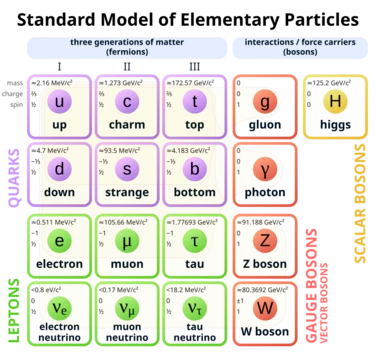
The neutron is a subatomic particle, symbol n or n⁰, that carries no electric charge and has a mass slightly larger than that of a proton. It is not an elementary particle but is composed of three quarks. Neutrons reside in the atomic nucleus alongside a comparable number of protons; atoms of the same element that differ only in their neutron count are known as isotopes. A free neutron is unstable and will spontaneously transform into a proton, an electron, and an antineutrino, with an average lifetime of about fifteen minutes. Neutrons are produced in large quantities during nuclear fission and fusion reactions, and they play a key role in the nucleosynthesis of elements inside stars through fission, fusion, and neutron capture. Neutron stars, the remnants of massive collapsing stars, consist entirely of neutrons at densities comparable to atomic nuclei but with a total mass exceeding that of the Sun. The discovery of the neutron by James Chadwick in 1932 was a pivotal event, leading directly to the discovery of nuclear fission in 1938, the construction of the first self-sustaining nuclear reactor (Chicago Pile-1) in 1942, and the development of the first nuclear weapon in 1945. Neutrons are essential for nuclear power generation. Dedicated sources such as neutron generators, research reactors, and spallation sources produce free neutrons for irradiation and scattering experiments. Although free neutrons do not directly ionize atoms, they can cause indirect ionizing radiation and pose a biological hazard depending on dose. A small natural background of free neutrons exists on Earth, arising from cosmic rays and the spontaneous fission of radioactive elements in the crust.
- discovered_by
- James Chadwick
- mass
- slightly greater than that of a proton
- charge
- none
- composition
- three quarks
- mean_lifetime_free
- about 15 minutes
- decay_products
- proton, electron, antineutrino
Lore & Background
Neutrons are subatomic particles bearing no electric charge, with a mass slightly exceeding that of a proton. They reside within the atomic nucleus alongside a comparable number of protons; atoms of the same element that differ only in neutron count are termed isotopes. Free neutrons are generated abundantly during nuclear fission and fusion, and they play a primary role in stellar nucleosynthesis through fission, fusion, and neutron capture. Neutron stars, which form from the collapse of massive stars, are composed entirely of neutrons at nuclear density yet possess a total mass greater than the Sun. A neutron is not an elementary particle but consists of three quarks. When free, it decays spontaneously into a proton, an electron, and an antineutrino, with a mean lifetime of roughly fifteen minutes. Free neutrons do not directly ionize atoms but indirectly cause ionizing radiation, posing a biological hazard depending on dose. A small natural neutron background exists on Earth from cosmic rays and spontaneous fission of elements in the crust. Dedicated sources such as neutron generators, research reactors, and spallation facilities produce free neutrons for irradiation and scattering experiments. The neutron’s properties and interactions are described by nuclear physics, and it is essential to nuclear power production.
Reader's Guide
The neutron is a fundamental component of atomic nuclei, found together with protons in all nuclei except the most common isotope of hydrogen. Neutrons determine the isotope of an element, and free neutrons are produced copiously in nuclear fission and fusion. They are a primary contributor to the nucleosynthesis of chemical elements within stars through fission, fusion, and neutron capture processes. Neutron stars, formed from massive collapsing stars, consist of neutrons at the density of atomic nuclei but a total mass more than the Sun. Neutrons are not elementary particles; each is composed of three quarks. A free neutron spontaneously decays to a proton, an electron, and an antineutrino with a mean lifetime of about 15 minutes. Dedicated neutron sources produce free neutrons for irradiation and scattering experiments. Free neutrons do not directly ionize atoms but indirectly cause ionizing radiation, posing a biological hazard depending on dose. A small natural neutron background exists on Earth from cosmic rays and spontaneous fission of elements in the Earth's crust.
Did You Know?
- A free neutron decays to a proton, an electron, and an antineutrino with a mean lifetime of about 15 minutes.
- Neutrons are composed of three quarks and are not elementary particles.
- The name 'neutron' derives from the Latin root for neutralis and the Greek suffix -on.
Frequently Asked Questions
What is a neutron?
A neutron is a neutral subatomic particle (symbol n or n⁰) carrying no electric charge and weighing just slightly more than a proton. It sits alongside protons inside atomic nuclei as one of the two main building blocks of matter.
What is a neutron made of?
A neutron is built from three quarks held together by the strong nuclear force. Although those quarks carry individual electric charges, their combination results in a net charge of zero for the whole particle.
How long does a free neutron last?
Once outside a nucleus, a neutron is unstable and decays with a mean lifetime of about 15 minutes. It breaks apart into a proton, an electron, and an antineutrino in a process called beta decay.
More in Particle And Nuclear Physics 1-24
Spotted an error? Know more?
This is a living reference — every entry is fact-audited, and reader corrections feed straight into our audit queue. Suggest an edit · See this site's audit record