Nucleosynthesis
Process creating atomic nuclei from pre-existing nucleons and nuclei.

Nucleosynthesis is the creation of new atomic nuclei from existing protons, neutrons, and other nuclei. The very first nuclei formed just minutes after the Big Bang, during a period known as Big Bang nucleosynthesis. Within about twenty minutes, the universe had expanded and cooled enough to halt the high-energy collisions between nucleons, allowing only the fastest, simplest reactions to finish. This left the universe composed mostly of hydrogen and helium, with small amounts of lithium and the hydrogen isotope deuterium. Later, nucleosynthesis inside stars and during stellar events like novas and supernovae produced the full range of elements and isotopes we see today, a process called cosmic chemical evolution. Even now, the total mass of elements heavier than hydrogen and helium—what astrophysicists call "metals"—remains only a few percent, so the universe’s overall composition has changed little.
Inside stars, nuclear fusion reactions convert light elements into heavier ones, releasing energy in a process known as stellar nucleosynthesis. These reactions create many lighter elements up to iron and nickel in the most massive stars. The products of stellar nucleosynthesis stay trapped in stellar cores or remnants unless they are ejected by stellar winds or explosions. Heavier elements, from iron upward, are produced through neutron capture reactions in two main processes: the r-process (rapid neutron capture) and the s-process (slow neutron capture).
Supernova nucleosynthesis, which occurs in exploding stars, is largely responsible for elements between oxygen and rubidium. This happens through three channels: the ejection of elements already produced during stellar nucleosynthesis, explosive nucleosynthesis during the supernova itself, and the r-process, which involves the absorption of many neutrons during the explosion.
Neutron star mergers have recently been identified as a major source of r-process elements. When two neutron stars collide, a large amount of neutron-rich matter is ejected, quickly forming heavy elements.
Cosmic ray spallation is a process where cosmic rays strike atomic nuclei and break them apart. It is a significant source of lighter nuclei that stellar nucleosynthesis does not produce, particularly helium-3, beryllium-9, and the boron isotopes boron-10 and boron-11. This spallation can happen in the interstellar medium, on asteroids and meteoroids, or on Earth in the atmosphere and ground, contributing to the presence of cosmogenic nuclides on our planet.
On Earth, new nuclei are also created through radiogenesis—the radioactive decay of long-lived, primordial radionuclides like uranium, thorium, and potassium-40.
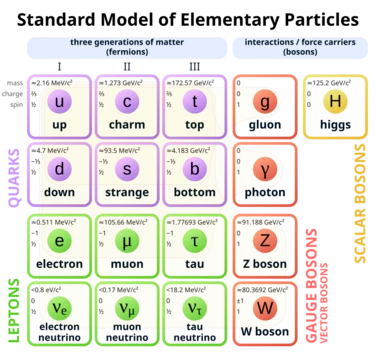
The first protons and neutrons formed from the quark-gluon plasma about 13.8 billion years ago, as the universe cooled below roughly ten billion Kelvin (or one MeV). Over the next few minutes, these particles combined into hydrogen (deuterium) and helium nuclei, with trace amounts of lithium also appearing. Because radiation vastly outnumbered matter at that time, the high binding energies of heavier elements prevented their formation. About 380,000 years after the Big Bang, free electrons combined with these nuclei, decoupling matter from radiation and producing the Cosmic Microwave Background. This initial process—Big Bang nucleosynthesis—was the first type of nucleogenesis in the universe. Even today, about 74% of all matter is hydrogen from BBN, and another 24% is helium. The first stars, called Population III stars, formed almost entirely from hydrogen and helium, with only traces of lithium, beryllium, and boron. (Some lithium, beryllium, and boron came from BBN, but most was later made by cosmic ray spallation or stellar fusion.)
The synthesis of heavier elements—what astronomers call "metals"—requires the extreme temperatures and pressures inside stars and supernovae. These processes began when hydrogen and helium from BBN collapsed into the first Population III stars, a few hundred million years after the Big Bang. Star formation has continued in galaxies ever since, a period often called "Cosmic Dawn." Today, heavier elements are made through stellar nucleosynthesis (like carbon and nitrogen), supernova nucleosynthesis (like magnesium and aluminum), or exotic events such as neutron star collisions (like europium). Some elements form through multiple processes, and others, like argon-40, arise from radioactive decay.
Because different elements form at different stages in a galaxy’s life, astronomers can use their abundances to date the formation of a star or galactic structure. For instance, most magnesium in the interstellar medium was ejected by core-collapse supernovae, while much of the universe’s iron came from type Ia supernovae. Type Ia supernovae occur in binary systems: one star dies, leaving a white dwarf, which then accretes matter from its companion until its temperature and density trigger a violent explosion. The effects of type Ia supernovae on the interstellar medium typically appear about one billion years after star formation begins in a galaxy. In contrast, core-collapse supernovae are the deaths of massive stars that live only a few million years. As a general rule, stars that formed earlier than one billion years after the start of star formation in a region have a higher magnesium-to-iron ratio than later stars, because magnesium was incorporated into the interstellar medium sooner.
- field
- Astrophysics, Nuclear Physics
- known_for
- Explaining the origin of chemical elements through Big Bang, stellar, supernova, and neutron star merger processes
- key_processes
- Big Bang nucleosynthesis, stellar nucleosynthesis, supernova nucleosynthesis, neutron star mergers, cosmic ray spallation, radiogenesis
Lore & Background
The first protons and neutrons formed from the quark-gluon plasma around 13.8 billion years ago during the Big Bang, as the universe cooled below about ten billion Kelvin. Over the next few minutes, these nucleons combined to form hydrogen and helium nuclei, with trace amounts of lithium. After about 20 minutes, the universe had expanded and cooled enough that high-energy collisions among nucleons ended, leaving the universe containing hydrogen, helium, traces of lithium, and the hydrogen isotope deuterium. The vast majority of matter in the universe today (about 74%) is hydrogen produced by Big Bang nucleosynthesis, while another 24% is helium. Stars fuse light elements to heavier ones in their cores, giving off energy in stellar nucleosynthesis. Nuclear fusion reactions create many lighter elements up to and including iron and nickel in the most massive stars. Products of stellar nucleosynthesis remain trapped in stellar cores and remnants except if ejected through stellar winds and explosions. The neutron capture reactions of the r-process and s-process create heavier elements from iron upwards. Supernova nucleosynthesis within exploding stars is largely responsible for the elements between oxygen and rubidium. Neutron star mergers are a recently-identified major source of elements produced in the r-process. Cosmic ray spallation is a significant source of lighter nuclei such as 3He, 9Be, and 10,11B that are not created by stellar nucleosynthesis. On Earth, new nuclei are also produced by radiogenesis, the decay of long-lived primordial radionuclides such as uranium, thorium, and potassium-40.
Reader's Guide
Nucleosynthesis is fundamental to understanding the composition of the universe and the origin of the elements that make up planets, stars, and life itself. The theory explains how the first nuclei formed minutes after the Big Bang, producing primarily hydrogen and helium, and how subsequent processes in stars, supernovae, and neutron star mergers created the full range of elements observed today. The amounts of total mass in elements heavier than hydrogen and helium remain small (a few percent), so the universe still has approximately the same composition as after Big Bang nucleosynthesis. Because different elements form at different points in a galaxy's life, astronomers can use the abundances of these elements to date the formation of a star or structure within a galaxy. For example, the ratio of magnesium to iron abundance in stars can indicate whether they formed before or after type Ia supernovae began enriching the interstellar medium with iron, about 1 billion years after the start of star formation. M. Burbidge, G. R. Burbidge, Fowler, and Hoyle defined new processes for the transformation of heavy nuclei within stars.
Did You Know?
- The first nuclei were formed a few minutes after the Big Bang through nuclear reactions in a process called Big Bang nucleosynthesis.
- Neutron star mergers are a recently-identified major source of elements produced in the r-process.
- Cosmic ray spallation is a significant source of lighter nuclei such as 3He, 9Be, and 10,11B that are not created by stellar nucleosynthesis.
- The amounts of total mass in elements heavier than hydrogen and helium remain small (a few percent) in the universe.
More in Particle And Nuclear Physics 1-24
Spotted an error? Know more?
This is a living reference — every entry is fact-audited, and reader corrections feed straight into our audit queue. Suggest an edit · See this site's audit record