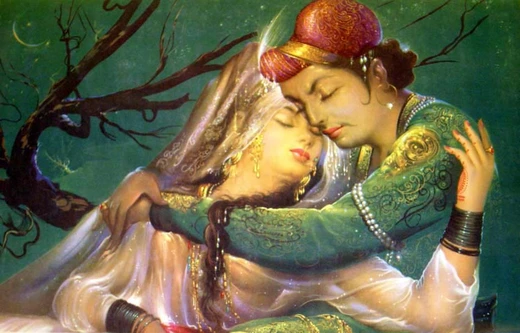
Mokhi and Matara
A barmaid's poisoned wine kills eight revelers.

Mokhi and Matara is a famous story from Sindhi folklore about a barmaid, Mokhi, who served poisonous wine to eight young men known as Mataras, or wine-drinkers. The tale is significant for its depiction of medieval Sindhi society and its exploration of psychological themes, and it has been referenced by renowned Sindhi poets such as Shah Abdul Latif Bhittai.
Quick Facts
- Folk Tale Name
- Mokhi and Matara
- Region
- Sindh
Facts from the source article.
Lore & Background
The story begins with Natar, mother of Mokhi, who left Kaak Mahal after the separation of Momal Rano and settled in Gadap near Karachi, opening a tavern. After Natar's death, her daughter Mokhi continued running the brewery. The tavern became famous, attracting wine-bibbers and revelers, including the Mataras—eight adventurous young men who were notables of Sari in the Kohistan area of Sindh.
On one visit, Mokhi had no old wine left and served them wine from an abandoned jar that contained a cobra's skeleton and venom. The Mataras enjoyed it immensely and returned a year later, demanding the same wine. When Mokhi revealed the truth about the venom, the Mataras were shocked and fell dead on the spot. Their tombs are still found at the foothill of Narathar in Gadap tehsil of Karachi.
The story is connected to the romantic tale of Momal Rano, and its earliest references appear in verses by Shah Abdul Latif Bhittai. It has been alluded to by later poets and is a recurring theme in Sindhi folk poetry.
Reader's Guide
The story of Mokhi and Matara holds significance as a cultural artifact of medieval Sindh, illustrating socio-cultural aspects where women like Natar and Mokhi ran taverns. It is preserved in Sindhi folk poetry, with early references by major poets such as Shah Karim, Shah Inat, and Shah Latif, indicating its deep roots in the region's literary tradition. The tale's central psychological idea—that genuine zeal can survive a real hazard, but conscious awareness of the hazard can be fatal even after the danger has passed—gives it a timeless, philosophical dimension. The story also provides historical insight into the tribes of the Kohistan area, including the Samma, Soomra, Channa, and Chauhan clans, and the physical remains of the Mataras' tombs at Narathar serve as a tangible link to the legend. Its enduring presence in Sindhi culture underscores its role in shaping local identity and moral discourse.
Did You Know?
- The Mataras were eight young men from the Kohistan area of Sindh.
- The story is connected to the romantic tale of Momal Rano, as Mokhi's mother Natar is sometimes linked to Momal in later folk elaborations.
- The earliest references to the saga are found in verses of poet Shah Abdul Latif Bhittai.
The Tavern and Its Keepers
The tale of Mokhi and Matara is rooted in the aftermath of another legendary Sindh romance, Momal Rano. Following the tragic separation of Momal and Rano, Momal burned herself, and her servant Natar — who would become Mokhi's mother — departed Kaak Mahal to settle in Gadap, near present-day Karachi. There, Natar established a brewery and opened a tavern in the village of Konkar, selling pots of wine to carefree patrons. After Natar's death, her daughter Mokhi, a thoughtful and courteous young woman, inherited the tavern and continued serving the local revelers. The establishment's reputation spread widely, drawing wine-bibbers and tipplers from across the region. It was this tavern that became the setting for one of Sindh's most haunting folk narratives, where hospitality, fate, and the lethal consequences of a single decision converged.
The Eight Devotees and Their Fatal Cup
The Mataras were eight young, stout men — two each from the Samma, Soomra, Channa, and Chauhan clans — who hailed from the Kohistan area of Sindh and were notables of Sari. As devoted followers of Bachhus, they made the long journey to Mokhi's tavern every six months to sample the finest mandh. On one visit, no fresh stock remained, and Mokhi, unwilling to disappoint her loyal patrons, retrieved an abandoned jar from a corner. Inside, a cobra had long since perished, its flesh dissolved to a skeleton, its venom seeping into the fermented liquid. The Mataras drank enthusiastically, praising the extraordinary taste. A year later, they returned and demanded that same wine. When Mokhi finally confessed the truth about the cobra's venom, the sheer shock of the revelation killed all eight on the spot. Their graves still mark the hillock at Narathar in Gadap tehsil.
Echoes in Sindhi Poetry
The saga of Mokhi and Matara secured its place in Sindh's literary canon through the verses of its most celebrated poets. The earliest known references appear in the works of Shah Karim, Shah Inat, and Shah Latif, the towering figures of Sindhi Sufi and folk poetry. Beyond these foundational voices, numerous later poets alluded to the tale, weaving it into the broader tapestry of Sindhi folk literature. The story endures not merely as a cautionary anecdote but as a rich narrative vessel through which generations of poets explored themes of fate, hospitality, and the thin boundary between pleasure and death. Its presence across multiple poetic traditions underscores how deeply the tale is embedded in the cultural memory of Sindh, functioning as a shared reference point that transcends any single era or author.
The Psychology of the Fatal Sip
At its core, the Mokhi and Matara narrative encodes a subtle psychological insight: a person can survive a genuine hazard when consumed by authentic enthusiasm, yet the mere conscious awareness of that hazard — even after the danger has passed — can prove instantly lethal. The Mataras drank cobra-laced wine with relish and lived; a year later, the knowledge of what they had consumed killed them in a single moment of shock. The story also illuminates socio-cultural dimensions of medieval Sindh, notably the fact that a tavern and brewery were operated by women — first Natar, then her daughter Mokhi — suggesting a social world in which women held visible economic roles in hospitality and trade. This detail, preserved in the folk tradition, offers a window into gendered labor and community life in pre-modern Sindhi society.
Frequently Asked Questions
Who are Mokhi and Matara in Sindhi folklore?
Mokhi is a barmaid at the center of a classic Sindhi tale, while the Mataras are eight young wine-drinkers who frequent her establishment. The story originates from the Kohistan area of Sindh and is one of the most recognizable narratives in regional folklore.
What actually happens in the Mokhi and Matara story?
Mokhi serves poisoned wine to the eight Mataras during their revelry, and all eight men die from the drink. The entire plot hinges on this single act of treachery and its irreversible, fatal outcome.
Which famous poet referenced the Mokhi and Matara tale?
Shah Abdul Latif Bhittai, the celebrated Sufi poet of Sindh, wove references to this story into his folk poetry. His literary treatment helped anchor the tale firmly within the broader Sindhi poetic tradition.
What themes does the Mokhi and Matara story explore?
The narrative offers a lens into the social hierarchies and power dynamics of medieval Sindhi society while also probing deep psychological tensions between the characters. It examines deception, transgression, and the weight of consequences within a tight-knit community.
Where does the Mokhi and Matara story come from geographically?
The tale is rooted in the Kohistan region of Sindh, Pakistan, and belongs to the wider tradition of Sindhi oral folklore. It has been carried forward through generations as a cornerstone of the region's storytelling heritage.
More in Pakistani folklore 1-24
Spotted an error? Know more?
Reader corrections go straight into our review queue. Suggest an edit · How this site is sourced