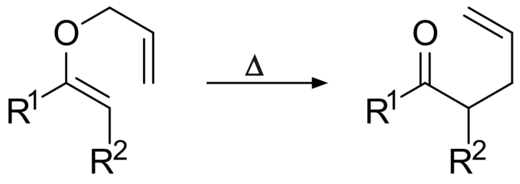
Arrow pushing
Technique using curved arrows to show electron movement in reactions.
Last updated
It uses curved arrows to indicate electron flow within molecular structures.[1] Sir Robert Robinson initially devised the arrow pushing method for illustrating how organic reactions proceed.[2] This approach now also applies to main group element chemistry, covering s- and p-block species.[3]
Quick Facts
- Field
- Organic chemistry, inorganic chemistry
- First developed by
- Sir Robert Robinson
Facts from the source article.
Key facts and history
Sir Robert Robinson developed the representation of reaction mechanisms using curved arrows in 1922.[1] Robinson and collaborator William Kermack suggested that electron hopping between adjacent atoms dictates bond formation, illustrating this with curly arrows.[4] Organic chemists use two types of arrows: single-barbed arrows for single electrons and double-barbed arrows for electron pairs.[5] The arrow's tail is drawn at an electron source, such as a lone pair or a bond.[5]
The arrow's head points toward an electron sink, an area of relatively low electron density.[5] This process leaves a single unpaired electron on each atom, forming free radicals.[6] A curved arrow drawn between two reactants indicates a new bond is being created.[7] When a bond breaks via homolytic cleavage, the electron pair is divided, and this event is depicted using two arrows with single barbs that point away from the broken bond.[6]
Sufficient energy for homolytic cleavage is supplied by either heat or light.[8]
What the research sources say
Ball states that the arrowhead convention for distinguishing single and pair electron movement was adopted only gradually.[4] The Chemistry LibreTexts resource explains that a curved arrow illustrates the path taken by a pair of electrons during a reaction.[9] The same source states that the curved arrow shows the direction of electron flow and highlights the transformation of a lone pair into a bond.[9] According to the resource on Lewis definitions from Purdue, a curved arrow starting at a nonbonding electron pair and ending at the electron acceptor illustrates a Lewis acid-base reaction.[10]
References
- Wikipedia, "Arrow pushing" (CC BY-SA 4.0), which cites: Kermack, "An explanation of the property of induced polarity of atoms and an interpretation of the theory of partial valencies on an electronic basis", Journal of the Chemical Society, Transactions, 1922, p. 427–440; Ghosh, "Chemistry's Curly Arrow Hits 100", American Scientist, 2022, p. 338; Ball, "A century of curly arrows", chemistryworld.com, 2022-02-14 (we also read that source) en.wikipedia.org
- Wikipedia, "Arrow pushing" (CC BY-SA 4.0) en.wikipedia.org
- Wikipedia, "Arrow pushing" (CC BY-SA 4.0), which cites: Abhik Ghosh, Steffen Berg, Arrow Pushing in Inorganic Chemistry: A Logical Approach to the Chemistry of the Main Group Elements, (John Wiley & Sons, 2014). (original not read by us) en.wikipedia.org
- Ball, "A century of curly arrows", chemistryworld.com, 2022-02-14. facts only, no text reused. chemistryworld.com
- Wikipedia, "Arrow pushing" (CC BY-SA 4.0), which cites: Boikess, "Chemical principles for organic chemistry", 2015 (we also read that source) en.wikipedia.org
- Wikipedia, "Arrow pushing" (CC BY-SA 4.0), which cites: "3.3: Arrow Conventions", Chemistry LibreTexts, 2019-04-15 (we also read that source) en.wikipedia.org
- Wikipedia, "Arrow pushing" (CC BY-SA 4.0), which cites: "Notes on arrow pushing (curly arrows)", Imperial College London (original not read by us) en.wikipedia.org
- Wikipedia, "Arrow pushing" (CC BY-SA 4.0), which cites: Liu, "Organic Chemistry I", Pressbooks, 2021-12-09 (original not read by us) en.wikipedia.org
- "3.3: Arrow Conventions", Chemistry LibreTexts, 2019-04-15. facts only, no text reused. chem.libretexts.org
- Wikipedia, "Arrow pushing" (CC BY-SA 4.0), which cites: "The Lewis Definitions of Acids and Bases", chemed.chem.purdue.edu (we also read that source) en.wikipedia.org
Each numbered sentence above was checked against the source it cites before publication. Sentences citing Wikipedia adapt text from the English Wikipedia article Arrow pushing (contributors), used under CC BY-SA 4.0; this entry is available under the same licence. Other sources were used for facts only; no text or images are copied from them.
More in Organic Chemistry And Reaction Mechanisms
Sources
Compiled from Wikipedia and the sources listed below. Text from Wikipedia is available under CC BY-SA 4.0; this entry is adapted from it.
- Wikipedia: Arrow pushing (CC BY-SA 4.0).
- Word definitions: the , each quoted from its Wikipedia article.
Spotted an error? Know more?
Reader corrections go straight into our review queue. Suggest an edit · How this site is sourced