
Mario Lanza
American tenor and Hollywood film star of the 1940s and 1950s.
Last updated

via Wikipedia: Mario Lanza · see source
Mario Lanza was born Alfredo Arnold Cocozza in Philadelphia on January 31, 1921, and died on October 7, 1959, at age 38. He was an American tenor and actor who became a Hollywood star in the late 1940s and 1950s. His parents were Italian immigrants from the Abruzzo and Molise regions, and his mother’s maiden name was Maria Lanza.
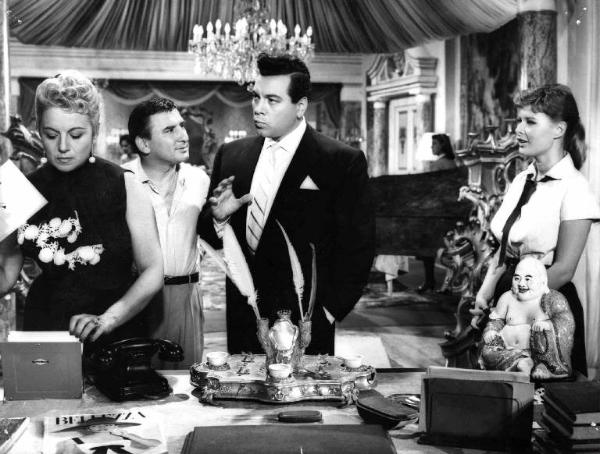
Film career
He started training to sing professionally at 16. After performing at the Hollywood Bowl in 1947, he caught the attention of MGM head Louis B. Mayer, who gave him a seven-year film contract. Before that, Lanza had only sung two opera performances as an adult; in 1948 he played Pinkerton in Puccini’s Madama Butterfly in New Orleans.
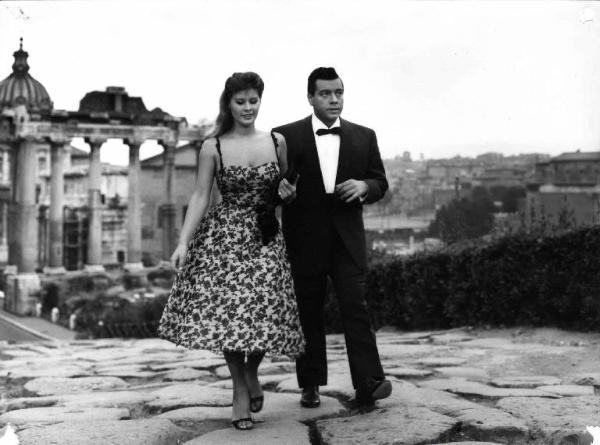
The Toast of New Orleans
His first movie was That Midnight Kiss (1949), co-starring Kathryn Grayson and Ethel Barrymore. The following year, his song “Be My Love” from The Toast of New Orleans became his first million-selling hit. In 1951 he played his idol, tenor Enrico Caruso, in the biopic The Great Caruso, which featured another million-seller, “The Loveliest Night of the Year” (set to the melody of Sobre las Olas).
The Student Prince
That film was the 11th highest-grossing movie of the year. His next film, Because You’re Mine, gave him his final million-selling hit song, which was also nominated for an Academy Award for Best Original Song. After recording the soundtrack for The Student Prince, he clashed with director Curtis Bernhardt and studio head Dore Schary over artistic differences, and MGM fired him.
Lanza was described as “rebellious, tough, and ambitious.” For much of his film career, he struggled with overeating and alcohol addiction, which harmed his health and strained his relationships with directors, producers, and sometimes other cast members. Hollywood columnist Hedda Hopper said his smile was as big as his voice but matched with the habits of a tiger cub that couldn’t be housebroken, and she called him the last of the great romantic performers.
He made three more films before dying of what appeared to be a pulmonary embolism. At his death, he was still considered the most famous tenor in the world. Author Eleonora Kimmel wrote that he “blazed like a meteor whose light lasts a brief moment in time.”
Early years
In his early years, Lanza sang in local YMCA Opera Company productions in Philadelphia. Conductor Serge Koussevitzky heard him and gave him a full scholarship to the Berkshire Music Center at Tanglewood in 1942, reportedly telling him his voice was the kind heard once in a hundred years. He made his first opera appearance as Fenton in The Merry Wives of Windsor at Tanglewood on August 7, 1942, after studying with Boris Goldovsky and Leonard Bernstein.
He adopted the stage name Mario Lanza, based on his mother’s maiden name. Critics praised him: The New York Times said he had few equals among tenors in quality, warmth, and power, and Opera News predicted he would one day join the Metropolitan Opera. He also sang Rodolfo in a scene from La bohème with soprano Irma González, who later recalled he was correct, likeable, and had a powerful, beautiful voice.
His opera career was interrupted by World War II, when he served in the U.S. Army Air Corps Special Services, appearing in shows and the film Winged Victory as an unrecognizable chorus member. After the war, he sang a concert in Atlantic City with the NBC Symphony Orchestra in September 1945 under Peter Herman Adler, who became his mentor. He then replaced tenor Jan Peerce on the CBS radio program Great Moments in Music, making six appearances over four months.
He studied with Enrico Rosati for 15 months and then toured the U.S., Canada, and Mexico from July 1947 to May 1948 with bass George London and soprano Frances Yeend. Critic Claudia Cassidy praised his “superbly natural tenor” and noted that while he lacked some fine points, he had the rare ability to make a lyric line reach its audience and understood opera as music drama. In April 1948, he sang two performances of an opera.
Lore & Background
Lanza was known to be "rebellious, tough, and ambitious." During most of his film career, he suffered from addictions to overeating and alcohol, which had a serious effect on his health and his relationships with directors, producers, and occasionally other cast members. Hollywood columnist Hedda Hopper wrote that "his smile, which was as big as his voice, was matched with the habits of a tiger cub, impossible to housebreak." After recording the soundtrack for The Student Prince, he embarked upon a protracted battle with studio head Dore Schary arising from artistic differences with director Curtis Bernhardt and was eventually fired by MGM. He made three more films before dying of an apparent pulmonary embolism at age 38. At the time of his death in 1959, he was still "the most famous tenor in the world." Author Eleonora Kimmel concluded that Lanza "blazed like a meteor whose light lasts a brief moment in time."
Did You Know?
- Lanza's first commercial recordings for RCA Victor in May 1949 included the aria 'Che gelida manina' from La bohème, which was awarded Operatic Recording of the Year by the National Record Critics Association.
Frequently Asked Questions
Who is Mario Lanza?
Mario Lanza was an American tenor and actor who rose to major Hollywood stardom in the late 1940s and 1950s. Born Alfredo Arnold Cocozza on January 31, 1921, he was celebrated for his rich operatic voice and magnetic screen presence.
What was Mario Lanza's film debut?
He made his screen debut in That Midnight Kiss (1949), sharing the stage with Kathryn Grayson and Ethel Barrymore. The picture launched his string of MGM musicals that defined his public image for the next several years.
How did Mario Lanza's life end?
Lanza passed away on October 7, 1959, at just thirty-eight years old, barely a decade after his Hollywood breakthrough. His early death left fans and colleagues feeling his career in both opera and cinema was still far from complete.
Also in the Codexery
More in Opera & Vocal Legends
Sources
Compiled from Wikipedia and the sources listed below. Text from Wikipedia is available under CC BY-SA 4.0; this entry is adapted from it.
- Wikipedia: Mario Lanza (CC BY-SA 4.0).
Spotted an error? Know more?
Reader corrections go straight into our review queue. Suggest an edit · How this site is sourced