
Maria Malibran
Spanish opera singer known for extraordinary vocal range and dramatic intensity.
Last updated

via Wikipedia: Maria Callas · see source
Maria Felicia Malibran, born María Felicia García Sitches in Paris, was a Spanish singer who could handle both contralto and soprano roles, making her one of the 19th century’s most famous opera stars. She came from a well-known musical family: her mother, Joaquina Sitches, was an actress and singer, and her father, Manuel García, was a celebrated tenor admired by Rossini—he even created the role of Count Almaviva in The Barber of Seville. He also composed and taught voice, and he was her first teacher. Their lessons were marked by constant fights between two strong wills, as he was described as inflexible and tyrannical.
Career
Malibran first appeared onstage at age eight in Naples, singing with her father in Ferdinando Paër’s Agnese. At 17, she sang in the choir of London’s King’s Theatre. When the prima donna Giuditta Pasta fell ill, García suggested his daughter take over as Rosina in The Barber of Seville. The audience loved her, and she kept singing the role for the rest of the season.
After the season ended, García took his troupe—Maria, her brother Manuel, their mother Joaquina, and four-year-old sister Pauline (later famous as Pauline Viardot)—to New York. This was the first Italian opera performed in the city. Over nine months, Maria sang lead roles in eight operas, two written by her father.
In New York, she hastily married banker Francois Eugene Malibran, 28 years her senior. Some say her father forced the marriage in exchange for 100,000 francs; others claim she married to escape her father. A few months later, her husband went bankrupt, and she supported him through performances. After a year, she left him and returned to Europe.
Back in Europe, she sang the title role at the premiere of Donizetti’s Maria Stuarda. The opera, based on Schiller’s play, portrayed Mary, Queen of Scots sympathetically, so censors demanded changes—which Malibran often ignored. The Royal Conservatory of Brussels library holds colorful costume sketches she made for the production, showing her hidden drawing talent. She began a relationship with Belgian violinist Charles Auguste de Bériot, living with him for six years as a common-law couple.
They had a child in 1833 (piano teacher Charles-Wilfrid de Bériot), and she eventually got an annulment from Malibran. Felix Mendelssohn wrote an aria with solo violin for the couple. She performed at the Paris Opera and other major houses, and in Paris she met and sang with Michael Balfe.
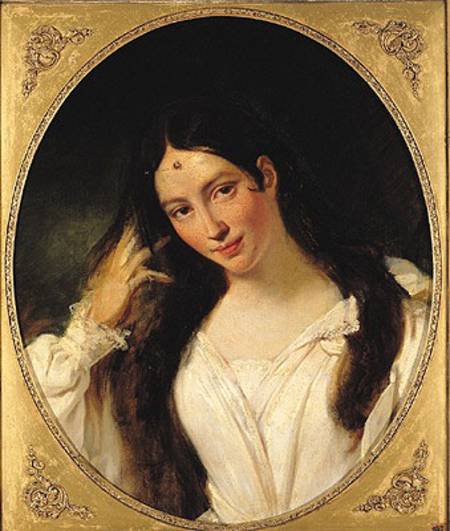
Last years
In 1834, she moved to England, performing in London and across Europe. In Venice, she sang Bellini’s La sonnambula on 8 April 1835, donating her performance to the run-down Teatro San Giovanni Grisostomo, which was restored and renamed Teatro Malibran; she was hailed as its patroness. In late May 1836, she starred in The Maid of Artois, written for her by Balfe. Earlier that year, she had returned to Milan to sing the title role in Vaccai’s Giovanna Gray.
On 5 July 1836, while horse riding with Lord William Lennox, she fell and suffered injuries she never recovered from. She refused to see a doctor and kept performing. In September 1836, she took part in a music festival at Manchester Cathedral and the Theatre Royal on Fountain Street.
She collapsed onstage while doing encores at the theatre but insisted on singing in the church the next morning. She died after a week of agony, attended by her private physician. After a public funeral, her body was temporarily buried in the church, then moved to a mausoleum in Laeken Cemetery, near Brussels. The Royal Conservatory of Brussels library holds her death mask, a four-page funeral report from Dr. Belluomini, and permission from Manchester authorities to transfer her body.
Roles and vocal style
Malibran is most closely tied to Rossini’s operas. He praised her, calling her a wonderful creature with disconcerting musical genius who surpassed all imitators and outshone other women with her superior mind, broad knowledge, and fiery temperament. She sang the title roles in his Tancredi and Otello—apparently playing both Desdemona and Otello—as well as roles in Il turco in Italia, La Cenerentola, and Semiramide (both Arsace and the title role). She also performed in Meyerbeer’s Il crociato in Egitto in Paris in September 1825, an opera Rossini introduced to the French capital, which launched Meyerbeer’s European reputation.
Lore & Background
María Felicia García Sitches was born into a famous Spanish musical family in Paris. Her mother Joaquina Sitches was an actress and operatic singer; her father Manuel García was a celebrated tenor, composer, and vocal instructor who became her first teacher. He was described as inflexible and tyrannical, and their lessons became constant quarrels.
Malibran first appeared on stage in Naples at age eight, and at 17 sang in the choir of the King's Theatre in London. When prima donna Giuditta Pasta became indisposed, García suggested his daughter take over as Rosina in The Barber of Seville; the audience loved her, and she continued in the role for the season. After the season closed, García took his operatic troupe to New York—the first Italian opera performed in the city.
Over nine months, Maria sang lead roles in eight operas. Her husband soon declared bankruptcy, and she supported him through performances. There she sang the title role at the premiere of Donizetti's Maria Stuarda, often ignoring censors' textual amendments.
Frequently Asked Questions
Who is Maria Malibran?
Maria Malibran was a Spanish opera singer renowned for her stormy personality and raw dramatic intensity on stage. She became one of the most talked-about vocal performers of her time, a reputation that only grew after her death.
What made Maria Malibran's voice so remarkable?
Contemporary listeners described her range, power, and flexibility as extraordinary. She could credibly sing both contralto and soprano parts, a versatility that marked her as a singular talent in the opera world.
Also in the Codexery
More in Opera & Vocal Legends
Sources
Compiled from Wikipedia and the sources listed below. Text from Wikipedia is available under CC BY-SA 4.0; this entry is adapted from it.
- Wikipedia: Maria Malibran (CC BY-SA 4.0).
Spotted an error? Know more?
Reader corrections go straight into our review queue. Suggest an edit · How this site is sourced