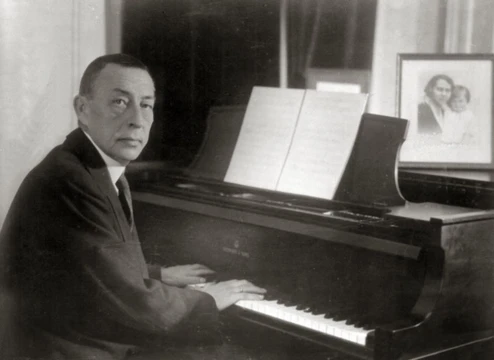
Serge Koussevitzky
Russian-American conductor who led the Boston Symphony Orchestra for 25 years.

Serge Koussevitzky was a Russian and American conductor, composer, and double-bassist, best known for his transformative 25-year tenure as music director of the Boston Symphony Orchestra from 1924 to 1949. Born into a Jewish musical family in Vyshny Volochyok, Russia, he studied violin, cello, piano, and trumpet before receiving a scholarship to the Musico-Dramatic Institute of the Moscow Philharmonic Society, where he focused on double bass. He excelled, joining the Bolshoi Theatre orchestra at age twenty and later succeeding his teacher as principal bassist. After marrying the wealthy Natalie Ushkova in 1905, he left the Bolshoi and moved to Berlin, where he studied conducting under Arthur Nikisch. He made his professional conducting debut in 1908 with the Berlin Philharmonic, featuring Rachmaninoff as soloist. Returning to Russia, he founded his own orchestra and a publishing firm, Éditions Russes de Musique, acquiring catalogs of composers including Rachmaninoff, Scriabin, Prokofiev, Stravinsky, and Medtner. After the 1917 Russian Revolution, he conducted the State Philharmonic Orchestra of Petrograd before leaving for Berlin and Paris, where he organized the Concerts Koussevitzky. In America, he built the Boston Symphony’s reputation into a leading ensemble, co-developed the Tanglewood summer programs, and championed modern music, commissioning works such as Copland’s Ode and Prokofiev’s Symphony No. 4. His protégés included Leonard Bernstein and Sarah Caldwell. He became a U.S. citizen in 1941 and died in Boston in 1951.
- field
- Conductor, composer, double-bassist
Lore & Background
Serge Koussevitzky was a Russian-born conductor, composer, and double-bassist who led the Boston Symphony Orchestra from 1924 to 1949. He was born into a Jewish family of musicians and studied violin, cello, piano, and trumpet before receiving a scholarship to study double bass and music theory in Moscow. He joined the Bolshoi Theatre orchestra at age twenty and later succeeded his teacher as principal bassist. After early solo success in Moscow and Berlin, he studied conducting under Arthur Nikisch in Berlin, using his wife’s wealth to pay off Nikisch’s gambling debts. He made his professional conducting debut in 1908 with the Berlin Philharmonic, featuring Rachmaninoff as piano soloist. Returning to Russia, he founded his own orchestra and the publishing firm Éditions Russes de Musique, acquiring catalogues of Rachmaninoff, Scriabin, Prokofiev, Stravinsky, and Medtner. He toured Volga River towns by riverboat, programming new works. After the 1917 Revolution, he conducted the State Philharmonic Orchestra of Petrograd, then left for Berlin and Paris, where he organized the Concerts Koussevitzky. In America, he built the Boston Symphony into a leading ensemble and helped develop the Tanglewood summer programs. He championed contemporary music, commissioning works by Copland, Prokofiev, and others, and mentored Leonard Bernstein, among others. He became a U.S. citizen in 1941.
Reader's Guide
Koussevitzky’s tenure as music director of the Boston Symphony Orchestra from 1924 to 1949 marked a golden era for the ensemble, during which he built its reputation into that of a leading American orchestra. He played a central role, alongside Gertrude Robinson Smith, in developing the orchestra’s internationally acclaimed summer concert and educational programs at Tanglewood, where the main performance venue now bears his name. He was a great champion of modern music, commissioning numerous works from prominent composers. In Paris during the early 1920s, he programmed much contemporary music and ensured well-prepared performances, with notable premieres including Arthur Honegger’s *Pacific 231*, George Gershwin’s *Second Rhapsody*, and Albert Roussel’s *Suite in F*. For the Boston Symphony’s 50th anniversary, he commissioned works such as Aaron Copland’s *Ode* and Sergei Prokofiev’s Symphony No. 4. His students and protégés included Leonard Bernstein, Eleazar de Carvalho, Samuel Adler, and Sarah Caldwell. He also discovered the young tenor Alfred Cocozza (later known as Mario Lanza) and provided him with a scholarship to attend Tanglewood. His numerous recordings with the Boston Symphony were well regarded by critics.
Did You Know?
- Koussevitzky premiered Prokofiev's Symphony No. 4, Op. 47 on November 14, 1930 in Symphony Hall, Boston, with the composer absent.
- He commissioned Ravel's orchestration of Mussorgsky's Pictures at an Exhibition, one of the most celebrated versions of that work.
- He studied conducting under Arthur Nikisch in Berlin after marrying Natalie Ushkova, daughter of a wealthy tea merchant.
- Koussevitzky's protégés included Leonard Bernstein, Eleazar de Carvalho, Samuel Adler, and Sarah Caldwell.
Frequently Asked Questions
Who is Serge Koussevitzky?
He was a Russian-born conductor, composer, and double-bassist who later became a U.S. citizen in 1941. He is most widely recognized for his long leadership of the Boston Symphony Orchestra.
What is Serge Koussevitzky best known for?
His 25-year tenure as music director of the Boston Symphony Orchestra, from 1924 to 1949, stands as his defining achievement. During that stretch he elevated the ensemble into one of America's premier orchestras while actively championing works by living composers.
What was Koussevitzky's connection to Tanglewood?
He played a central role in establishing the Tanglewood summer concert and educational programs in Massachusetts. Those initiatives became a cornerstone of American classical-music outreach and continue to operate to this day.
When and where was Serge Koussevitzky born, and when did he die?
He was born on 26 July 1874 (Old Style 14 July) in Vyshny Volochyok, Tver Governorate, Russia. He died on 4 June 1951 in Boston, United States.
Why is Serge Koussevitzky considered important to American classical music?
Beyond his orchestral leadership, he founded the Koussevitzky Music Foundations to support composers and musicians. His twin focus on promoting contemporary repertoire and building educational infrastructure left a lasting institutional legacy in the United States.
More in Classical Virtuosos 1-24
Spotted an error? Know more?
This is a living reference — every entry is fact-audited, and reader corrections feed straight into our audit queue. Suggest an edit · See this site's audit record