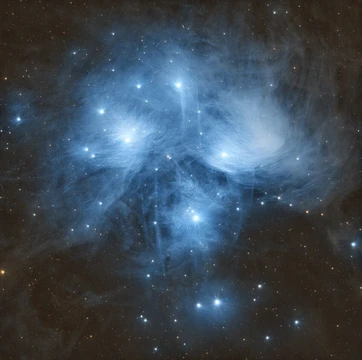
Lambda Orionis Cluster
Young open cluster in Orion with a molecular ring.
Last updated

JanP3000 · CC BY-SA 4.0
The Lambda Orionis Cluster, also known as Collinder 69, is an open star cluster located northwest of the star Betelgeuse in the constellation Orion. It is notable for its young age of about five million years and its proximity to Earth at roughly 400 parsecs. The cluster includes the double star Meissa (Lambda Orionis) and is visible from both hemispheres from mid-August to late April.
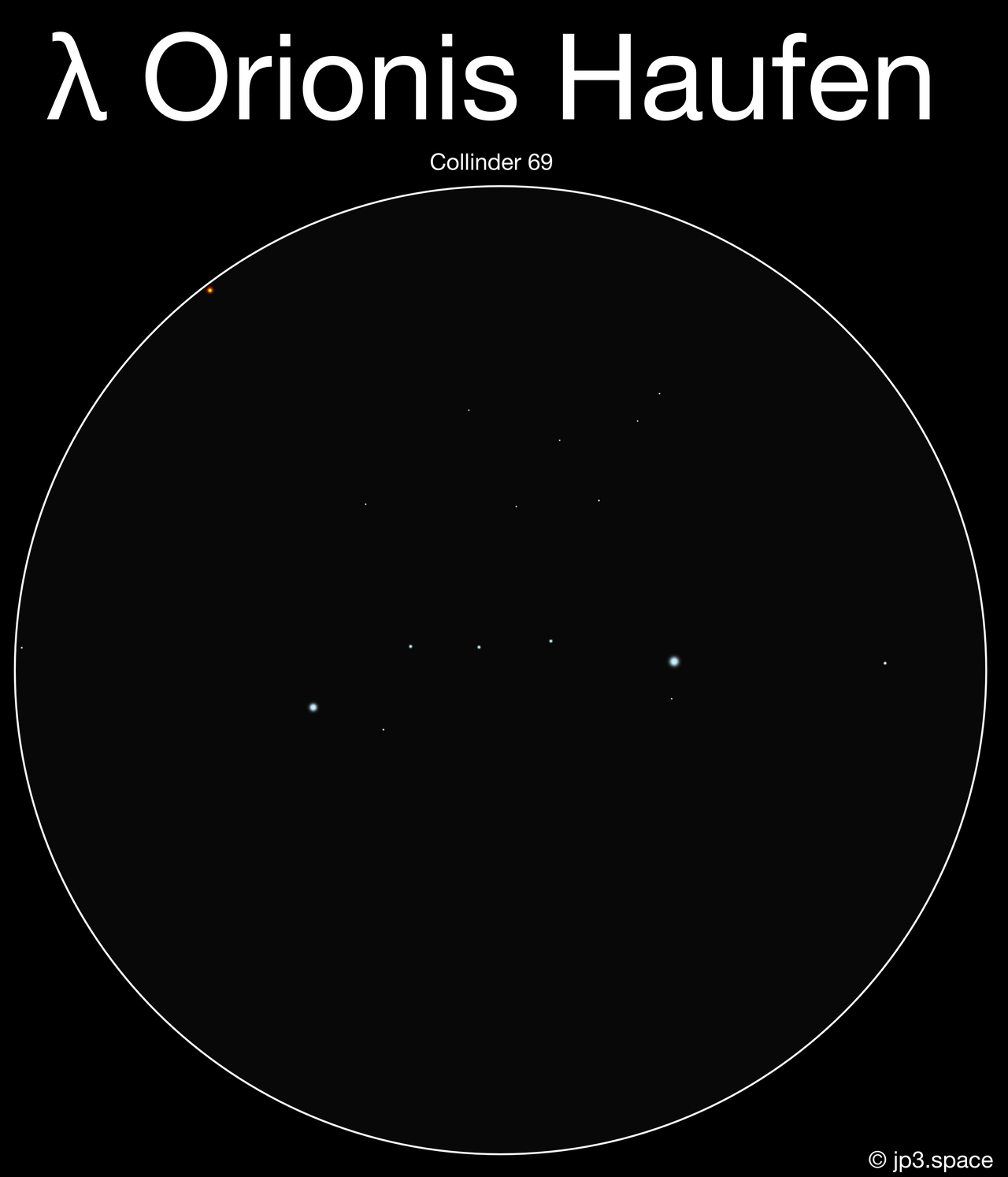
Lore & Background
The cluster follows an orbit through the Milky Way with a period of 227.4 million years and an ellipticity of 0.06, ranging from 7.7 to 8.6 kpc from the Galactic Center and reaching up to 80 pc from the galactic plane. It crosses the galactic plane on average every 33.3 million years.
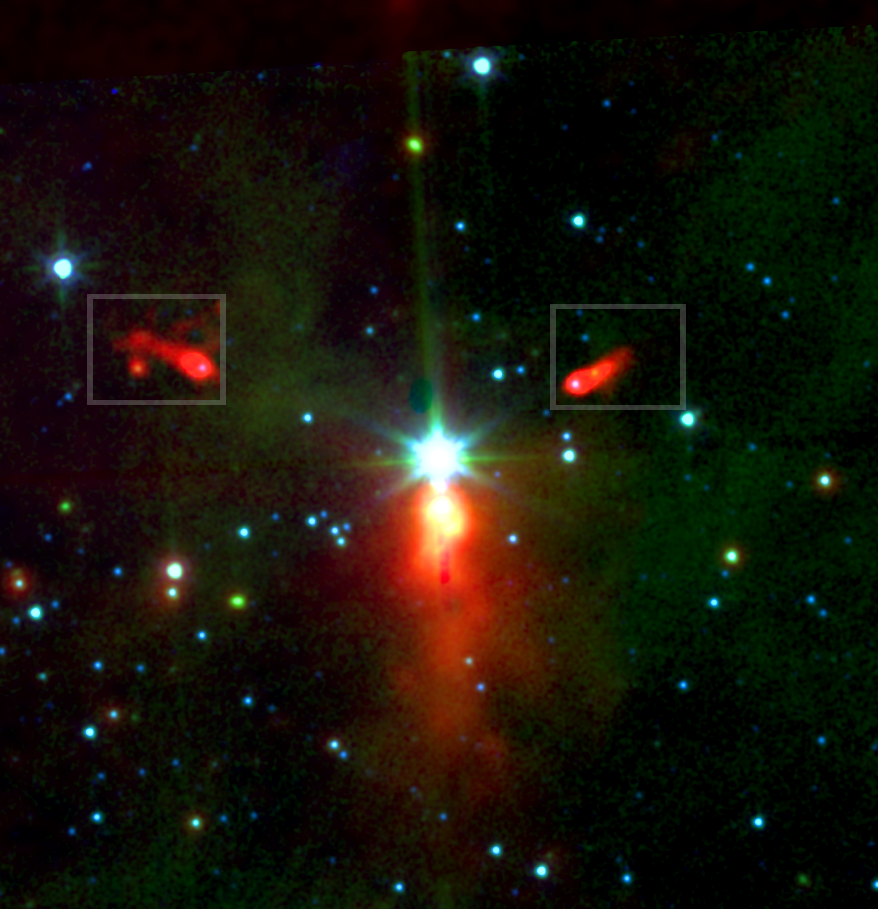
The cluster is young and contains many low-mass stars, T Tauri stars, and brown dwarfs. A notable member is LOri167, a wide binary consisting of a potential planetary-mass object and a brown dwarf. Observations with the Spitzer Space Telescope show that 25% of low-mass stars and 40% of substellar objects in the cluster have circumstellar disks, with two being actively photoevaporated by Meissa.
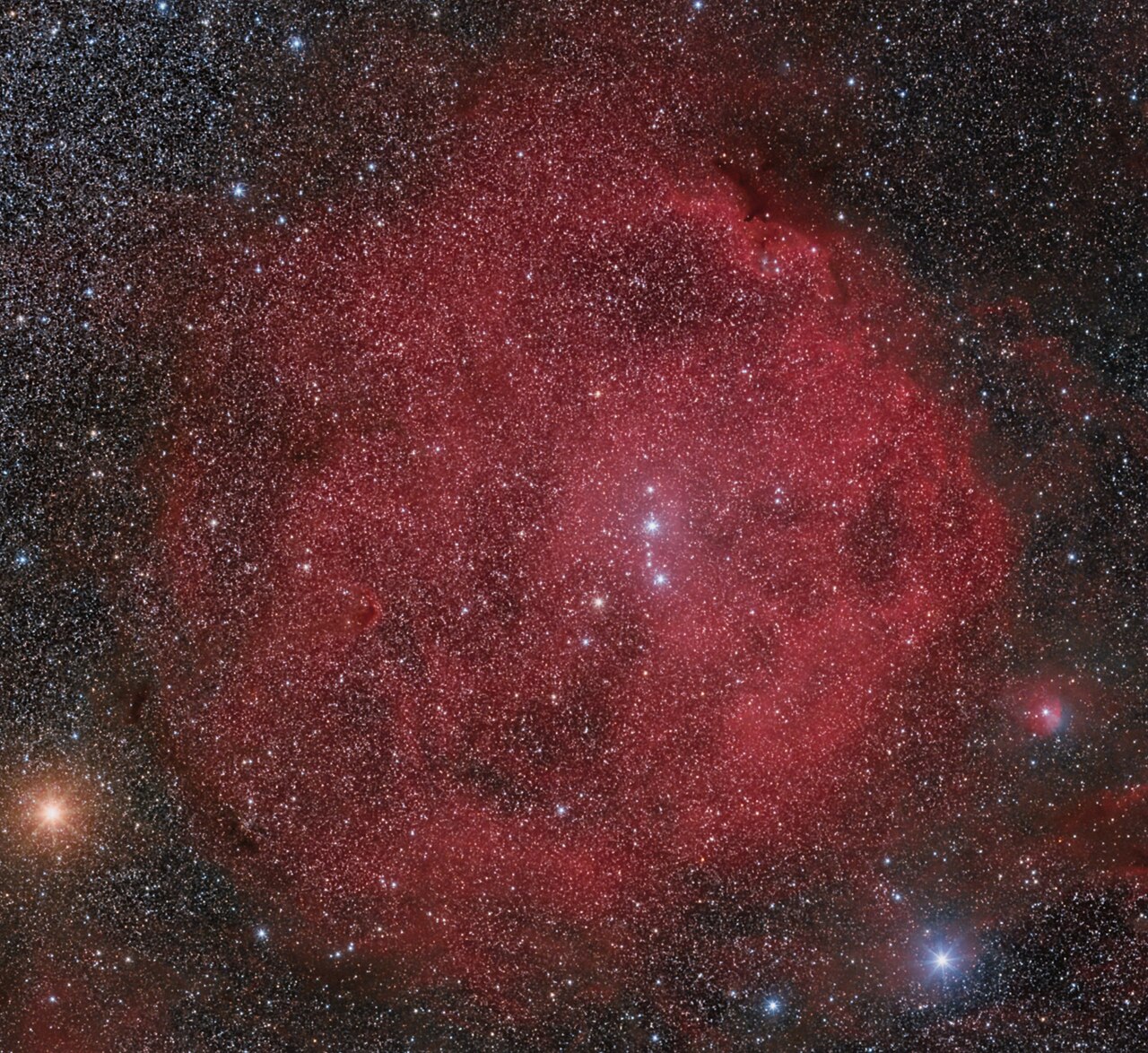
The cluster may have formed in the central region of an elongated cloud, as suggested by the distribution of pre-main-sequence star candidates concentrated in an elongated shape. Massive OB stars and low-mass stars formed in the central regions; low-mass stars closest to the massive stars likely lost their disks due to photoevaporation, while those farther away retained them. The cluster is surrounded by a large molecular ring, the Lambda Orionis ring, interpreted as the remnant of a supernova that exploded one million years ago. The supernova blast dispersed the parent core, creating the ring.
Reader's Guide
The Lambda Orionis Cluster is significant as a nearby, young open cluster that provides insights into star formation and early stellar evolution. Its age of about five million years places it in a critical phase where circumstellar disks are still present around many low-mass stars and substellar objects, offering a laboratory for studying disk evolution and planet formation. The detection of a potential planetary-mass object in the binary LOri167 highlights the cluster's role in understanding the low-mass end of the stellar and substellar population.
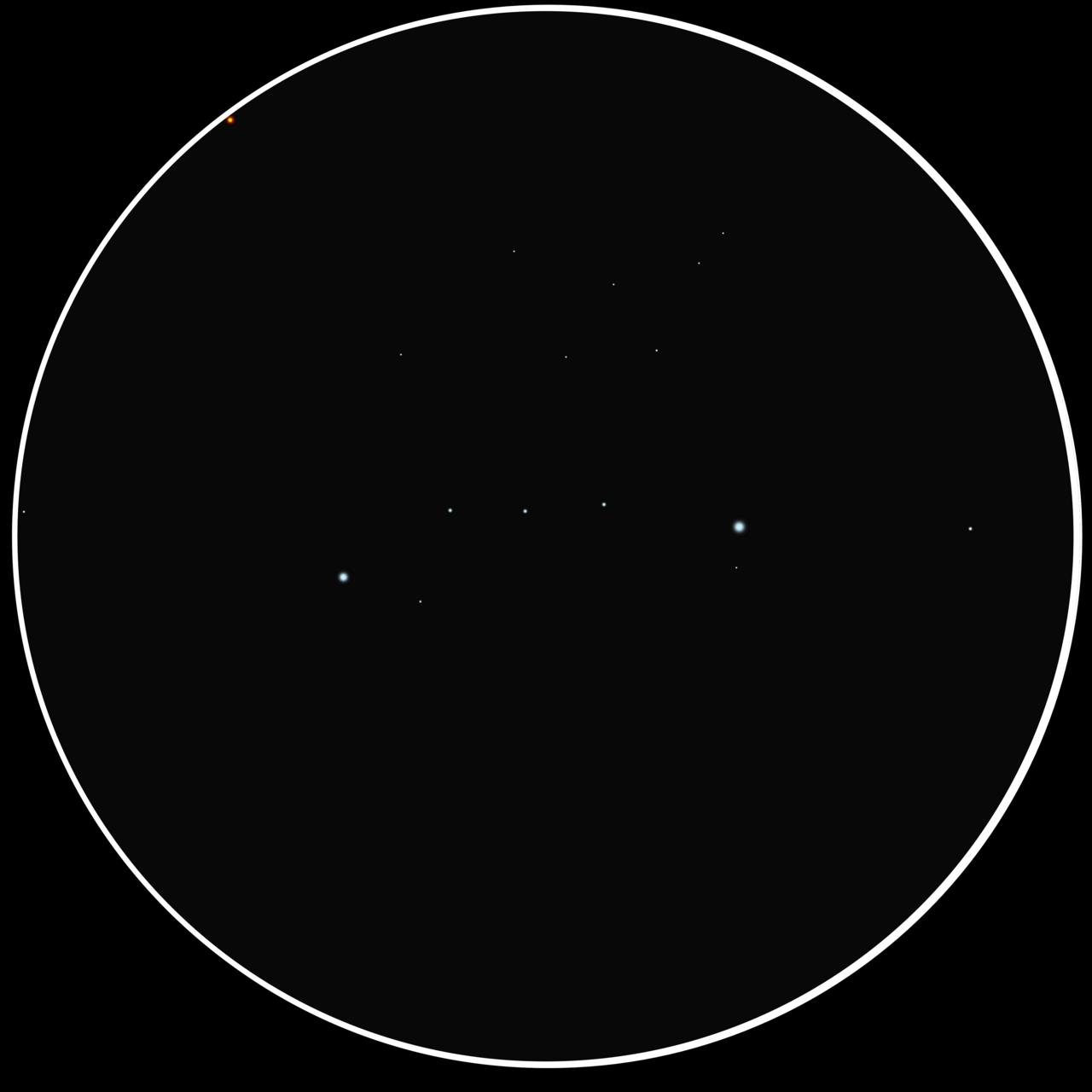
The molecular ring surrounding the cluster, likely created by a supernova one million years ago, illustrates the dynamic interplay between massive stars, supernovae, and the interstellar medium. The cluster's well-characterized orbit and its population of T Tauri stars and brown dwarfs make it a valuable target for studies of stellar kinematics and the dispersal of young stellar groups. Its visibility from both hemispheres and its location in Orion, near Betelgeuse, make it accessible to amateur and professional astronomers alike.
More in Open Clusters
Sources
Compiled from Wikipedia and the sources listed below. Text from Wikipedia is available under CC BY-SA 4.0; this entry is adapted from it.
- Wikipedia: Lambda Orionis Cluster (CC BY-SA 4.0).
Spotted an error? Know more?
Reader corrections go straight into our review queue. Suggest an edit · How this site is sourced