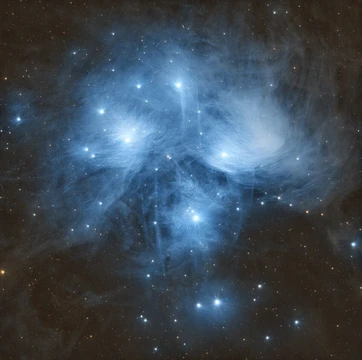
IC 4665
A bright, loose open cluster in Ophiuchus, visible to the naked eye.
Last updated

C messier · CC BY 4.0
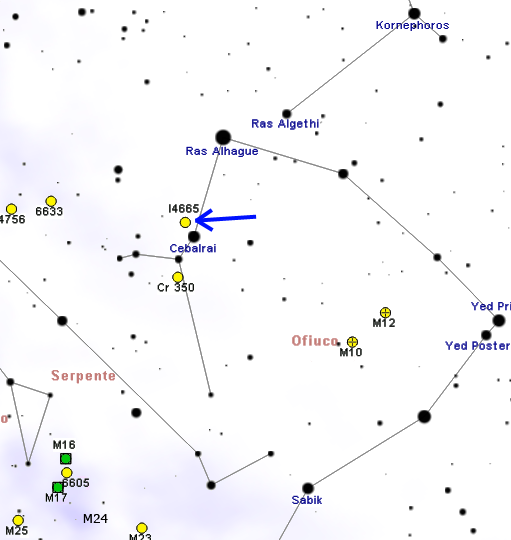
IC 4665, sometimes called the Summer Beehive Cluster or Poseidon's Trident, is an open star cluster found in Ophiuchus, roughly one degree northeast of the star Beta Ophiuchi. Swiss astronomer Philippe Loys de Chéseaux first spotted it in 1745. The cluster sits about 1,100 light-years from Earth and can be seen with the smallest telescopes or binoculars; from a dark enough location, it is even visible without any aid. It ranks among the brightest clusters that neither Charles Messier nor William Herschel ever cataloged, probably because its stars are so widely spread and loosely arranged.
Estimates of its age have varied from 20 million to 100 million years. By comparing how much lithium its stars have lost relative to other clusters, astronomers think it started forming around 55 million years ago. The upper main sequence turnoff age is given as a specific number of millions of years.
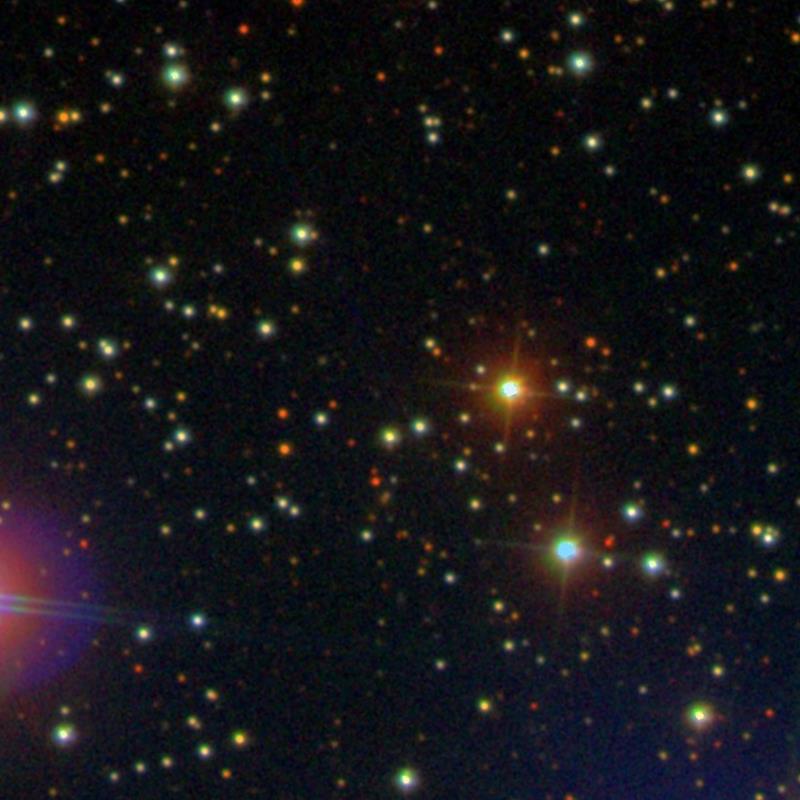
So far, 819 likely member stars have been identified. In 1977, two chemically unusual stars were confirmed as members. The cluster's total mass is estimated at about 130 times that of the Sun.
There is evidence that IC 4665 is currently colliding with an older cluster called Collinder 350, located about four degrees away. The two clusters are now 36.25 parsecs apart, though they originally formed at least 500 parsecs from each other. Whether they will eventually merge remains unclear.
Lore & Background
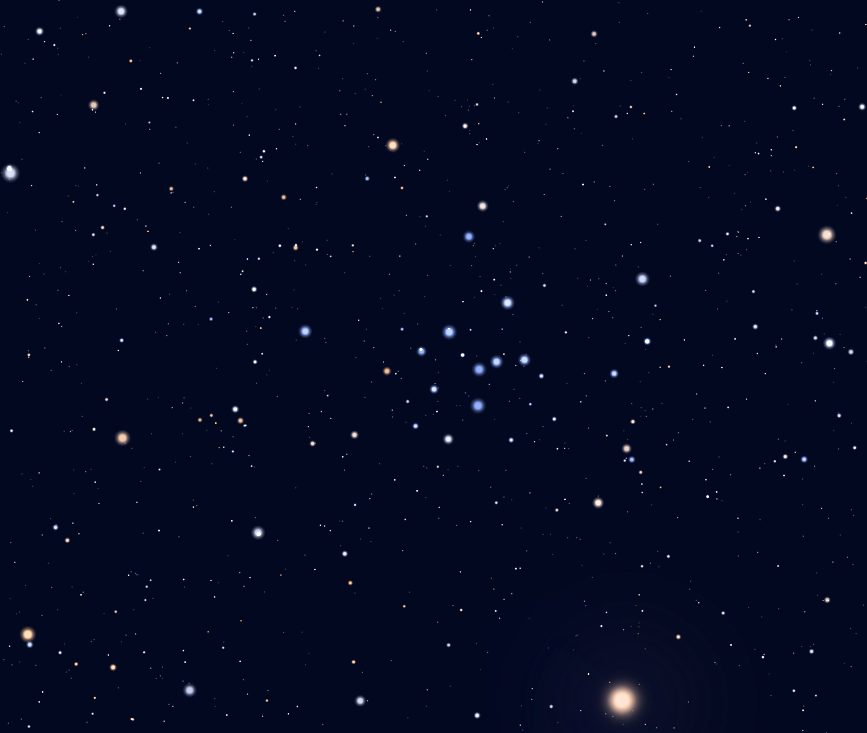
IC 4665 was discovered in 1745 by Swiss astronomer Philippe Loys de Chéseaux. It is located about 1° northeast of Beta Ophiuchi in the constellation Ophiuchus. The cluster is easily visible in binoculars and small telescopes, and from a sufficiently dark site it can be seen with the naked eye. Its loose, coarse structure likely explains why it was omitted from the catalogs of Charles Messier and William Herschel, despite being one of the brightest clusters not listed by them.
Age estimates for IC 4665 have ranged from 20 to 100 million years. A comparison of stellar lithium depletion with other clusters suggests it began forming about 55 million years ago.
The upper main sequence turnoff age is given as a value in millions of years, but the specific number is not provided. In 1977, two chemically peculiar stars were identified as members. The cluster has an estimated mass of about 130 solar masses, and 819 candidate cluster members have been identified.
There is evidence that IC 4665 is undergoing a collision with the older cluster Collinder 350, located about 4° away. The two clusters are currently separated by 36.25 parsecs, having formed at least 500 parsecs apart. It remains unclear whether they will merge as a result of this interaction.
Discovery & Remarkable Visibility
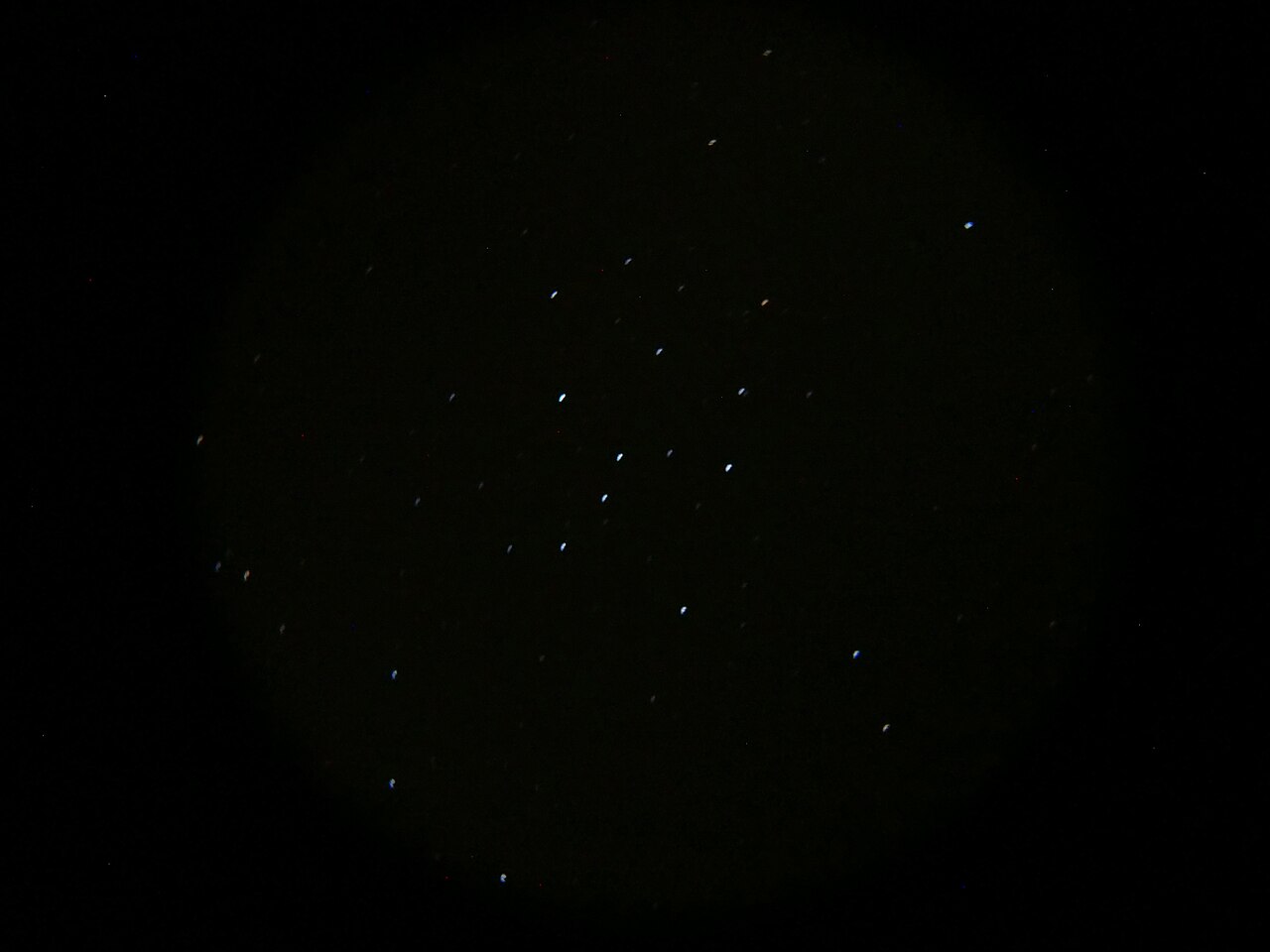
In 1745, the Swiss astronomer Philippe Loys de Chéseaux turned his attention to the region of sky near Beta Ophiuchi and identified a loose grouping of stars roughly one degree to the northeast. That observation gave the world what we now call IC 4665, a cluster that has since earned colorful nicknames such as the Summer Beehive Cluster and Poseidon's Trident. What makes this object particularly striking is just how easy it is to find. Even the most modest telescope reveals its scattered stars, and a pair of binoculars is more than sufficient to pick it out against the background of Ophiuchus.
On a truly dark night, away from city glow, a careful observer can make out the faint smudge with nothing more than the unaided eye. For a deep-sky object, that level of accessibility is unusual, and it speaks to the brightness of the individual stars that compose the group. Despite all of this visibility, the cluster somehow slipped past the great catalogers of the eighteenth and nineteenth centuries, a fact that would later spark curiosity among astronomers trying to understand why.
Stellar Population & Age
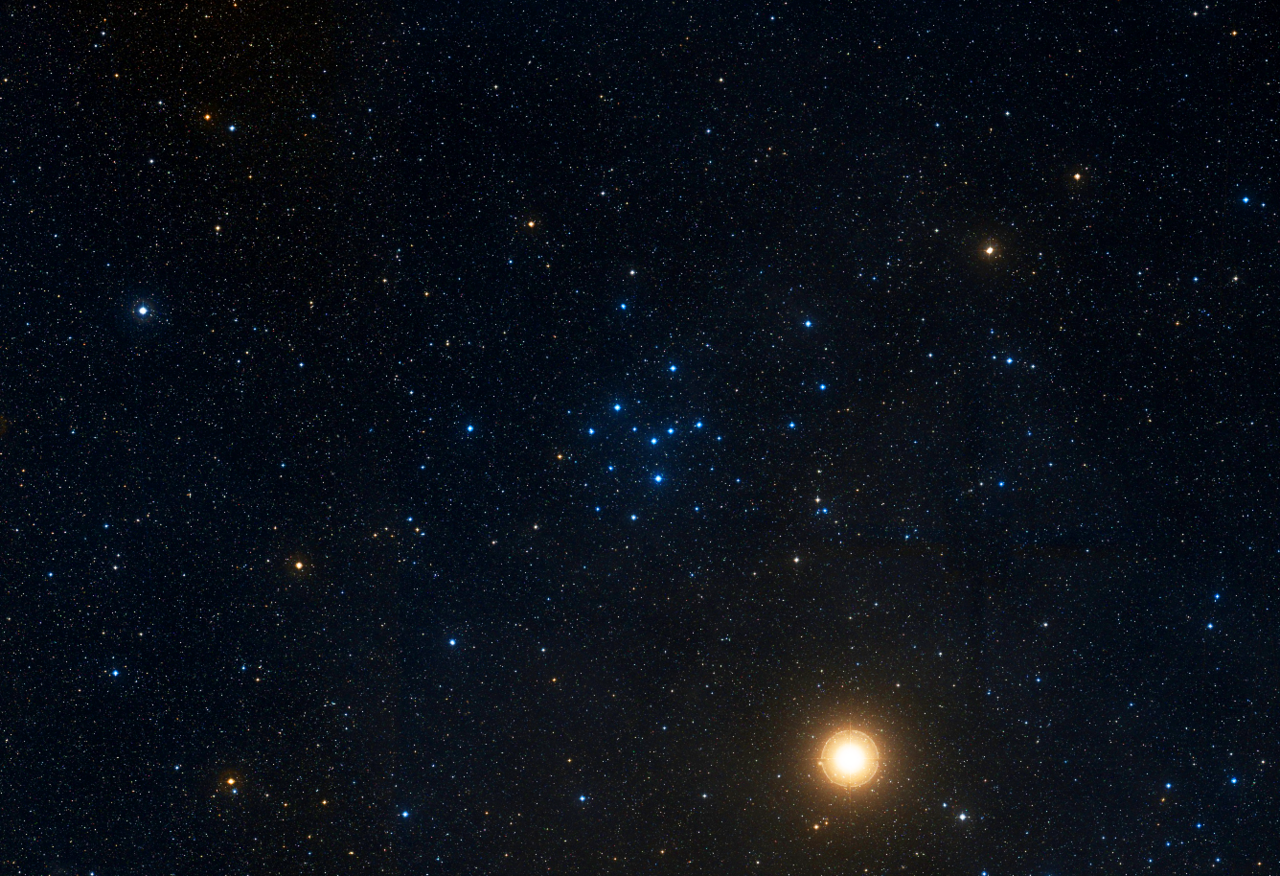
Sitting roughly 1,100 light years from our solar system, IC 4665 is a modest but well-populated assembly of stars. Surveys have identified 819 candidate members, and the cluster's total mass is estimated at around 130 times that of our Sun. Among its stellar residents, researchers in 1977 confirmed the presence of two chemically peculiar stars, objects whose atmospheric compositions deviate from what standard models predict. Determining the cluster's age has proven more challenging than one might expect.
Estimates have swung widely, from as young as 20 million years to as old as 100 million. A more constrained figure comes from comparing lithium depletion patterns in its stars with those in other well-studied clusters, pointing to a formation epoch of roughly 55 million years ago. The upper main-sequence turnoff provides yet another estimate of 42 million years, with an uncertainty of plus or minus 12 million. These somewhat overlapping but not identical figures remind us that pinning down the exact birthday of an open cluster remains an active area of stellar astrophysics.
A Collision in Progress
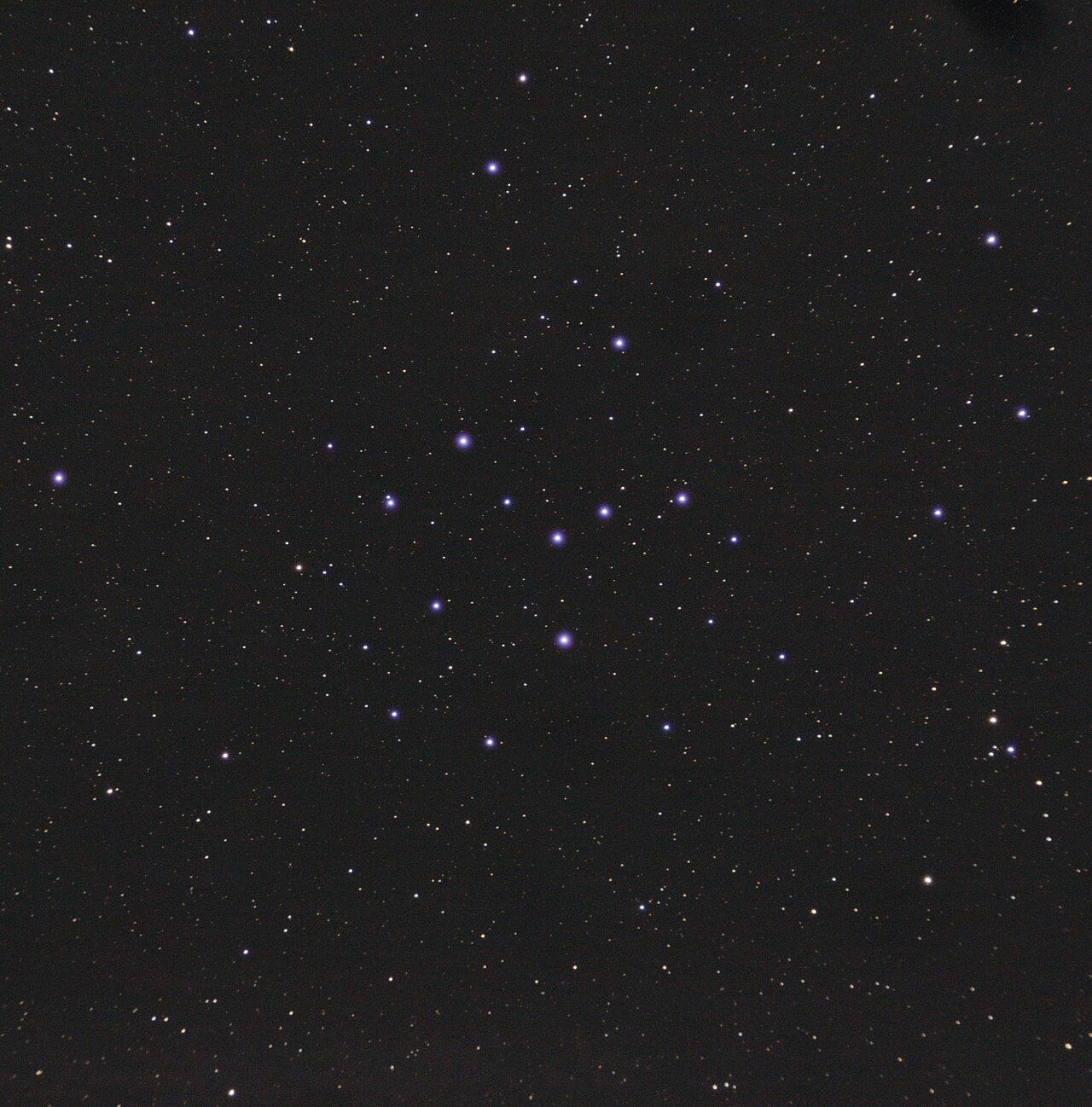
Perhaps the most dynamically interesting aspect of IC 4665 is the growing evidence that it is on a collision course with an older neighboring cluster, Collinder 350. The two groups sit about four degrees apart on the sky, and their current physical separation is approximately 118.2 light years, or 36.25 parsecs. What makes this encounter remarkable is the distance they have already covered: the two clusters are believed to have formed at least 1,600 light years, or 500 parsecs, apart, meaning they have been drifting toward one another over a vast stretch of cosmic time.
The fact that their separation has shrunk so dramatically suggests gravitational interaction is already at work, pulling the two systems into a close encounter. Whether this will culminate in a full merger, with the stars of both clusters eventually blending into a single larger population, remains an open question. Astronomers continue to track the relative motions and tidal effects to determine the ultimate fate of this slow-motion cosmic collision.
A Cataloging Curiosity
One of the most intriguing facts about IC 4665 is that, despite being one of the brightest open clusters visible from Earth, it was never included in the famous catalogs of Charles Messier or William Herschel. This omission is widely attributed to the cluster's loose, coarse structure; its stars are spread out enough that it lacks the tight, compact appearance that made many other clusters stand out to eighteenth- and nineteenth-century observers peering through small instruments.
The cluster carries multiple designations—IC 4665, Collinder 349, and Melotte 179—reflecting its inclusion in several different cataloging schemes over the centuries. Each of these entries represents a different astronomer's attempt to organize the night sky, and the fact that IC 4665 appears in all of them while being absent from the two most famous highlights how cataloging was never a perfectly systematic enterprise. It is a reminder that even the most visible objects can slip through the cracks of human record-keeping.
Reader's Guide
IC 4665 holds significance as one of the brightest open clusters not cataloged by Messier or Herschel, a distinction attributed to its loose and coarse appearance. Its visibility to the naked eye from dark sites and ease of observation with binoculars make it a popular target for amateur astronomers. The cluster's age has been debated, with estimates ranging from 20 to 100 million years, but lithium depletion studies point to an age of about 55 million years. The identification of two chemically peculiar stars in 1977 adds to its astrophysical interest.
The ongoing collision with the older cluster Collinder 350 provides a rare opportunity to study cluster interactions. The outcome of this encounter—whether the clusters will merge—remains uncertain. With 819 candidate members and a mass of about 130 solar masses, IC 4665 continues to be a subject of study for stellar evolution and dynamics.
Frequently Asked Questions
Who discovered IC 4665 and when?
Swiss astronomer Philippe Loys de Chéseaux first spotted the cluster in 1745. Despite its brightness, it was notably left out of both Messier's and Herschel's catalogs.
How far away is IC 4665 and can I see it?
The cluster lies roughly 1,100 light-years from Earth and is visible to the naked eye from a sufficiently dark sky. Small telescopes and binoculars make it even easier to pick out.
More in Open Clusters
Sources
Compiled from Wikipedia and the sources listed below. Text from Wikipedia is available under CC BY-SA 4.0; this entry is adapted from it.
- Wikipedia: IC 4665 (CC BY-SA 4.0).
Spotted an error? Know more?
Reader corrections go straight into our review queue. Suggest an edit · How this site is sourced