Santa Monica Mountains National Recreation Area
Largest urban national park, rich in archaeology and Mediterranean ecosystem.
Last updated
Where it is
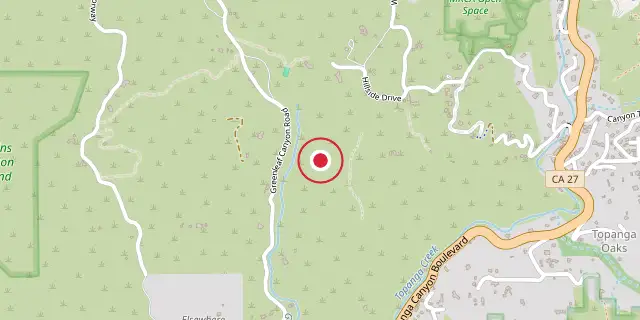
Coordinates: 34°06′14″N 118°36′11″W (34.1040, -118.6030) · Open in OpenStreetMap
Coordinates and connected clubs: the infobox of Wikipedia: Santa Monica Mountains National Recreation Area (CC BY-SA 4.0). Map: drawn by Codexery from OpenStreetMap tiles.
The Santa Monica Mountains National Recreation Area, a collection of parks and preserves in Southern California, sits within the greater Los Angeles region. About two-thirds of its land lies in northwest Los Angeles County, while the rest, including a Simi Hills section, extends into southeastern Ventura County. Managed by the National Park Service alongside various state and local agencies, it holds the title of the world’s largest urban national park. Its Mediterranean climate ecosystem and an exceptionally high concentration of archaeological sites make it globally significant.
Park history
Frederick H. Rindge attempted to create a forest reserve in the Santa Monica Mountains several times during the first decade of the twentieth century. In 1902, California's State Mining Bureau tried to establish a forest reserve, but their proposal was denied. A 1907 proposal for at least 70,000 acres as a forest reserve was submitted to the Secretary of the Interior, but state mineralogist Lewis E. Aubury opposed it; the U.S. Forest Service advised that local opposition and limited public land made creation improbable.
In 1925, limestone discoveries behind Pacific Palisades sparked a battle between home owners and land developers. Alphonzo Bell Sr. led development, while Sylvia Morrison led opposition. After criticism, Bell submitted an updated plan to pump pulverized limestone via pipeline to an offshore buoy; Will Rogers parodied it, and William Mulholland defended Bell. Morrison urged establishment of Whitestone National Park.
In 1930, Frederick Law Olmsted Jr. proposed a network of parks and advocated for public ownership of at least 10,000 acres between Topanga and Point Dume, but his report failed. In 1938, May Rindge proposed a park in exchange for $1.1 million in unpaid taxes, but the county refused. In the 1960s and 70s, possibly as early as the 1950s, several proposals for Toyon National Park went before Congress; in 1971, Representative Alphonzo Bell Jr. introduced the first bill to create Toyon National Park.
Studies
The National Park Service began tracking bobcats in 1996, mountain lions in 2002, and black bears in 2019 to study the effects of U.S. 101 on wildlife survival, movement, and genetic diversity. The Wallis Annenberg Wildlife Crossing, a vegetated overpass at Liberty Canyon, is meant to alleviate negative effects found by the study.
Cultural resources
The Santa Monica Mountains have been occupied for more than 10,000 years and contain many prehistoric and historic sites. More than 1,000 archaeological sites are in the SMMNRA, one of the highest densities in any mountain range. At least 73 sites, structures, cultural landscapes, and properties are eligible for the National Register of Historic Places.
The area includes 26 known Chumash pictograph sites and California Historical Landmarks such as the Port of Los Angeles Long Wharf, Point Dume, and Adamson House. Paramount Ranch is within the SMMNRA but was severely damaged by the Woolsey Fire in 2018. The SMMNRA encompasses homelands of the Chumash people in the west and the Tongva people in the east.
Facilities
The Anthony C. Beilenson Interagency Visitor Center opened in June 2012 and is operated by the National Park Service, California State Parks, Santa Monica Conservancy, and Mountains Recreation and Conservation Authority. The Satwiwa Native American Indian Culture Center is the only site in the SMMNRA dedicated to Indian cultures.
Park headquarters are in Thousand Oaks. Main entrances are in Malibu, Newbury Park, Agoura Hills, Calabasas, Woodland Hills, and Topanga. Facilities include Leo Carrillo, Malibu Creek, Point Mugu, Will Rogers, Zuma, and the Backbone Trail System, among many others.
More in National Park Service National Recreation Areas
Sources
Compiled from Wikipedia and the sources listed below. Text from Wikipedia is available under CC BY-SA 4.0; this entry is adapted from it.
- Wikipedia: Santa Monica Mountains National Recreation Area (CC BY-SA 4.0).
Spotted an error? Know more?
Reader corrections go straight into our review queue. Suggest an edit · How this site is sourced