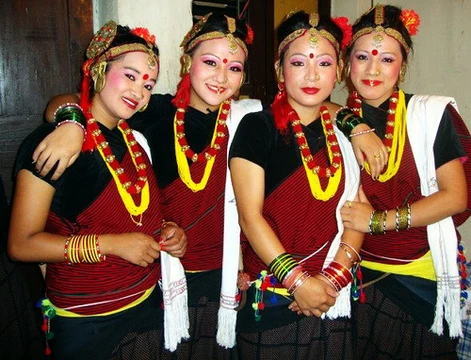
Gagauz people
Oghuz Turkic group, mostly Orthodox, native to Moldova and Ukraine.

The Gagauz are an Oghuz Turkic ethnic group whose homeland lies in southern Moldova—including Gagauzia, Taraclia District, and Basarabeasca District—and in southwestern Ukraine’s Budjak region. They are predominantly Eastern Orthodox Christians. The name “Gagauz” also serves as a collective term for Turkic peoples in the Balkans who speak the Gagauz language, which is distinct from Balkan Gagauz Turkish.
The origins of the Gagauz remain unclear. By the early 20th century, a Bulgarian historian had counted 19 different theories about their ancestry; later, Gagauz ethnologist M. N. Guboglo raised that number to 21. Some theories trace them to the Pechenegs, Cumans-Kipchaks, or a clan of Seljuk Turks, or a mix of these groups. Others argue they are not Turkic at all, but rather Turkified Bulgarians or Greeks. Their Eastern Orthodox faith suggests their ancestors may have lived in the Balkans before the Ottoman conquest of the late 14th century.
One hypothesis, based on the 15th-century Selçukname, claims that in 1261 the Turkoman dervish Sarı Saltık led a group of Turkomans into Dobruja, where the Byzantine emperor Michael VIII Palaiologos settled them to guard the empire’s northern frontier. Dobruja was also occupied by Tatars at the time. The same source places Sarı Saltık in Crimea after 1265 among Turkomans moved there by Berke, the Golden Horde’s khaghan, and after 1280 he is said to have led nomads back to Dobruja. After his death, some Turkomans returned to Anatolia and became ancestors of the Karamanlides, while others stayed and converted to Christianity. However, A.F. Bajora considered this story a Tatar myth, not a real event. Critics note that no archaeological evidence confirms a “secular and compact” Seljuk presence, and it is difficult to believe that Seljuk Muslims would have converted en masse.
The ethnonym “Gagauz” itself has a complicated history. Before the Russian Revolution, the group was often called “Turkic-speaking old Bulgars.” In the 1930s, Gagauz agricultural settlers in Uzbekistan referred to themselves as “Eski Bulgarlar” (Old Bulgars). According to linguist Astrid Menz, older ethnographic works from the 1890s—covering Gagauz in Bulgaria—report that only outsiders used the term “Gagauz,” sometimes as an insult. The Gagauz themselves did not use it and considered it offensive. Instead, they often registered as Greek (due to the Ottoman millet system) or as Bulgarian (under emerging nationalism). Informants from Moldova told one researcher that local Gagauz called themselves “Hristiyan-Bulgar” (Christian Bulgar), with “Gagauz” used only as a nickname. The etymology of the word remains uncertain, and because the group is not mentioned under that name in any historical sources before their migration to Bessarabia, older versions of the ethnonym do not exist.
Today, the Gagauz are one of Moldova’s largest ethnic minorities. According to the 2014 census (excluding Transnistria), they number 126,010 people, or 4.57% of the population, and their share is gradually increasing. They are concentrated in the south, especially in the Autonomous Territorial Unit of Gagauzia, where they make up 83.8% of the population. In Taraclia District—mostly Bulgarian—they account for 9.0%; in Basarabeasca District, 7.4% (though declining); and in Cahul District, 2.7%. Elsewhere in Moldova, their share is below 1%. Internal migration is low; most Gagauz who leave Gagauzia move to Russia. Outside Moldova, smaller communities live in Ukraine’s Odesa and Zaporizhzhia regions, as well as in Kazakhstan, Kyrgyzstan, Uzbekistan, Bulgaria, Greece, Romania, Brazil, Turkmenistan, Belarus, Estonia, Latvia, Georgia, Turkey, and Russia’s Kabardino-Balkaria region.
The Gagauz follow a primarily rural lifestyle. Because they are concentrated near the Moldova-Ukraine border, they tend to marry within their own group, maintaining high ethnic stability. In the early 20th century, the ratio of Gagauz to Bulgarians in Comrat was about 2:1; by the late 20th century, due to assimilation and higher Gagauz fertility, the ratio shifted to 1:14. Similar ratios persist in some villages today. Most contemporary Gagauz speak at least two languages: Gagauz and Russian in daily life, and many also speak Romanian.
- primary_religion
- Eastern Orthodox Christianity
- language
- Gagauz (Oghuz Turkic)
- majority_in
- Autonomous Territorial Unit of Gagauzia (83.8%)
- also_found_in
- Ukraine, Kazakhstan, Kyrgyzstan, Uzbekistan, Bulgaria, Greece, Romania, Brazil, Turkmenistan, Belarus, Estonia, Latvia, Georgia, Turkey, Russia (Kabardino-Balkaria)
Quick Facts
- Group
- Gagauz people / Gagauzlar
- Population
- 150,000
- Region1
- Moldova (excl. Transnistria)
- Pop1
- 98,200 (2024 census)
- Region2
- Ukraine
- Pop2
- 25,000
- Region3
- Russia
- Pop3
- 9,272
- Region4
- Turkey
- Pop4
- 5,400
- Region5
- Transnistria
- Pop5
- 4,999 (2015 census)
Facts from the source article.
Lore & Background
The Gagauz are an Oghuz Turkic ethnic group whose origins are deeply disputed. In the early 20th century, a Bulgarian historian counted 19 different theories about their origin; a few decades later, ethnologist M. N. Guboglo increased the number to 21. Some theories present them as descendants of Pechenegs, Cumans-Kipchaks, or Seljuk Turks; others claim they are Turkified Bulgarians or Greeks. Their Eastern Orthodox Christian faith suggests their ancestors already lived in the Balkans before the Ottoman conquest in the late 14th century. Before the Russian Revolution, they were commonly referred to as 'Turkic-speaking old Bulgars,' and Gagauz agricultural settlers in Uzbekistan called themselves 'Eski Bulgarlar' (Old Bulgars) in the 1930s. Older ethnographic works note that the Gagauz themselves did not use the ethnonym 'Gagauz' and considered it offensive; they instead called themselves 'Hristiyan-Bulgar' (Christian Bulgar) or 'Hasli Bulgar' (True Bulgarians).
Reader's Guide
The Gagauz people are significant as one of the largest ethnic minorities in Moldova, concentrated in the Autonomous Territorial Unit of Gagauzia, where they form 83.8% of the population. Their presence in southern Bessarabia stabilized in the early 19th century during Russian colonization, when they moved from the eastern Balkans. They follow a primarily rural lifestyle and maintain a high degree of ethnic stability through endogamous marriage. Their legacy includes a distinct Oghuz Turkic language (Gagauz) and Eastern Orthodox Christian faith, which sets them apart from most other Turkic groups. The obscurity of their origins—with 21 competing theories—highlights the complexity of ethnogenesis in the Balkans and steppe regions. Their historical self-identification as 'Old Bulgars' and the offensive nature of the term 'Gagauz' in the past underscore the fluidity of ethnic labels. Today, most Gagauz speak at least two languages (Gagauz and Russian), and many also speak Romanian. Their internal migration is low, but those who leave Gagauzia primarily migrate to Russia.
Did You Know?
- The Gagauz are mostly Eastern Orthodox Christians, which may indicate their ancestors lived in the Balkans before the Ottoman conquest in the late 14th century.
- Before the Russian Revolution, Gagauz were commonly referred to as 'Turkic-speaking old Bulgars.'
- In the early 20th century, a Bulgarian historian counted 19 different theories about the origin of the Gagauz; later, ethnologist M. N. Guboglo increased the number to 21.
- Older ethnographic works report that the Gagauz themselves considered the term 'Gagauz' offensive and instead called themselves 'Hristiyan-Bulgar' (Christian Bulgar).
More in National Cultures And Ethnic Groups 1-24
Spotted an error? Know more?
This is a living reference — every entry is fact-audited, and reader corrections feed straight into our audit queue. Suggest an edit · See this site's audit record