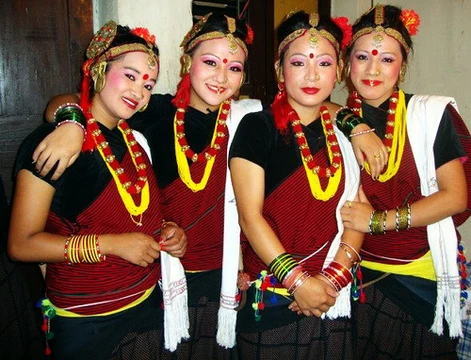
Culture of India
One of the world's oldest continuous cultural traditions, spanning diverse religions and languages.

Sumitramehta · CC BY-SA 4.0
Indian culture encompasses the social norms, technologies, and traditions that originated in or are tied to India’s ethnolinguistically diverse population, covering the Indian subcontinent before 1947 and the Republic of India afterward. The term also extends to countries and cultures beyond India—especially in South and Southeast Asia—whose histories are closely linked through immigration, colonization, or influence. Within India itself, languages, religions, dance, music, architecture, food, and customs vary significantly from one region to another. Often described as a blend of multiple cultures—including those of Hindus, Buddhists, Jains, Muslims, Sikhs, and others—Indian culture has been shaped by a history spanning several millennia, starting with the Indus Valley Civilization and the Vedic period. It is one of the world’s oldest continuous cultural traditions. The British Raj left its mark as well, notably through the widespread introduction of English, which led to a local dialect and influenced other Indian languages. Elements of Indian culture—such as its religions, mathematics, philosophy, cuisine, languages, dance, music, and films—have had a deep impact across the Indosphere, Greater India, and the wider world.
Religions that originated in India—Hinduism, Jainism, Buddhism, and Sikhism—are all grounded in the concepts of dharma and karma. Nonviolence, or ahimsa, is a key principle in these native faiths; its most famous advocate was Mahatma Gandhi, who used civil disobedience during India’s independence movement, later inspiring Martin Luther King Jr. and James Bevel in the American civil rights movement. Foreign-origin religions, including Judaism, Christianity, Islam, Zoroastrianism, and the Baháʼí Faith, are also present in India. The country has 28 states and 8 union territories, each with distinct cultures, and is the world’s most populous nation. Throughout its history, Indian culture has been heavily influenced by Dharmic religions. Ancient India and early Hinduism also absorbed influences from East and Southeast Asian cultures, particularly through Austroasiatic groups like the early Munda and Mon Khmer, as well as Tibetic and other Tibeto-Burmese peoples. Scholars such as Professor Przyluski, Jules Bloch, and Lévi have noted significant cultural, linguistic, and political Mon-Khmer (Austroasiatic) influence on early India, visible in Austroasiatic loanwords in Indo-Aryan languages and in rice cultivation, introduced by East/Southeast Asian rice-agriculturalists traveling from Southeast Asia through Northeast India. These influences helped shape much of Indian philosophy, literature, architecture, art, and music. Greater India refers to the historical spread of Indian culture beyond the subcontinent, especially the diffusion of Hinduism, Buddhism, architecture, administration, and writing systems to other parts of Asia via the Silk Road and maritime trade routes in the early centuries of the Common Era. To the west, Greater India overlaps with Greater Persia in the Hindu Kush and Pamir Mountains. Over centuries, a significant fusion of cultures has occurred among Buddhists, Hindus, Muslims, Jains, Sikhs, and various tribal populations in India.
India is the birthplace of Hinduism, Buddhism, Jainism, and Sikhism, collectively known as Indian religions, which are a major world religious tradition alongside Abrahamic faiths. Today, Hinduism and Buddhism are the world’s third- and fourth-largest religions, with over 2 billion followers combined—possibly as many as 2.5 or 2.6 billion. Followers of Indian religions—Hindus, Sikhs, Jains, and Buddhists—make up about 80–82% of India’s population. India is one of the most religiously and ethnically diverse nations, with deeply religious societies and cultures; religion plays a central and defining role in many people’s lives. Although a secular Hindu-majority country, India has a large Muslim population. Hindus form the predominant population in all 28 states and 8 union territories except Jammu and Kashmir, Punjab, Meghalaya, Nagaland, Mizoram, and Lakshadweep. Muslims are present throughout India, with large populations in Uttar Pradesh, Bihar, Maharashtra, Kerala, Telangana, Andhra Pradesh, West Bengal, and Assam; only Jammu and Kashmir and Lakshadweep have Muslim majorities. Christians are another significant minority. Due to this religious diversity, India has experienced a history of turmoil and violence between groups, including clashes among Hindus, Christians, Muslims, and Sikhs. Several national-religious political parties have formed, and despite government policies, minority religious groups often face prejudice from more dominant groups seeking to maintain control over resources in particular regions. According to the 2011 census, 79.8% of India’s population practices Hinduism, followed by Islam (14.2%), Christianity (2.3%), Sikhism (1.7%), Buddhism (0.7%), and Jainism (0.4%). Many tribal religions, such as Sarnaism, also exist, though they have been affected by the major religions.
- field
- Cultural heritage
- nationality
- Indian
- known_for
- Oldest continuous cultural traditions; birthplace of Hinduism, Buddhism, Jainism
- major_religions
- Hinduism (79.8%), Islam (14.2%), Christianity (2.3%), Sikhism (1.7%), Buddhism (
- states_and_union_territories
- 28 states, 8 union territories
- population_rank
- Most populated country in the world
Verified Timeline
Lore & Background
Indian culture, often labelled as a combination of several cultures like Indian Hindus, Buddhists, Jains, Muslims, Sikhs and others, has been influenced by a history that is several millennia old, beginning with the Indus Valley Civilisation, Vedic period and other early cultural eras. The British Raj further influenced Indian culture, including through the widespread introduction of the English language, which resulted in a local English dialect and influences on other Indian languages. Indian-origin religions—Hinduism, Jainism, Buddhism, and Sikhism—are all based on the concepts of dharma and karma. Ahimsa, the philosophy of nonviolence, is an important aspect of native Indian faiths whose most well-known proponent was Shri Mahatma Gandhi, who used civil disobedience to unite India during the Indian independence movement – this philosophy further inspired Martin Luther King Jr. and James Bevel during the American civil rights movement. Foreign-origin religions, including Abrahamic religions such as Judaism, Christianity and Islam, are also present in India, as well as Zoroastrianism and Baháʼí Faith.
Reader's Guide
Indian culture spans across the Indian subcontinent and has been influenced and shaped by a history that is several thousand years old. Throughout the history of India, Indian culture has been heavily influenced by Dharmic religions. Influence from East/Southeast Asian cultures onto ancient India and early Hinduism, specifically via Austroasiatic groups such as early Munda and Mon Khmer, but also Tibetic and other Tibeto-Burmese groups, had noteworthy impact on local Indian peoples and cultures. Several scholars, such as Professor Przyluski, Jules Bloch, and Lévi, among others, concluded that there is a significant cultural, linguistic, and political Mon-Khmer (Austroasiatic) influence on early India, which can also be observed by Austroasiatic loanwords within Indo-Aryan languages and rice cultivation, which was introduced by East/Southeast Asian rice-agriculturalists using a route from Southeast Asia through Northeast India into the Indian subcontinent. Greater India was the historical extent of Indian culture beyond the Indian subcontinent, particularly concerning the spread of Hinduism, Buddhism, architecture, administration and writing system from India to other parts of Asia through the Silk Road by travelers and maritime traders during the early centuries of the Common Era. Over the centuries, there has been a significant fusion of cultures between Buddhists, Hindus, Muslims, Jains, Sikhs and various tribal populations in India. India is one of the most religiously and ethnically diverse nations in the world, with some of the most deeply religious societies and cultures. Religion plays a central and definitive role in the lives of many of its people. For generations, India has had a prevailing tradition of the joint family system, where extended members of a family live together, usually with the oldest male member as head making important decisions.
Did You Know?
- According to the 2011 census, 79.8% of Indians practice Hinduism, while Islam is the second-largest religion at 14.2%.
- The Cārvāka school, one of the earliest materialistic and atheistic movements, originated in India around the 6th century BCE.
- Mahatma Gandhi's philosophy of nonviolence (ahimsa) during the Indian independence movement later inspired Martin Luther King Jr. and James Bevel in the American civil rights movement.
- Scholars like Przyluski, Bloch, and Lévi found significant Mon-Khmer (Austroasiatic) influence on early India, including loanwords in Indo-Aryan languages and the introduction of rice cultivation.
- India has 28 states and 8 union territories, and is the most populated country in the world.
Religious Roots and the Dharmic Heritage
India is the birthplace of Hinduism, Buddhism, Jainism, Sikhism, and other religions. They are collectively known as Indian religions. Indian religions are a major form of world religions along with Abrahamic ones. Today, Hinduism and Buddhism are the world's third and fourth-largest religions respectively, with over 2 billion followers altogether, and possibly as many as 2.5 or 2.6 billion followers. Followers of Indian religions – Hindus, Sikhs, Jains and Buddhists make up around 80–82% population of India. Indian-origin religions Hinduism, Jainism, Buddhism, and Sikhism, are all based on the concepts of dharma and karma. Ahimsa, the philosophy of nonviolence, is an important aspect of native Indian faiths whose most well-known proponent was Shri Mahatma Gandhi, who used civil disobedience to unite India during the Indian independence movement – this philosophy further inspired Martin Luther King Jr. and James Bevel during the American civil rights movement. According to the 2011 census, 79.8% of the population of India practice Hinduism. Islam (14.2%), Christianity (2.3%), Sikhism (1.7%), Buddhism (0.7%) and Jainism (0.4%) are the other major religions followed by the people of India.
Millennia of Cultural Layering
Indian culture, often labeled as an amalgamation of several various cultures, spans across the Indian subcontinent and has been influenced and shaped by a history that is several thousand years old, beginning with the Indus Valley Civilisation, Vedic period and other early cultural eras. Throughout the history of India, Indian culture has been heavily influenced by Dharmic religions. Influence from East/Southeast Asian cultures onto ancient India and early Hinduism, specifically via Austroasiatic groups, such as early Munda and Mon Khmer, but also Tibetic and other Tibeto-Burmese groups, had noteworthy impact on local Indian peoples and cultures. Several scholars, such as Professor Przyluski, Jules Bloch, and Lévi, among others, concluded that there is a significant cultural, linguistic, and political Mon-Khmer (Austroasiatic) influence on early India, which can also be observed by Austroasiatic loanwords within Indo-Aryan languages and rice cultivation, which was introduced by East/Southeast Asian rice-agriculturalists using a route from Southeast Asia through Northeast India into the Indian subcontinent. They have been credited with shaping much of Indian philosophy, literature, architecture, art and music. Over the centuries, there has been a significant fusion of cultures between Buddhists, Hindus, Muslims, Jains, Sikhs and various tribal populations in India. The British Raj further influenced Indian culture, including through the widespread introduction of the English language, which resulted in a local English dialect and influences on other Indian languages.
The Indosphere and Global Cultural Reach
Many elements of Indian culture, such as Indian religions, mathematics, philosophy, cuisine, languages, dance, music, and movies have had a profound impact across the Indosphere, Greater India, and the world. Greater India was the historical extent of Indian culture beyond the Indian subcontinent. This particularly concerns the spread of Hinduism, Buddhism, architecture, administration and writing system from India to other parts of Asia through the Silk Road by the travelers and maritime traders during the early centuries of the Common Era. To the west, Greater India overlaps with Greater Persia in the Hindu Kush and Pamir Mountains. The term Indian culture also applies beyond India to countries and cultures whose histories are strongly connected to India by immigration, colonisation, or influence, particularly in South Asia and Southeast Asia.
Diversity, Tension, and the Secular Mosaic
India has 28 states and 8 union territories with different cultures and is the most populated country in the world. India is one of the most religiously and ethnically diverse nations in the world, with some of the most deeply religious societies and cultures. Religion plays a central and definitive role in the lives of many of its people. Although India is a secular Hindu-majority country, it has a large Muslim population. Except for Jammu and Kashmir, Punjab, Meghalaya, Nagaland, Mizoram and Lakshadweep, Hindus form the predominant population in all 28 states and 8 union territories. Muslims are present throughout India, with large populations in Uttar Pradesh, Bihar, Maharashtra, Kerala, Telangana, Andhra Pradesh, West Bengal and Assam; while only Jammu and Kashmir and Lakshadweep have majority Muslim populations. Christians are other significant minorities of India. Because of the diversity of religious groups in India, there has been a history of turmoil and violence between them. India has been a theatre for violent religious clashes between members of different religions such as Hindus, Christians, Muslims, and Sikhs. Several groups have founded various national-religious political parties, and in spite of government policies minority religious groups are being subjected to prejudice from more dominant groups in order to maintain and control resources in particular regions of India. Atheism and agnosticism have a long history in India and flourished within Śramaṇa movement. The Cārvāka school originated in India around the 6th century BCE. It is one of the earliest form of materialistic and atheistic movement in ancient India. According to the 2012 WIN-Gallup Global Index of Religion and Atheism report, 81% of Indians were religious, 13% were not religious, 3% were convinced atheists, and 3% were unsure or did not respond.
Gallery
More in National Cultures And Ethnic Groups 1-24
Spotted an error? Know more?
This is a living reference — every entry is fact-audited, and reader corrections feed straight into our audit queue. Suggest an edit · See this site's audit record