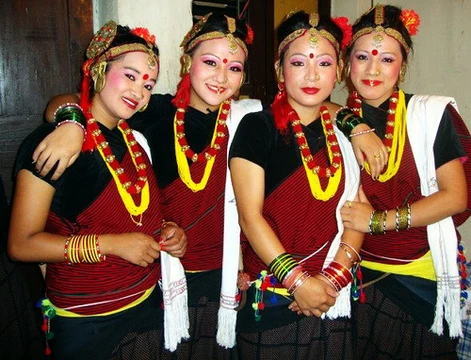
Culture of Latin America
A diverse blend of Iberian, Indigenous, African, and Asian influences.

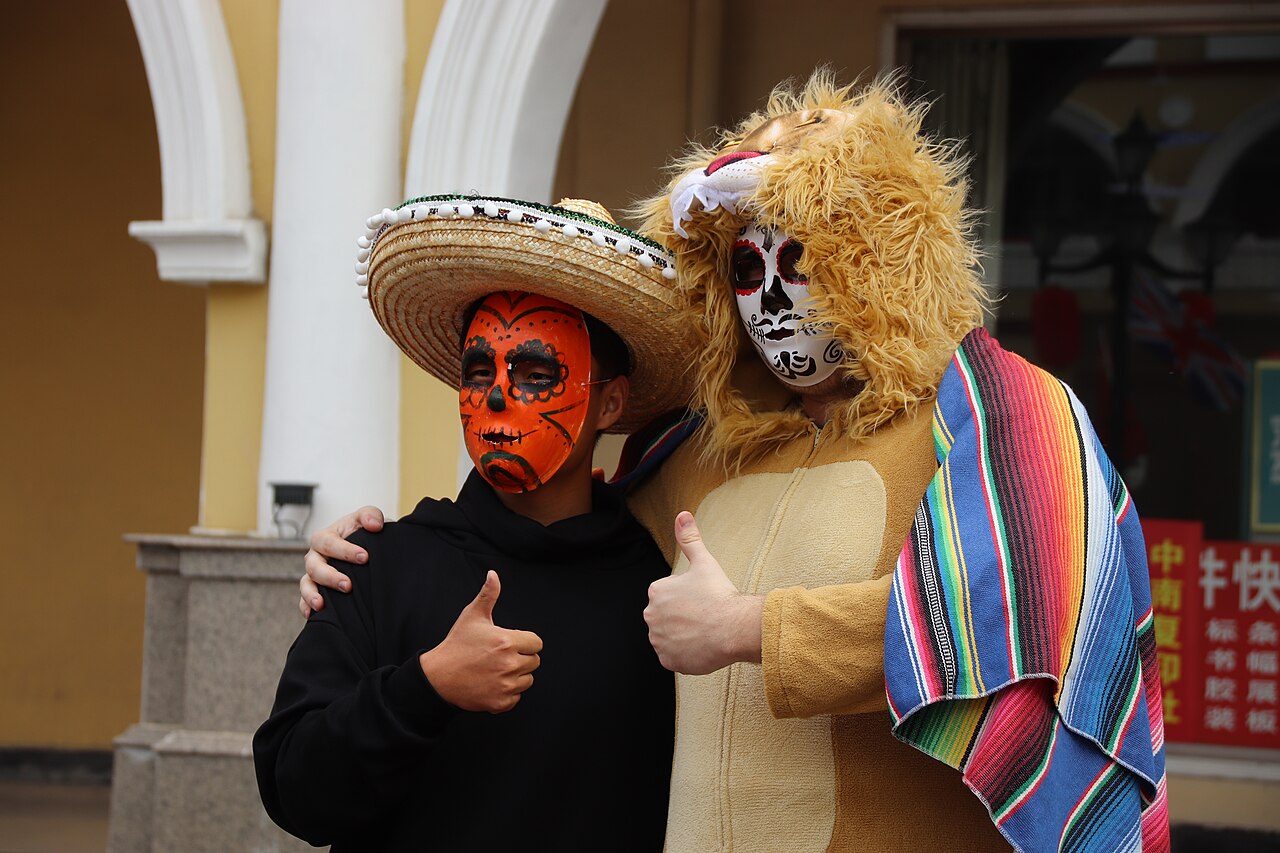
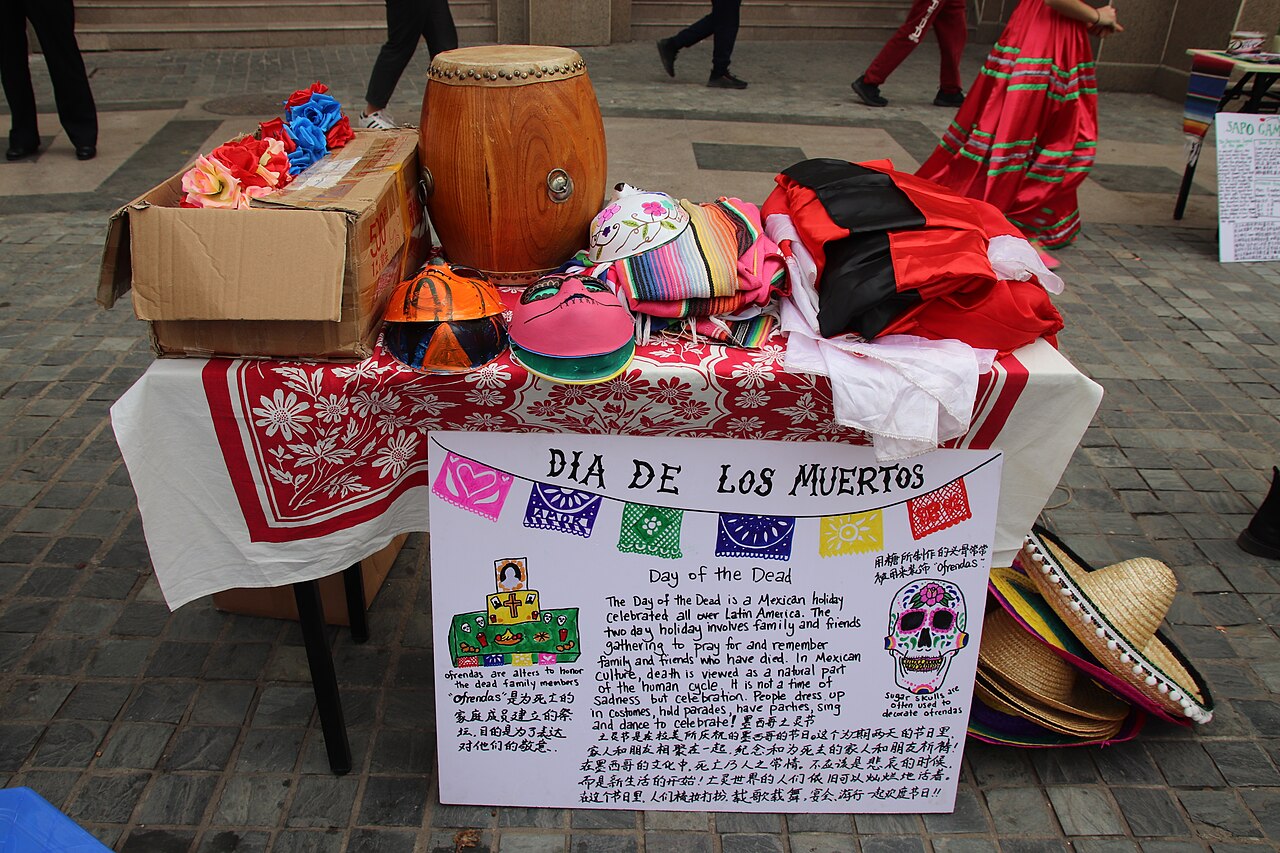
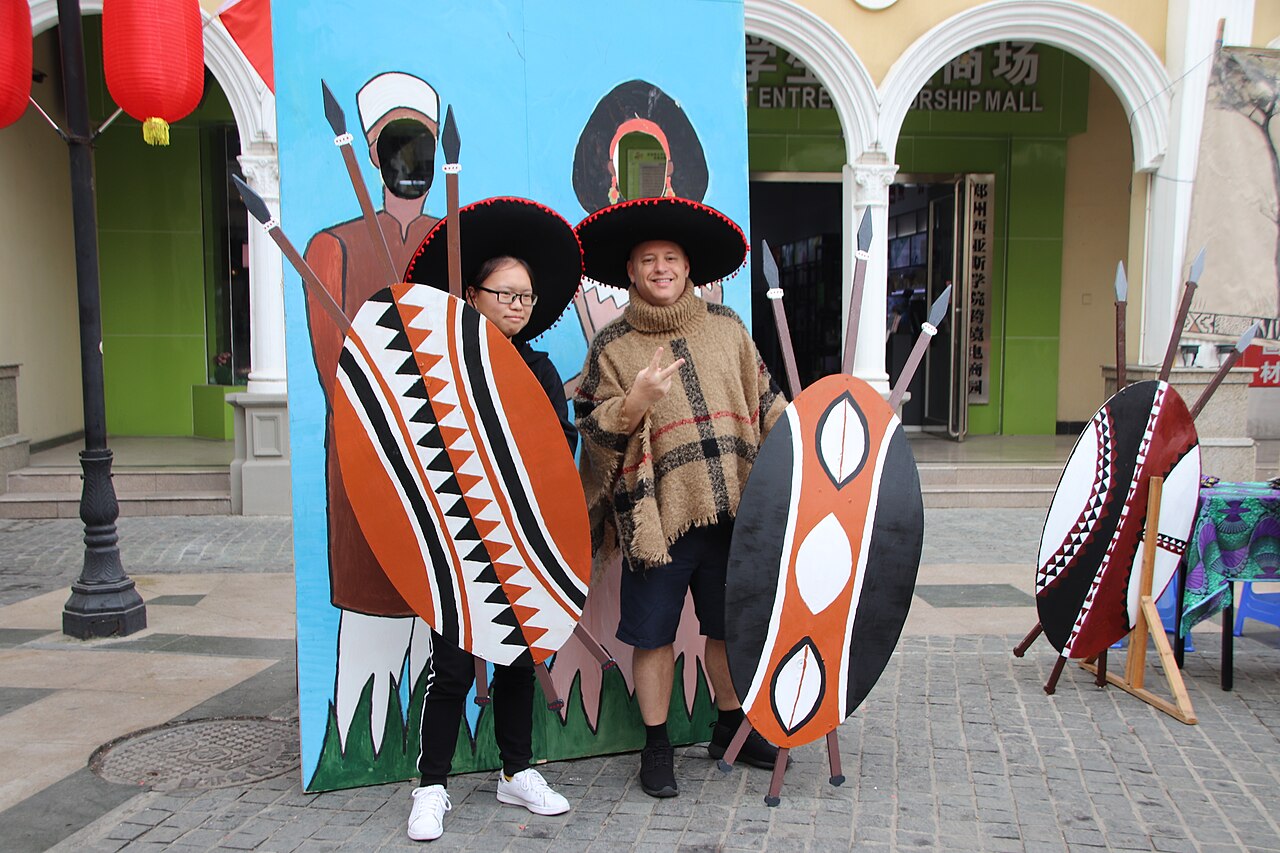
Gary Todd from Xinzheng, China · Public domain
The culture of Latin America is a rich tapestry woven from multiple influences, primarily Iberian traditions from Spain and Portugal, which form the core of its Western-derived heritage. These foundations have been significantly shaped by pre-Columbian civilizations, whose legacy remains particularly strong in countries like Mexico, Guatemala, Peru, and Bolivia, especially among Indigenous groups such as the Quechua, Maya, and Aymara. Subsequent waves of European immigration during the 19th and 20th centuries—from Italy, Germany, France, and Eastern Europe—further transformed the region, notably impacting Argentina, Uruguay, Brazil, and Chile. Asian influences arrived through Chinese, Japanese, Korean, Indian, Lebanese, and other groups, often as immigrants or indentured laborers, leaving their mark on food, art, and trade in nations like Brazil, Peru, and Ecuador. African culture, brought by the trans-Atlantic slave trade, deeply influenced dance, music, cuisine, and syncretic religions, particularly in Cuba, Brazil, and coastal Colombia. This ethnic diversity is reflected in the population, where mestizos (of mixed European and Indigenous ancestry) form the majority. Many countries also have significant populations of mulattoes (mixed European and African), zambos (mixed Indigenous and African), and pardos (tri-racial ancestry). The Southern Cone, including Argentina and Uruguay, has a majority of European descent, while the Caribbean nations often have majority Black populations. This complex heritage infuses all aspects of life, from religion and music to politics, and is collectively referred to as Latino in American English. Linguistically, the region is dominated by Spanish and Portuguese, with French also present in some Caribbean and North American territories.
- Region
- Latin America (Mexico, Central America, South America, and parts of the Caribbean and North America)
- Primary languages
- Spanish, Portuguese, and various Amerindian languages (e.g., Nahuatl, Guaraní, Quechua)
- Primary religion
- Christianity (mostly Roman Catholicism), with Protestant, Afro-Latin, and other traditions
- Major ethnic groups
- Mestizos, Europeans (especially in the Southern Cone), Africans, Amerindians, and various Asian groups
- Key influences
- Iberian (Spanish and Portuguese), Pre-Columbian, African, and 19th–20th century European and Asian immigration
Lore & Background
The richness of Latin American culture stems from multiple influences. Spanish and Portuguese colonization and settlement provided the core Iberian elements, while Pre-Columbian cultures remain central in countries such as Mexico, Guatemala, Ecuador, Peru, Bolivia, and Paraguay, particularly among Indigenous communities like the Quechua, Maya, and Aymara. Later, 19th- and 20th-century European immigration from Spain, Portugal, Italy, Germany, France, and Eastern Europe transformed the region, especially in Argentina, Uruguay, Brazil, and other nations. Asian groups—including Chinese, Japanese, Korean, Indian, Lebanese, and Armenian immigrants—also contributed to food, art, and cultural trade, particularly in Brazil, Colombia, Cuba, Panama, Nicaragua, Ecuador, and Peru. African culture, brought through the trans-Atlantic slave trade, strongly influenced dance, music, cuisine, and syncretic religions in Cuba, Brazil, Dominican Republic, Venezuela, and other areas.
Reader's Guide
Latin American culture is significant for its synthesis of diverse heritages, creating unique traditions in literature, music, dance, religion, and cuisine. The population is highly diverse, with mestizos (mixed European and Amerindian ancestry) forming the majority, while many countries have substantial populations of European descent, African descent, and tri-racial pardos. The Southern Cone (Argentina, Uruguay, southern Brazil) has a majority of largely European descent. Language reflects this diversity: Spanish and Portuguese dominate, but Amerindian languages like Guaraní (co-official in Paraguay) and Quechua (millions of speakers) persist. Religion is predominantly Roman Catholic, with growing Protestant and Evangelical movements, as well as Afro-Latin traditions like Santería and Macumba. British influence after independence introduced organized sports, especially football (soccer), which became central to Latin American leisure, while baseball gained popularity in parts of the Caribbean and Central America. This cultural heritage is often referred to as 'Latino' in American English.
Did You Know?
- Mestizos, of mixed European and Amerindian ancestry, make up the majority of Latin America's population.
- Guaraní is, along with Spanish, an official language of Paraguay and is spoken by a majority of its population.
- Evangelicalism is increasing in popularity across Latin America.
- British influence after the 1820s introduced organized sports like football, which became dominant in the region.
The Layered Foundations of a Cultural Identity
Latin American culture is not a single monolithic tradition but rather a palimpsest of influences stacked over centuries. At its base lies the Iberian foundation—Spanish and Portuguese language, religion, and customs transmitted through colonization, settlement, and ongoing immigration. Yet this Western core was never imposed in a vacuum. Pre-Columbian civilizations, particularly those of the Quechua, Maya, and Aymara peoples, left indelible marks across Mexico, Guatemala, Ecuador, Peru, Bolivia, and Paraguay. The Trans-Atlantic slave trade carried African traditions that reshaped dance, music, cuisine, and syncretic religious practices in Cuba, Brazil, the Dominican Republic, Venezuela, coastal Colombia, Honduras, and Northwest Ecuador. Asian communities—Chinese, Japanese, Korean, Indian, Lebanese, Armenian, and others—arrived as immigrants and indentured laborers, contributing to food, art, and trade in Brazil, Colombia, Cuba, Panama, Nicaragua, Ecuador, and Peru. The result is a culture that is formally Western in origin yet profoundly hybrid in expression.
Mestizaje and the Architecture of Ethnic Identity
The demographic fabric of Latin America is defined less by pure ethnic categories than by centuries of intermarriage. During the 16th through 18th centuries, Spanish and Portuguese emigrants—predominantly men—settled in the region and frequently married Indigenous women, producing the mestizo population that today constitutes the majority across the continent. Even criollos, those of predominantly European descent, typically carry some Native ancestry. From the late 16th century onward, enslaved Africans were brought in large numbers, especially to Brazil and the Caribbean, where they now form the majority in most Caribbean nations. Their descendants intermixed with Europeans, producing mulattoes who are the majority in the Dominican Republic, and with Indigenous peoples, producing zambos. A further category, the pardos, reflects tri-racial ancestry blending Amerindian, European, and African lineages. In the late 19th and early 20th centuries, waves of European immigrants—Italians, Spaniards, Portuguese, French, Germans, Jews, and others—settled heavily in the Southern Cone, where over 80 percent of Latin America's European-descent population now resides. This extraordinary layering of bloodlines has shaped religion, music, and politics across the region.
A Continent of Tongues
The linguistic map of Latin America is far more complex than the common assumption of a Spanish-speaking bloc. Spanish serves as the dominant language across Puerto Rico and eighteen sovereign nations, while Portuguese anchors Brazil's identity. Beneath these colonial languages, however, a rich substrate of Indigenous tongues persists. Nahuatl alone commands more than a million speakers in Mexico, and the country harbors nearly eighty native languages without the government or constitution designating any single official language, not even Spanish. In Paraguay, Guaraní holds co-official status alongside Spanish and is spoken by a majority of the population. Quechua, with roughly ten million speakers across South America and Spain, finds more than half of its community in Bolivia and Peru. These languages are not mere relics; they remain living vehicles of cultural expression in nations including Chile, Panama, Ecuador, Colombia, Guatemala, Bolivia, Argentina, and Mexico. The coexistence of Romance, Indigenous, and immigrant languages reflects the same multilayered identity that defines the region's broader cultural life.
Borders, Diaspora, and the Expanding Cultural Sphere
The boundaries of Latin America resist neat geographic lines. Culturally, the term encompasses territories whose heritage traces back to the Latin culture of the late Roman Empire—specifically regions where Spanish, Portuguese, or other Romance languages descended from Vulgar Latin are natively spoken. This includes nearly all of Mexico, Central America, and South America, excluding English- or Dutch-speaking enclaves. The French-derived cultures of the Caribbean and parts of North America also qualify, given their ultimate Roman linguistic roots. The sphere extends well beyond the hemisphere: since the 16th century, Latin American cultural presence has been embedded in California, Texas, and Florida, all once part of the Spanish Empire. In more recent decades, cities such as New York, Chicago, Dallas, Los Angeles, and Miami have become vibrant nodes of this transnational culture. The region's diversity—spanning high art and literature alongside popular music, folk art, dance, religion, and customary practice—travels with its people, making Latin American identity a living, expanding phenomenon rather than a fixed territorial category.
Gallery
More in National Cultures And Ethnic Groups 1-24
Spotted an error? Know more?
This is a living reference — every entry is fact-audited, and reader corrections feed straight into our audit queue. Suggest an edit · See this site's audit record