Culture of Italy
Italian culture has profoundly shaped Western civilisation across many fields.

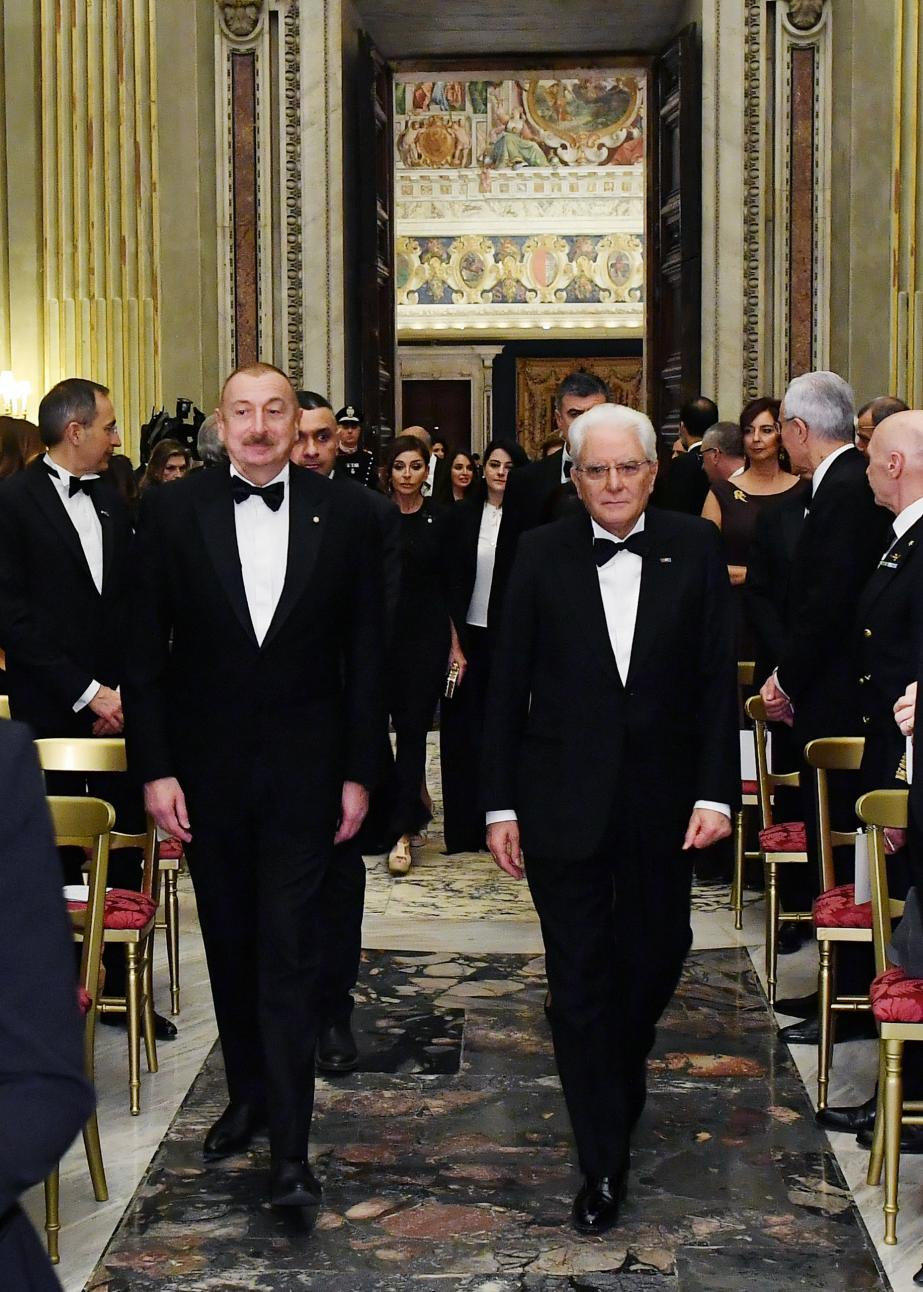
Press Service of the President of the Republic of Azerbaijan · CC BY 4.0
Italy’s culture—its knowledge, beliefs, arts, laws, customs, and social practices—grew out of the Italian Peninsula and later the modern nation-state. The country has shaped Western civilisation in major ways. It was the heart of Roman civilisation, which gave Europe Roman law, the Latin alphabet and language, and lasting institutions. Italy also anchored the Roman Catholic Church, the Renaissance, the Baroque, Neoclassicism, Futurism, and Fascism. Its scholars, artists, merchants, explorers, and political movements helped drive broader European developments like the Romanesque style, Scholasticism, the Age of Discovery, the Scientific Revolution, and European integration.
Several Italian institutions rank among Europe’s oldest: the Ospedale di Santo Spirito in Sassia, the University of Bologna, the Capitoline Museums, early modern banks, and the Teatro San Cassiano. Italian culture has left its mark on art, architecture, music, film, fashion, literature, theatre, science, and food. Italy was central to opera’s rise and played a key role in classical music, with composers such as Antonio Vivaldi, Gioachino Rossini, and Giuseppe Verdi. Its cultural history also includes contributions to ballet, folk dance, commedia dell’arte, and cinema. Italy holds the world’s most UNESCO World Heritage Sites—62 in total.
**Arts**
Italian art has driven major movements for centuries and produced many great painters, architects, and sculptors. Today, Italy remains essential to the global art scene, with major galleries, museums, and exhibitions in Rome, Florence, Venice, Milan, Turin, Genoa, Naples, Palermo, and other cities. The country’s 62 World Heritage Sites are the most of any nation.
From ancient times, Greeks lived in the south, Etruscans in the centre, and other groups in the north. Rock drawings in Valcamonica date back to around 8000 BC. Rich Etruscan art survives in thousands of tombs, and Greek cities like Paestum and Agrigento left substantial remains. Ancient Rome eventually became the dominant power in Italy and Europe. Roman remains are extraordinarily rich, from grand Imperial monuments in Rome to well-preserved everyday buildings in Pompeii and nearby sites. After the Roman Empire fell, medieval Italy remained important—not only for Carolingian and Ottonian art under Holy Roman Emperors but also for Byzantine art in Ravenna and elsewhere.
Italy was the main centre of artistic development during the Renaissance (1300–1600), starting with Giotto’s Proto-Renaissance and peaking in the High Renaissance of Leonardo da Vinci, Michelangelo, and Raphael. Their work inspired the later Mannerist phase. Italy kept its artistic lead into the 1600s with the Baroque (1600–1750). Cultural tourism and Neoclassicism (1750–1850) became key supports for a struggling economy. Both Baroque and Neoclassicism began in Rome and were the last Italian-born styles to spread across all Western art. From the mid-19th century onward, Italy stayed active in international art through movements like the Macchiaioli, Futurism, Metaphysical art, Novecento Italiano, Spatialism, Arte Povera, and Transavantgarde.
**Architecture**
Italy is famous for its architectural heritage, spanning ancient Rome to modern design. Italian architects pioneered arches, domes, and vaults, laid the groundwork for Renaissance architecture, and inspired movements like Palladianism and Neoclassicism. Italian cities display a wide range of historical styles that shaped building worldwide.
*Ancient and classical*: Architecture in Italy began with Etruscan and Greek settlements, which influenced Roman architecture. Roman achievements included aqueducts, amphitheatres, temples, and urban planning. The legacy of Roman engineering is visible in structures like the Colosseum and the Pantheon, as well as at Pompeii.
*Early Christian and Byzantine*: As Christianity spread, Roman forms were adapted into the basilica—long, rectangular churches richly decorated with mosaics. Ravenna became a centre of Byzantine art and architecture, while Old St. Peter’s Basilica, begun in the 4th century, set the pattern for medieval church design.
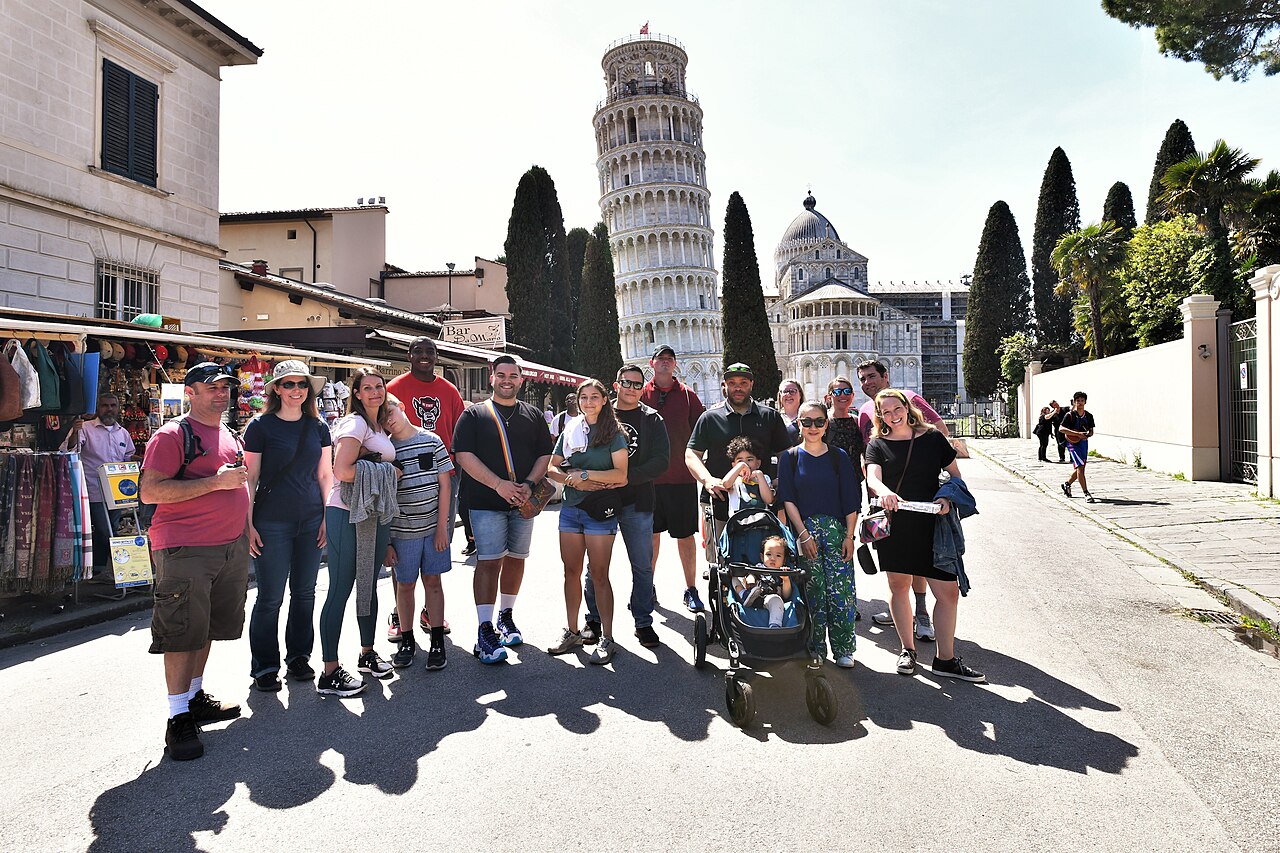
*Romanesque and Gothic*: Between the 9th and 12th centuries, Romanesque architecture flourished, marked by rounded arches, vaults, and elaborate cloisters. Notable examples include the Leaning Tower of Pisa and the Basilica of Sant’Ambrogio in Milan.
*Renaissance and Baroque*: The Italian Renaissance (14th–16th centuries) revived classical forms and stressed symmetry and proportion. Filippo Brunelleschi’s dome for Florence Cathedral and Donato Bramante’s work on St. Peter’s Basilica exemplify this era’s innovations. Andrea Palladio’s harmonious villas in the Veneto, such as Villa La Rotonda, became models for Western architecture. In the 17th century, Baroque architecture emerged, emphasising grandeur and theatricality, as seen in churches and palaces across Rome and Naples. The style continued into Rococo and was later tempered by the classical restraint of Neoclassicism.
**Cinema**
Italian cinema began a few months after the Lumière brothers started motion picture exhibitions. The first Italian director is considered to be Vittorio Calcina, a collaborator of the Lumière brothers.
- field
- Culture
- nationality
- Italian
- known_for
- Influence on Western civilisation, art, architecture, music, cinema, fashion, literature, theatre, science, and cuisine
- UNESCO_World_Heritage_Sites
- 62
- earliest_institutions
- Ospedale di Santo Spirito in Sassia, University of Bologna, Capitoline Museums, early modern banking institutions, Teatro San Cassiano
Lore & Background
The Italian Peninsula was the center of Roman civilisation, which contributed to the spread of Roman law, the Latin alphabet, the Latin language, and institutions that influenced later European societies. Italy was also an important center of the Roman Catholic Church, the Renaissance, the Baroque, Neoclassicism, Futurism, and Fascism. Several institutions in Italy are among the earliest of their kind in Europe, including the Ospedale di Santo Spirito in Sassia, the University of Bologna, the Capitoline Museums, early modern banking institutions, and the Teatro San Cassiano. Italian art has influenced several major movements throughout the centuries and has produced several great artists, including painters, architects, and sculptors. Italy was the main centre of artistic developments throughout the Renaissance, beginning with the Proto-Renaissance of Giotto and reaching a particular peak in the High Renaissance of Leonardo da Vinci, Michelangelo, and Raphael. Italy retained its artistic dominance into the 17th century with the Baroque, and both Baroque and Neoclassicism originated in Rome and were the last Italian-born styles that spread to all Western art. Italian cinema began a few months after the Lumière brothers began motion picture exhibitions. After World War II, Italian film was widely recognised and exported, with notable directors including Federico Fellini, Sergio Leone, Pier Paolo Pasolini, Luchino Visconti, Vittorio De Sica, Michelangelo Antonioni, and Roberto Rossellini. The Cinecittà studio, founded by Benito Mussolini, is today the largest film and television production facility in Europe.
Reader's Guide
The culture of Italy is significant for its foundational role in Western civilisation, spanning from ancient Rome through the Renaissance to modern contributions in cinema, architecture, and art. Italy was central to the development of opera and classical music, with composers such as Antonio Vivaldi, Gioachino Rossini, and Giuseppe Verdi. Italian cultural history also includes contributions to ballet, folk dance, commedia dell'arte, and cinema. Italy has the world's largest number of UNESCO World Heritage Sites, with 62 sites, reflecting its rich architectural and artistic heritage. Italian architects pioneered the use of arches, domes, and vaults, laid the foundations of Renaissance architecture, and inspired movements such as Palladianism and Neoclassicism. The legacy of Roman engineering is visible in structures such as the Colosseum and the Pantheon. Italian Renaissance architecture revived classical forms and emphasised symmetry and proportion, with Filippo Brunelleschi's dome for Florence Cathedral and Andrea Palladio's harmonious villas becoming models for Western architecture. In cinema, Italian neorealist films of the mid-1940s to early 1950s reflected the poor condition of post-war Italy, and later genres such as commedia all'italiana and spaghetti Westerns were popular internationally. Actresses such as Sophia Loren, Giulietta Masina, and Gina Lollobrigida achieved international stardom. The Italian film industry continues to produce notable works, with films such as Cinema Paradiso, Life Is Beautiful, and The Great Beauty receiving international attention.
Did You Know?
- Italy has the world's largest number of UNESCO World Heritage Sites, with 62 sites.
- The University of Bologna is among the earliest institutions of its kind in Europe.
- Cinecittà studio, founded by Benito Mussolini, is today the largest film and television production facility in Europe.
Foundations of Western Civilisation
The Italian Peninsula served as the cradle of Roman civilisation, a legacy that radiated outward and shaped the trajectory of European society for millennia. Through Rome, the world inherited a codified legal system, the Latin alphabet, a written language, and governmental institutions whose echoes persist in modern European states. Beyond antiquity, the peninsula anchored the Roman Catholic Church and became the intellectual engine behind movements as varied as Scholasticism, the Scientific Revolution, and the Age of Discovery. Italian merchants, scholars, and political thinkers fed directly into the broader currents of European integration. What distinguishes Italy further is the sheer antiquity of its civic institutions: the University of Bologna, the Ospedale di Santo Spirito in Sassia, the Capitoline Museums, early modern banking houses, and the Teatro San Cassiano all rank among the earliest of their kind on the continent. Together, these threads establish Italy not merely as a participant in Western history but as one of its principal architects, a role that continues to inform how the peninsula's cultural output is understood and studied worldwide.
A Continuous Thread in Visual Art and Architecture
Italy's visual culture stretches back to rock engravings in Valcamonica dating to roughly 8,000 BC, through the rich tomb paintings of the Etruscans and the monumental Greek temples at Paestum and Agrigento. Roman engineering produced structures of extraordinary scale—the Colosseum, the Pantheon—and the remarkably preserved everyday architecture of Pompeii. After the empire's collapse, Byzantine mosaics in Ravenna and the basilica form of early Christian churches kept artistic innovation alive. The true flowering came with the Renaissance, where Giotto opened the door and the High Renaissance of Leonardo, Michelangelo, and Raphael set a benchmark that Mannerism then extended. Italy's dominance continued into the Baroque and Neoclassical periods, both born in Rome and exported across the Western world. In architecture, Italian builders pioneered arches, domes, and vaults; Brunelleschi's dome for Florence Cathedral and Bramante's work on St. Peter's exemplify Renaissance breakthroughs, while Palladio's harmonious villas in the Veneto became templates for Western design. Even after 1850, movements like Futurism, Arte Povera, and Transavantgarde kept Italian artists at the forefront of international debate.
Music, Theatre, and the Birth of Cinema
Italy's contribution to performing and musical arts is foundational. The country was central to the development of opera and produced classical composers of global stature, including Antonio Vivaldi, Gioachino Rossini, and Giuseppe Verdi. Beyond the concert hall, Italian cultural history embraces ballet, folk dance traditions, and the improvisational theatre form known as commedia dell'arte, all of which shaped European performance culture. Italian cinema arrived almost simultaneously with the medium itself: just months after the Lumière brothers began public screenings, Vittorio Calcina, a collaborator of the Lumière company, filmed Pope Leo XIII in 1896, making him the first Italian director. By the 1910s the industry was expanding at remarkable speed. In 1912 alone, Turin produced 569 films, Rome 420, and Milan 120. Giovanni Pastrone's 1914 epic Cabiria became the most celebrated Italian silent film and holds the distinction of being the first movie ever screened inside the White House. These achievements cemented Italy's role not just as a participant in the global arts but as a pioneer across multiple disciplines.
Global Recognition and the Living Cultural Landscape
No country on Earth holds more UNESCO World Heritage Sites than Italy, with 62 locations spanning the entire peninsula from the ancient Greek ruins of Agrigento to the imperial monuments of Rome. This extraordinary density of protected heritage reflects a culture that has been influential across art, architecture, music, cinema, fashion, literature, theatre, science, and cuisine. Major artistic centres—Rome, Florence, Venice, Milan, Turin, Genoa, Naples, and Palermo—host major galleries, museums, and exhibitions that anchor Italy's essential place in the international art scene. Cultural tourism itself became a significant economic pillar, particularly during the Neoclassical period when it propped up an otherwise faltering economy. The breadth of Italian cultural influence is further underscored by its role in shaping wider European developments: from the Romanesque architectural style to the intellectual frameworks of Scholasticism, from the navigational ambitions of the Age of Discovery to the collaborative spirit of modern European integration. Italy's cultural footprint is not a single era's achievement but a continuous, layered contribution that remains a reference point for the entire Western world.
Gallery


More in National Cultures And Ethnic Groups 1-24
Spotted an error? Know more?
This is a living reference — every entry is fact-audited, and reader corrections feed straight into our audit queue. Suggest an edit · See this site's audit record