Culture of Indonesia
A melting pot of indigenous and foreign cultural influences.

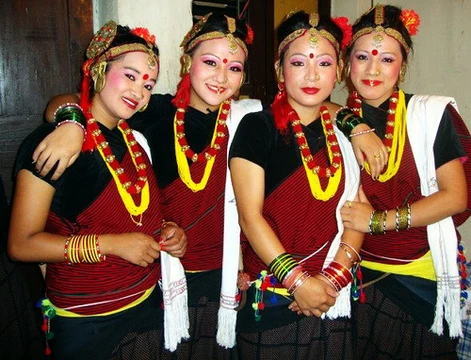
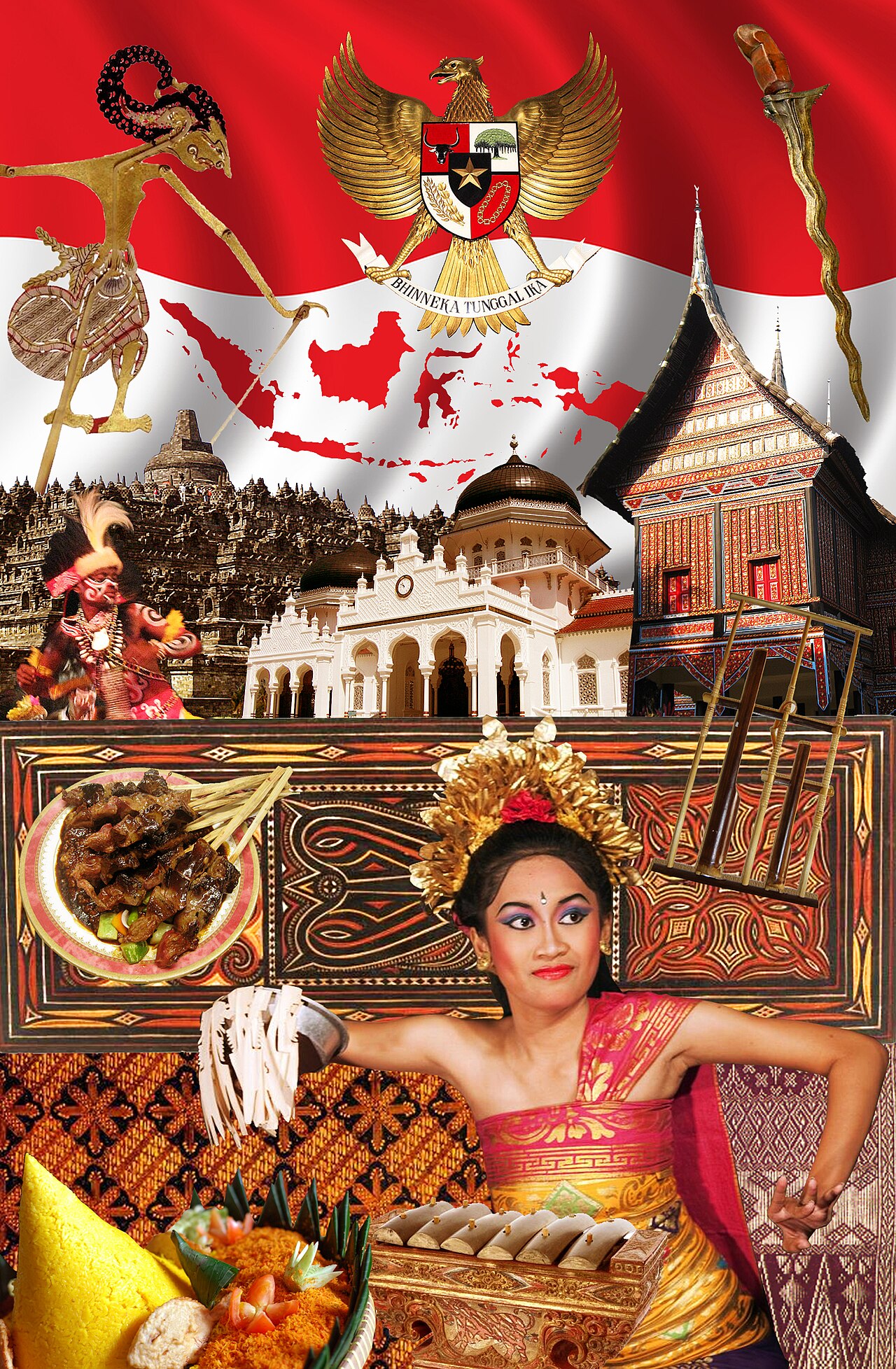
Tari_Pendet.jpg : Christopher Michel from San Francisco, USA Garuda Pancasila.jp · CC BY 2.0
Indonesia’s culture is a blend of local traditions and outside influences, shaped by its position on historic trade routes linking East Asia, South Asia, and the Middle East. Over time, the archipelago absorbed elements from Hinduism, Buddhism, Confucianism, Islam, and Christianity, resulting in a layered cultural landscape that often differs from its original indigenous roots.
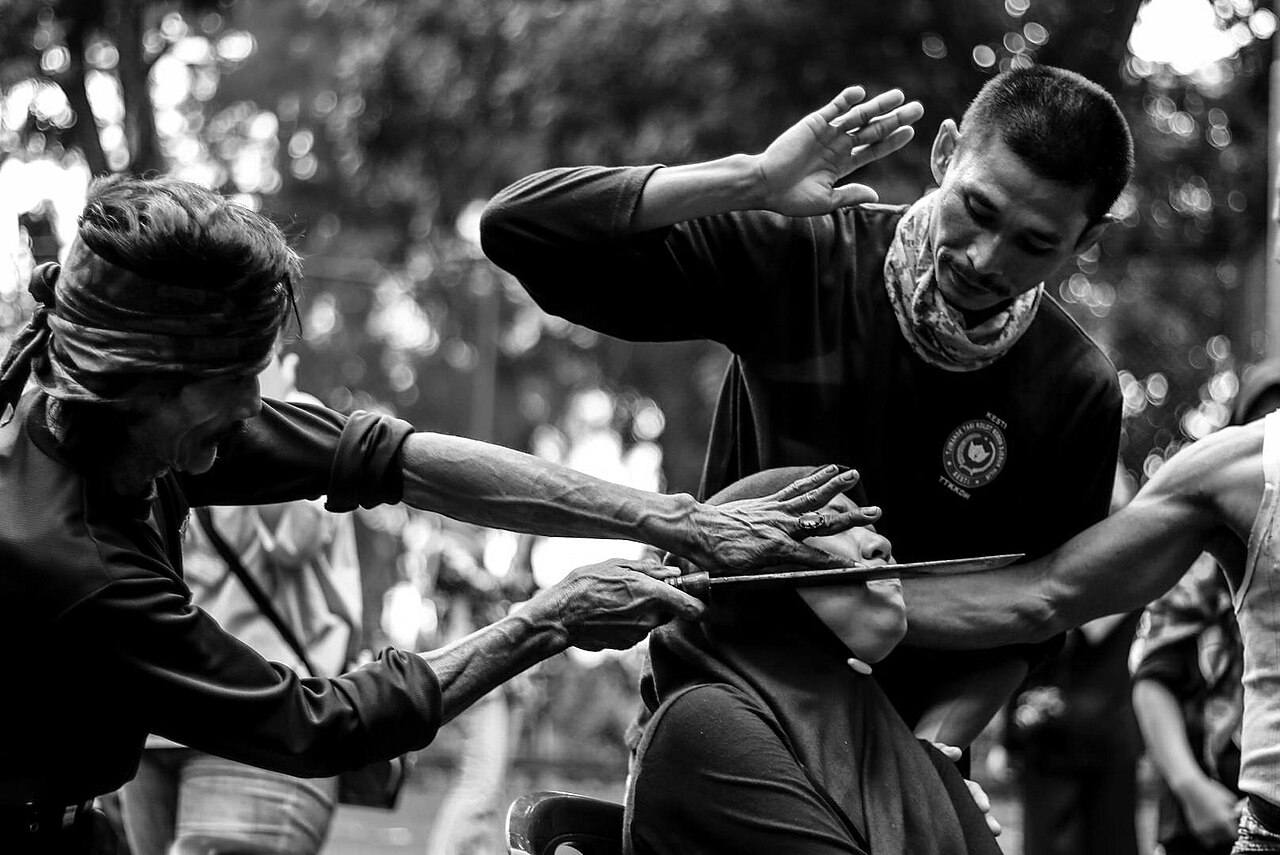
The fusion of Islam with Hindu traditions appears in Javanese Abangan beliefs. Balinese dance recounts stories from ancient Buddhist and Hindu kingdoms, while Islamic art and architecture are prominent in Sumatra, particularly among the Minangkabau and Aceh peoples. The martial art Pencak Silat combines traditional art, music, and sport. Western influence shows up in science, technology, modern entertainment (television, film, music), and political systems. India has left a mark on Indonesian songs and movies, notably through dangdut—a popular genre mixing Indian rhythms with Arabic, Javanese, and Malay folk music.
Some remote regions still preserve distinct indigenous cultures. Groups like the Batak, Nias, Mentawai, Asmat, Dani, Sumba, Dayak, Toraja, and others continue their rituals, customs, and traditional dress. Indonesia holds sixteen UNESCO Intangible Cultural Heritage items, including wayang puppet theatre, kris, batik, angklung, saman dance, noken, three Balinese dance genres, pinisi ship, pencak silat, gamelan, jamu, and reog. Pantun, kebaya, and kolintang were added through joint nominations.
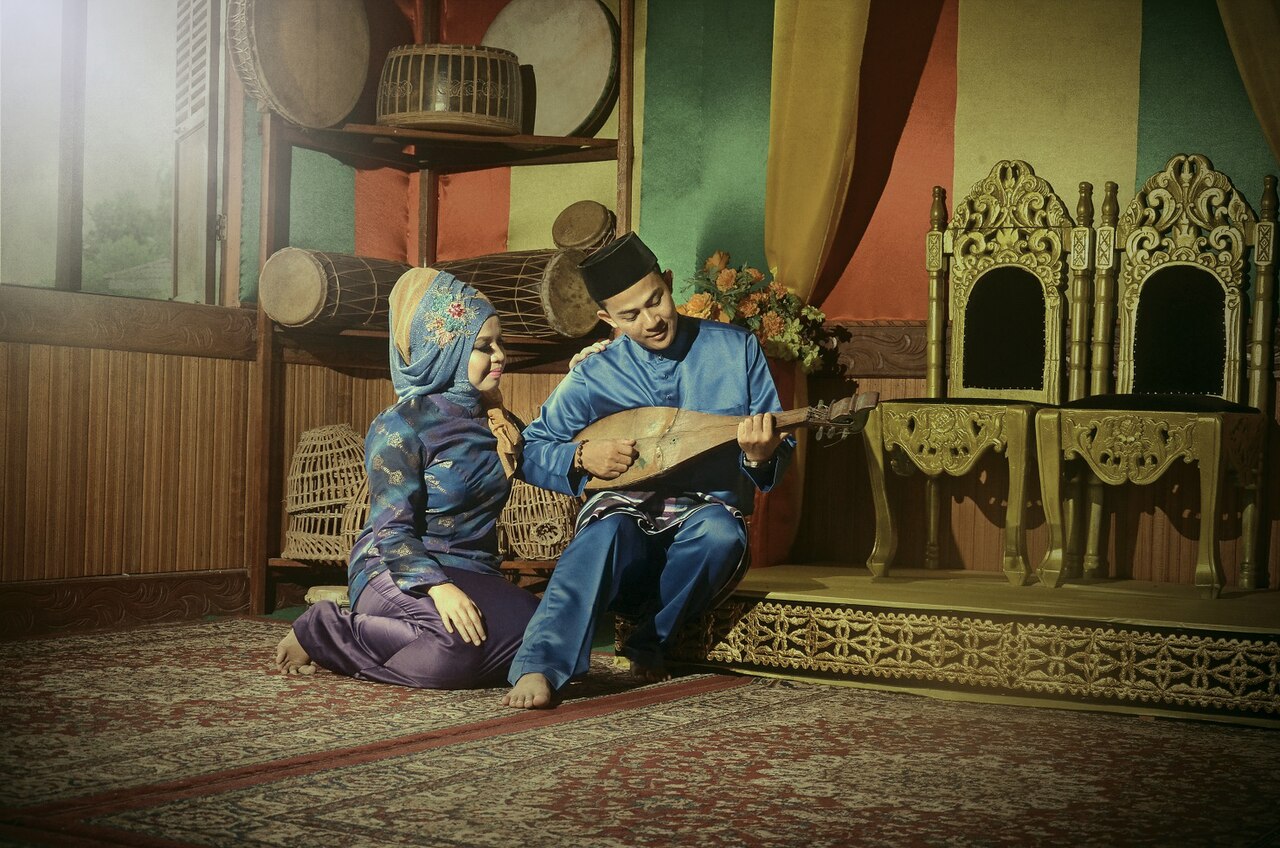
In traditional music, gamelan is a key ensemble from Java and Bali, using percussion instruments like metallophones (gambang, bonang) and gongs (kenong, gong ageng). It accompanies ceremonies, shadow puppetry, and dance, with layered melodies and interlocking rhythms. UNESCO recognized gamelan in 2021. In West Sumatra, the Minangkabau play talempong (small knobbed gongs) and the saluang (a four-holed bamboo flute). Batak music in North Sumatra centers on gondang (drums and gongs), including the nine-drum gordang sambilan, and the hasapi (two-stringed lute). The Toraja use pa’pompang (large bamboo flutes), while Bugis and Makassar people play the kacaping (small plucked string instrument). Dayak music in Kalimantan features the sape (long-necked lute) and gongs. In Papua, the tifa (hand drum) and bamboo wind instruments are common.
The angklung, from West Java, is a UNESCO-recognized bamboo instrument. The Sasando from East Nusa Tenggara is a harp-like instrument made from split lontar palm leaves. Kroncong, introduced by Portuguese traders in the 15th century, uses guitars and ukuleles; regional styles include Keroncong Tugu and Keroncong Kemayoran, with Pop Kroncong as a modern variant. Other genres include Tanjidor (brass and woodwind from Betawi culture) and Jaipongan (Sundanese music and dance). In the 1960s, the band Koes Plus was jailed for playing Western music under Sukarno’s ban, but after his resignation, restrictions lifted and they became pop pioneers. Dangdut emerged in the 1970s, blending Javanese, Malay, Indian, and Arabic sounds, and spread to Malaysia, Singapore, and Brunei, gaining global reach through diaspora and collaborations.
- UNESCO Intangible Cultural Heritage item
- 16 (as of 2011, but by 2024 the number has grown; Indonesia now has more than 16 items, including wayang, batik, gamelan, angklung, saman dance, pencak silat, and others)
Lore & Background
Indonesia's culture reflects a fusion of indigenous customs with influences from Hinduism, Buddhism, Islam, and Christianity, absorbed through ancient trade routes. Examples include Javanese Abangan belief, a syncretic tradition blending Islam with pre-Islamic animistic and Hindu-Buddhist elements, and Balinese dances that depict ancient Buddhist and Hindu kingdoms. Islamic art and architecture are prominent in Sumatra, particularly in Minangkabau and Aceh regions. Traditional art, music, and sport combine in the martial art Pencak Silat. Western influence has affected science, technology, entertainment, and political systems, while India has notably influenced Indonesian songs and movies, such as the dangdut genre, which draws from Indian, Malay, and Arabic musical roots.
Reader's Guide
The culture of Indonesia is significant for its extraordinary diversity and its role as a crossroads of global civilizations. Its traditional performing arts, such as gamelan and angklung, have received UNESCO recognition, highlighting their global importance. The fusion of foreign influences with indigenous traditions has produced unique art forms like wayang puppet theatre, batik, and the martial art Pencak Silat. Despite external influences, remote regions preserve indigenous cultures, with groups like the Batak, Dayak, and Toraja maintaining their rituals and customs. Indonesia's cultural legacy continues to evolve, with modern genres like dangdut gaining international recognition through diaspora communities and global collaborations.
Did You Know?
- Indonesia holds more than sixteen items of UNESCO's Intangible Cultural Heritage as of 2024, including wayang puppet theatre, batik, gamelan, and angklung.
- The martial art Pencak Silat combines traditional art, music, and sport.
- The angklung, a bamboo instrument from West Java, has received international recognition from UNESCO.
- The Saman dance from Aceh was recognized by UNESCO in 2011 as an Intangible Cultural Heritage in Need of Urgent Safeguarding.
A Mosaic of Six Hundred Peoples
Indonesia's cultural landscape is defined by staggering internal diversity. As the world's largest archipelagic nation, it shelters more than six hundred distinct ethnic groups, spanning Austronesian and Melanesian lineages, each carrying its own languages, rituals, and customs. This makes the country one of the most culturally layered places on Earth. While urban centers and trade corridors have long blended traditions, the interior of many islands tells a different story. In remote highlands and forested coasts, communities such as the Batak, Nias, Mentawai, Asmat, Dani, Sumba, Dayak, and Toraja continue to perform ancestral ceremonies, observe age-old social customs, and dress in traditional garments that have changed little over generations. Their persistence ensures that Indonesia's cultural identity is not merely a product of historical contact but also a living archive of pre-colonial and pre-conversion worldviews, preserved in ritual, dress, and communal life far from the reach of globalizing forces.
Crossroads of Civilizations
Indonesia's position along ancient maritime trade routes linking the Far East, South Asia, and the Middle East turned the archipelago into a crucible of religious and artistic exchange. Over centuries, Hindu, Buddhist, Confucian, Islamic, and Christian traditions settled into local soil, producing hybrid expressions that differ markedly from their source cultures. In Java, the Abangan belief system weaves Islamic practice into a Hindu-influenced spiritual framework. Balinese choreography still narrates the legends of ancient Buddhist and Hindu kingdoms, while the Minangkabau and Aceh regions of Sumatra display Islamic architectural and artistic forms. The Indian subcontinent left a deeper imprint on popular music and cinema, most visibly in dangdut, a genre that fuses Indian rhythmic patterns with Arabic, Javanese, and Malay folk elements. Meanwhile, Western contact introduced modern science, technology, television, film, and political structures, adding yet another layer to an already complex cultural tapestry.
A Sound World of Gongs, Flutes, and Lutes
Indonesian traditional music is as varied as its geography. On Java and Bali, the gamelan ensemble—built from metallophones like the gambang and bonang, plus gongs such as the kenong and gong ageng—anchors religious ceremonies, shadow-puppet shows, and dance, its interlocking rhythms creating a layered sonic signature recognized by UNESCO in 2021. In West Sumatra, Minangkabau musicians strike the talempong, a set of small knobbed gongs, while the saluang, a four-holed bamboo flute played with circular breathing, accompanies folk narratives. Batak communities in North Sumatra center their ritual music on the gondang drum-and-gong ensemble, including the nine-drum gordang sambilan once reserved for royal occasions, and pair it with the two-stringed hasapi lute. In Sulawesi, Toraja players sound the deep-toned pa'pompang bamboo flute, while Bugis and Makassar musicians pluck the kacaping for storytelling. Dayak communities in Kalimantan carve the long-necked sape lute, originally tied to healing and warrior rites, and Papua's tifa hand drum drives rhythmic dance. The bamboo angklung of West Java and the palm-leaf Sasando of East Nusa Tenggara round out a panorama of instruments that spans the entire archipelago.
Living Heritage on the World Stage
Indonesia's performing arts have earned a remarkable place in global cultural memory. The nation currently holds sixteen inscriptions on UNESCO's Intangible Cultural Heritage list, a testament to the breadth and vitality of its traditions. Among the most celebrated are wayang shadow-puppet theatre, the kris, batik and its education and training methods, the angklung, the saman dance, the noken, three distinct genres of Balinese dance, the pinisi ship, pencak silat, gamelan, jamu, and reog. Pantun, the kebaya, and the kolintang were added through joint nominations with neighboring countries. Beyond these formal recognitions, Indonesia's dance repertoire alone exceeds three thousand distinct forms, reflecting Austronesian roots, Melanesian tribal movements, and stylistic borrowings from the Indian subcontinent, mainland China, the Middle East, and European colonial encounters. Each ethnic group contributes its own choreographic vocabulary, ensuring that the nation's stage remains as plural as its islands.
Gallery
More in National Cultures And Ethnic Groups 1-24
Spotted an error? Know more?
This is a living reference — every entry is fact-audited, and reader corrections feed straight into our audit queue. Suggest an edit · See this site's audit record