Culture of Iran
One of the oldest and most influential cultures in the world.

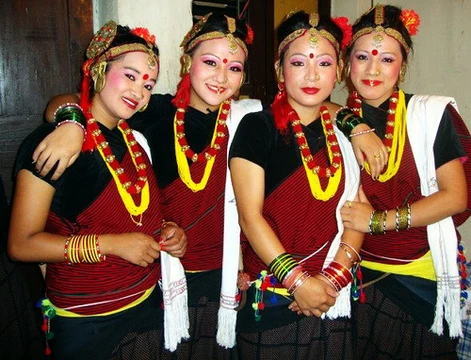
Gerald England · CC BY-SA 2.0
The culture of Iran (Persia) is among the world’s oldest and most influential, often recognized as a cradle of civilization. Its strategic geopolitical position has enabled it to shape societies across Southern and Eastern Europe, Central Asia, South Asia, East Asia, and Southeast Asia. Iranian history has left a lasting mark globally through art, architecture, poetry, science, technology, medicine, philosophy, and engineering. A quality described as “eclectic cultural elasticity” is seen as a core feature of Iranian identity and a reason for its enduring presence.
**History** Iran’s cultural history draws on ancient civilizations like the Elamites and Persians, as well as the Achaemenid and Sassanian empires. The Arab conquest in the 7th century brought Islamic traditions that blended with pre-Islamic customs, creating a distinct identity rich in literature, art, and philosophy. Iran has long been a hub of culture and learning, influencing its surroundings. The South Caucasus and Central Asia are central to the historical geography of Persian civilization; much of this area was part of pre-Islamic Persian empires, and its ancient peoples—such as the Medes, Soghdians, and Armenians—were either Iranian branches of Indo-European groups or in close cultural contact with them. As Iranologist Richard Nelson Frye noted, the peoples of Central Asia, whether Iranian or Turkic speaking, share one culture, religion, and set of social values, with only language as a divider. Persian culture has evolved over millennia, historically linking the peoples of modern Iran, Kurdistan Region, Armenia, Azerbaijan, Turkey, Uzbekistan, Tajikistan, Turkmenistan, Eastern Georgia, and Afghanistan as part of the Greater Iranian cultural sphere. The Northern Caucasus also falls within this influence, as seen in surviving relics, ruins, and literary works.
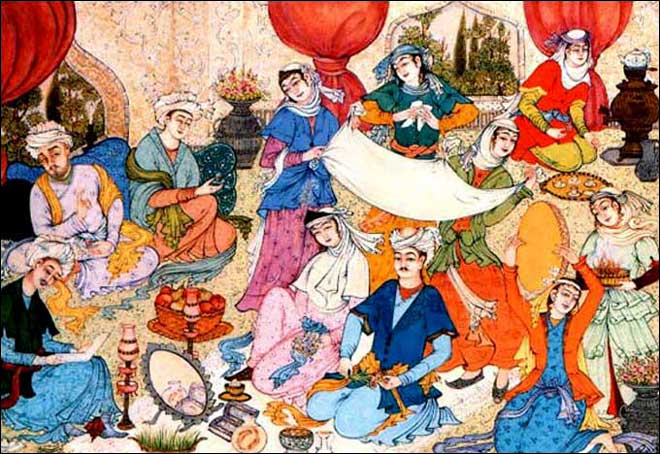
**Art** Iran possesses one of the oldest, richest, and most influential art heritages globally, spanning literature, music, dance, architecture, painting, weaving, pottery, calligraphy, metalworking, embroidery, and stonemasonry. Iranian art has passed through many phases, reflected in its unique aesthetics—from the Elamite Chogha Zanbil and Median and Achaemenid reliefs of Persepolis to the mosaics of Bishapur. The Islamic Golden Age shifted artistic styles and practices, but each Iranian dynasty built on its predecessor’s work, with all periods heavily influencing world cultures both then and now.
**Contemporary art** Interest has revived in Iranian contemporary artists and those from the wider Iranian diaspora. Notable figures include Shirin Aliabadi, Mohammed Ehsai, Ramin Haerizadeh, Rokni Haerizadeh, Golnaz Fathi, Monir Shahroudy Farmanfarmaian, Parastou Forouhar, Pouran Jinchi, Farhad Moshiri, Shirin Neshat, Parviz Tanavoli, Y. Z. Kami, and Charles Hossein Zenderoudi.
**Language** Iran is home to languages from the Iranian, Turkic, and Semitic families. According to the CIA World Factbook, 78% of Iranians speak an Iranian language natively, 18% a Turkic language, 2% a Semitic language, and 2% languages from other groups. Although Azerbaijanis speak a Turkic language, their culture, history, and genetics are often linked to the Iranian people. Persian is the national and predominant language, spoken fluently nationwide. Azerbaijani is widely spoken in the northwest, Kurdish and Luri in the west, Mazandarani and Gilaki along the Caspian Sea, Arabic along the Persian Gulf coast, Balochi in the southeast, and Turkmen in northern border areas. Smaller languages include Talysh, Georgian, Armenian, Assyrian, and Circassian. Recent studies list the most spoken languages as Persian (63.3%), Azeri Turkic and its dialects (13%), Kurdish (7%), Gilaki (3.6%), Mazandarani or Tabari (3%), Arabic (1.8%), and others including Lorish and Balochi (8.3%).
**Literature** Iranian literature is among the world’s oldest and most celebrated, spanning over 2,500 years from Achaemenid inscriptions like the Behistun inscription to poets of the Islamic Golden Age and modern times. It is considered one of humanity’s great literatures and a main pillar of world literature. L.P. Elwell-Sutton described Persian-language literature as “one of the richest poetic literature of the world.” Few pre-Islamic Iranian literary works survived the destruction of Persepolis’s libraries by Alexander the Great and the Arab invasion of 641, which aimed to eliminate non-Quranic texts. All Iranian libraries were destroyed, with books burned or thrown into rivers. Iranians could only protect books by burying them, but many texts were eventually forgotten.
- field
- Culture, art, literature, music, science, philosophy
- nationality
- Iranian (Persian)
- known_for
- One of the oldest and most influential cultures; cradle of civilization; rich literary and artistic heritage
Lore & Background
The culture of Iran, also known as Persian culture, is among the world’s oldest and most influential, with Iran widely regarded as a cradle of civilization. Its geopolitical position has allowed it to heavily shape the cultures of Southern and Eastern Europe, Central Asia, South Asia, East Asia, and Southeast Asia. A defining characteristic of Iranian identity is an “eclectic cultural elasticity,” which is considered key to its historical longevity. The culture’s history is marked by ancient civilizations such as the Elamites and Persians, and the Achaemenid and Sassanian empires. The 7th-century Arab conquest introduced Islamic traditions that merged with pre-Islamic customs, creating a distinct identity with major contributions to literature, art, and philosophy. The South Caucasus and Central Asia hold an important place in Persian civilization’s historical geography, with many ancient peoples belonging to the Iranian branch of Indo-Europeans or in close contact with them. Historically, peoples of modern Iran, Kurdistan Region, Armenia, Azerbaijan, Turkey, Uzbekistan, Tajikistan, Turkmenistan, Eastern Georgia, and Afghanistan are part of the Greater Iranian cultural sphere, with the Northern Caucasus also within its influence. Iranian art, one of the oldest and richest heritages, includes literature, music, dance, architecture, painting, weaving, pottery, calligraphy, metalworking, embroidery, and stonemasonry, evident from Elamite Chogha Zanbil to Achaemenid reliefs of Persepolis. The Islamic Golden Age altered artistic styles, with each dynasty building on previous ones. Iranian literature spans over 2,500 years, from Achaemenid inscriptions to celebrated poets of the Islamic Golden Age, and is considered one of the great literatures of humanity. Pre-Islamic literary works largely perished due to the destruction of Persepolis’s libraries by Alexander the Great and the Arab invasion in 641, which sought to eradicate non-Quranic texts, forcing Iranians to bury books for protection.
Reader's Guide
The culture of Iran (Persia) holds immense significance as one of the world's oldest and most influential civilizations. Its legacy is evident in its profound contributions to art, architecture, poetry, science, technology, medicine, philosophy, and engineering, which have shaped cultures across Europe, Asia, and beyond. The concept of 'eclectic cultural elasticity' explains how Iranian identity has adapted and endured over millennia, blending pre-Islamic traditions with Islamic influences after the 7th-century Arab conquest. This fusion produced a distinct cultural identity that continues to impact global literature, music, and visual arts. Iranian literature, including works by poets such as Ferdowsi, Rumi, and Hafiz, is considered one of the four main pillars of world literature. Iranian music influenced the musical terminology of neighboring Turkic and Arabic cultures and reached India through the Mughal Empire. The art heritage, from ancient Elamite and Achaemenid sites to contemporary works, remains influential. The Persian language serves as the national language, while numerous other languages reflect the country's ethnic diversity. The culture's historical role as a center of learning and its enduring influence on the Greater Iranian cultural sphere—including parts of Central Asia, the Caucasus, and South Asia—underscore its lasting global importance.
Did You Know?
- Iran is widely regarded as one of the cradles of civilization.
- The Arab conquest in the 7th century introduced Islamic traditions that merged with pre-Islamic customs.
- Iranian music has directly influenced the cultures of West Asia, Central Asia, Europe, and South Asia.
Ancient Roots and Cultural Elasticity
Iran's cultural heritage is frequently cited as one of the oldest and most far-reaching on the planet, with the region widely recognized as a cradle of civilization. Its commanding geopolitical position placed it at a crossroads through which ideas, aesthetics, and knowledge radiated outward—shaping societies from Southern and Eastern Europe in the west, across Central Asia to the north, and extending all the way into South, East, and Southeast Asia. The domains of influence span art, architecture, poetry, science, technology, medicine, philosophy, and engineering. A concept scholars describe as "eclectic cultural elasticity" is often pointed to as the defining trait of Iranian identity and the key to its remarkable historical longevity. Rather than remaining static, the culture absorbed, adapted, and reinterpreted external influences while preserving a coherent core. This process unfolded over several thousand years, weaving together the legacies of the Elamites, Persians, Achaemenids, and Sassanians into a continuous thread. The resulting Greater Iranian cultural sphere stretches well beyond modern borders, encompassing peoples in Kurdistan, Armenia, Azerbaijan, Turkey, Uzbekistan, Tajikistan, Turkmenistan, Eastern Georgia, Afghanistan, and the Northern Caucasus—regions where ruins, literary works, and shared social values testify to a common civilizational heritage.
Conquest, Synthesis, and the Forging of Identity
The 7th-century Arab conquest stands as a pivotal turning point in Iranian cultural history. Islamic traditions entered the region and did not simply replace what came before; instead, they merged with deeply rooted pre-Islamic customs to produce a distinctly new cultural identity. This synthesis generated extraordinary contributions to literature, art, and philosophy, and positioned Iran as a center of learning whose influence rippled across the surrounding region. The historical geography of Persian civilization extends well into the South Caucasus and Central Asia. Many of the ancient peoples of these areas—such as the Medes and Soghdians—belonged to the Iranian branch of the Indo-European family, while others, like the Armenians, maintained close cultural contact with them. Iranologist Richard Nelson Frye observed that the present peoples of central Asia, whether Iranian- or Turkic-speaking, share one culture, one religion, and one set of social values and traditions, with language being the primary divider. This layered identity—forged through conquest, adaptation, and creative synthesis—explains how a civilization could endure and evolve across millennia while remaining recognizably itself.
A Living Artistic Heritage from Antiquity to the Diaspora
Iran's art heritage is routinely described as one of the oldest, richest, and most influential anywhere in the world. It spans an extraordinary range of disciplines—literature, music, dance, architecture, painting, weaving, pottery, calligraphy, metalworking, embroidery, and stonemasonry—each carrying its own aesthetic lineage. The visual record runs from the Elamite ziggurat at Chogha Zanbil, through the Median and Achaemenid stone reliefs at Persepolis, to the mosaics of Bishapur, illustrating how each successive era built upon and transformed what came before. The Islamic Golden Age introduced new stylistic currents, yet no single dynasty imposed a uniform look. Instead, each ruling house developed its own particular artistic foci while drawing on the achievements of its predecessors, and each in turn shaped the broader cultural landscape of its era and, in many cases, the present day. In recent decades, a notable resurgence of global interest has spotlighted Iranian contemporary artists and members of the wider diaspora. Names such as Shirin Neshat, Parastou Forouhar, Monir Shahroudy Farmanfarmaian, Parviz Tanavoli, and Charles Hossein Zenderoudi, among many others, have brought the ancient tradition into dialogue with the modern world.
A Mosaic of Languages and a 2,500-Year Literary Tradition
Iran is a linguistically diverse nation where languages from the Iranian, Turkic, and Semitic families coexist. Roughly 78 percent of the population speaks an Iranian language as a native tongue, 18 percent a Turkic language, and 2 percent a Semitic language, with the remaining 2 percent speaking other groups. Persian serves as the predominant and national language, spoken fluently across the country. Azerbaijani dominates the northwest, Kurdish and Luri the west, Mazandarani and Gilaki the Caspian littoral, Arabic the Persian Gulf coast, Balochi the southeast, and Turkmen the northern borderlands. The literary tradition stretches back more than 2,500 years, from Achaemenid inscriptions like the Behistun text to the celebrated poets of the Islamic Golden Age and into the modern era. It is often ranked among the four great pillars of world literature, and scholar L.P. Elwell-Sutton called Persian "one of the richest poetic literatures of the world." Tragically, the burning of Persepolis's libraries by Alexander and the 641 Arab invasion, which sought to destroy all non-Quranic texts, erased vast portions of pre-Islamic writing. Iranians preserved what they could by burying manuscripts, yet many works were lost before new libraries could be rebuilt.
Gallery

More in National Cultures And Ethnic Groups 1-24
Spotted an error? Know more?
This is a living reference — every entry is fact-audited, and reader corrections feed straight into our audit queue. Suggest an edit · See this site's audit record