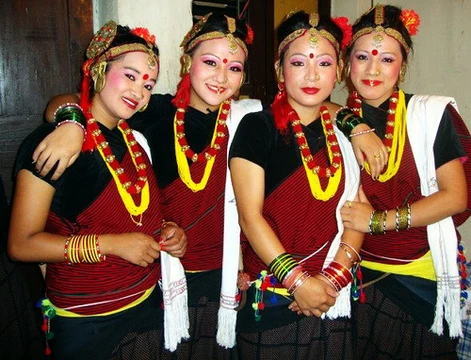
Culture of South America
A blend of indigenous, European, African, and global influences.

The culture of South America is a fusion of several distinct traditions. Prior to European contact, the continent was home to a wide array of indigenous peoples, each with their own established customs. The arrival of Spanish, Portuguese, and French colonizers introduced European elements, while the forced migration of enslaved Africans brought profound African influences. In more recent centuries, mass culture from the United States, especially through cinema and television, has also left its mark. This blend is evident across all aspects of life. In religion, Roman Catholicism is dominant, practiced by over 80% in most Hispanic countries and around 65% in Brazil, though French Guiana has a notable Protestant population. Guyana and Suriname are exceptions, where Christianity, Hinduism, and Islam all have significant followings. In lowland regions and the Andes, indigenous animism and shamanism remain common. Linguistically, Portuguese and Spanish are the primary languages, with Portuguese spoken by a majority of South Americans, nearly all of whom live in Brazil. Many other languages are also widely used, including Aymara, Quechua, Guaraní, and Wayuu, as well as English in Guyana, Dutch and Indonesian in Suriname, and French in French Guiana. Pockets of southern South America also feature Italian, German, and Welsh speakers, while Japanese is spoken in Peru and Brazil. Musically, the continent is known for genres such as Brazil’s samba, Argentina and Uruguay’s tango, and Colombia’s cumbia. In visual art, indigenous traditions were long overshadowed by Spanish, Portuguese, and French Baroque painting, which followed Italian trends, but this Eurocentrism began to fade in the early twentieth century as artists embraced their unique identity. Cuisine reflects the ethnic mix, with Brazil’s Bahia state noted for West African influences and Peru for its blend of African, American Indian, European, Chinese, and Japanese elements.
- Region
- South America
- Primary Languages
- Portuguese and Spanish
- Dominant Religion
- Roman Catholicism
- Notable Music Genres
- samba, tango, cumbia
- Cuisine Influences
- European, American Indian, African
Lore & Background
Roman Catholicism is the dominant religion, with over 80%–70% in Hispanic countries and some 65% in Brazil. French Guiana also has a large number of Protestants. Guyana and Suriname are exceptions, with three major religions: Christianity, Hinduism, and Islam. In lowland South America and the Andes, animism and shamanism are common, as noted among the Urarina of Peruvian Amazonia. Portuguese and Spanish are the primary languages. The majority of South Americans speak Portuguese, though most countries are Spanish-speaking, and nearly all lusophones reside in Brazil. Other languages include Aymara, Quechua, Urarina, Wayuu, Guaraní, English, Hakka, Hindi, Dutch, Indonesian, French, Italian, German, Welsh, and Japanese. South American nations have a rich variety of music, including samba from Brazil, tango from Argentina and Uruguay, and cumbia from Colombia. Visual art, beyond indigenous traditions, owed much to Spanish, Portuguese, and French Baroque painting, which often followed Italian Masters. This Eurocentrism began to fade in the early twentieth century as South Americans acknowledged their unique condition.
Reader's Guide
The culture of South America is significant for its synthesis of multiple continents and histories, creating a distinct regional identity. Its religious landscape is predominantly Roman Catholic, but with notable exceptions in Guyana and Suriname, where Hinduism and Islam are major, and in indigenous areas where animism and shamanism persist. Linguistically, Portuguese and Spanish dominate, but dozens of indigenous and immigrant languages survive, reflecting deep cultural layers. Music genres like samba, tango, and cumbia have become global symbols. Art evolved from European Baroque to a self-aware, unique expression in the twentieth century. Cuisine similarly blends European, American Indian, and African influences, with regional specialties like Bahia's West African-influenced dishes and Peru's multi-ethnic fusion. This cultural legacy continues to shape South America's identity and its contributions to world culture.
Did You Know?
- Roman Catholicism is the dominant religion, with over 80%–70% in Hispanic countries and some 65% in Brazil.
- Guyana and Suriname have three major religions: Christianity, Hinduism, and Islam.
- Portuguese is spoken by more than 50% of South Americans, mostly in Brazil.
- Samba from Brazil, tango from Argentina and Uruguay, and cumbia from Colombia are famous music genres.
More in National Cultures And Ethnic Groups 1-24
Spotted an error? Know more?
This is a living reference — every entry is fact-audited, and reader corrections feed straight into our audit queue. Suggest an edit · See this site's audit record