C/2016 R2 (PanSTARRS)
A carbon monoxide-rich comet with a blue coma and little water.

N. Biver et al. (2018)/EDP Sciences · CC BY 4.0
C/2016 R2 (PanSTARRS) is an unusual long-period comet discovered on 7 September 2016 by the Pan-STARRS survey at Haleakalā Observatory in Hawaiʻi. It is notable for its extreme richness in carbon monoxide and nitrogen, combined with a very low water content, which gives it a distinctive blue coma and sets it apart from typical Solar System comets.
Quick Facts
- Discovery Ref
- MPEC_2016-R107
- Discoverer
- Pan-STARRS
- Discovery Site
- Haleakalā Observatory
- Discovery Date
- 7 September 2016
- Orbit Ref
- barycenter · jpl
- Epoch
- 29 May 2018 (JD 2458267.5)
- Observation Arc
- 1,762 days (4.82 years)
- Obs
- 4,319
- Perihelion
- 2.602 AU
- Aphelion
- ≈1,600 AU (inbound)barycenter / ≈1,100 AU (outbound)
- Semimajor
- ≈780 AU (inbound) / ≈530 AU (outbound)
- Period
- ≈22,000 years (inbound) / ≈12,000 years (outbound)
Facts from the source article.
Lore & Background
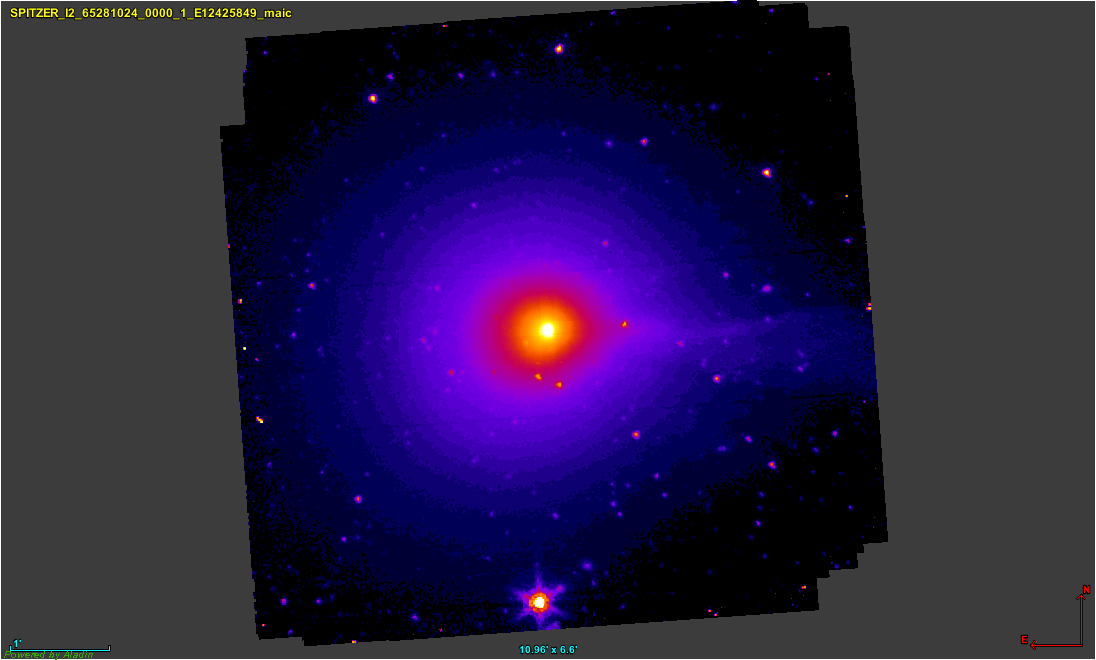
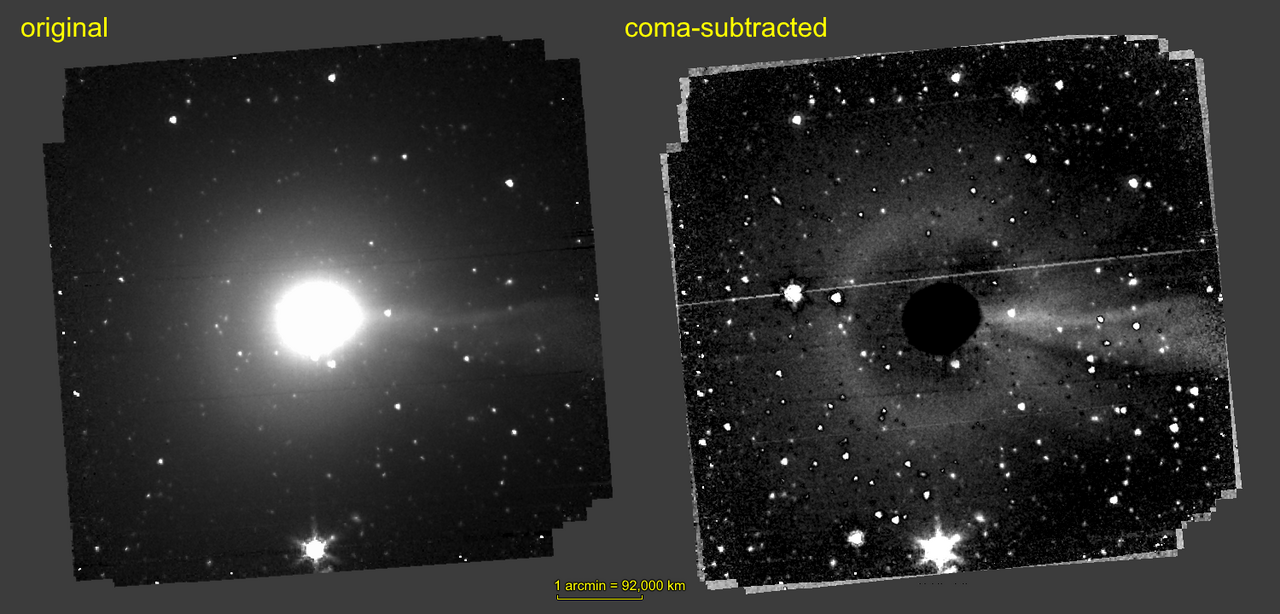
C/2016 R2 is a dynamically old Oort cloud comet that passed perihelion on 9 May 2018, when it was inside the asteroid belt at 2.6 AU. Its inbound orbit took it out to about 1600 AU on a 22,000-year path, and it will return in about 12,000 years. The comet attracted widespread attention from astronomers as it approached the Sun, revealing a complex tail and a diffuse, spherical coma that grew as large as 350,000 km in March 2018.
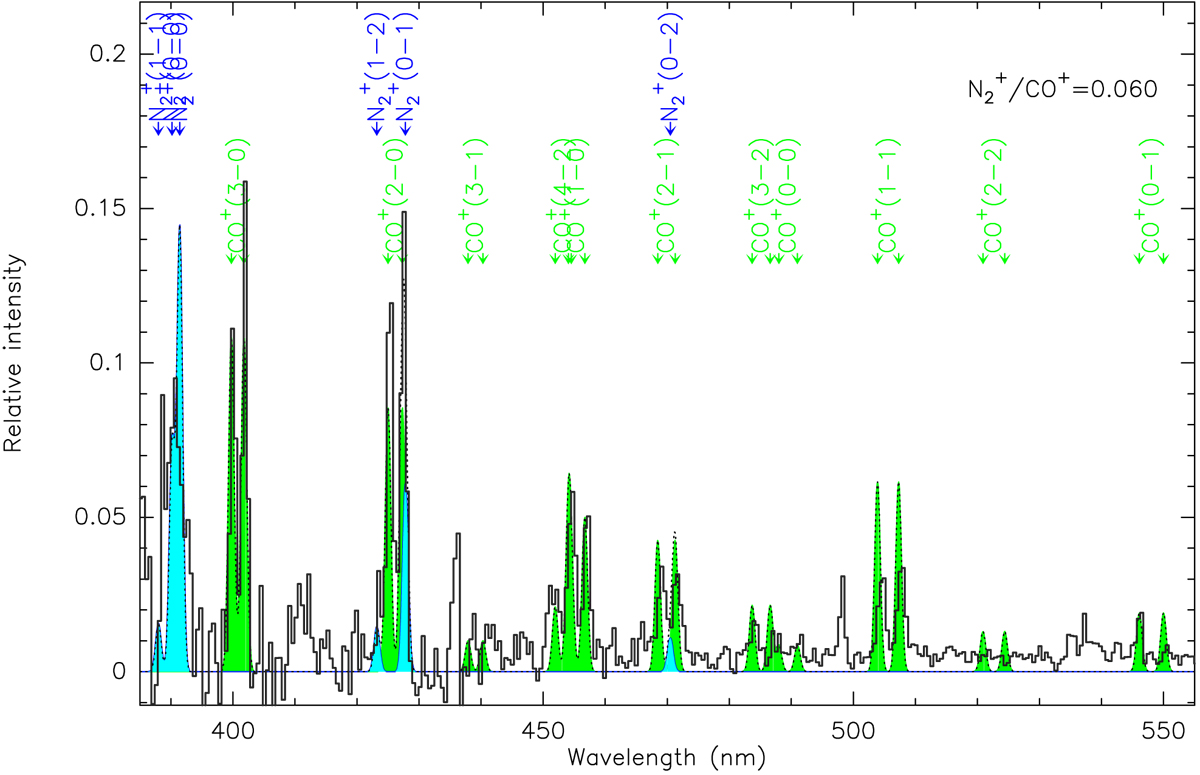
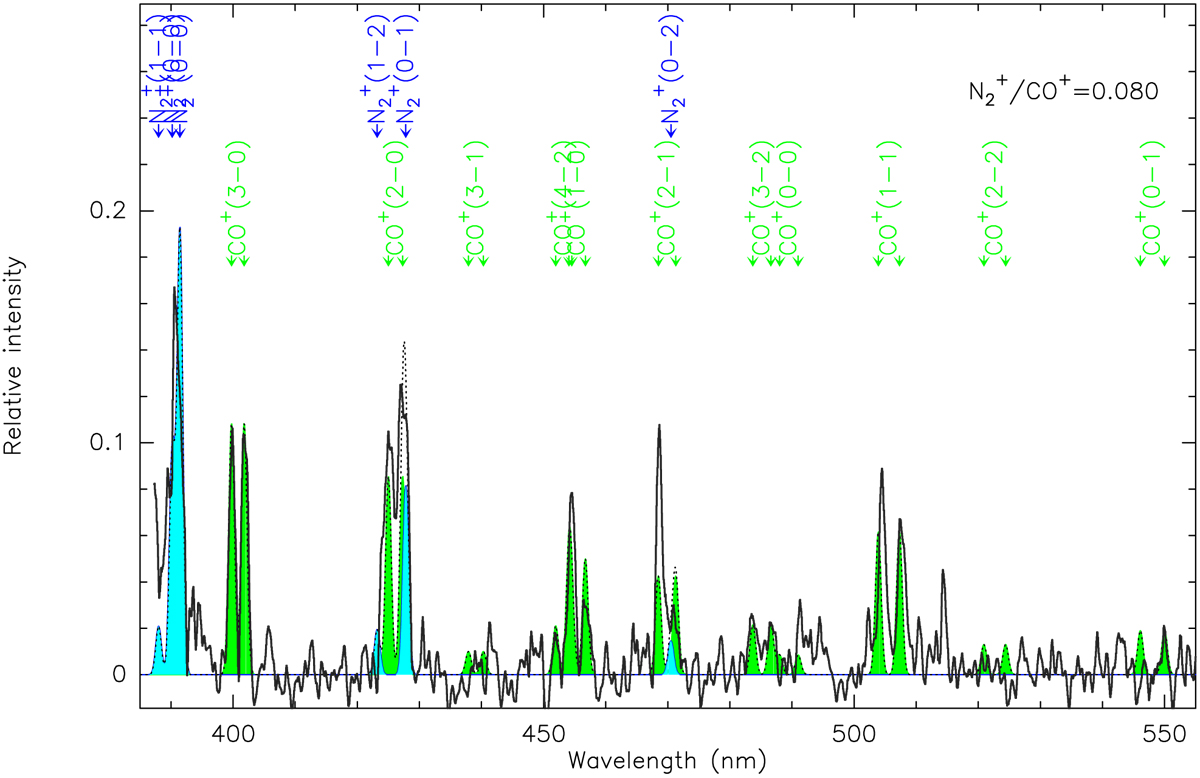
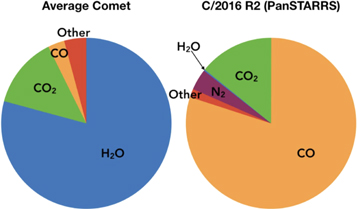
The comet's volatile composition is dominated by carbon monoxide (over 80% of coma molecules), with roughly 12–17% carbon dioxide, 4–6% molecular nitrogen, and trace amounts (≤1%) of water vapor. During January–February 2018, it was outgassing about 4,600 kg of CO per second, comparable to exceptionally active comets like Hale–Bopp and 17P/Holmes. Spectroscopic observations identified at least 12 chemical species, including methane, ethane, hydrogen cyanide, methanol, formaldehyde, carbonyl sulfide, acetylene, and ammonia. The blue color of the coma comes primarily from ionized carbon monoxide (CO⁺), with a small contribution from N₂⁺.
C/2016 R2 is dust-poor, with very little dust emission. Atomic iron and nickel vapor were detected in the coma, with a nickel-to-iron ratio close to 1 and emission rates among the highest seen in comets. Only two other long-period comets—C/1908 R1 (Morehouse) and C/1961 R1 (Humason)—share its blue color, low dust, and CO- and N₂-rich composition, suggesting they may belong to a rare group.
Reader's Guide
C/2016 R2 is significant for its extreme deviation from typical comet composition, challenging models of Solar System formation and evolution. Its coma consists of over 80% carbon monoxide and 4–6% molecular nitrogen, with water making up less than 1%—a stark contrast to normal comets where water dominates. The high abundance of hypervolatile compounds like CO and N₂, which easily sublimate and should become depleted over time, raises questions about the comet's origin and thermal history. The detection of N₂ in such quantities is particularly rare, as most comets contain virtually no molecular nitrogen. The comet's blue color, driven by CO⁺ emission, and its low dust content further distinguish it from the gray or green hues of typical comets. Its outgassing rate of CO during early 2018 rivaled that of the most active comets ever observed, despite its large distance from the Sun. The identification of only two similar objects—Morehouse and Humason—suggests that C/2016 R2 may represent a distinct and rare class of comets, though further discoveries are needed to confirm this. The comet also provides a natural laboratory for studying photochemical processes, as sunlight ionizes its gases and produces spectral emissions from CO⁺, CO₂⁺, N₂⁺, and atomic oxygen.
Did You Know?
- C/2016 R2's coma is over 80% carbon monoxide, with water making up less than 1% of its volatile molecules.
- It was outgassing roughly 4,600 kg of CO per second during January–February 2018, comparable to Comet Hale–Bopp.
- The comet's blue color comes primarily from ionized carbon monoxide (CO⁺) emission.
- Only two other comets—C/1908 R1 (Morehouse) and C/1961 R1 (Humason)—are known to share its unusual composition.
Gallery
More in Named Comets, Part 5 1-24
Spotted an error? Know more?
Reader corrections go straight into our review queue. Suggest an edit · How this site is sourced