
Hilaeira
Messenian princess abducted by Castor and Pollux.

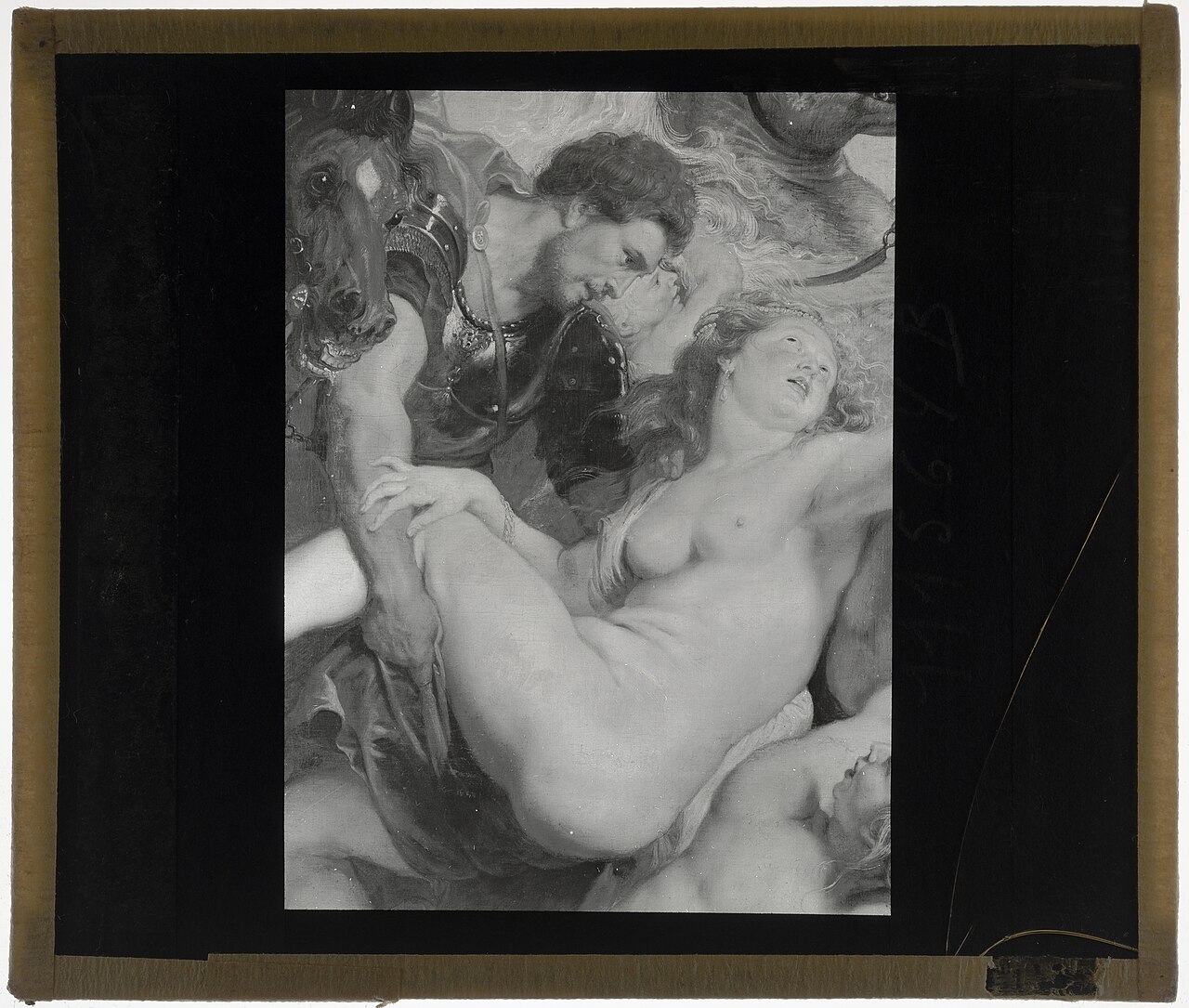
Rubens, Peter Paul (1577-1640) (artist) · Public domain
Hilaera (also Ilaeira or Elaeira) was a Messenian princess in Greek mythology, daughter of Leucippus and Philodice. She and her sister Phoebe, known as the Leucippides, were priestesses of Artemis and Athena and were famously abducted by Castor and Pollux.
- Also known as
- Ilaeira, Elaeira
- Field
- Greek mythology
- Nationality
- Messenian
- Known for
- Being a Leucippide, abducted by Castor and Pollux
- Family
- Daughter of Leucippus and Philodice; sister of Phoebe; wife of Castor; mother of Anogon or Anaxis, and possibly Aulothoe
Lore & Background
Hilaera was a daughter of Leucippus and Philodice, daughter of Inachus. She and her sister Phoebe are commonly referred to as Leucippides. In another account, they were daughters of Apollo. Hilaera married Castor and bore him a son, named either Anogon or Anaxis; according to one source, they also had a daughter, Aulothoe.
Hilaera and Phoebe were priestesses of Artemis and Athena, and betrothed to Lynceus and Idas, the sons of Aphareus. Castor and Pollux were charmed by their beauty and carried them off. When Idas and Lynceus tried to rescue their brides-to-be, they were both slain, but Castor himself fell. Pollux persuaded Zeus to allow him to share his immortality with his brother.
Hilaera and Phoebe are both portrayed in the painting The Rape of the Daughters of Leucippus.
Reader's Guide
Hilaera is a figure from Greek mythology whose story illustrates themes of abduction, divine intervention, and the bond between brothers. As one of the Leucippides, she was a priestess of Artemis and Athena, and her betrothal to Lynceus was disrupted by the Dioscuri, Castor and Pollux. The abduction led to a fatal conflict in which Castor died, but Pollux's plea to Zeus allowed the brothers to share immortality. Hilaera's legacy is preserved in art, notably in the painting The Rape of the Daughters of Leucippus, which depicts the abduction. Her mythological role underscores the often violent interactions between mortals and demigods in Greek tradition, and her story contributes to the larger narrative of the Dioscuri as both heroes and abductors.
Did You Know?
- Hilaera was also called Elaeira by Stephanus of Byzantium.
- She and her sister Phoebe were priestesses of Artemis and Athena.
- Hilaera married Castor and bore a son named either Anogon or Anaxis.
- According to one source, Hilaera and Castor also had a daughter named Aulothoe.
Lineage & Family Ties
Hilaeira was a Messenian princess whose parentage is recorded in ancient sources as the daughter of Leucippus and Philodice, the latter being a daughter of the river-god Inachus. Together with her sister Phoebe, she is frequently grouped under the collective name Leucippides, a term meaning simply "daughters of Leucippus." A separate tradition, however, attributes their birth to Apollo himself, elevating their divine status. After her marriage to the Dioscurus Castor, Hilaeira bore him a son whose name appears in different sources as either Anogon or Anaxis. One account further records a daughter named Aulothoe. Her very name has shifted across the ancient record: Stephanus of Byzantium rendered it as Elaeira, while other texts preserve the form Ilaeira. These variations and competing genealogies reflect the fluid way oral and literary traditions handled minor royal figures, yet the core identity of Hilaeira as a Messenian noblewoman bound to the Dioscuri remains consistent across the sources.
The Abduction and the Dioscuri's Tragedy
In the central myth surrounding Hilaeira, she and her sister Phoebe served as priestesses of both Artemis and Athena, a dual religious role that marked them as figures of sacred significance. They had been betrothed to Idas and Lynceus, the sons of Aphareus, when the twin heroes Castor and Pollux, struck by the sisters' beauty, seized them and carried them away. The rescue attempt by Idas and Lynceus ended in catastrophe: both brothers were slain in the confrontation, and Castor himself fell in the fighting. The aftermath of this bloodshed produced one of Greek mythology's most poignant acts of devotion. Pollux, grieving for his dead brother, persuaded Zeus to permit him to divide his own immortality with Castor, so that the two Dioscuri could share eternal life together. Hilaeira's abduction thus became the catalyst for a chain of violence and sacrifice that reshaped the fate of the twin heroes and cemented their bond beyond even death.
Sacred Office and Betrothal
Before the violent episode that dominates her story, Hilaeira occupied a position of considerable religious and social importance. She and Phoebe held priesthoods in the temples of both Artemis and Athena, goddesses associated with maidenhood, warfare, and civic virtue. Serving in dual priestly roles would have placed the sisters at the intersection of sacred ritual and public life in Messenian society. Their betrothal to Idas and Lynceus, sons of Aphareus, further anchored them within the political and dynastic networks of the region. The pairing of two princesses with two brothers suggests a carefully arranged alliance, the kind of marriage bond that in mythic narratives often sets the stage for conflict. That the Dioscuri's desire disrupted both the religious sanctity of the sisters' offices and the political compact of the betrothal underscores how deeply personal longing and divine intervention could overturn the ordered structures of human society in the Greek mythic imagination.
Literary Echoes and Visual Legacy
Hilaeira's story has left a mark across a wide range of ancient literary and artistic traditions. She appears in the mythographic compilations of Apollodorus and Hyginus, in the geographical descriptions of Pausanias, and in the poetic works of Ovid, Propertius, and Theocritus, each author drawing on the episode to serve different thematic purposes. The collective image of the two sisters—Hilaeira and Phoebe—was also rendered in the painting known as The Rape of the Daughters of Leucippus, a title that frames their abduction as a violent act rather than a romantic pursuit. Modern digital archives, including the Perseus Digital Library and Wikimedia Commons, preserve both the textual sources and visual representations connected to the pair. The persistence of her name in variant forms—Hilaeira, Ilaeira, Elaeira—across centuries of scholarship testifies to the difficulty of pinning down a figure whose identity was shaped by multiple competing traditions, yet whose narrative role as the catalyst for the Dioscuri's ultimate fate remains unmistakable.
Gallery
Frequently Asked Questions
Who is Hilaeira in Greek mythology?
Hilaeira was a Messenian princess, daughter of King Leucippus and Philodice. She is best known as one of the Leucippides, the pair of priestess sisters who were taken by the Dioscuri.
How was Hilaeira abducted by Castor and Pollux?
While she and her sister Phoebe were serving as priestesses of Artemis and Athena, the Dioscuri seized them. This episode of the twins' mythic career is one of the most widely retold in Greek legend.
Who were Hilaeira's parents and sister?
Her father was Leucippus of Messenia and her mother was Philodice. Her only sibling was Phoebe, and the two sisters were collectively called the Leucippides.
What became of Hilaeira after the abduction?
She became the wife of Castor, one of the Dioscuri. In several traditions she bore him a son named Anogon (or Anaxis) and possibly a daughter called Aulothoe.
Why is Hilaeira's story significant in Greek myth?
Her and Phoebe's abduction is a defining episode in the Dioscuri's legend and links Messenian royal lineage to the broader Arcadian and Spartan mythological traditions. She also appears under alternate names such as Ilaeira and Elaeira in different sources.
More in Mythological kidnapped people 1-24
Spotted an error? Know more?
Reader corrections go straight into our review queue. Suggest an edit · How this site is sourced