
Helen of Troy
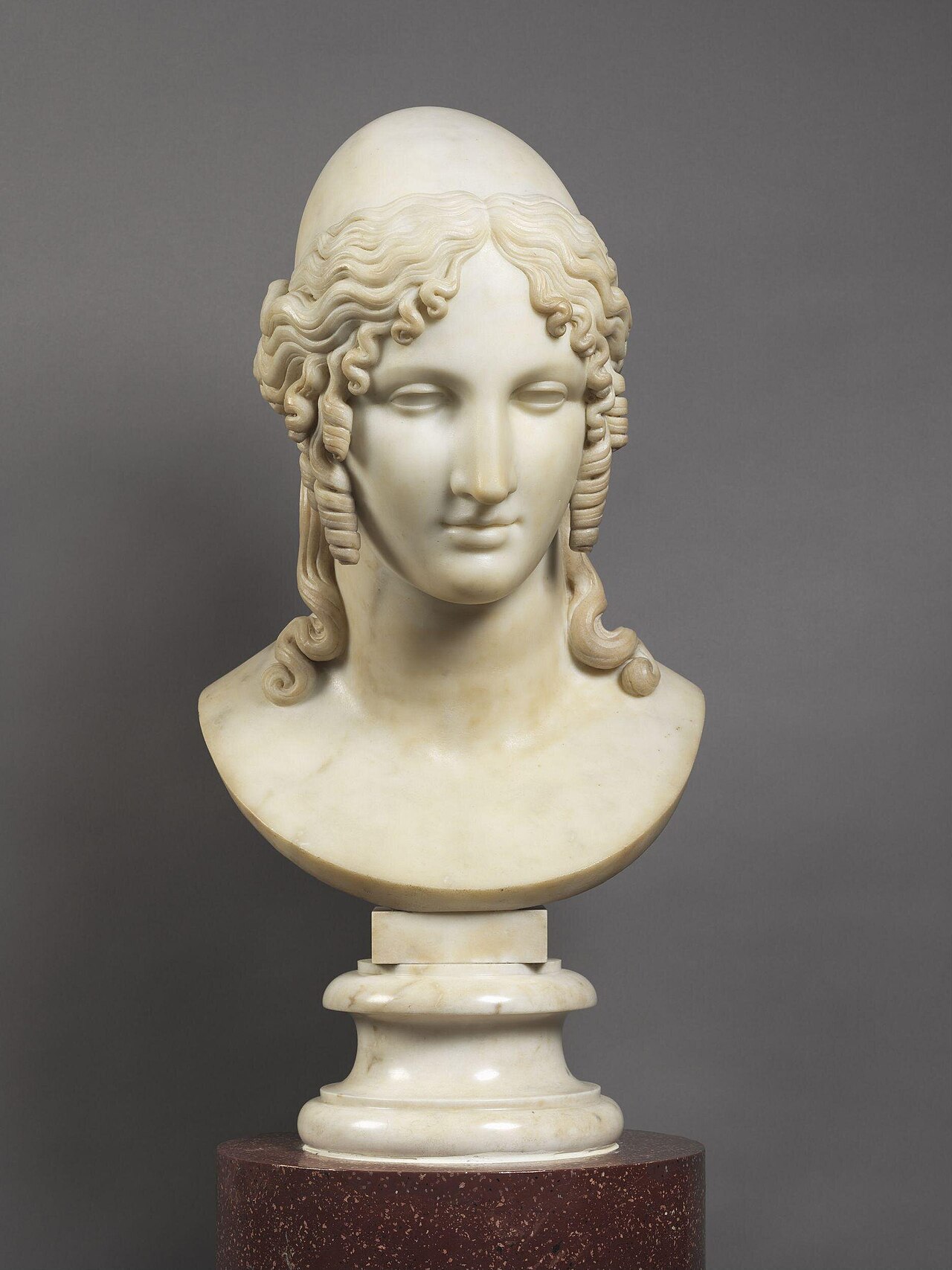
Her face launched a thousand ships toward Troy.

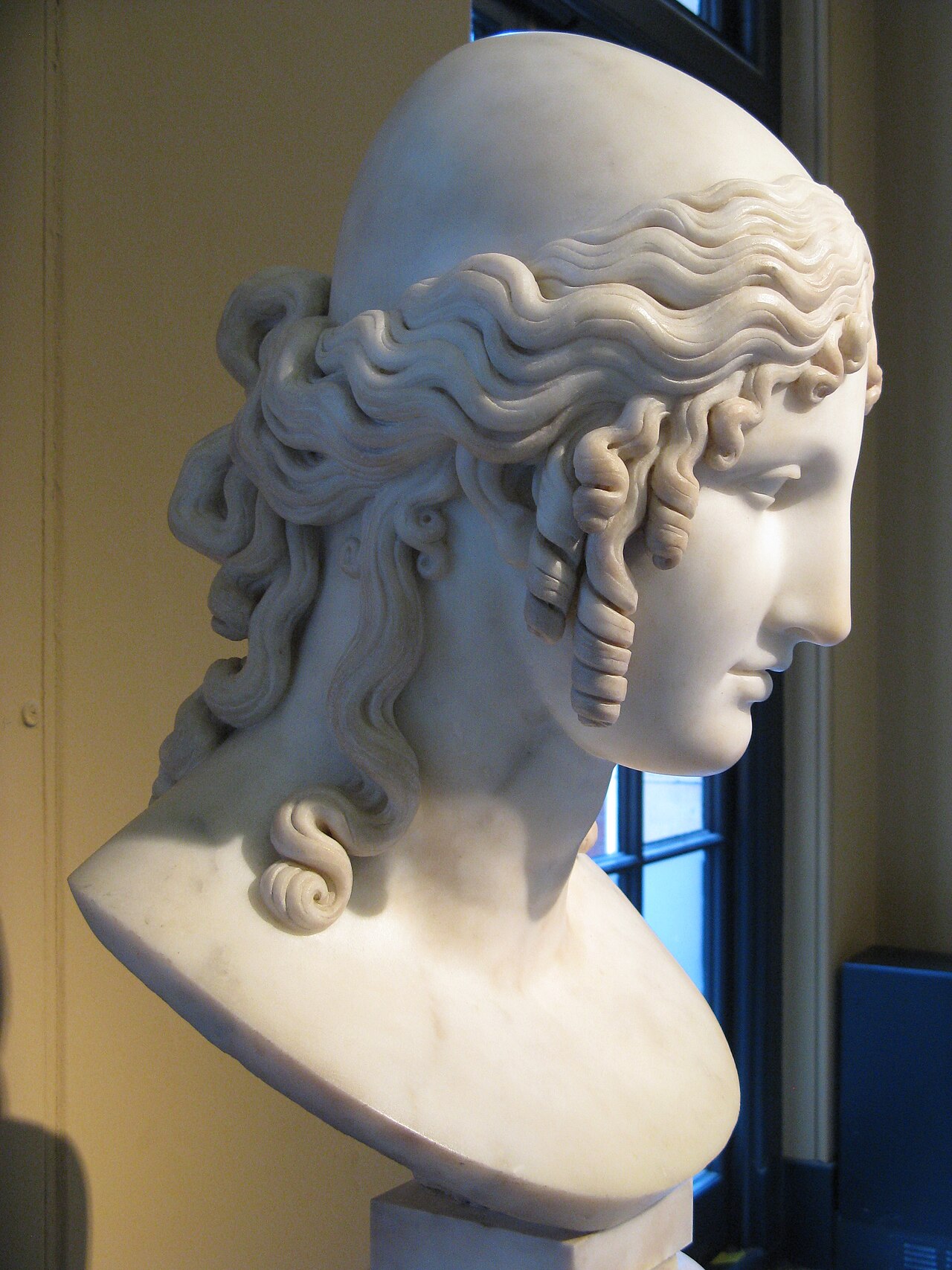
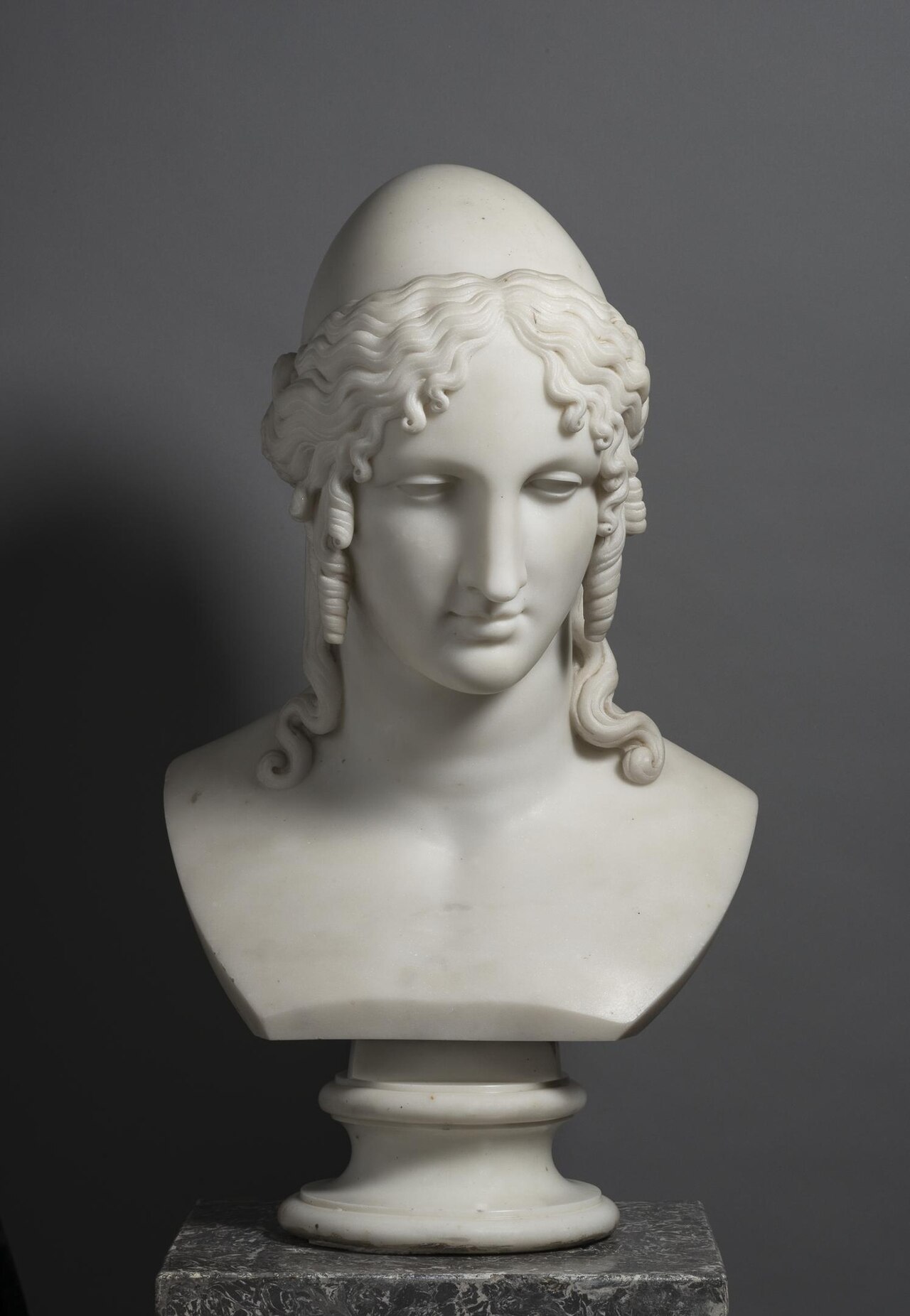
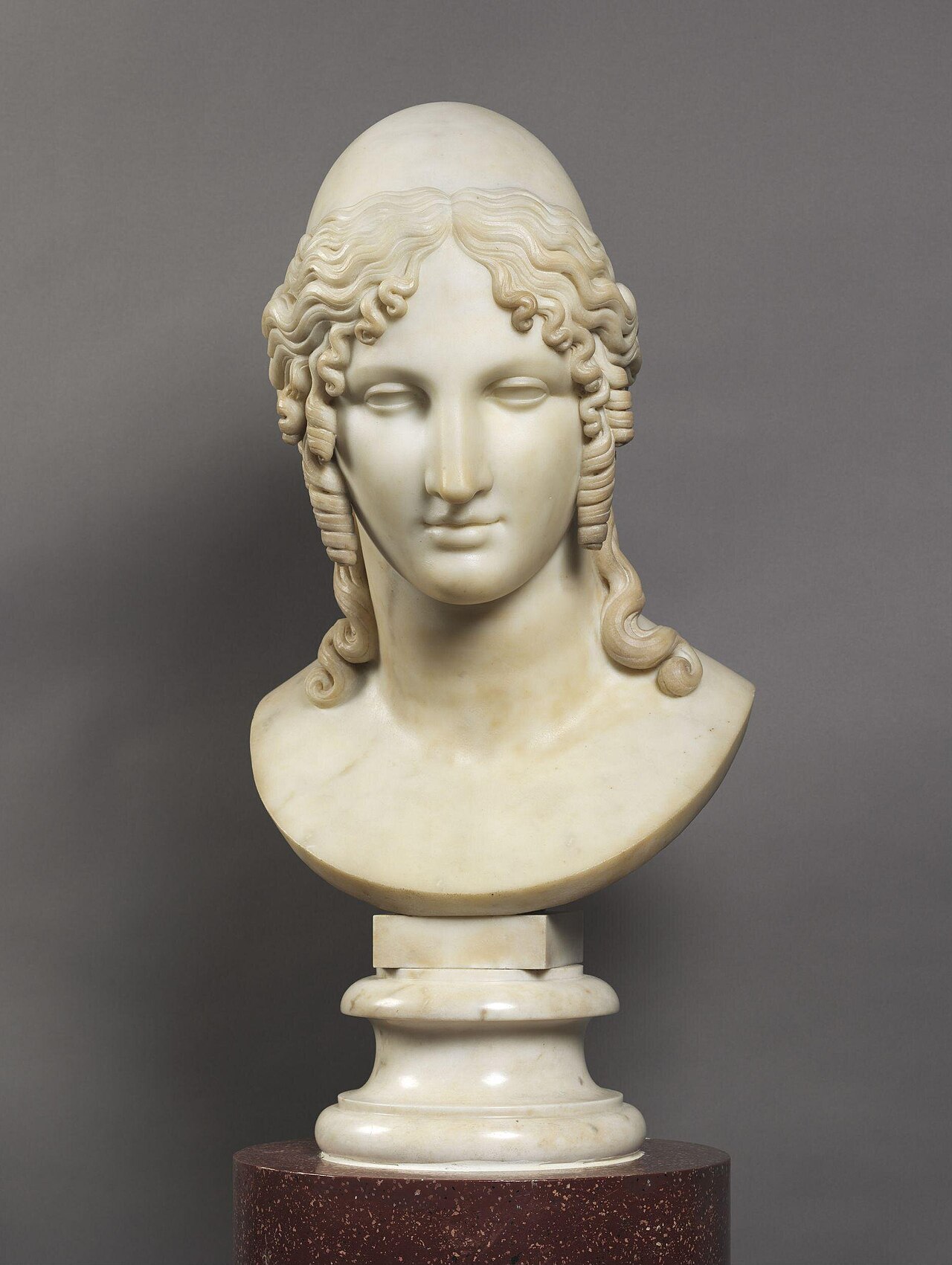
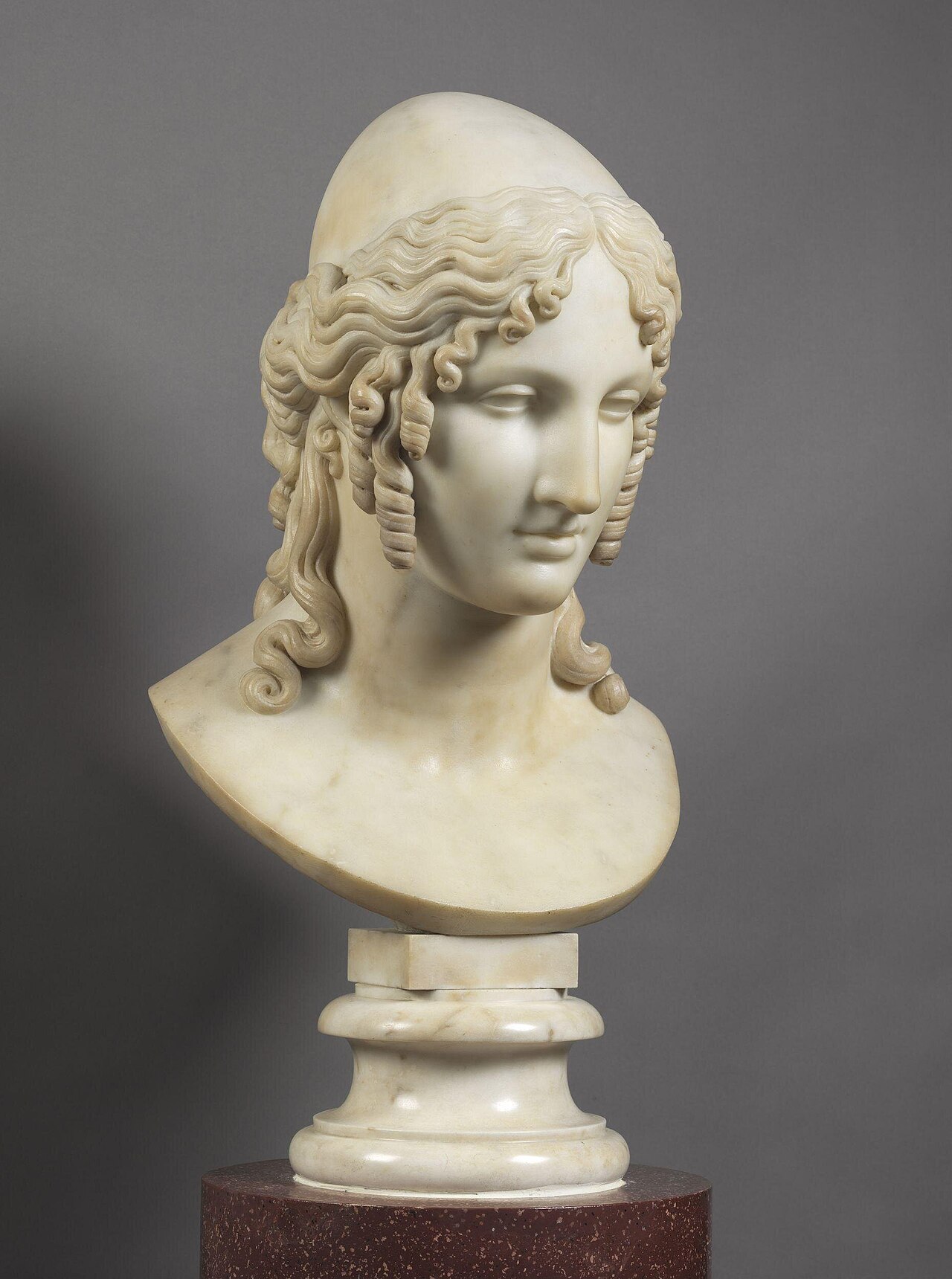
Antonio Canova · Public domain
Helen of Troy, known in Greek mythology as the most beautiful woman in the world, was a figure whose abduction or elopement with Paris of Troy sparked the Trojan War. She was the daughter of Zeus by Leda or Nemesis, and the sister of Clytemnestra, Castor, Pollux, and others. Her story appears in works by Homer, Hesiod, Euripides, Virgil, and Ovid, and she has been a lasting symbol of ideal human beauty.
Quick Facts
- Siblings
- Castor and Pollux, Clytemnestra, Timandra, Philonoe
- Offspring
- Hermione, various others in different stories
- Birth Place
- Sparta
- Death Place
- Rhodes (according to Pausanias)Taken on Olympus while still alive according to Euripides.
- Abode
- Sparta / Troy
- Parents
- Zeus · Leda or Nemesis
- Deity Of
- Queen of Sparta / Princess of Troy / Patron deity of sailors
- Spouse
- Menelaus · Paris · Deiphobus
Facts from the source article.
Lore & Background
Helen was first married to King Menelaus of Sparta, bearing him a daughter, Hermione, and possibly a son, Nicostratus. A competition among her suitors led to the Oath of Tyndareus, requiring all to defend her husband if she were stolen. When she later went to Troy with Paris—whether willingly or by abduction—the oath's obligations triggered the Trojan War. Legends of her time in Troy are contradictory: Homer depicts her as regretful yet sly, while other accounts show her rejoicing in carnage. Some versions say she never reached Troy but waited in Egypt.
Reader's Guide
Helen of Troy's significance lies in her role as both a catalyst for the Trojan War and a symbol of beauty that transcends time. Her story, preserved by ancient Greek and Roman authors, explores themes of love, choice, and consequence. The ambiguity of her actions—whether she was abducted or eloped—has fueled artistic and literary interpretations for centuries. In medieval art, her elopement was often a seduction; in the Renaissance, a forced abduction. Christopher Marlowe's line 'Was this the face that launched a thousand ships' encapsulates her enduring legacy. Cult worship of Helen developed in Hellenistic Laconia, Sparta, Attica, and Rhodes, and she shared a shrine with Menelaus at Therapne. Her name's etymology remains debated, with theories linking it to the moon, a torch, the sun, or a vegetation goddess. As a personification of ideal human beauty, Helen has inspired countless artists and writers, making her a central figure in Western cultural memory.
Did You Know?
- Helen's name in Laconian Greek began with a digamma (Ϝ), ruling out etymologies starting with simple *s-.
- Some accounts say Helen and Paris had children, but the claim of four sons and a daughter with three dying in an earthquake during the Trojan War is not supported by major ancient sources.
- A cult associated with Helen developed in Hellenistic Laconia, and she was worshipped in Attica and on Rhodes.
- The First Vatican Mythographer mentions two eggs from Leda's union with Zeus, but the standard tradition pairs Castor and Polydeuces (Pollux) in one egg, and Helen and Clytemnestra in the other.
Origins, Family, and the Web of Kinship
Helen's mythological parentage places her at the intersection of divine and mortal worlds. She is credited as the offspring of Zeus, with her mother identified variously as Leda or Nemesis. This divine lineage made her the full sister of Clytemnestra, the Dioscuri Castor and Pollux, and the lesser-known Philonoe, Phoebe, and Timandra. Her marriage to Menelaus of Sparta, which she entered while still very young, produced at least one daughter, Hermione—whom Homer calls her first and only child, while Hesiod describes her as an unexpected arrival. Other traditions add sons to the family, though some sources reclassify these boys as Menelaus's illegitimate offspring by other women. Her later union with Paris of Troy generated yet another cluster of children: four sons (Corythus, Bunomus, Aganus, Idaeus) and a daughter Helen named after herself following a game contest she won. The fate of these children was grim—three of the boys perished in a structural collapse during the war, and the daughter was reportedly slain by her own grandmother Hecuba as Troy fell.
The Oath, the Elopement, and the War's Spark
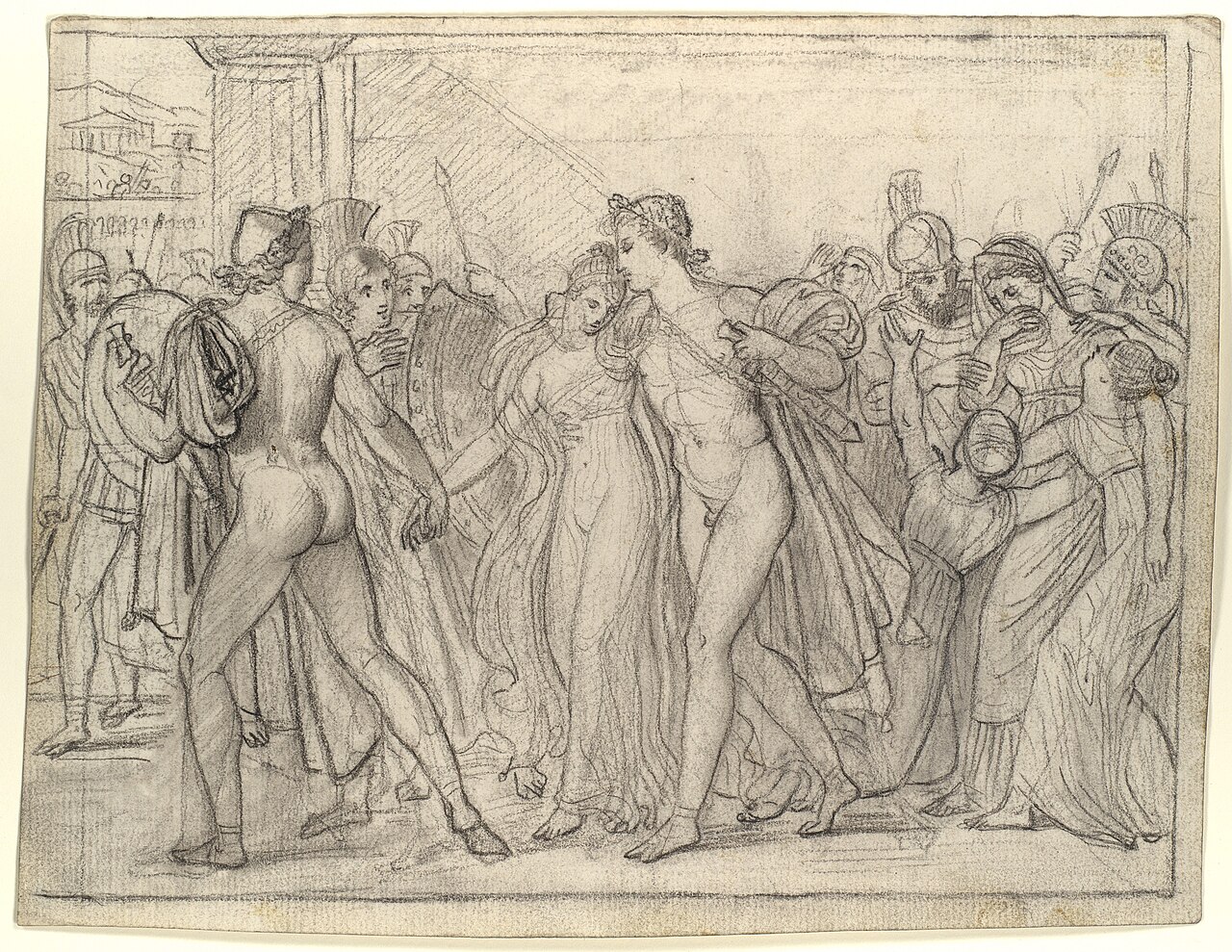
The mechanism that turned Helen's personal story into a pan-Hellenic catastrophe was the Oath of Tyndareus. When a competition among her suitors for her hand in marriage concluded with Menelaus as the victor, every suitor was compelled to swear a solemn pledge: should Helen ever be taken from her husband, they would marshal military aid to recover her. This binding obligation is what ultimately mobilized the Greek coalition against Troy. As for Helen's own departure, the ancient sources are divided. In Homer and most major accounts, she fell genuinely in love with Paris and chose to go to Troy of her own will. Other traditions cast her as a victim of abduction. Her earlier life also carried a shadow: in her youth, Theseus seized her, an episode that underscores how her beauty made her a perpetual object of desire and conflict long before the Trojan saga began.
Contradictory Portrayals in Troy and Beyond
Ancient authors paint Helen's years in Troy in sharply conflicting strokes. Homer presents her as a complex, ambivalent figure—she regrets her choice yet simultaneously schemes to repair her public reputation, a sly self-protective intelligence running beneath her sorrow. Other, darker traditions depict her as actively treacherous: simulating ecstatic Bacchic rites while secretly reveling in the destruction her presence wrought. A third strand removes her from Troy entirely, placing her in Egypt where she simply waits out the decade-long siege. Her end is equally uncertain. In Homer's telling, Paris dies in battle and Helen is reunited with Menelaus. Alternative versions elevate her beyond the mortal sphere, having her ascend to Olympus. These contradictions suggest that Helen was never a fixed character but a mutable vessel into which each culture projected its own anxieties about beauty, agency, and guilt.
Cult, Etymology, and the Enduring Image
Helen transcended mere narrative to become an object of religious veneration. In Hellenistic Laconia, a cult grew up around her at Sparta and at Therapne, where she shared a shrine with Menelaus. Her worship extended to Attica and Rhodes, indicating a broad geographic reach. The etymology of her name remains genuinely unresolved. Nineteenth-century scholar Georg Curtius linked it to the moon goddess Selene, but early Laconian inscriptions spelling her name with an initial digamma (a w-sound) complicate that reading. Émile Boisacq proposed a derivation from the Greek word for torch. Otto Skutsch suggested two distinct etymologies for two separate mythological figures: a Spartan light-goddess connected to phenomena like St. Elmo's fire, and a vegetation deity worshipped as Helena of the Trees. Martin L. West offered mistress of sunlight via a Proto-Indo-European suffix, tying her to a broader sun-goddess marriage myth. Meanwhile, her image has captivated artists from seventh-century BC depictions through Marlowe's immortal couplet in Doctor Faustus.
Gallery
Frequently Asked Questions
Who is Helen of Troy?
Helen is a Spartan princess in Greek mythology, born from an egg as the child of Zeus and either Leda or Nemesis. She is consistently portrayed across ancient sources as the most beautiful woman in the world.
What are Helen of Troy's powers or special role?
Helen wields no magical abilities herself, yet her beauty is treated in the myths as a kind of world-shaking force. Her face is famously said to have launched a thousand ships, making her the direct human catalyst for the Trojan War.
Why is Helen of Troy important in mythology?
She is the central human cause of the Trojan War, the defining conflict of Greek epic tradition. Her story threads through the works of Homer, Hesiod, Euripides, Virgil, and Ovid, cementing her as one of the most enduring figures in Western literature.
Did Paris kidnap Helen or did she leave willingly?
Ancient sources genuinely disagree: some accounts describe her as being seized by force, while others frame the departure as a mutual elopement. This ambiguity has been a point of debate among readers for thousands of years.
More in Mythological kidnapped people 1-24
Spotted an error? Know more?
Reader corrections go straight into our review queue. Suggest an edit · How this site is sourced