
Hesione
Trojan princess saved by Heracles, later linked to the Trojan War.

Mark Landon · CC BY 4.0
Hesione is a figure from Greek mythology, most prominently known as a Trojan princess, daughter of King Laomedon of Troy and sister of Priam. She is notable for being saved from a sea monster by Heracles and later becoming the second wife of King Telamon of Salamis, with her story linked to the events leading up to the Trojan War.
- Born
- Troy (mythological)
- Died
- Unknown (mythological)
- Field
- Greek mythology
- Nationality
- Trojan
- Known for
- Being saved from a sea monster by Heracles; potential trigger of the Trojan War
Lore & Background
According to the Bibliotheca, Hesione was a Trojan princess, daughter of King Laomedon, sister of Priam, and second wife of King Telamon of Salamis. Her first notable myth involves Heracles saving her from a sea monster sent by Poseidon after Laomedon refused to pay the gods for building Troy's walls. Oracles promised deliverance if Laomedon exposed Hesione to the monster Cetus, and Heracles agreed to save her in exchange for Laomedon's wonderful horses, but Laomedon later refused the payment.
Reader's Guide
Hesione's significance lies in her role as a potential trigger of the Trojan War. After Heracles slew the monster and later attacked Troy, killing Laomedon and most of his sons, he gave Hesione as a prize to Telamon. She chose to ransom her brother Podarces, who then became known as Priam. Years later, when Hesione was an old woman, Priam sent envoys to Greece demanding her return; when they were rejected, he sent Paris and Aeneas, but Paris instead brought back Helen, leading to the Trojan War. Thus, Hesione's story connects the earlier Heracles myth to the later epic conflict.
Did You Know?
- Hesione married Telamon and bore him a son, Teucros, half-brother to Ajax.
- Priam's demand for Hesione's return led to Paris bringing back Helen, sparking the Trojan War.
The Monster at the Rocks
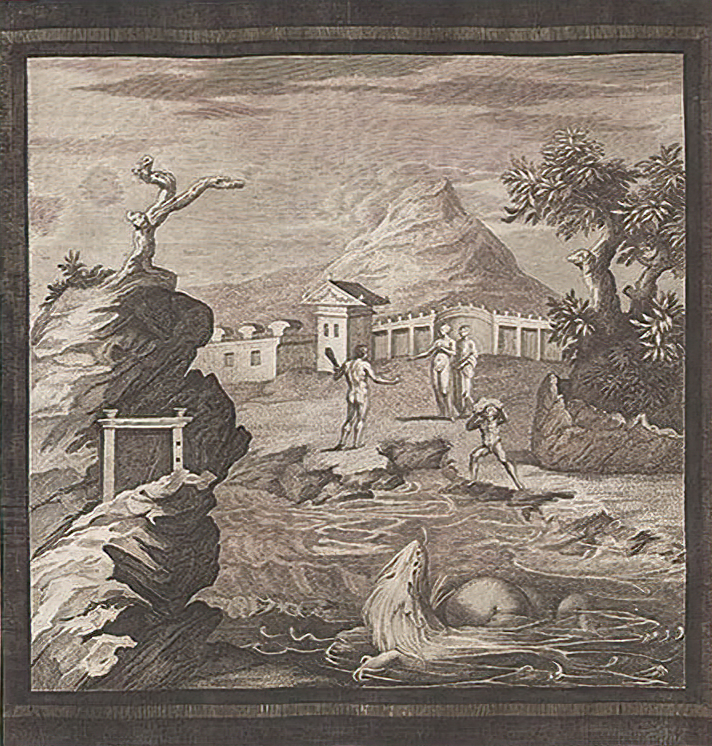
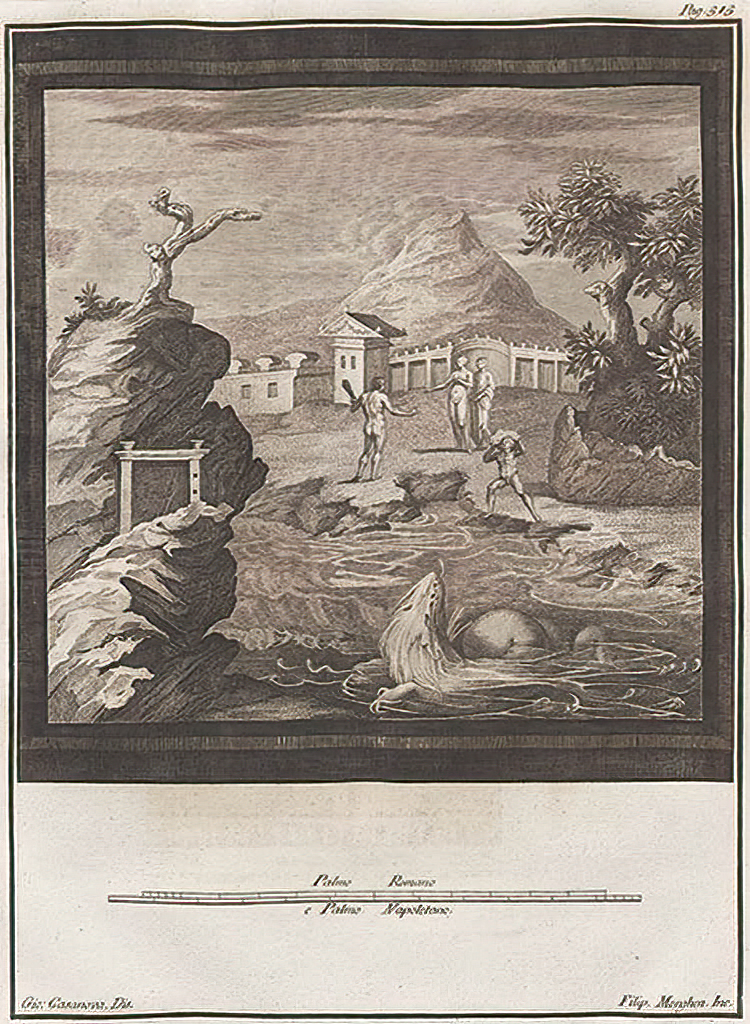
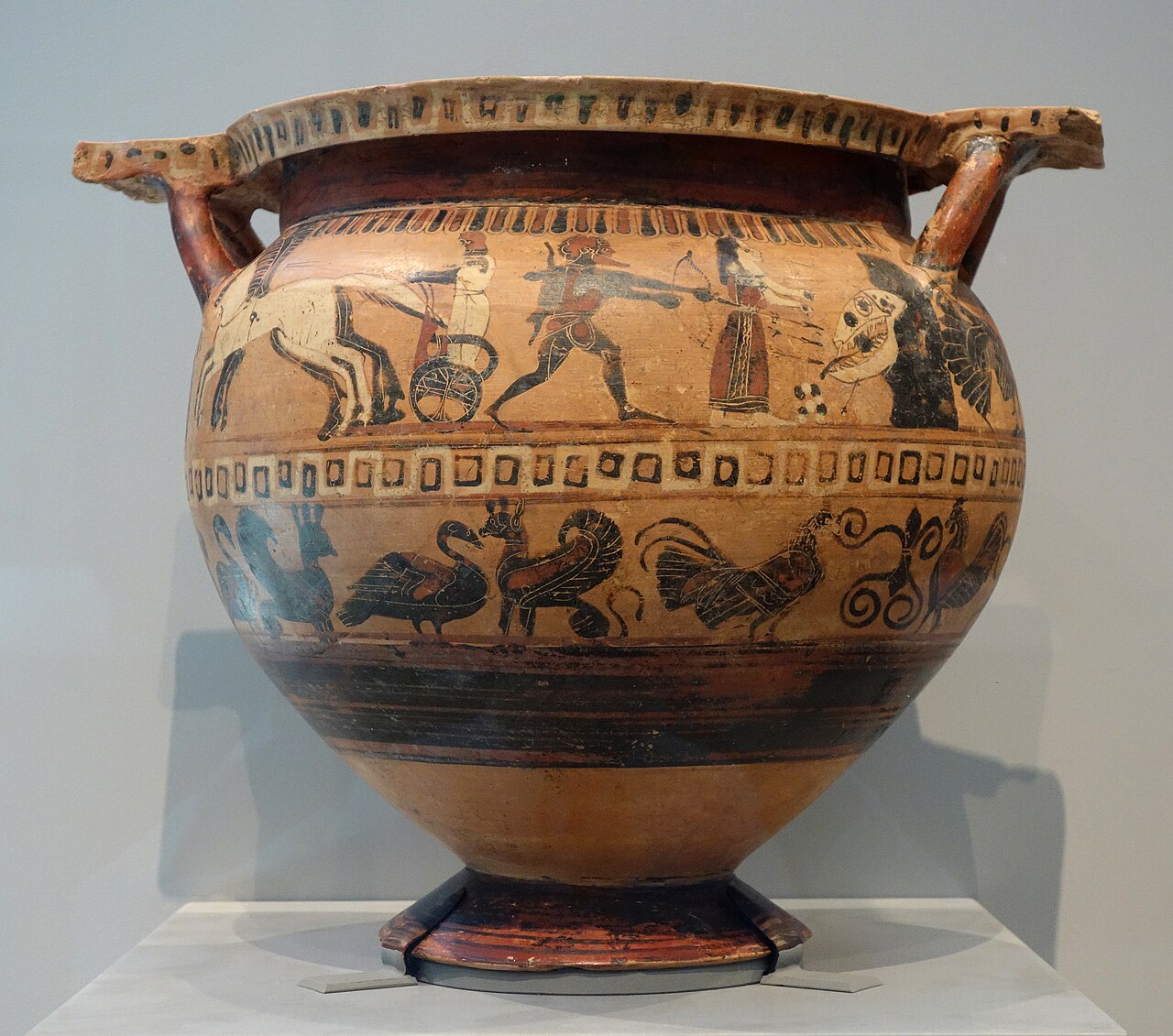
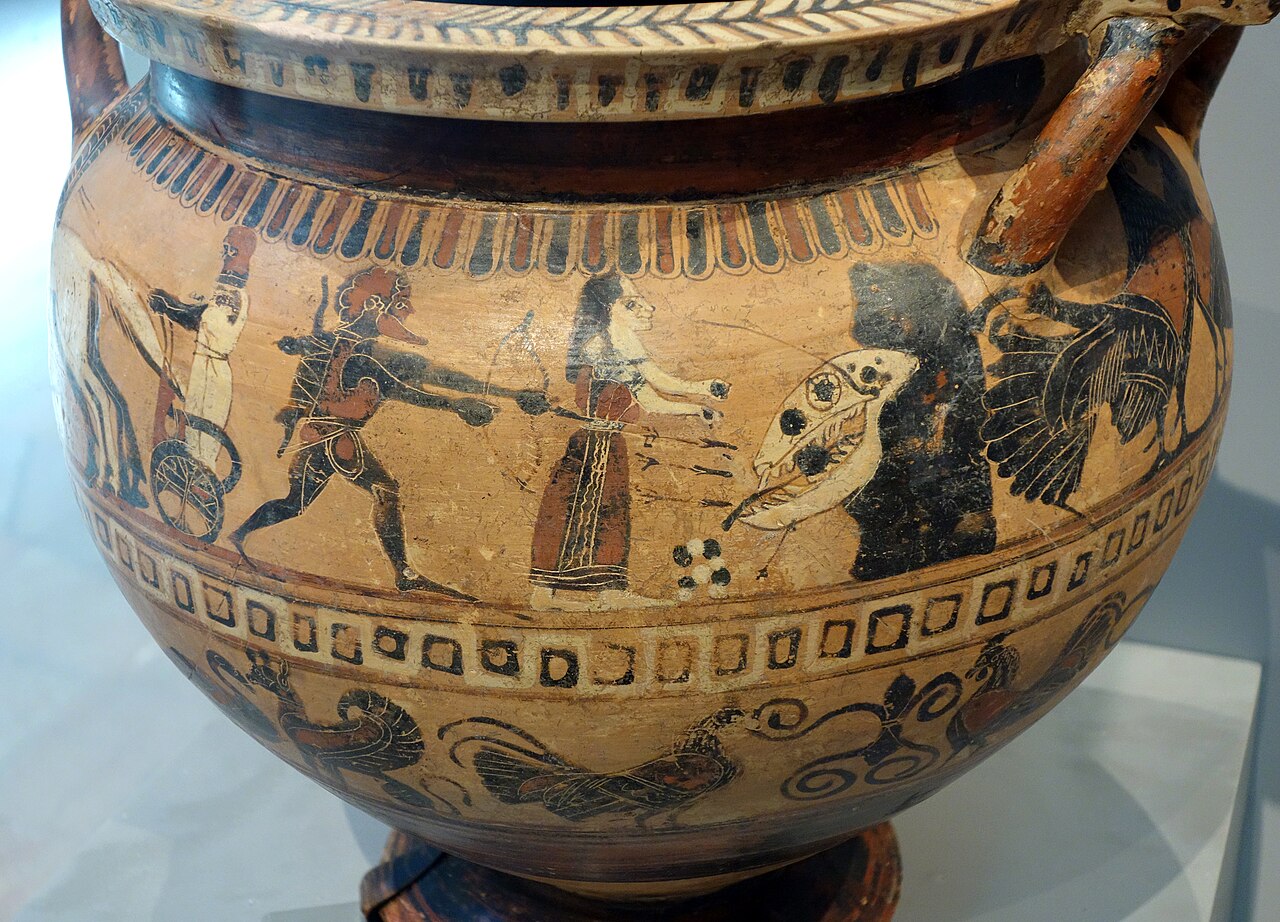
When King Laomedon of Troy refused to honor the wages he owed Apollo and Poseidon for constructing the city's walls, the two gods unleashed devastating punishment upon the Trojan people. Apollo sent a plague to ravage the population, while Poseidon released a fearsome sea creature known as Cetus to destroy Troy. Oracles declared that the only path to deliverance was for Laomedon to expose his daughter to the beast, and he complied by fastening the young Hesione naked to the rocks near the sea. It was by chance that Heracles, Telamon, and Oicles arrived in the area, returning from their campaign against the Amazons. Upon seeing the princess bound to the cliffs, Heracles offered to slay the monster on one condition: Laomedon must hand over the wonderful horses he had received from Zeus as compensation for the god's kidnapping of Ganymede. The king accepted the bargain. Heracles killed Cetus, though some versions describe him being swallowed whole and then hacking at the creature's innards for three days before it finally perished, emerging in the process having lost all his hair. Yet when the deed was done, Laomedon reneged on his promise and withheld the horses.
The Fall of Troy and the Birth of a Name
The broken promise over the divine horses set in motion a far graver consequence. In a subsequent expedition, Heracles returned to Troy with the intent of collecting what he was owed, and the result was catastrophic for the royal house. He slew King Laomedon and every one of his sons, with the sole exception of the youngest, Podarces. Rather than claiming the princess for himself, Heracles bestowed Hesione upon Telamon as a prize. In a moment that would echo through generations, the hero permitted Hesione to select any captives she wished to accompany her. She chose her brother Podarces. Heracles then allowed her to ransom him in exchange for her veil, a transaction so defining that the boy was thereafter called Priam, a name derived from the ancient Greek word priasthai, meaning "to buy." Heracles went on to entrust the governance of Troy to this newly named prince. A variant tradition offers a different explanation for Podarces' survival: he was simply absent, campaigning in Phrygia when the attack fell upon the city.
The Old Woman Who Almost Started a War
Many years after her rescue from the sea monster and her marriage to Telamon, Hesione lived out her days as an elderly woman in Salamis. Yet her presence in Greek territory remained a grievance for Troy's king, Priam. Driven by the desire to reclaim his sister, he dispatched Antenor and Anchises on a diplomatic mission to Greece, demanding her return. The Greeks rejected the envoys outright and drove them away. Undeterred, Priam sent a second, more prestigious delegation: his own son Paris alongside Aeneas. The mission was meant to retrieve Hesione, but fate intervened in the most consequential way imaginable. Paris became sidetracked and instead brought back Helen, the queen of Sparta and wife of Menelaus. The irony is staggering: an embassy sent to recover a long-forgotten Trojan princess ended up abducting the woman whose seizure would ignite the Trojan War. Priam, according to the sources, was ultimately willing to accept Helen's abduction, precisely because the Greeks had refused to return his sister.
Lineage, Variant Traditions, and the Name's Reach
Among the various figures bearing the name Hesione in Greek myth, the Trojan princess stands as the most prominent. She is identified as the daughter of King Laomedon, the sister of Priam, and the second wife of Telamon, king of Salamis. From this union she bore a son named Teucros, who became the half-brother of Ajax, Telamon's child from his first marriage. Yet the tradition surrounding her later life is not uniform. One account holds that she became pregnant with a child called Trambelus while still aboard the ship carrying her from Troy, and that she subsequently escaped. Another possibility noted in the sources is that the mother of Trambelus was not Hesione at all but a woman named Theaneira. The name also surfaces in later literary works, though not always reliably. In Dictys Cretensis, a reference to Hesione in book four appears to be a scribal error for Plesione, which in turn may be a corruption of the name Pleione. In the broader landscape of Greek storytelling, her tale of a hero rescuing a maiden from a sea creature aligns with parallel myths such as Perseus and Andromeda, Eurybarus and Alcyoneus, and Menestratus and Cleostratus.
Gallery
Frequently Asked Questions
Who is Hesione?
Hesione is a Trojan princess in Greek mythology, daughter of King Laomedon and sister of Priam. She is best known for being rescued from a sea monster by the hero Heracles.
How did Heracles save Hesione?
Poseidon sent a sea creature to ravage Troy's coast, and Hesione was chained to the rocks as a sacrifice to appease the god. Heracles slew the monster and freed her, though Laomedon later refused to hand over the promised reward of immortal horses.
Who are Hesione's parents and siblings?
She was born to King Laomedon of Troy and is the full sister of Priam, the ruler who presided over the city during the Trojan War. Her mother is not consistently named across the surviving mythological accounts.
Why is Hesione linked to the Trojan War?
Her rescue is sometimes cited as part of the chain of grievances between Greece and Troy, since Laomedon's refusal to reward Heracles deepened the hostility that eventually erupted into full-scale conflict. She is not a warrior herself, but her story sits at a narrative crossroads leading into the war.
What happened to Hesione after the sea monster episode?
She went on to marry King Telamon of Salamis as his second wife, and her mythological presence largely concludes there. She does not feature as a major character in the Iliad or in the broader Trojan War narratives.
More in Mythological kidnapped people 1-24
Spotted an error? Know more?
Reader corrections go straight into our review queue. Suggest an edit · How this site is sourced