
Ganymede (mythology)
Divine hero abducted by Zeus to serve as cup-bearer.

Marie-Lan Nguyen · Public domain
Ganymede (also Ganymedes) is a divine hero from Greek mythology whose homeland was Troy. He is described by Homer as the most handsome of mortals and was abducted by the gods to serve as Zeus's cup-bearer on Mount Olympus. His name is derived from the Ancient Greek for 'gladdening prince' or 'meant to please.'
Quick Facts
- God Of
- Cupbearer to the gods
- Abode
- Mount Olympus
- Parents
- Tros and Callirhoe or Acallaris
- Siblings
- Ilus, Assaracus, Cleopatra, Cleomestra
Facts from the source article.
Lore & Background
Ganymede is the son of Tros of Dardania, from whose name 'Troy' is supposedly derived, either by his wife Callirrhoe or Acallaris. Depending on the author, he is the brother of Ilus, Assaracus, Cleopatra, or Cleomestra. Some authors call him a son of Laomedon or Ilus, and he is also known as Dardanus, Erichthonius, or Assaracus.
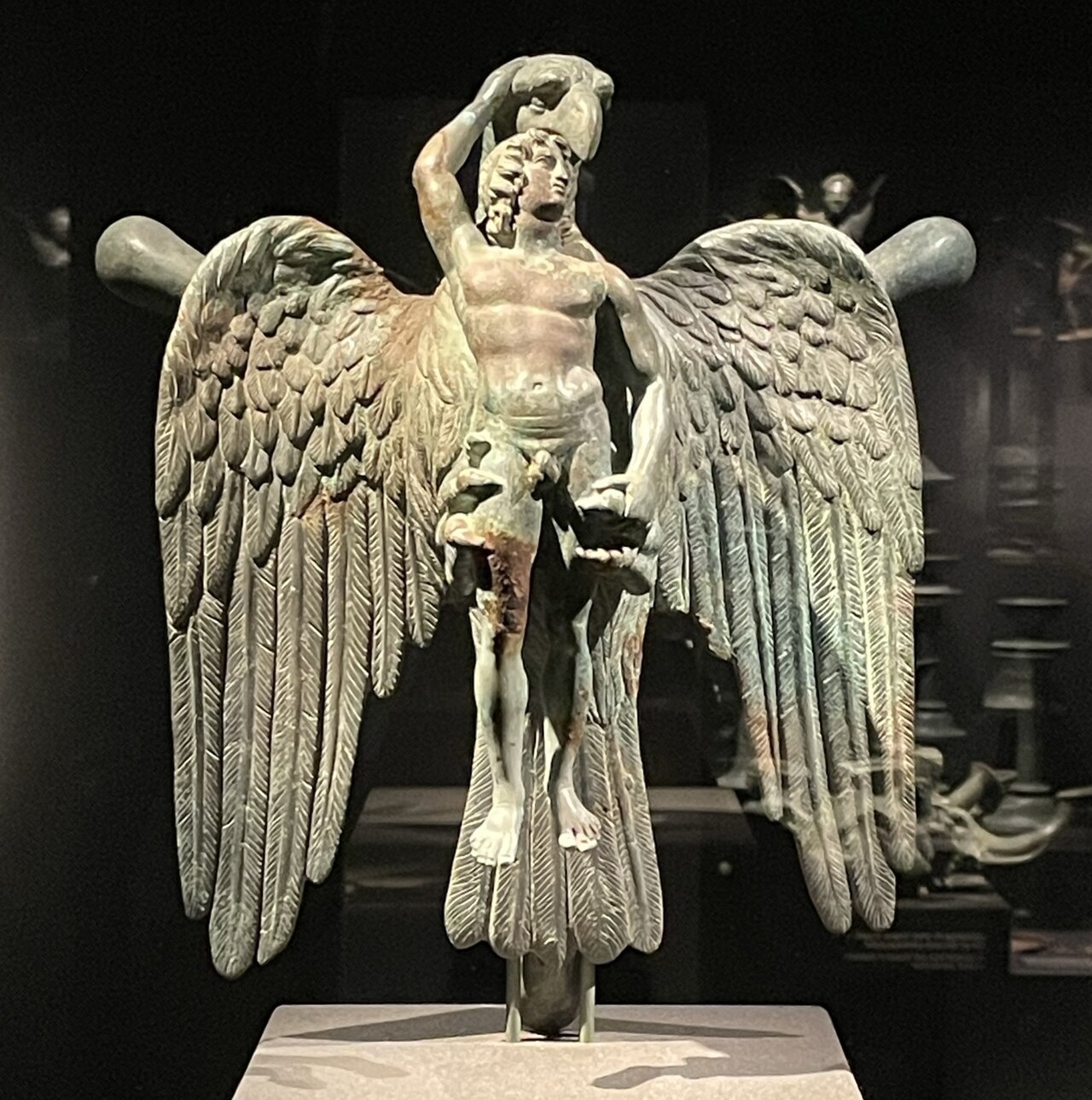
In the Iliad, Ganymede's beauty exceeds that of all other mortals, leading the gods to kidnap him to become Zeus's wine-pourer. The earliest unambiguous erotic interpretation appears in Theognis (c. 6th century BC). In some later sources, Zeus abducted Ganymede from Mount Ida near Troy while the youth tended sheep, using an eagle that was either under Zeus's command or Zeus himself. Zeus compensated Ganymede's father Tros with swift horses delivered by Hermes. On Olympus, Ganymede received eternal youth and immortality as cup-bearer, replacing Hebe. In some accounts, Zeus later placed him in the sky as the constellation Aquarius.
Reader's Guide
Ganymede's myth evolved significantly over time. Early Homeric accounts present the abduction as nonsexual, using words without erotic connotation. By the 5th century BCE, however, a sexual passion between Zeus and Ganymede was widely believed, as noted by Socrates in Plato's Phaedrus. Xenophon's Socrates later argued the relationship was nonsexual, based on love for Ganymede's mind. The Latin form Catamitus gave rise to the English word 'catamite.' In art, Ganymede became a major symbol of homosexual love from the Renaissance through the Late Victorian era. The largest moon of Jupiter is named Ganymede after this myth. The story also appears in works by Virgil, Statius, and Apollonius of Rhodes, and was a popular subject in ancient vase-painting and Roman funerary monuments.
Did You Know?
- The English word 'catamite' derives from the Latin form of Ganymede's name, Catamitus.
- Ganymede's abduction is referenced in the Iliad, which describes his beauty as exceeding that of all other mortals.
The Abduction and Its Shifting Meaning
The story of Ganymede's removal from the mortal world is one of the most fluid narratives in Greek myth. In the Iliad, composed around 750 to 700 BC, the poet simply states that the gods seized the most beautiful of all mortals to serve as Zeus's wine-pourer on Olympus. The Greek verb Homer chose carries no sexual weight whatsoever, and the Homeric Hymn to Aphrodite likewise presents the event as a straightforward divine taking. It was not until Theognis, writing in roughly the sixth century BC, that an author explicitly framed the bond between god and youth as erotic. By the fifth century BCE, the idea that Zeus harbored a sexual passion for the Trojan boy had become widespread. Later traditions add vivid detail: Ganymede is tending flocks on Mount Ida near Phrygia when an eagle—sometimes identified as Zeus in disguise—carries him skyward. A separate strand, preserved by Dictys Cretensis and echoed by Athenaeus, replaces Zeus with the Cretan King Minos as the abductor, linking the episode to local customs of courtship.
Family, Names, and the Puzzle of Identity
Ganymede's genealogy is a patchwork of contradictions that has puzzled scholars for centuries. He is most commonly identified as the son of Tros, the eponymous ancestor of Troy, though some sources make him a child of Laomedon or even of Ilus. His mother is variously given as Callirrhoe, daughter of the river god Scamander, or Acallaris, daughter of Eumedes. His sibling list shifts from author to author: Ilus, Assaracus, Cleopatra, and Cleomestra all appear in different versions. In certain tellings he is even called Dardanus or Erichthonius, blurring his identity with other Trojan figures. The scholar Edmund Veckenstedt went so far as to classify Ganymede and his brothers Ilus and Assarakos as ethnically Semitic. His name itself—derived from the Greek for "gladdening prince" or "meant to please"—carried a Latin rendering, Catamitus, from which the English word "catamite" ultimately descends. This linguistic legacy underscores how deeply the figure permeated Western vocabulary.
Cup-Bearer, Constellation, and Cosmic Legacy
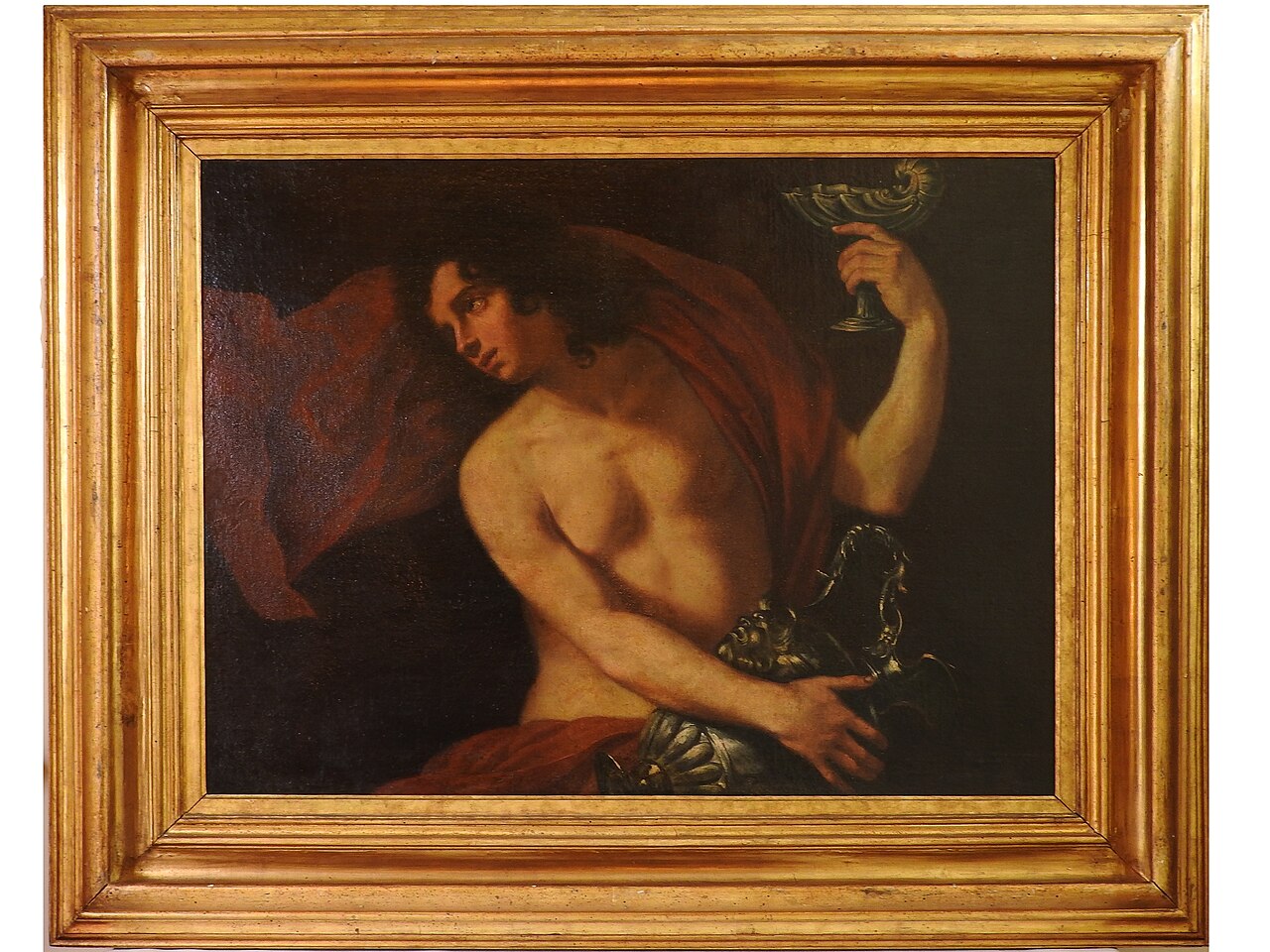
Upon reaching Olympus, Ganymede received two extraordinary gifts from Zeus: eternal youth and full immortality. He assumed the prestigious role of the god's personal wine-pourer, a position that in some accounts displaced Hebe, who was relieved of her cup-bearing duties after her marriage to Herakles. In the Iliad's version, Hebe and at one point Hephaestus serve as the general cup-bearers of all the Olympians, while Ganymede attends specifically to Zeus. To soothe his father Tros's grief, Zeus sent Hermes with a pair of celestial horses—so swift they could gallop across water and the standing air of grain—as compensation. The myth's reach extended far beyond the mortal realm: Zeus placed Ganymede among the stars as the constellation Aquarius, the water-carrier, positioned beside Aquila, the Eagle that bore him. This identification became the standard reading in Greek astronomical and mythological texts. In recognition of the story, the German astronomer Simon Marius named the largest moon of Jupiter—Zeus's Roman counterpart—Ganymede.
Philosophical Debates and Literary Portrayals
The question of what Zeus's love for Ganymede truly entailed set ancient thinkers in vigorous debate. In Plato's Phaedrus, Socrates describes the bond as "desire," a term with clear erotic overtones. Yet in Xenophon's Symposium, the same Socrates insists that Zeus cherished Ganymede for his mind and soul, explicitly denying any sexual dimension. Xenophon's argument gains force from a striking observation: Zeus never granted immortality to any of his other lovers, yet he made Ganymede eternal. The etymology of the name becomes a battleground—γάνυται means "he is glad" and μήδεᾰ means "counsel" or "thought," but the latter word also denotes male genitals, leading the scholar Christine Downing to propose a reading of "happy genitals" that reasserts the homoerotic layer. In poetry, Ganymede became the archetypal beautiful youth who stirs homosexual longing, though he is not always passive: in Apollonius of Rhodes' Argonautica, he rages at Eros for cheating him at a knucklebone game, prompting Aphrodite to scold her son for "cheating a beginner." Virgil, meanwhile, renders the abduction with deep pathos as the boy's aged tutors strain in vain to hold him back.
Gallery



Frequently Asked Questions
Who is Ganymede in Greek mythology?
Ganymede is a Trojan youth regarded as a divine hero in Greek myth. Homer singles him out as the most beautiful of all mortals, and his name carries the sense of a 'gladdening prince' or one 'meant to please.'
What happens to Ganymede in the myth?
Zeus is so captivated by the young man's striking beauty that he carries him off to Mount Olympus. Once there, the king of the gods bestows upon him immortality and eternal youth as part of his new divine role.
What is Ganymede's job among the Olympian gods?
He serves as the cup-bearer to Zeus and the rest of the divine court, pouring nectar and ambrosia at their feasts. This makes him a constant, honored presence in the halls of Olympus.
Which constellation is linked to Ganymede?
In Greek tradition he is identified with Aquarius, the water-bearer, a direct reflection of his pouring duties for the gods. That celestial association has carried forward into Western astronomy and astrology.
Why does Ganymede's story matter in the broader mythological canon?
His abduction is a foundational example of a god elevating a mortal into permanent divine service, a motif that recurs throughout Greek art and literature. The tale also ties Trojan heritage directly to the Olympian pantheon, bridging the mortal and divine worlds.
More in Mythological kidnapped people 1-24
Spotted an error? Know more?
Reader corrections go straight into our review queue. Suggest an edit · How this site is sourced