
Europa (consort of Zeus)
Phoenician princess abducted by Zeus, mother of Minos.

Wikifrits · Public domain
Europa was a Phoenician princess in Greek mythology, said to have been abducted by Zeus in the form of a bull. She became the mother of the Cretan king Minos, and the continent Europe may derive its name from her.
Quick Facts
- Abode
- Crete
- Consort
- Asterion, Zeus
- Parents
- Agenor with either Telephassa or Argiope; alternatively Phoenix and Perimede
- Siblings
- Cadmus, Cilix, Phoenix
- Children
- Minos, Rhadamanthys, Sarpedon, Crete, Alagonia, Carnus
Facts from the source article.
Lore & Background
Europa is generally said to be the daughter of Agenor, the Phoenician King of Tyre, though some sources, such as the Iliad, claim she is the daughter of Agenor's son Phoenix. Her mother is variously given as Queen Telephassa or Argiope. She had two brothers, Cadmus and Cilix, with some accounts including Phoenix as a third brother. After being taken to Crete, Europa bore Zeus three sons: Minos, Rhadamanthus, and Sarpedon. She later married Asterion (also rendered Asterius) and became mother or step-mother of his daughter Crete.
Reader's Guide
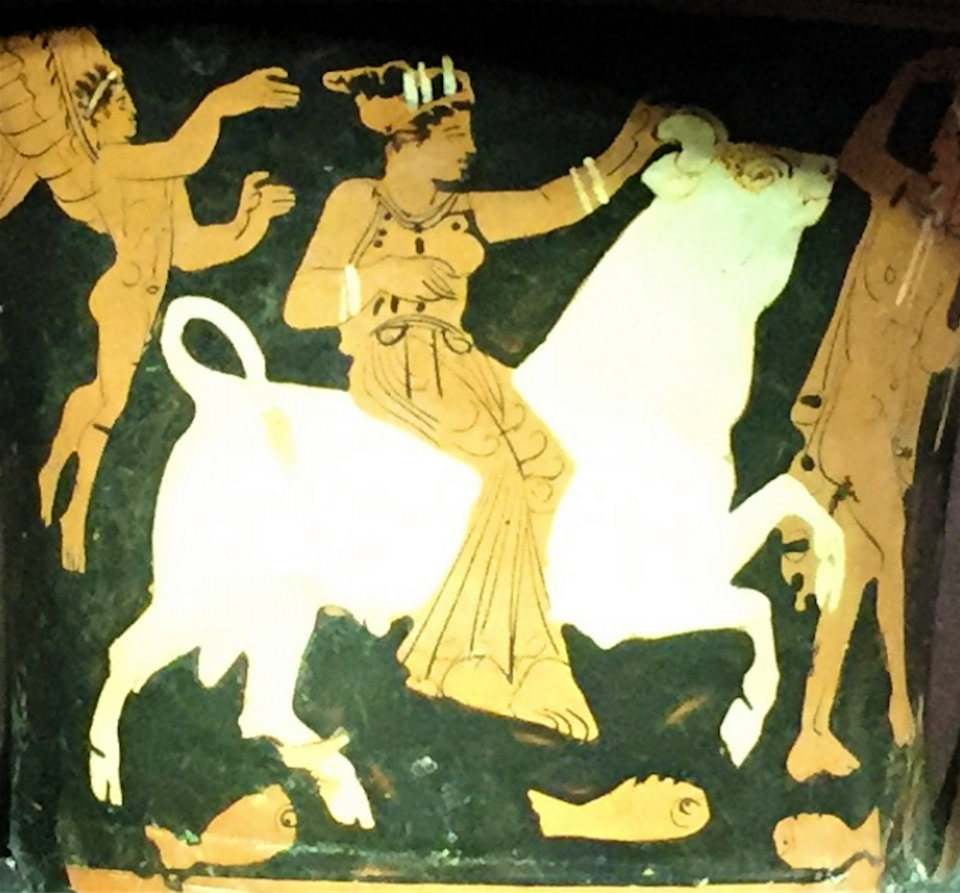
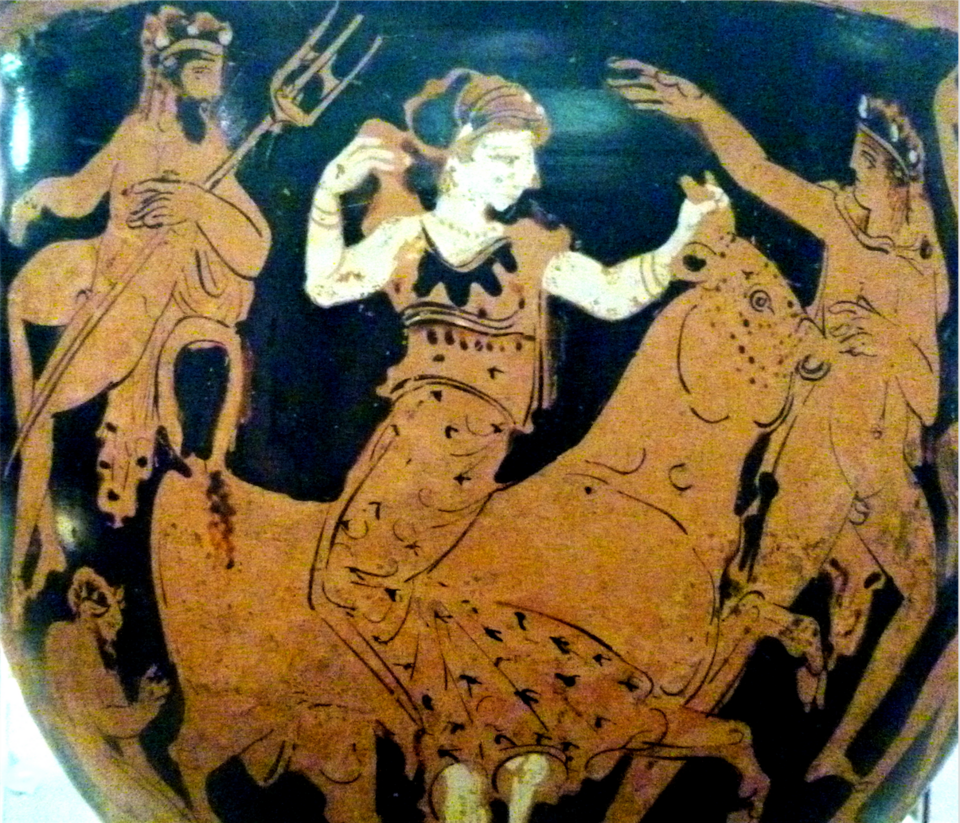
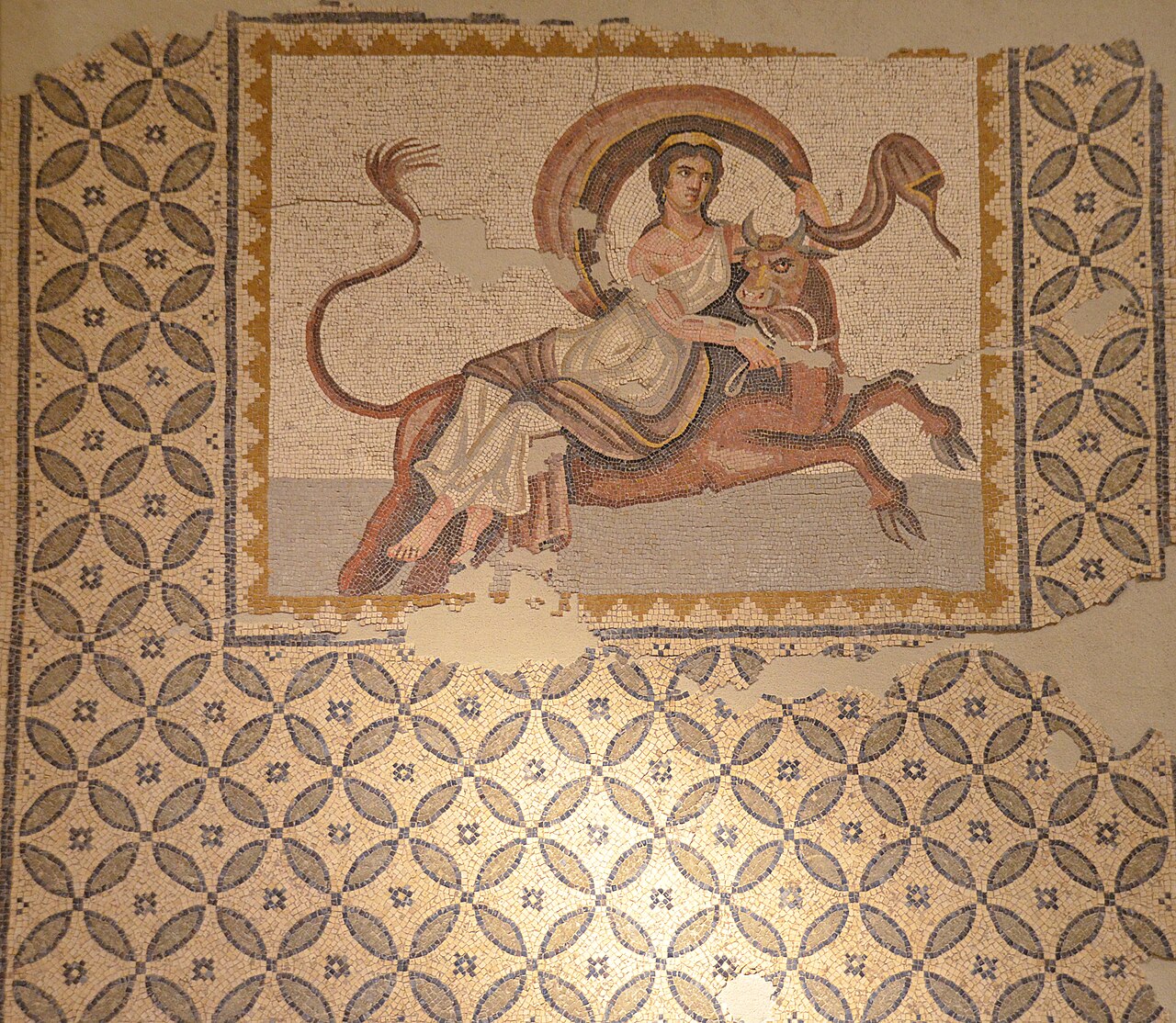
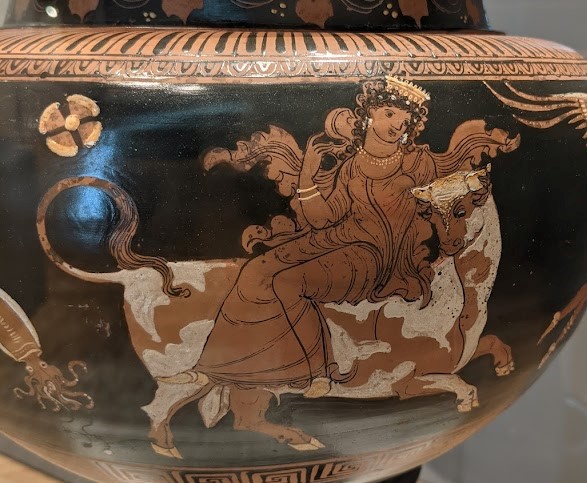
Europa's myth is central to the cultural connection between the Levant and the Greek world. The story of her abduction by Zeus in the form of a bull was widely depicted in ancient art, with the earliest securely identifiable vase-painting dating from the mid-7th century BC. The etymology of her name is debated, with some linking it to Greek words for 'broad' or 'wide face,' while others propose a Semitic origin meaning 'west' or 'sunset.' The continent Europe may take its name from her. Her cult was not widespread in classical Greece, but she was honored as an epithet of Demeter at Lebadaea in Boeotia, and a festival called Hellotia was celebrated in her honor in Crete. The myth may have origins in a sacred union between Phoenician deities 'Aštar and 'Aštart in bovine form.
Did You Know?
- An early reference to Europa is in a fragment of the Hesiodic Catalogue of Women, discovered at Oxyrhynchus.
- The earliest vase-painting securely identifiable as Europa dates from the mid-7th century BC.
- Zeus gave Europa a necklace made by Hephaestus and three additional gifts: the bronze automaton Talos, the hound Laelaps, and a javelin that never missed.
- The festival of Hellotia in Crete was celebrated in honor of Europa.
The Abduction and Its Many Tellings
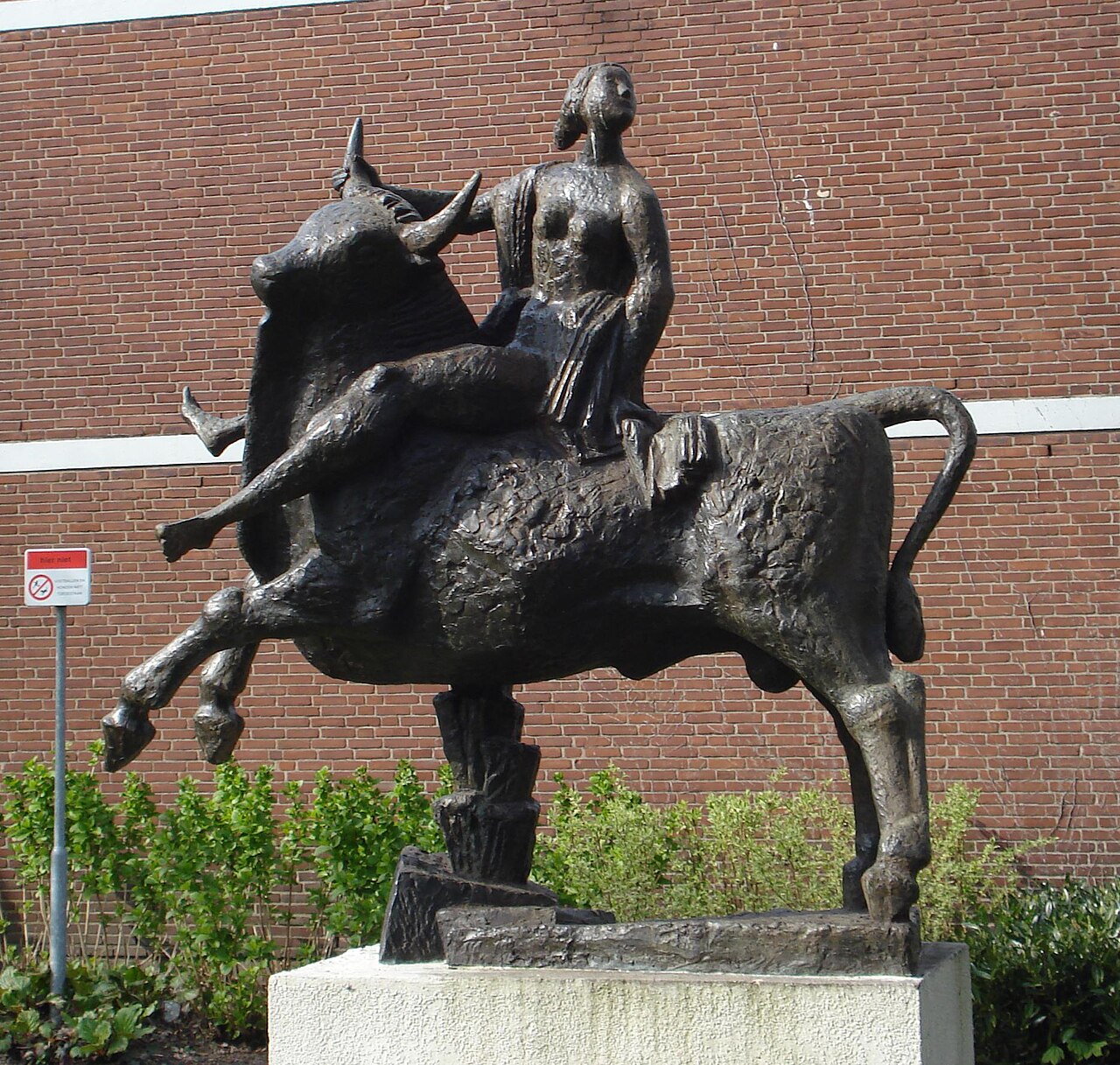
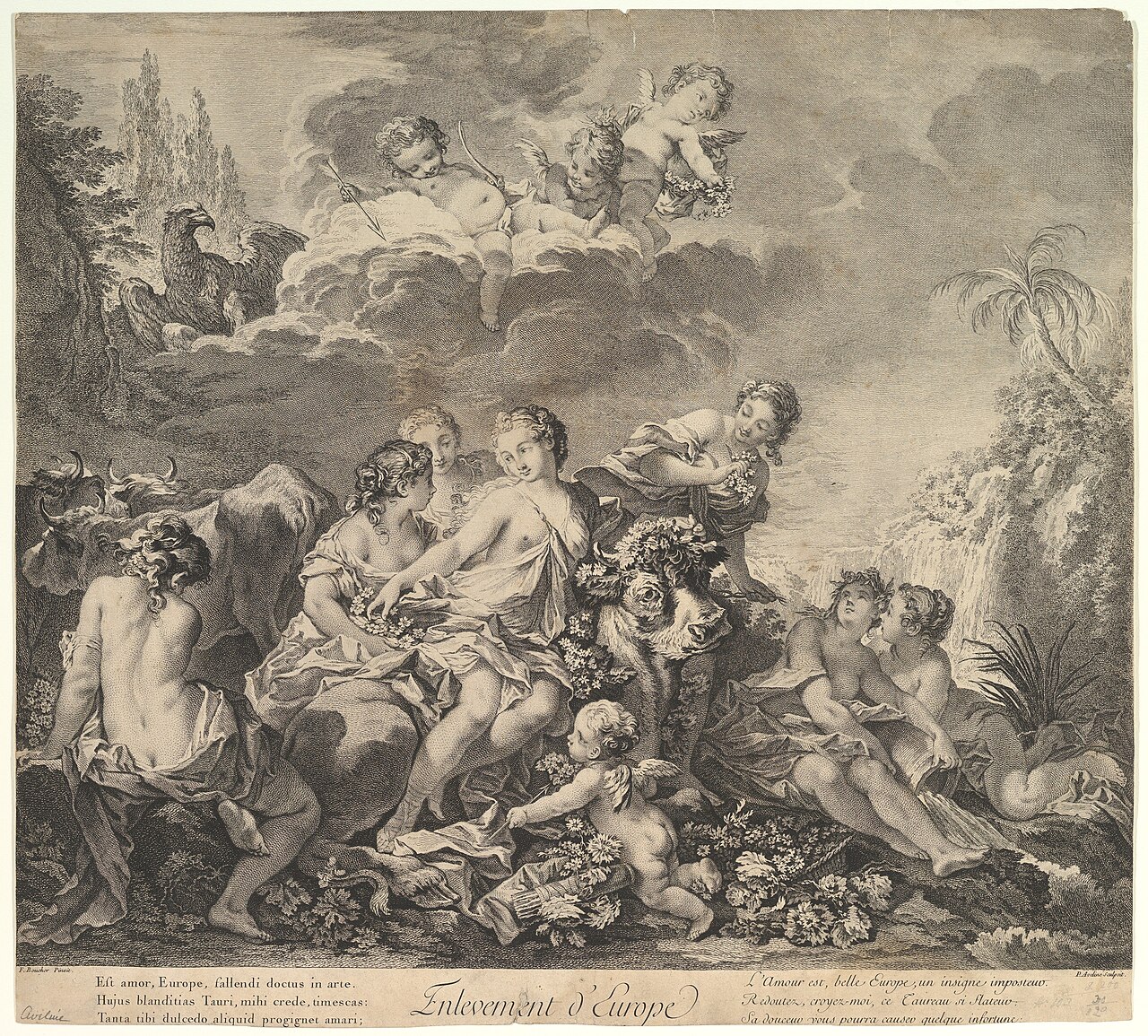
The central narrative of Europa's story revolves around Zeus's desire for the Phoenician princess. He assumed the form of a gentle white bull and mingled with her father's cattle. While Europa and her attendants were picking flowers, she noticed the animal, stroked its sides, and climbed onto its back. Zeus then charged toward the sea and swam across to Crete with her riding on his shoulders. Upon arriving, he revealed himself, and she became Crete's first queen. He presented her with a necklace crafted by Hephaestus, the bronze guardian Talos, the infallible hound Laelaps, and a javelin that never missed its target. Zeus later immortalized the bull's shape as the constellation Taurus. However, the tale has been reinterpreted in numerous ways. Herodotus offered a rationalizing account in which Cretans seized Europa to avenge the earlier kidnapping of Io. Palaephatus suggested a Cretan warrior named Tauros carried her off during a campaign near Tyre. John Tzetzes recorded yet another version involving a bull-shaped vessel or a Cretan general named Taurus. Some scholars trace the myth's roots to a sacred bovine union between Phoenician deities Astarte and Aštar.
A Name That Shaped the World
The etymology of Europa's name remains debated. One prominent Greek derivation links it to eurus, meaning "wide" or "broad," combined with a root meaning "eye" or "face," evoking the broad countenance of the Earth itself—an epithet found in reconstructed Proto-Indo-European religious language. Ancient Greek thought commonly personified landscapes as female figures, and Europa first appears in a geographic setting in the Homeric Hymn to Delian Apollo, describing the western shore of the Aegean. By the sixth century BC, Anaximander and Hecataeus employed the term to designate a portion of the known world. Toponyms connected to the name survive in ancient Macedonia, such as Europos. In 1966, Ernest Klein and Giovanni Semerano proposed a Semitic connection, linking the name to Akkadian erebu ("to set, go down") and Phoenician ereb ("evening; west"), paralleling the Latin occident. M. A. Barry later cited an Assyrian stele bearing the word Ereb, meaning "night" or "the country of sunset," contrasted with Asu, "the country of sunrise." Most scholars regard these Semitic proposals as unlikely, yet the name's resonance with westernness persists in the continent that likely bears her name.
Lineage, Brothers, and the Kings of Crete
Europa's genealogy is tangled across sources, though her Phoenician identity and Argive descent from the nymph Io are consistent. She is most commonly named as daughter of Agenor, king of Tyre, with her mother variously identified as Telephassa in Moschus's account or Argiope elsewhere. The Iliad complicates matters by making her the daughter of Agenor's son Phoenix, the "sun-red" one. Her brothers include Cadmus, credited with bringing the alphabet to mainland Greece, and Cilix, who lent his name to the region of Cilicia in Asia Minor. After Zeus carried her to Crete, Europa bore him three sons: Minos, Rhadamanthus, and Sarpedon. Upon their deaths, Minos and Rhadamanthus served as judges in the Underworld alongside Aeacus of Aegina. In Crete, Europa married the king Asterion (also rendered Asterius) and became mother or stepmother to his daughter Crete. The poet Praxilla, as cited by Pausanias, additionally names Carnus as a son of Europa. The name Asterion itself overlaps with the Minotaur's name and an epithet of Zeus, possibly derived from the Phoenician Aštar.
Sacred Echoes and Cultural Afterlife
Europa's myth left traces far beyond a single narrative. In the territory of Phoenician Sidon, the second-century writer Lucian of Samosata reported that the Sidonians maintained a large temple they called the temple of Astarte, a moon goddess whom Lucian equated with the figure sacred to Europa. This connection suggests the myth may have grown from a Phoenician sacred union involving bovine-form deities. In the Greek artistic record, the earliest vase-painting clearly depicting Europa dates to the mid-seventh century BC, while a fragment of the Hesiodic Catalogue of Women, unearthed at Oxyrhynchus, provides one of the earliest literary references. Roman mythology absorbed the story, substituting Jupiter for Zeus and preserving it under titles such as "The Abduction of Europa" and "The Seduction of Europa." Zeus's celestial gift—the constellation Taurus—ensured the white bull remained visible in the night sky, distinct from the Cretan Bull that sired the Minotaur and was later captured by Heracles. Together, these threads show how a single mythic episode radiated into religion, art, astronomy, and the naming of an entire continent.
Gallery
Frequently Asked Questions
Who is Europa (consort of Zeus)?
Europa was a Phoenician princess from Tyre in Greek myth, best known as the mortal woman Zeus carried off while disguised as a white bull. She later became a consort of Zeus and the mother of several Cretan kings.
How did Zeus abduct Europa?
Zeus took the shape of a gentle white bull and allowed Europa to climb onto his back. He then swam out to sea with her, carrying her across the water to the island of Crete.
Who are Europa's children?
She bore Zeus three sons: Minos, Rhadamanthus, and Sarpedon, all of whom became rulers in Crete. Minos in particular is the most prominent, often cited as the first great king of Cretan civilization.
Why is Europa important in mythology?
Beyond her role as Zeus's lover and mother of Cretan kings, she is widely believed to be the namesake of the continent of Europe. Her story also serves as an origin myth linking Phoenicia and Crete.
Where was Europa from and what was her background?
She was born in Tyre, a major city in Phoenicia (modern-day Lebanon), and held the title of princess. In most versions she was a mortal woman with no divine powers, making her story one of a human drawn into the affairs of the gods.
More in Mythological kidnapped people 1-24
Spotted an error? Know more?
Reader corrections go straight into our review queue. Suggest an edit · How this site is sourced