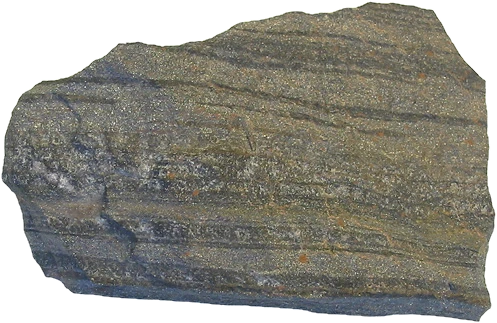
Sphalerite
Last updated
Sphalerite, a zinc sulfide with the composition (Zn,Fe)S, serves as the primary global source of zinc.[1][2] The mineral's crystal structure is the face-centered cubic zincblende arrangement, a form that takes its name from sphalerite itself.[3]
Key facts and history
The name reflects the many different appearances of sphalerite and the challenge of identifying it in hand specimens.[1] Pure zinc sulfide is a wide-bandgap semiconductor with a bandgap of about 3.54 electron volts.[4] In 1847, Ernst Friedrich Glocker, a German geologist, first identified sphalerite; he chose its name from the Greek term sphalerós, meaning 'deceiving', because the mineral is hard to recognize.[5] Miners initially called the ore blende because, while it looks like galena, it does not produce any lead.[6]
A perfect dodecahedral cleavage, with six distinct cleavage planes, is a property of sphalerite.[7][1] On the Mohs scale, sphalerite's hardness falls between 3.5 and 4.[7][1] As the temperature at which sphalerite forms rises, its iron content typically increases, potentially reaching as high as 40%.[8]
What the research sources say
The geology.com account states that sphalerite is found in metamorphic, igneous, and sedimentary rocks in many parts of the world.[1] According to the same source, sphalerite often contains trace to minor amounts of cadmium, indium, germanium, or gallium.[1] The geology.com account notes that sphalerite's streak is white to yellowish brown and sometimes is accompanied by a distinct odor of sulfur.[1] The geology.com account reports that sphalerite has a dispersion of 0.156, exceeding that of all popular gems and three times higher than diamond.[1]
Crystals of sphalerite, which belongs to the isometric crystal system, can take the form of cubes, octahedrons, tetrahedrons, and dodecahedrons.[1] Cutting and polishing sphalerite presents considerable difficulty.[1]
References
- Hobart M. King, Sphalerite, geology.com. Retrieved 22 Feb. 2022.. facts only, no text reused. geology.com
- Wikipedia, "Sphalerite" (CC BY-SA 4.0), which cites: Muntyan, "Colorado Sphalerite", Rocks & Minerals, 1999, p. 220–235 (original not read by us) en.wikipedia.org
- Wikipedia, "Sphalerite" (CC BY-SA 4.0), which cites: Klein, "Earth materials: introduction to mineralogy and petrology", 2017 (original not read by us) en.wikipedia.org
- Wikipedia, "Sphalerite" (CC BY-SA 4.0), which cites: Hobart M. King, Sphalerite, geology.com. Retrieved 22 Feb. 2022.; Nesse, "Introduction to optical mineralogy", Oxford University Press, 2013, p. 121 (we also read that source) en.wikipedia.org
- Wikipedia, "Sphalerite" (CC BY-SA 4.0), which cites: Glocker, "Generum et specierum mineralium, secundum ordines naturales digestorum synopsis, omnium, quotquot adhuc reperta sunt mineralium nomina complectens. : Adjectis synonymis et veteribus et recentioribus ac novissim (original not read by us) en.wikipedia.org
- Wikipedia, "Sphalerite" (CC BY-SA 4.0), which cites: Klein Hurlbut 1993, p. 357 (original not read by us) en.wikipedia.org
- Wikipedia, "Sphalerite" (CC BY-SA 4.0), which cites: Klein, "Earth materials: introduction to mineralogy and petrology", 2017; Klein, "Earth materials : introduction to mineralogy and petrology", Cambridge University Press, 2017; Deng, "Effect of iron concentration on the crystallization and electronic structure of sphalerite/marmatite: A DFT study", Minerals Engineering, June 2019, p. 168–174; Hobart M. King, Sphalerite, geology.com. Retrieved 22 Feb. 2022. (we also read that source) en.wikipedia.org
- Wikipedia, "Sphalerite" (CC BY-SA 4.0), which cites: Nesse, "Introduction to optical mineralogy", Oxford University Press, 2013, p. 121 (we also read that source) en.wikipedia.org
Each numbered sentence above was checked against the source it cites before publication. Sentences citing Wikipedia adapt text from the English Wikipedia article Sphalerite (contributors), used under CC BY-SA 4.0; this entry is available under the same licence. Other sources were used for facts only; no text or images are copied from them.
More in Minerals & Ore Deposits
Sources
Compiled from Wikipedia and the sources listed below. Text from Wikipedia is available under CC BY-SA 4.0; this entry is adapted from it.
- Wikipedia: Sphalerite (CC BY-SA 4.0).
- Word definitions: the Codexery glossary, each quoted from its Wikipedia article.
Spotted an error? Know more?
Reader corrections go straight into our review queue. Suggest an edit · How this site is sourced