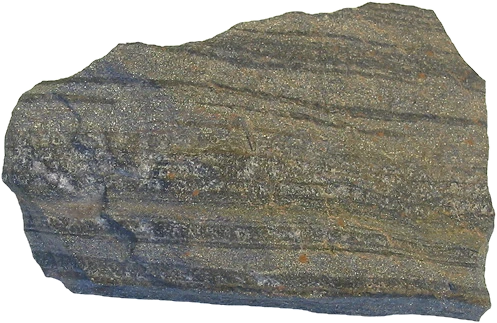
Petalite
Last updated
Petalite, sometimes called castorite, is a lithium aluminum phyllosilicate mineral with the chemical formula LiAlSi4O10. It forms in the monoclinic crystal system, appearing as tabular crystals or columnar masses that can be colorless, pink, grey, yellow, yellow grey, or white. This mineral is found in lithium-rich pegmatites, often alongside spodumene, lepidolite, and tourmaline.
As an important lithium ore, petalite can be transformed into spodumene and quartz when heated to about 500 °C under 3 kbar of pressure in the presence of a dense hydrous alkali borosilicate fluid with a minor carbonate component. Both petalite and the secondary spodumene derived from it contain less iron than primary spodumene, making them more suitable for uses like glass production. Colorless varieties are sometimes cut as gemstones.
Petalite holds historical significance because the element lithium was first identified from this mineral in Sweden in 1817. The element was named "lithium" from the Greek word for "stone," reflecting its discovery in petalite.
The mineral was first discovered in 1800 by Brazilian naturalist and statesman José Bonifácio de Andrada e Silva. Its type locality is Utö Island in Haninge, Stockholm, Sweden.
The name comes from the Greek word petalon, meaning "leaf," referring to its perfect cleavage. Major economic deposits exist near Kalgoorlie, Western Australia; Aracuai, Minas Gerais, Brazil; Karibib, Namibia; Manitoba, Canada; and Bikita, Zimbabwe. The first major commercial use for petalite was as a raw material for CorningWare glass-ceramic cookware, and it has also been employed in ceramic glazes.
Lore & Background
Petalite, also called castorite, is a lithium aluminum phyllosilicate mineral with the formula LiAlSi4O10. It crystallizes in the monoclinic system and typically appears as colorless, pink, grey, yellow, yellow-grey, or white tabular crystals, as well as columnar masses. The mineral’s name comes from the Greek word petalon, meaning “leaf,” in reference to its perfect cleavage. Its type locality is Utö Island, Haninge, Stockholm, Sweden, and it was discovered in 1800 by Brazilian naturalist and statesman José Bonifácio de Andrada e Silva.
Petalite is found in lithium-bearing pegmatites, often alongside spodumene, lepidolite, and tourmaline. Significant economic deposits occur near Kalgoorlie, Western Australia; Aracuai, Minas Gerais, Brazil; Karibib, Namibia; Manitoba, Canada; and Bikita, Zimbabwe. The mineral is an important ore of lithium. When heated to approximately 500 °C under 3 kbar of pressure in the presence of a dense hydrous alkali borosilicate fluid with a minor carbonate component, petalite converts to spodumene and quartz.
This secondary spodumene, along with petalite itself, contains less iron than primary spodumene, making it a more desirable source of lithium for applications such as glass production. Colorless varieties are sometimes used as gemstones. Historically, petalite is significant because the element lithium was first identified from this mineral in Sweden in 1817; the element was named from the Greek word for “stone” due to its discovery in petalite. The first major economic use of petalite was as a raw material for the glass-ceramic cookware CorningWare, and it has also been employed in ceramic glazes.
Reader's Guide
The element was named 'lithium' from the Greek word for 'stone' due to its discovery in this mineral. Petalite and secondary spodumene formed from it are lower in iron than primary spodumene, making it a more useful source of lithium in applications such as glass production.
Colorless varieties are often used as gemstones. The first important economic application for petalite was as a raw material for the glass-ceramic cooking ware CorningWare, and it has also been used in ceramic glazes. Economic deposits are found near Kalgoorlie, Western Australia; Aracuai, Minas Gerais, Brazil; Karibib, Namibia; Manitoba, Canada; and Bikita, Zimbabwe.
More in Minerals & Ore Deposits
Sources
Compiled from Wikipedia and the sources listed below. Text from Wikipedia is available under CC BY-SA 4.0; this entry is adapted from it.
- Wikipedia: Petalite (CC BY-SA 4.0).
- Word definitions: the Codexery glossary, each quoted from its Wikipedia article.
Spotted an error? Know more?
Reader corrections go straight into our review queue. Suggest an edit · How this site is sourced