Stibnite
Last updated
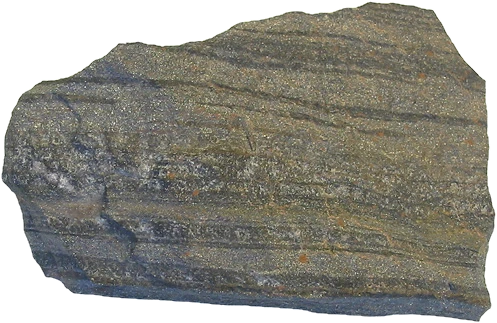
When freshly exposed, stibnite appears grey, but its surface can develop a black coloration from air exposure.[1] Ingesting stibnite is dangerous, producing effects that resemble those of arsenic poisoning.[2][3]
Key facts and history
Stibnite occurs in hydrothermal deposits and is associated with minerals such as realgar, orpiment, cinnabar, and galena.[4] Since around 3000 BC, stibnite powder was used as eye cosmetics called kohl in the Mediterranean and beyond.[5][6] The 17th century alchemist Eirenaeus Philalethes described stibnite as a precursor to philosophical mercury.[7] According to certain research, the antimony coordination may involve seven sulfur atoms, with the M1 site showing (3+4) coordination and the M2 site showing (5+2) coordination.[1]
Sb₂S₃ melts at 823 K, and at room temperature it functions as a photoconductor with a band gap of 1.88 eV.[2] This mineral was applied to darken eyelashes and eyebrows or to outline the eye.[5]
What the research sources say
The Pitt Rivers Museum account states that either galena or stibnite was ground with copper oxide and gum resins to form kohl, a widespread black cosmetic.[6]
References
- Wikipedia, "Stibnite" (CC BY-SA 4.0), which cites: Kyono A, "Low-temperature crystal structures of stibnite implying orbital overlap of Sb 5s 2 inert pair electrons", Physics and Chemistry of Minerals, 2002, p. 254–260 (original not read by us) en.wikipedia.org
- Wikipedia, "Stibnite" (CC BY-SA 4.0), which cites: Mills, K. C., "Thermodynamic data for inorganic sulphides, selenides and tellurides", Butterworths, 1974; Madelung, O. (Otfried), "Semiconductors: data handbook", Springer, 2004; "Minerals: Sparkling, sensitive and toxic" (we also read that source) en.wikipedia.org
- "Minerals: Sparkling, sensitive and toxic". facts only, no text reused. nhm.ac.uk
- Wikipedia, "Stibnite" (CC BY-SA 4.0), which cites: Anthony, "Stibnite", Handbook of Mineralogy, 2005 (original not read by us) en.wikipedia.org
- Wikipedia, "Stibnite" (CC BY-SA 4.0), which cites: "Ancient Egyptian make-up", Pitt Rivers Museum (we also read that source) en.wikipedia.org
- "Ancient Egyptian make-up", Pitt Rivers Museum. facts only, no text reused. web.prm.ox.ac.uk
- Wikipedia, "Stibnite" (CC BY-SA 4.0), which cites: Newman, "Decknamen or pseudochemical language? Eirenaeus Philalethes and Carl Jung", Revue d'histoire des sciences, 1996, p. 159–188 (original not read by us) en.wikipedia.org
Each numbered sentence above was checked against the source it cites before publication. Sentences citing Wikipedia adapt text from the English Wikipedia article Stibnite (contributors), used under CC BY-SA 4.0; this entry is available under the same licence. Other sources were used for facts only; no text or images are copied from them.
More in Minerals & Ore Deposits
Sources
Compiled from Wikipedia and the sources listed below. Text from Wikipedia is available under CC BY-SA 4.0; this entry is adapted from it.
- Wikipedia: Stibnite (CC BY-SA 4.0).
- Word definitions: the Codexery glossary, each quoted from its Wikipedia article.
Spotted an error? Know more?
Reader corrections go straight into our review queue. Suggest an edit · How this site is sourced