
Radiation therapy
Ionizing radiation used to treat cancer and other conditions.

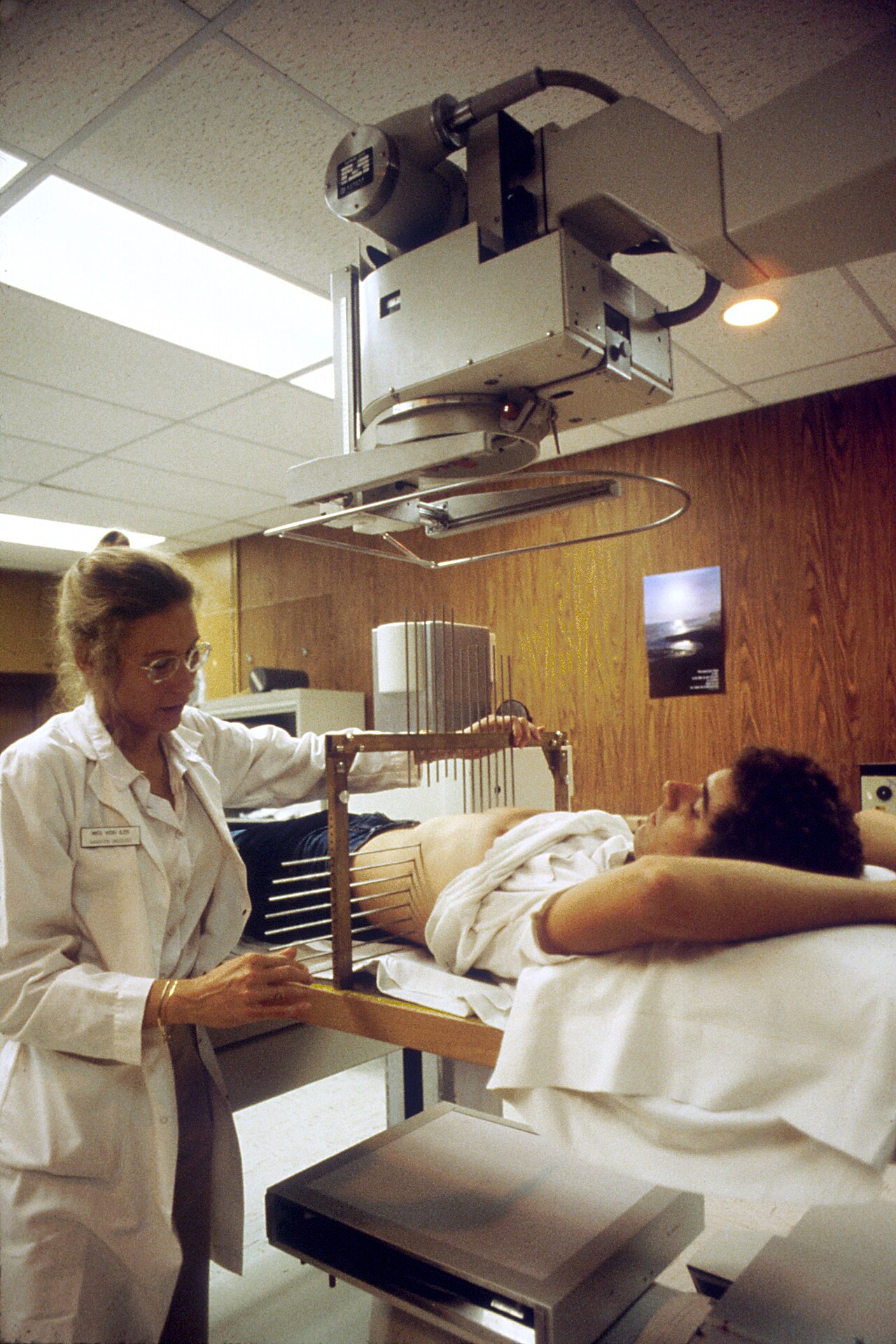
Linda Bartlett (Photographer) · Public domain
Radiation therapy (RT, RTx, or XRT) is a medical treatment that uses ionizing radiation, primarily delivered by a linear particle accelerator, to kill or control the growth of malignant cells. It is a core component of cancer therapy, often used curatively for localized tumors, as adjuvant therapy after surgery, or in combination with chemotherapy, hormone therapy, or immunotherapy. The subspecialty of radiation oncology governs its prescription, distinct from radiology.
The therapeutic effect of radiation therapy stems from its ability to damage the DNA of cancerous tissue, leading to cellular death. To protect surrounding healthy tissues, such as skin or organs that the radiation must traverse, shaped beams are directed from multiple angles so they converge on the tumor, delivering a concentrated dose there while minimizing exposure elsewhere. Treatment fields may also include nearby lymph nodes if they are involved or at risk of subclinical spread, and a margin of normal tissue is added to account for daily setup uncertainties and internal motion caused by breathing or bladder filling. The precise intent—curative, adjuvant, neoadjuvant, or palliative—depends on the tumor type, location, stage, and the patient’s general health. Different cancers exhibit varying radiosensitivity: leukemias, most lymphomas, and germ cell tumors are highly sensitive to modest doses, while most epithelial cancers require higher doses (60–70 Gy) for radical cure. Melanoma and renal cell cancer are notably radioresistant, though radiation remains a palliative option, and combining it with immunotherapy is an active area of research. Modern treatment relies on CT scans to identify the tumor and surrounding structures, with small skin marks guiding beam placement. Beyond cancer, radiation therapy is used for non-malignant conditions such as trigeminal neuralgia, acoustic neuromas, severe thyroid eye disease, pterygium, and prevention of keloid scars, though its use is limited by the risk of radiation-induced cancers. Brachytherapy, where a radioactive source is placed inside or near the treatment area, minimizes healthy tissue exposure for breast, prostate, and other cancers. Total body irradiation prepares the body for bone marrow transplant.
- field
- Oncology (radiation oncology)
- known_for
- Using ionizing radiation to treat cancer and certain non-malignant conditions
- common_delivery_method
- Linear particle accelerator
- typical_curative_dose_for_moderately_rad
- 60–70 Gy
Lore & Background
Radiation therapy, also known as radiotherapy, employs ionizing radiation, typically generated by a linear particle accelerator, to kill or control malignant cell growth. Its primary mechanism involves damaging the DNA of cancerous tissue, which leads to cellular death. To protect surrounding healthy tissue, such as skin or organs that the radiation must traverse, shaped beams are directed from multiple angles so they converge on the tumor, resulting in a much higher absorbed dose there. The treatment fields may also encompass nearby lymph nodes if they are clinically or radiologically involved, or if there is a risk of subclinical spread. A margin of normal tissue around the tumor is always included to compensate for daily positioning uncertainties and internal motion, such as breathing or bladder filling. The medical specialty responsible for prescribing this treatment is radiation oncology, distinct from radiology, which uses radiation for imaging and diagnosis. A physician in this field is a radiation oncologist, while the practicing radiographer is a therapeutic radiographer. Radiation therapy can be curative for localized cancers, used as adjuvant therapy to prevent recurrence after surgery, or as palliative care for symptom relief when cure is not possible. It is often combined with surgery, chemotherapy, hormone therapy, or immunotherapy. Different cancers exhibit varying radiosensitivity: leukemias and lymphomas are highly radiosensitive, while most epithelial cancers require higher doses (60–70 Gy) for radical cure. Some cancers, like renal cell cancer and melanoma, are notably radioresistant, though radiation remains a palliative option. Modern treatment relies on CT scans for precise tumor identification and dose calculation, with small skin marks guiding field placement.
Reader's Guide
Its significance lies in its versatility: it can be curative for localized tumors (e.g., non-melanoma skin cancer, head and neck cancer, breast cancer, prostate cancer), adjuvant after surgery, neoadjuvant before surgery, or palliative for symptom relief. The response of a cancer to radiation is described by its radiosensitivity, with highly radiosensitive cancers (leukemias, most lymphomas) killed by modest doses, while moderately radiosensitive epithelial cancers require 60–70 Gy. Radioresistant cancers like melanoma and renal cell cancer may still be treated palliatively. Modern techniques such as image-guided radiation therapy and daily MR-guided adaptive radiotherapy improve precision by correcting for positional and anatomical changes. Side effects are dose-dependent and limited to the treated area; serious complications occur in about 5% of cases. Radiation therapy also has applications in non-malignant conditions, though use is limited by concerns about radiation-induced cancers.
Did You Know?
- Radiation therapy may be used as palliative treatment when cure is not possible, aiming for local disease control or symptomatic relief.
- Total body irradiation (TBI) is a technique used to prepare the body for a bone marrow transplant.
- Brachytherapy places a radioactive source inside or next to the treatment area, minimizing exposure to healthy tissue.
- Radiosensitizing drugs such as cisplatin, nimorazole, and cetuximab can enhance the effectiveness of radiation therapy.
How Radiation Targets and Damages Cancer Cells
Ionizing radiation works by inflicting damage on the DNA within malignant tissue, ultimately triggering cell death. Because the beams must traverse healthy structures like skin and internal organs to reach a deep-seated tumor, clinicians employ a geometric strategy: multiple shaped beams are directed from different angles so they converge precisely at the tumor site. This intersection dramatically amplifies the absorbed dose at the target while keeping surrounding tissue exposure comparatively low. The treatment field is not limited to the visible tumor alone; draining lymph nodes that show clinical or radiological involvement, or that carry a risk of harboring subclinical spread, are often incorporated. A margin of healthy tissue is deliberately included around the tumor to compensate for daily uncertainties—respiratory motion, changes in bladder volume, and slight shifts in external skin marks relative to the actual tumor position. This careful geometric planning is what allows a single modality to be both potent against cancer and tolerable to the patient.
Treatment Intent and the Spectrum of Clinical Use
Radiation therapy is far from a one-size-fits-all intervention. Its precise purpose—whether curative, adjuvant to prevent recurrence after surgery, neoadjuvant to shrink a tumor before other treatments, or palliative to ease symptoms when cure is unattainable—depends on the tumor's type, location, stage, and the patient's overall health. In the United States, roughly half of the 1.2 million invasive cancer cases diagnosed in 2022 incorporated radiation into their treatment pathway. It is frequently combined with chemotherapy, surgery, hormone therapy, or immunotherapy, and its synergistic relationship with chemotherapy has been exploited before, during, and after systemic treatment. Beyond malignancy, radiation finds application in conditions such as trigeminal neuralgia, acoustic neuromas, severe thyroid eye disease, pterygium, pigmented villonodular synovitis, keloid scar prevention, vascular restenosis, and heterotopic ossification, though concern about radiation-induced secondary cancers tempers its use in these settings. Total body irradiation serves a distinct role in conditioning patients for bone marrow transplantation.
Radiosensitivity and the Limits of Curability
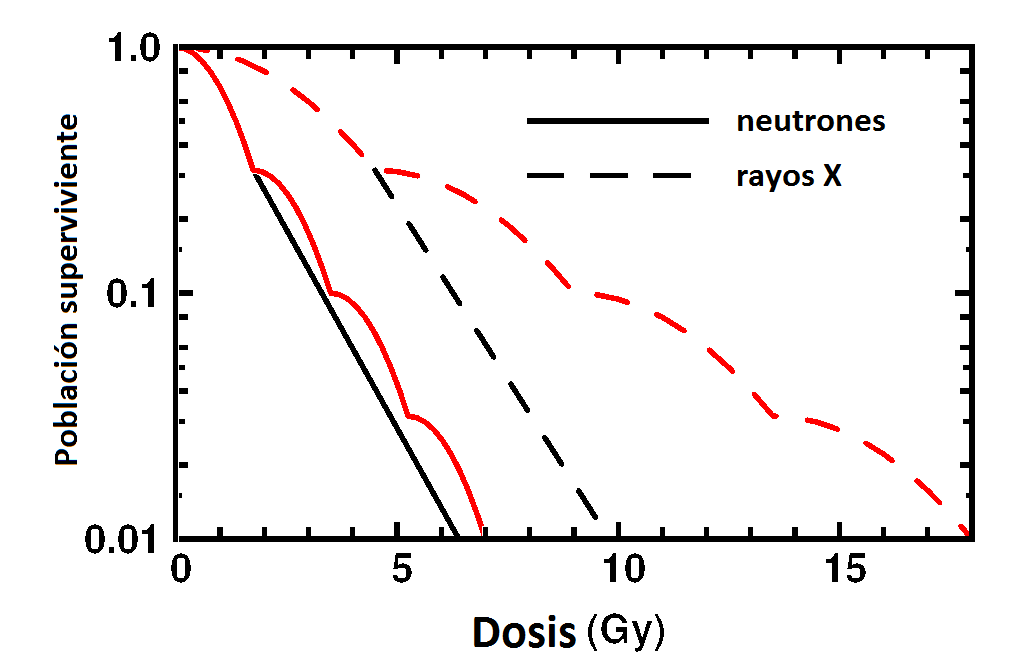
Not all cancers respond to radiation in the same way, and understanding this spectrum is central to treatment planning. Leukemias, most lymphomas, and germ cell tumors are highly radiosensitive, meaning modest doses can rapidly kill their cells. The bulk of epithelial cancers fall into a moderate-sensitivity category, typically requiring doses in the 60-to-70-gray range for a radical cure. At the other extreme, renal cell carcinoma and melanoma are generally radioresistant, though radiation remains a palliative option for metastatic melanoma, and emerging combinations with immunotherapy show promise. Crucially, laboratory radiosensitivity does not equal clinical curability. Leukemias, despite being highly radiosensitive, are disseminated throughout the body and therefore not curable with radiation alone. Conversely, a localized lymphoma or an early-stage breast, prostate, cervical, or non-small-cell lung cancer can be radically treated. With the exception of oligometastatic disease, widespread metastatic cancers remain beyond the reach of radiation because the modality cannot safely treat the entire body.
The Specialty, the Team, and Modern Delivery
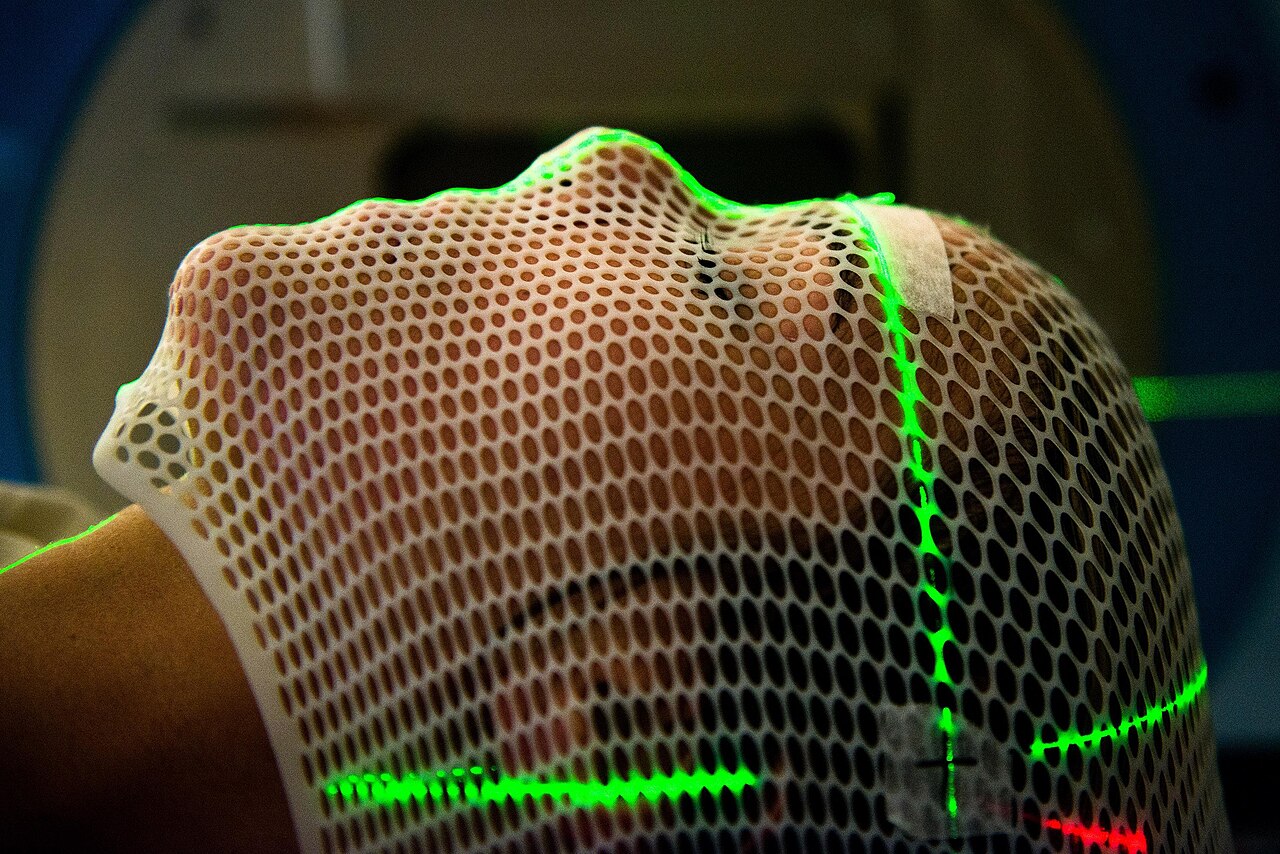
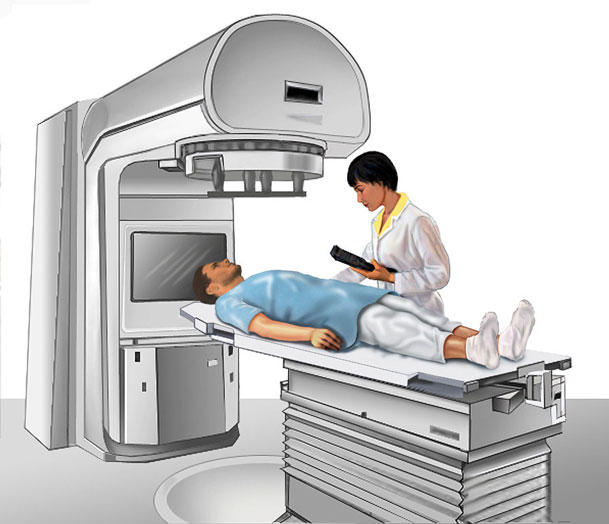
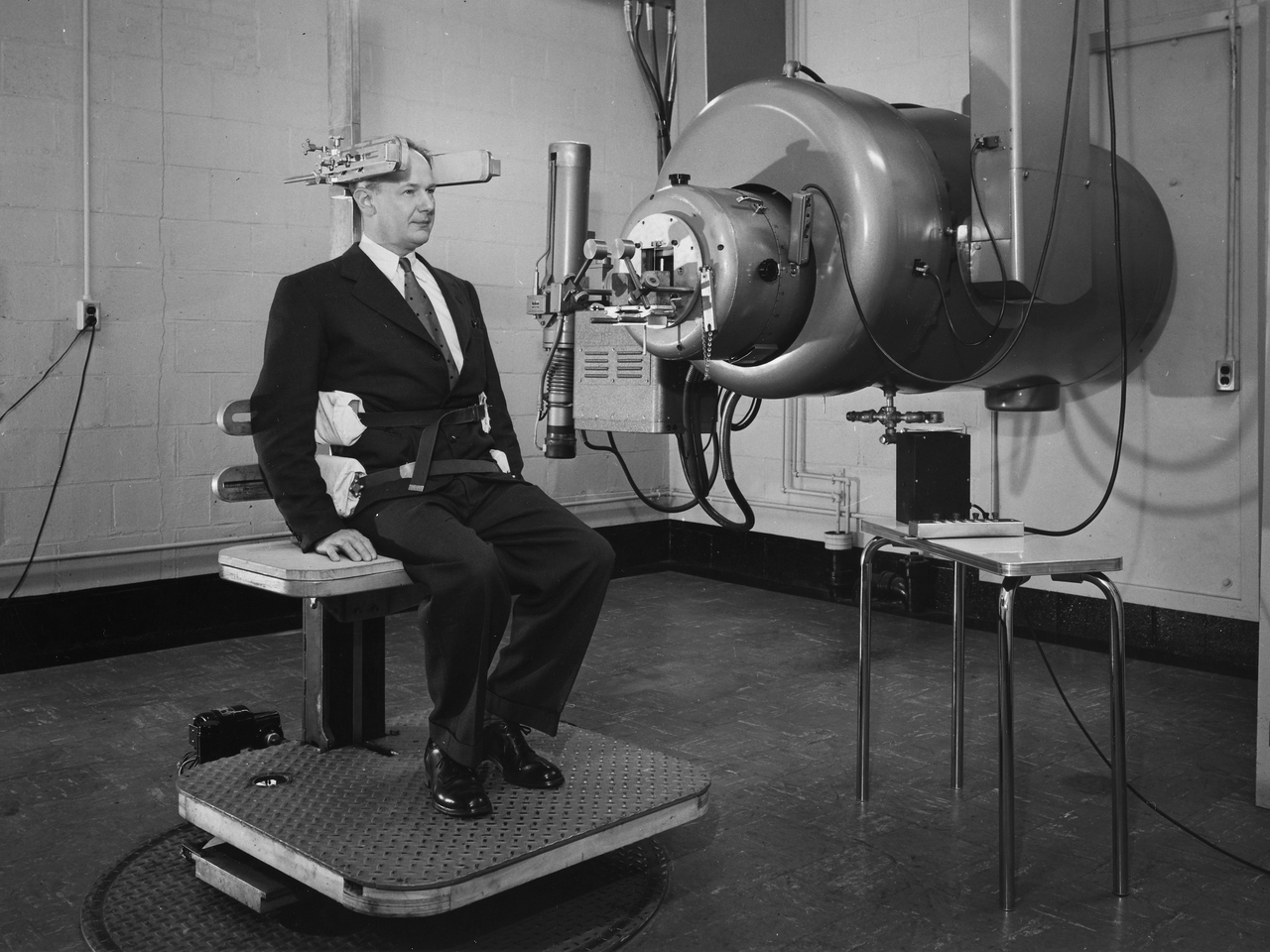
Radiation oncology is the dedicated medical subspecialty responsible for prescribing and overseeing radiation treatment, and it is distinct from radiology, which focuses on imaging and diagnosis. A radiation oncologist determines the treatment intent and prescribes the plan, while a therapeutic radiographer handles the practical delivery of each session. The equipment at the center of most treatments is a linear particle accelerator, which generates the high-energy beams needed for precise external-beam therapy. Modern planning begins with a CT scan that maps the tumor and adjacent normal anatomy, enabling complex dose calculations. Patients receive small skin marks and are fitted with custom-molded masks or cushions to ensure they can be repositioned identically for every session. Image-guided radiation therapy adds an imaging check before each treatment to correct any positional drift, and newer MR-guided adaptive techniques extend this principle by allowing the high-dose region to be conformed more tightly to the tumor shape, reducing unnecessary exposure to surrounding structures.
Gallery
Frequently Asked Questions
Who is Radiation therapy?
Radiation therapy is a medical treatment modality in oncology that harnesses ionizing radiation to destroy or halt the growth of malignant cells. It is typically delivered using a linear particle accelerator and is prescribed by specialists in radiation oncology.
What are Radiation therapy's powers/role?
Its core function is to target and eliminate cancerous tissue, either as a standalone curative approach for localized tumors or as an adjuvant following surgical removal. A typical curative dose for moderately radiosensitive tumors falls in the 60–70 Gy range.
How does Radiation therapy's story end?
A course of radiation therapy concludes once the prescribed total dose has been delivered over a planned schedule, after which the patient enters a follow-up monitoring phase to assess response and manage any late effects. The 'ending' is not a single dramatic moment but a transition into long-term surveillance.
Why is Radiation therapy important?
It is a cornerstone of modern cancer care because it can cure localized malignancies, reduce recurrence risk after surgery, and synergize with chemotherapy, hormone therapy, or immunotherapy to tackle more aggressive disease. Without it, many tumor types would lack a viable non-surgical treatment option.
What team does Radiation therapy work with?
Radiation therapy is frequently combined with chemotherapy, hormonal agents, or immunotherapies to enhance overall treatment efficacy. It is also sequenced with surgery—either before (neoadjuvant) or after (adjuvant)—to maximize the chance of complete remission.
More in Medical Procedures And Treatments 1-23
Spotted an error? Know more?
This is a living reference — every entry is fact-audited, and reader corrections feed straight into our audit queue. Suggest an edit · See this site's audit record