
Palliative care
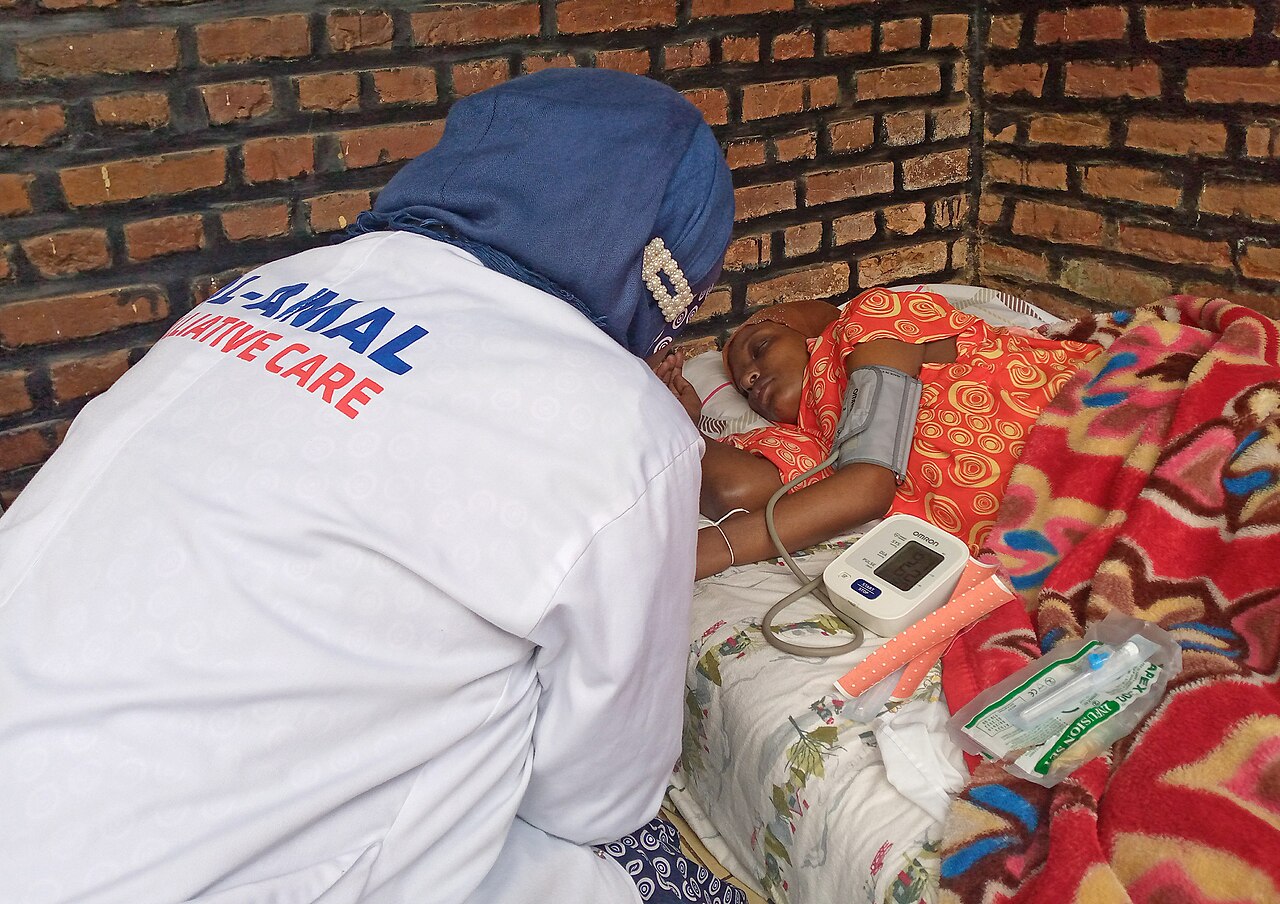
Interdisciplinary care optimizing quality of life in serious illness.

Jwslubbock · CC BY-SA 3.0
Palliative care is a team-based medical approach focused on improving quality of life and reducing suffering for people facing serious, complex, and often terminal illnesses. Its name comes from the Latin word *palliare*, meaning "to cloak." According to the World Health Organization, palliative care works by preventing and easing suffering through early identification and careful treatment of pain and other issues—whether physical, psychological, social, or spiritual.
In the 1990s, many palliative care programs were designed around specific diseases. But as the field grew, the WHO shifted toward a broader, patient-centered model, recommending that palliative care principles be applied as early as possible to any chronic, eventually fatal illness. This change happened because a disease-focused approach often fails to fully address a patient’s needs and preferences, including pain control, quality of life, social support, and emotional or spiritual concerns. A patient-centered model instead prioritizes relief from suffering and tailors care to improve quality of life for those with terminal conditions.
Palliative care is suitable for people of any age with serious or chronic illnesses. It can be the main goal of care or provided alongside treatments aimed at a cure. Ideally, it is delivered by an interdisciplinary team that may include doctors, nurses, occupational and physical therapists, psychologists, social workers, chaplains, and dietitians. Care can take place in hospitals, outpatient clinics, or at home. While it is an important part of end-of-life care, palliative care is not limited to the final stages of life and can be helpful at any point during a complex or chronic illness.
Palliative care improves healthcare in three main areas: relieving physical and emotional distress, strengthening communication and decision-making between patients and doctors, and ensuring coordinated, continuous care across different settings like hospitals, homes, and hospice. Its overall goal is to enhance quality of life for people with serious illness—any life-threatening condition that reduces daily function or quality of life or increases caregiver burden—through pain and symptom management, supporting caregiver needs, and coordinating care. It can be delivered at any stage of illness, alongside treatments meant to cure or prolong life.
Historically, palliative care focused on people with incurable cancer, but it now applies to other diseases, including severe heart failure, chronic obstructive pulmonary disease, multiple sclerosis, and other neurodegenerative conditions. About 40 million people worldwide need palliative care each year, with roughly 78% living in low- and middle-income countries. Yet only 14% of those who need it receive it, and most of that care happens in high-income countries, making this a critical area for attention.
Palliative care can begin in various settings, such as emergency rooms, hospitals, hospice facilities, or at home. For some severe diseases, medical specialty groups recommend starting palliative care at diagnosis or when disease-directed options won’t improve a patient’s outlook. For instance, the American Society of Clinical Oncology advises that patients with advanced cancer be referred to interdisciplinary palliative care teams early in their illness, within eight weeks of diagnosis, while still receiving active cancer treatment. Involving palliative care providers appropriately improves symptom control, quality of life, and family satisfaction, while also lowering overall healthcare costs.
The distinction between palliative care and hospice varies by country. In the United States, hospice refers specifically to a federal benefit created in 1982. Both hospice and palliative care aim to relieve symptoms, control pain, improve comfort, and address psychological distress. However, hospice focuses on comfort and psychological support, and curative treatments are not pursued. Under the Medicare Hospice Benefit, individuals certified by two physicians as having less than six months to live (assuming a typical disease course) can access specialized hospice services through Medicare, Medicaid, and most health maintenance organizations and private insurers. A person does not lose hospice benefits if they live longer than six months. In the U.S., to qualify for hospice, patients usually give up treatments aimed at a cure, unless they are minors. This avoids concurrent care, where two clinicians bill for the same service. In 2016, a movement began to extend concurrent care to adults who were eligible for hospice but not yet ready to stop curative treatments. Outside the United States, the term hospice usually refers to a building or institution that specializes in palliative care, providing care to patients with end-of-life and palliative care needs.
- field
- Interdisciplinary medical care
- known_for
- Optimizing quality of life and reducing suffering in serious illness
- global_need
- 40 million people per year expected to need palliative care
- access_gap
- Only 14% of those in need receive it; 78% of need is in low- and middle-income countries
- US_hospitals_with_300+_beds
- Over 90% have palliative care teams
- US_rural_hospitals_with_50+_beds
- Only 17% have palliative care teams
Lore & Background
Palliative care is an interdisciplinary medical approach focused on optimizing quality of life and reducing suffering for individuals with serious, complex, and often terminal illnesses. The term derives from the Latin root meaning "to cloak." It is appropriate for patients of any age and can be provided alongside curative treatment or as the main goal of care. Ideally delivered by teams including physicians, nurses, therapists, psychologists, social workers, chaplains, and dietitians, palliative care can be offered in hospitals, outpatient clinics, and home settings. While an important part of end-of-life care, it is not limited to those nearing death and can be helpful at any stage of a chronic or complex illness. The World Health Organization describes it as an approach that improves quality of life for patients and families facing life-threatening illness through early identification and treatment of pain and other physical, psychosocial, and spiritual problems. Since the 1990s, many programs used a disease-specific approach, but by the 2000s, the WHO shifted to a broader patient-centered model, recommending that palliative principles be applied as early as possible to any chronic, ultimately fatal illness. This change addressed the failure of disease-oriented approaches to fully meet patient needs regarding pain, quality of life, social support, and emotional or spiritual concerns. Palliative care improves symptom control, quality of life, and family satisfaction while reducing overall healthcare costs. It is now applied to conditions beyond incurable cancer, including heart failure, chronic obstructive pulmonary disease, multiple sclerosis, and other neurodegenerative diseases. Globally, an estimated forty million people annually need palliative care, with about 78 percent living in low- and middle-income countries, yet only 14 percent of this population receives it, mostly in high-income nations. The distinction between palliative care and hospice varies by context; in the United States, hospice is a specific federal benefit for those with a prognosis of less than six months, typically requiring patients to forego curative treatments, while elsewhere the term hospice often refers to a facility specializing in palliative care.
Reader's Guide
Palliative care is appropriate for individuals with serious or chronic illnesses across all ages and can be provided as the main goal of care or alongside curative treatment. It is ideally delivered by interdisciplinary teams including physicians, nurses, therapists, psychologists, social workers, chaplains, and dietitians, in settings such as hospitals, outpatient clinics, and homes. Historically focused on incurable cancer, palliative care now applies to diseases including severe heart failure, chronic obstructive pulmonary disease, multiple sclerosis, and other neurodegenerative conditions. The distinction between palliative care and hospice varies globally: in the United States, hospice is a specific federal benefit for those with less than six months to live who forego curative treatments, while outside the U.S. the terms are often synonymous. Evidence shows that palliative care improves symptom control, quality of life, and family satisfaction while reducing healthcare costs. Over 90% of U.S.
Did You Know?
- Only 14% of the 40 million people worldwide who need palliative care each year receive it.
- Providing palliative care alongside standard oncologic care for advanced cancer is associated with lower rates of depression, increased quality of life, and increased length of survival.
Origins and the Patient-Centered Turn
The term palliative care traces back to the Latin word palliare, meaning to cloak — a fitting metaphor for wrapping around a patient's suffering rather than attacking the disease itself. For decades the field operated under a disease-specific lens, with programs organized around particular cancers or conditions. The World Health Organization's formal definition framed it as an approach improving quality of life for patients and families facing life-threatening illness through early identification and treatment of pain and physical, psychosocial, and spiritual problems. However, throughout the 2000s, WHO broadened its stance considerably. It began advocating that palliative principles be applied as early as possible to any chronic, ultimately fatal illness, regardless of diagnosis. This was a deliberate correction: a disease-oriented model, WHO argued, left patients' preferences unmet and neglected dimensions of care like emotional support, social needs, and spiritual well-being. The patient-centered model that emerged prioritizes the individual's experience of suffering and tailors interventions to maximize their quality of life, making the person — not the pathology — the organizing principle of care.
The Interdisciplinary Team and Settings of Care
Palliative care is not a single clinician's responsibility. It is delivered by a multidisciplinary team that may include physicians, nurses, occupational and physical therapists, psychologists, social workers, chaplains, and dietitians working in concert. This breadth reflects the scope of what the field addresses: physical symptom relief, emotional and spiritual distress, caregiver burden, and the practical logistics of navigating complex healthcare systems. The team's work unfolds across a wide range of settings — emergency rooms, inpatient hospital wards, outpatient clinics, hospice facilities, and the patient's own home. Crucially, palliative care is not confined to the final weeks of life. It can be initiated at diagnosis for certain severe conditions and can run alongside curative or life-prolonging treatments. The American Society of Clinical Oncology, for instance, recommends that patients with advanced cancer be referred to interdisciplinary palliative teams within eight weeks of diagnosis, even while active cancer treatment continues. This early, concurrent model is designed to improve symptom control, strengthen communication between patients and physicians, and ensure continuity of care as patients move between hospital, home, and hospice environments.
Expanding Beyond Cancer and the Global Access Crisis
Historically, palliative care services were built around one diagnosis: incurable cancer. That narrow framing has given way to a much wider application. Today the field encompasses severe heart failure, chronic obstructive pulmonary disease, multiple sclerosis, and other neurodegenerative conditions — any serious illness that diminishes daily function, degrades quality of life, or places heavy strain on caregivers. The scale of the need is staggering. An estimated forty million people worldwide each year require palliative care, yet only about fourteen percent actually receive it. The distribution of that access is deeply inequitable: roughly seventy-eight percent of the global population in need lives in low- and middle-income countries, while the majority of those who do receive services are concentrated in high-income nations. This gap has made palliative care a significant public-health priority. The field's overall aim is to improve quality of life through pain and symptom management, identification and support of caregiver needs, and coordinated care across settings. Engaging palliative providers early has been shown to improve symptom control, boost family satisfaction, and reduce overall healthcare costs, making the case for broader investment both ethical and economic.
Palliative Care versus Hospice: A Distinction That Depends on Geography
The relationship between palliative care and hospice care is not uniform around the world. In the United States, hospice carries a specific legal and financial meaning: it is a federal benefit established in 1982 under Medicare. To qualify, a patient typically must be certified by two physicians as having fewer than six months to live and must generally forgo curative treatments, a requirement designed to prevent two clinicians from billing for overlapping services. If a patient lives beyond that six-month window, benefits are not automatically revoked. More than forty percent of dying Americans now receive hospice care, most of it in the home during the final weeks or months, and an overwhelming eighty-six and two-thirds percent rate their experience as excellent. Outside the United States, by contrast, hospice usually simply names a building or institution dedicated to end-of-life and palliative services, and the two terms are often used interchangeably without any funding-based distinction. In 2016, a movement emerged in the U.S. to extend concurrent care to adults who qualify for hospice but are not yet emotionally ready to abandon curative options.
Gallery




Frequently Asked Questions
What is Palliative care and where does the name come from?
Palliative care is an interdisciplinary medical approach focused on improving quality of life and easing suffering for people dealing with serious or terminal illnesses. The term traces back to the Latin word 'palliare,' meaning 'to cloak,' evoking the idea of wrapping comfort around a patient.
What exactly does Palliative care do for a patient?
It goes beyond simple pain management to address physical, psychological, and social distress through early identification and thorough assessment of a patient's needs. The World Health Organization frames it as a way to relieve suffering for both patients and their families facing life-threatening conditions.
Who makes up the Palliative care team?
Rather than relying on a single physician, palliative care draws on an interdisciplinary group of professionals—nurses, social workers, chaplains, and specialists—who collaborate to treat the whole person. This team-based model is what distinguishes it from a standard single-provider consultation.
Why is Palliative care considered so important globally?
Roughly 40 million people each year are expected to need this kind of support, yet only about 14 percent actually receive it. The gap is especially stark in low- and middle-income countries, which account for 78 percent of the unmet global need.
How accessible is Palliative care in the United States?
In larger US hospitals with 300 or more beds, over 90 percent maintain a dedicated palliative care team. The picture is far less favorable in rural settings, where only 17 percent of hospitals with 50 or more beds offer the service.
More in Medical Procedures And Treatments 1-23
Spotted an error? Know more?
This is a living reference — every entry is fact-audited, and reader corrections feed straight into our audit queue. Suggest an edit · See this site's audit record