
Pap test
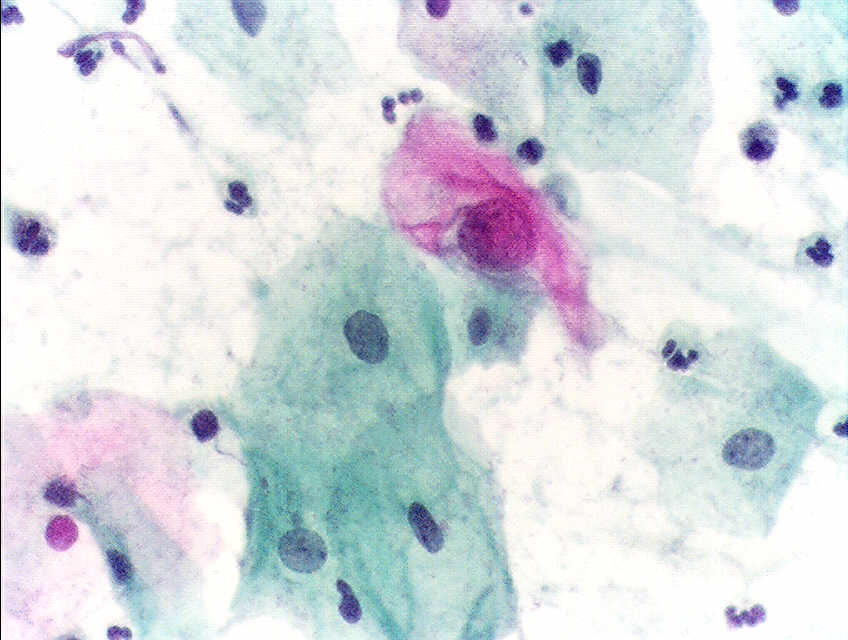
Cervical screening test detecting precancerous and cancerous changes.

Mikael Häggström , M.D. Author info - Reusing images - Conflicts of interest: No · CC0
The Pap test (also called a Papanicolaou test, Pap smear, cervical smear, or smear test) screens the cervix—the opening of the uterus—for precancerous or cancerous changes. Less often, it can detect such changes in the anus (in both men and women) or the vaginal vault. For patients who have had a hysterectomy where the cervix was removed, the test is not usually needed unless the uterus was removed due to suspected neoplasia. Abnormal results typically lead to more sensitive diagnostic procedures and, if necessary, treatments to stop progression to cervical cancer. The test was invented independently in the 1920s by Greek physician Georgios Papanikolaou and named after him. A simplified version was introduced in 1957 by Canadian obstetrician Anna Marion Hilliard.
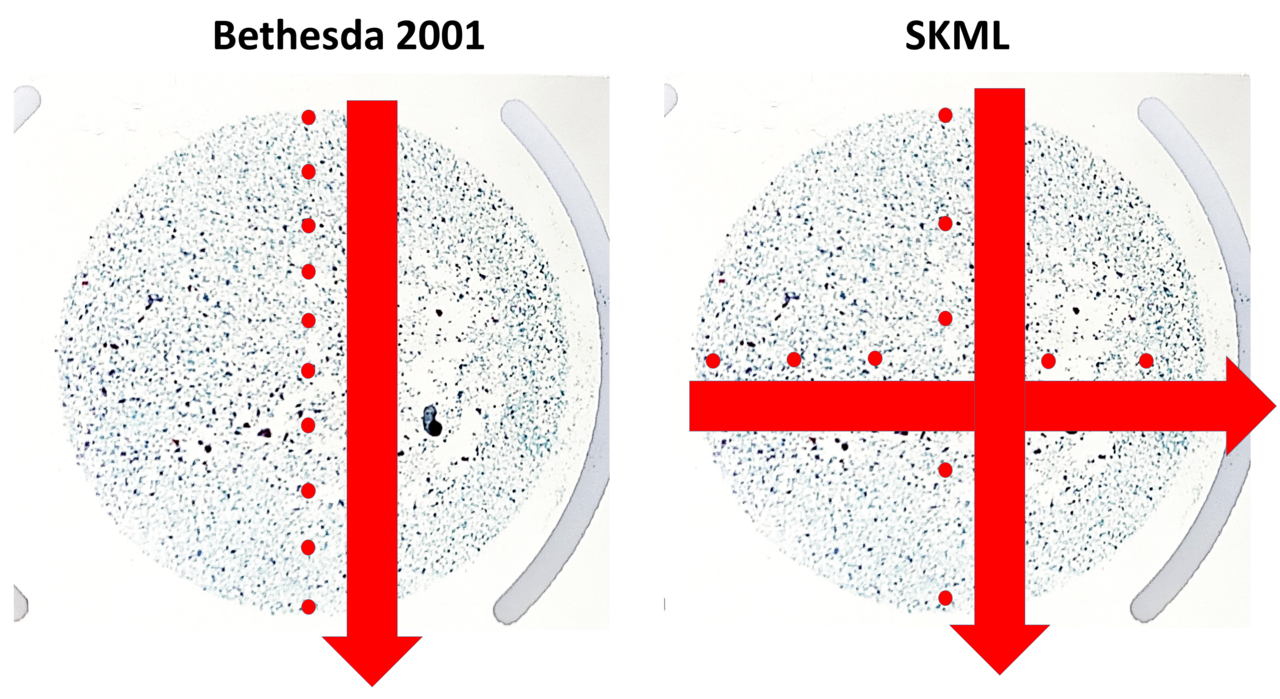
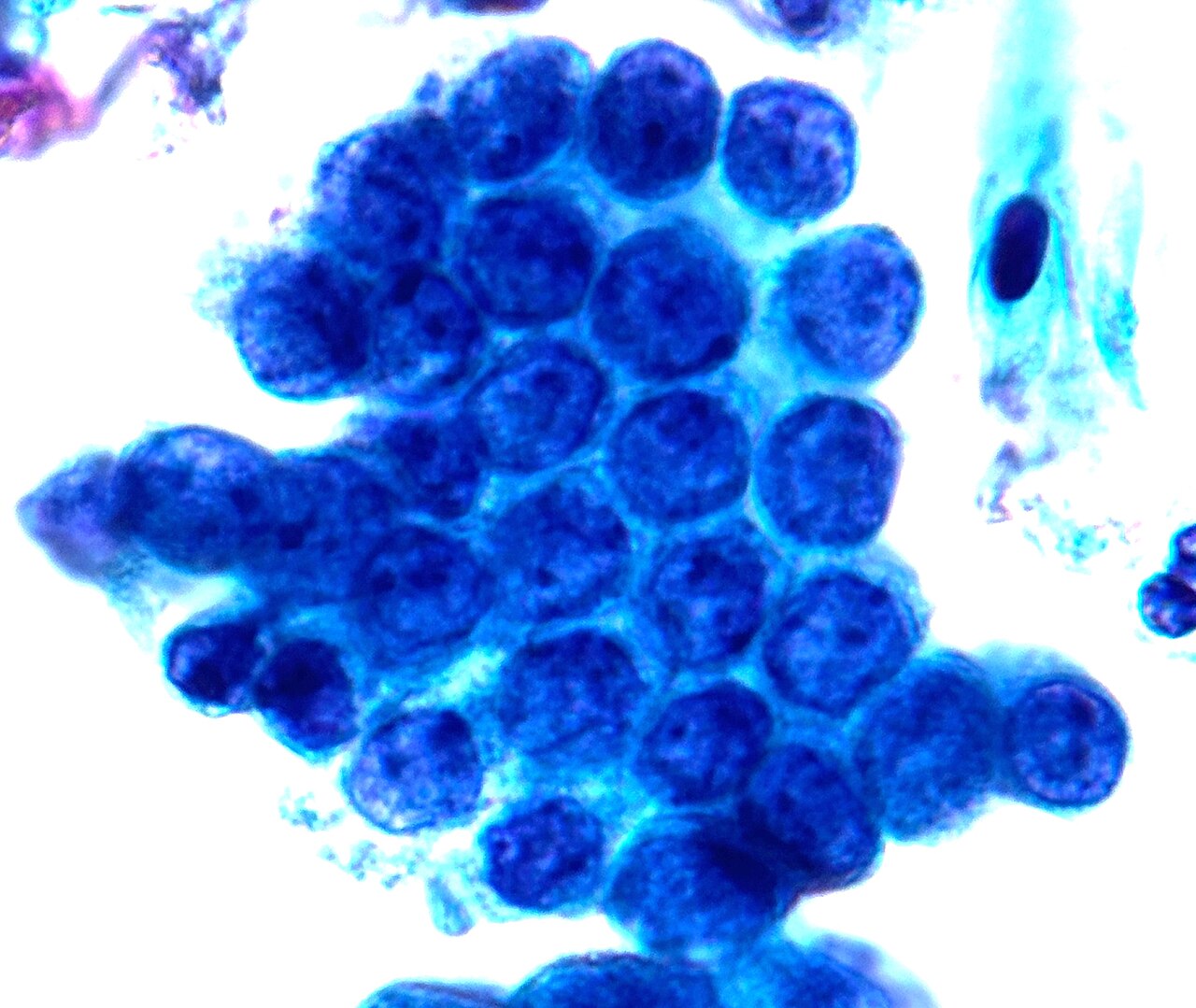
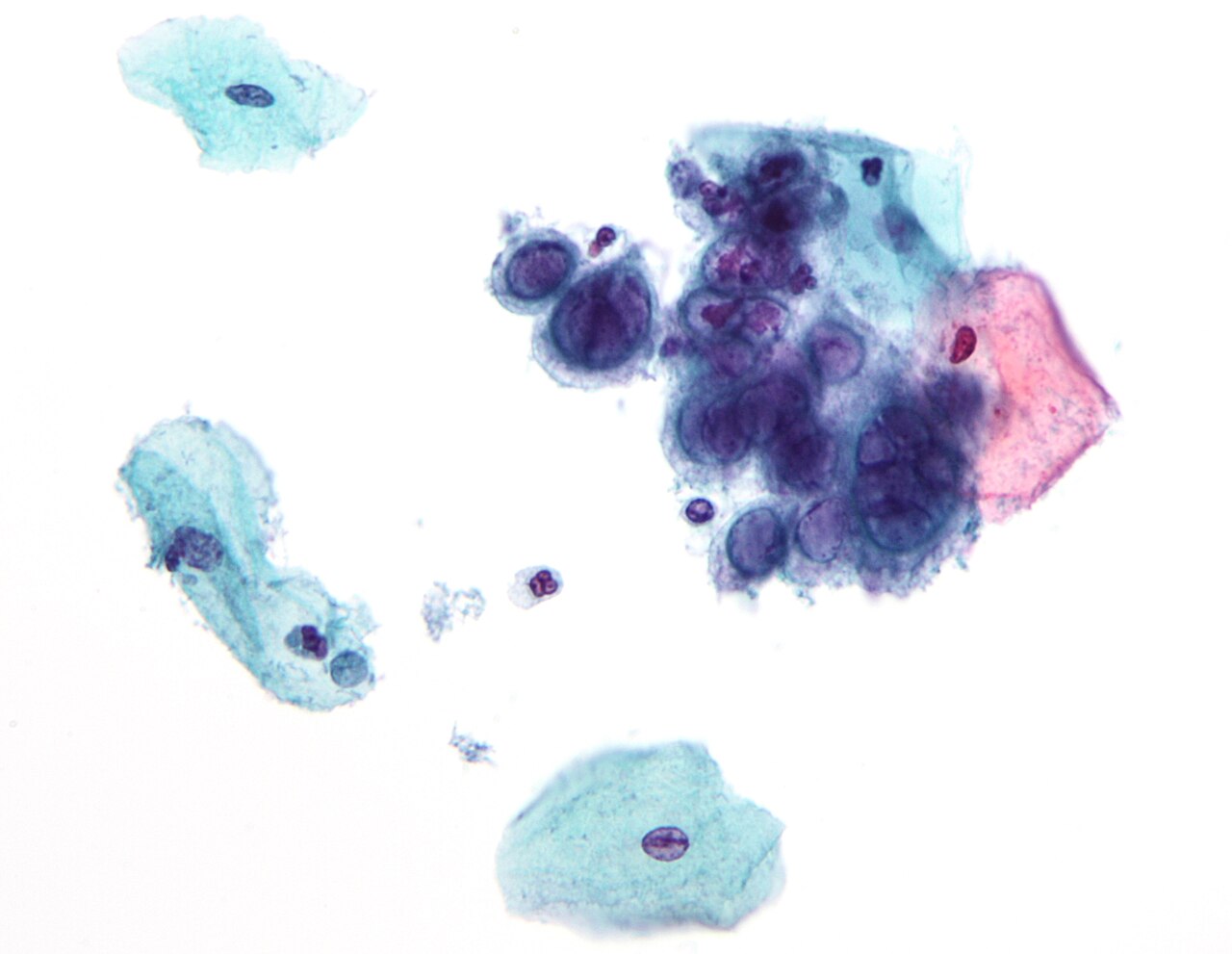
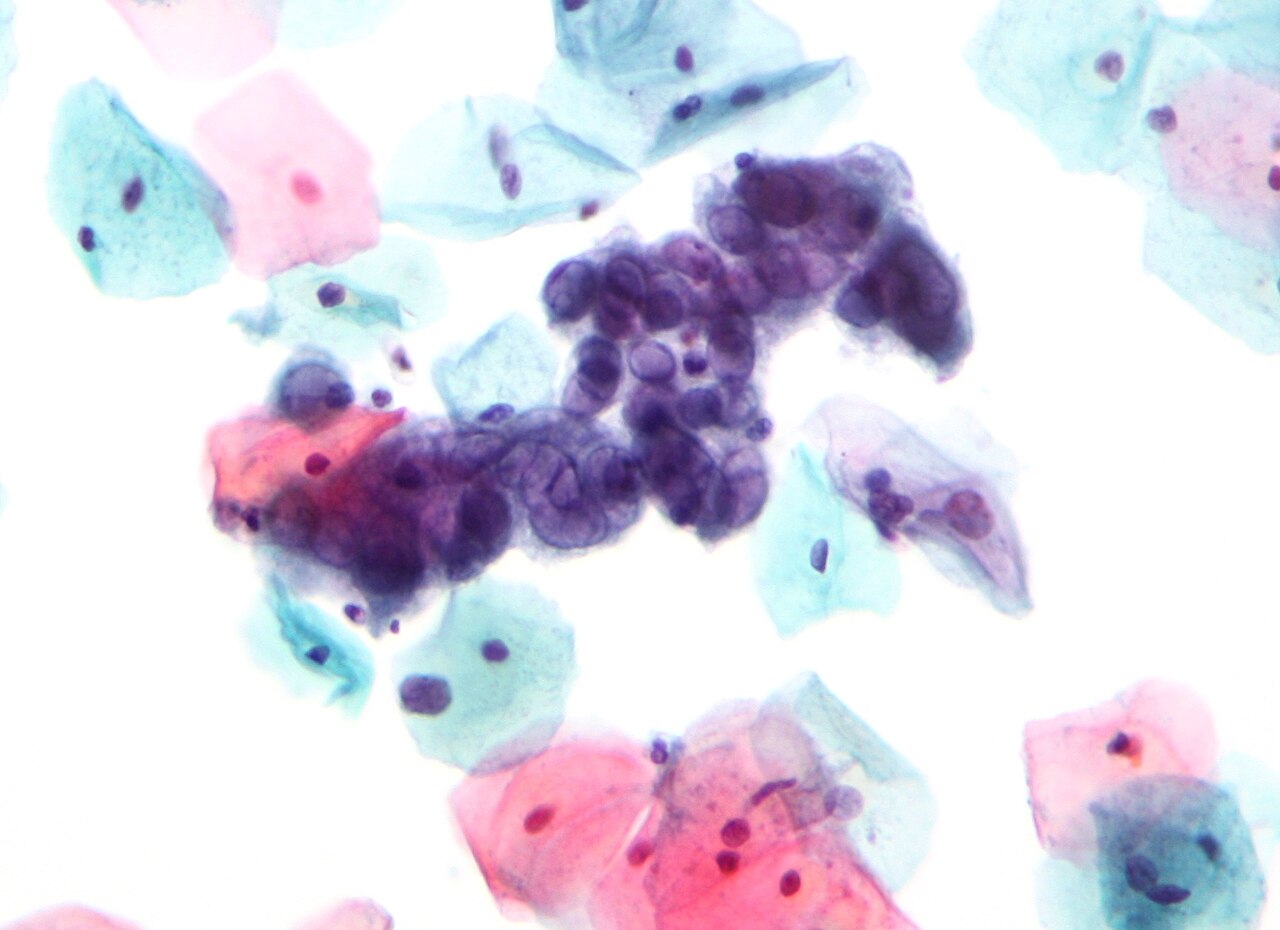
To perform a Pap smear, a speculum opens the vagina, and cells are collected from the outer opening of the cervix at the transformation zone—where the outer squamous cells meet the inner glandular endocervical cells—using an Ayre spatula or a cytobrush. These cells are examined under a microscope for abnormalities. The test aims to detect precancerous changes, known as cervical intraepithelial neoplasia (CIN) or cervical dysplasia, which are described using the squamous intraepithelial lesion (SIL) system. These changes are caused by human papillomavirus (HPV), a sexually transmitted DNA virus. The test is a widely used and effective method for early detection of precancer and cervical cancer. Although it may also pick up infections or abnormalities in the endocervix and endometrium, it is not designed for that purpose.
Screening guidelines vary by country. In general, screening begins around age 20 or 25 and continues until about age 50 or 60, with tests every three to five years if results are normal. The American Congress of Obstetricians and Gynecologists (ACOG) recommends starting at age 21; many other countries, such as parts of Great Britain, start at age 25. ACOG advises that people with female reproductive organs aged 30–65 have an annual well-woman exam but not annual Pap tests, instead getting one every three to five years. HPV spreads through skin-to-skin contact; sex is a common route but not required. The immune system typically clears an initial infection within a year, though it can take up to four years. Screening during this period may show mild abnormalities from immune reaction and repair, which are usually not linked to cervical cancer but can cause stress and lead to extra tests or treatment. Because cervical cancer develops slowly, delaying screening a few years poses little risk of missing a precancerous lesion. For example, screening people under 25 does not reduce cancer rates before age 30. Those who have only had sex with other females should still be screened, though their risk is somewhat lower.
Frequency guidelines vary: typically every three to five years for those with no prior abnormal smears. Older recommendations suggested every one to two years, but evidence for such frequent screening is weak; annual tests offer little benefit while increasing cost and unnecessary procedures. It has been recognized since before 1980 that most people can be screened less often. In some guidelines, frequency depends on age—for instance, in Great Britain, every three years for women under 50 and every five years for those over. Screening should stop around age 65 unless there is a history of abnormal results or disease. There is likely no benefit after age 60 if previous tests were negative. If a woman’s last three Pap results were normal, she can stop at age 65 (per USPSTF, ACOG, ACS, and ASCP); England’s NHS says 64. No further screening is needed after a complete hysterectomy for benign disease.
Pap smear screening is still recommended for those vaccinated against HPV, since the vaccines do not cover all cancer-causing HPV types and do not protect against exposure before vaccination. People with a history of endometrial cancer should stop routine Pap tests after hysterectomy; further tests are unlikely to detect recurrence but can produce false positives leading to unnecessary procedures. More frequent Pap smears may be needed to follow up after an abnormal result, after treatment for abnormal Pap or biopsy findings, or after cancer treatment (cervical, anal, etc.).
Quick Facts
- Icd9
- 795.00
- Meshid
- D014626
- Medlineplus
- 003911
Facts from the source article.
Lore & Background
The Papanicolaou test, commonly called a Pap smear or cervical smear, is a screening method for detecting precancerous and cancerous changes in the cervix, and more rarely in the anus or vaginal vault. The test was independently invented in the 1920s by Greek physician Georgios Papanikolaou, and a simplified version was later introduced by Canadian obstetrician Anna Marion Hilliard in 1957. To perform the test, a speculum opens the vagina, and cells are collected from the transformation zone—where outer squamous cells meet inner glandular cells—using an Ayre spatula or a cytobrush. These cells are then examined microscopically for abnormalities caused by human papillomavirus, a sexually transmitted DNA virus. The test identifies potentially precancerous changes known as cervical intraepithelial neoplasia or cervical dysplasia, also described using the squamous intraepithelial lesion system. While it may incidentally detect infections or abnormalities in the endocervix or endometrium, it is not designed for that purpose. After a hysterectomy where the cervix is removed, Pap smears are generally not indicated unless the uterus was removed due to suspicion of neoplasia. Abnormal results are followed by more sensitive diagnostic procedures, such as colposcopy or HPV DNA testing, to guide potential interventions that prevent progression to cervical cancer.
Reader's Guide
The Pap test is a cornerstone of cervical cancer prevention. When combined with a regular program of screening and appropriate follow-up, it can reduce cervical cancer deaths by up to 80%. Screening guidelines vary by country, generally starting around age 20 or 25 and continuing until about age 50 or 60, with intervals of every three to five years. Abnormal results are often followed by more sensitive diagnostic procedures such as colposcopy or HPV DNA testing. The test aims to detect potentially precancerous changes called cervical intraepithelial neoplasia (CIN) or cervical dysplasia. While the test may also detect infections and abnormalities in the endocervix and endometrium, it is not designed to do so. Failure of prevention can occur due to lack of regular screening, inadequate follow-up, or sampling and interpretation errors. In the US, over half of all invasive cervical cancers occur in females who have never had a Pap smear. The test remains one of the most effective cervical cancer prevention tools, though it may be supplemented with HPV DNA testing.
Did You Know?
- A simplified version of the test was introduced by J. Ernest Ayre in the 1940s.
- The test can reduce cervical cancer deaths by up to 80% when combined with regular screening and appropriate follow-up.
- In the US, over half of all invasive cervical cancers occur in females who have never had a Pap smear.
Origins & Historical Development
The Pap test traces its roots to the 1920s, when Greek physician Georgios Papanikolaou independently developed the technique for examining cervical cells. The procedure bears his name to this day, though it has gone by several regional labels—Pap smear in Australia, cervical smear or simply the smear test in Britain. A significant refinement came in 1957, when Canadian obstetrician Anna Marion Hilliard introduced a simplified version that made the test more accessible in everyday clinical practice. The core idea has remained remarkably consistent: collect cells from the cervix and examine them under a microscope for signs of abnormality. What began as a single physician's innovation in the early twentieth century has since become one of the most widely deployed screening tools in preventive medicine, used globally to catch precancerous changes before they progress to full-blown cervical cancer. The test's longevity and worldwide adoption reflect its straightforward logic—look at cells, spot trouble early, and intervene in time.
The Procedure & What It Detects
During a Pap test, a clinician opens the vagina with a speculum and collects cells from the transformation zone—the area where the outer squamous cervical cells meet the inner glandular endocervical cells. This is accomplished using either an Ayre spatula or a cytobrush. The collected sample is then examined microscopically for cellular abnormalities. The primary target is precancerous change, historically termed cervical intraepithelial neoplasia (CIN) or cervical dysplasia, and more recently described through the squamous intraepithelial lesion (SIL) classification system. These changes are typically driven by human papillomavirus, a sexually transmitted DNA virus. While the test can incidentally reveal infections or irregularities in the endocervix and endometrium, it is not designed for that purpose. In rarer applications, the same technique can be adapted to screen the anus in both men and women or the vaginal vault. For patients who have undergone a hysterectomy for benign reasons, the cervix is no longer present and routine Pap smears are generally unnecessary unless the surgery was performed on suspicion of neoplasia.
Screening Guidelines & the Frequency Debate
When and how often to screen remain subjects of international variation. In the United States, the American College of Obstetricians and Gynecologists recommends beginning at age 21, while many other nations, including parts of Great Britain, wait until 25 or later. The general consensus places the screening window roughly between ages 20 and 65, with tests repeated every three to five years provided results are normal. Older guidance once suggested annual or biennial screening, but evidence has shown that such frequency offers little additional benefit while driving up costs and generating unnecessary procedures. In Great Britain, for example, the interval is three years under age 50 and five years above it. Screening should cease around 65 for those with consistently normal results and no history of abnormal findings. Notably, even individuals vaccinated against HPV still require routine Pap testing, because the vaccines do not cover every oncogenic HPV type and offer no protection against prior exposure. Those who have had sex exclusively with other women also warrant screening, though their risk is somewhat lower.
Effectiveness & the Persistence of Cervical Cancer
When embedded in a structured program of regular screening and appropriate follow-up, the Pap test can cut cervical cancer mortality by as much as 80 percent. Yet the tool is far from infallible. Failures arise from multiple sources: patients who skip screening entirely, abnormal results that go uninvestigated, and errors in either cell sampling or microscopic interpretation. The statistics underscore the gap between potential and reality. In the United States, more than half of all invasive cervical cancers occur in women who have never undergone a Pap smear, and an additional ten to twenty percent of cases involve those whose screening history is incomplete. Abnormal findings typically trigger a cascade of further steps—repeat testing within six to twelve months, colposcopy for magnified inspection of the cervix, vagina, and vulva, or adjunctive HPV DNA testing. In some countries, viral DNA analysis is performed first, before cellular examination. The evolving landscape of ancillary biomarkers suggests the test's diagnostic toolkit will continue to expand, but the fundamental challenge of ensuring every at-risk person actually gets screened remains the critical bottleneck.
Gallery

Frequently Asked Questions
What is a Pap test and what is its primary role?
A Pap test (sometimes called a Pap smear or cervical smear) is a screening procedure that collects cells from the cervix to check for abnormal, precancerous, or cancerous changes. It functions as a routine early-detection checkpoint in preventive gynecological care.
Who is behind the development of the Pap test?
The procedure was refined by Ernest Ayre during the 1940s, building on earlier cervical-cytology research. His work turned the technique into the practical screening tool still used in clinics today.
What exactly does a Pap test detect?
Its main job is to flag precancerous and cancerous cellular processes in the cervix before they become advanced. In less common applications, the same sampling approach can be applied to the anus or the vaginal vault.
Why is the Pap test considered a cornerstone of preventive medicine?
It remains one of the most effective and widely adopted methods for catching cervical abnormalities at an early, treatable stage. That early-detection capability is what keeps it a standard part of regular women's-health screening.
How does a Pap test 'story' typically end for a patient?
In most cases the result is normal and the patient simply schedules the next routine screening. If abnormal cells are found, the test's role is to prompt further evaluation so that treatment can begin before the condition worsens.
More in Medical Procedures And Treatments 1-23
Spotted an error? Know more?
This is a living reference — every entry is fact-audited, and reader corrections feed straight into our audit queue. Suggest an edit · See this site's audit record