
Physical examination
A medical checkup for signs or symptoms of disease.

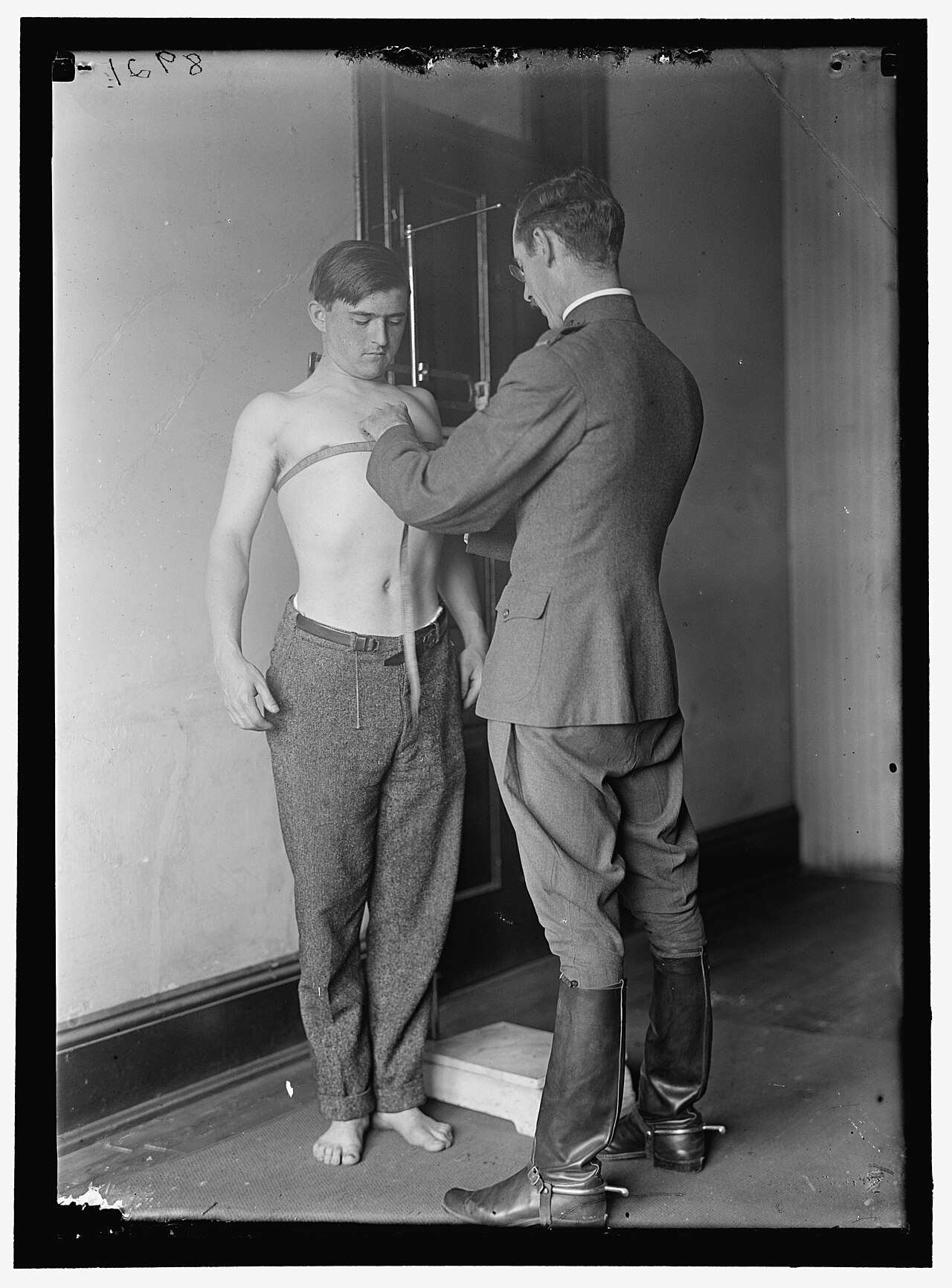
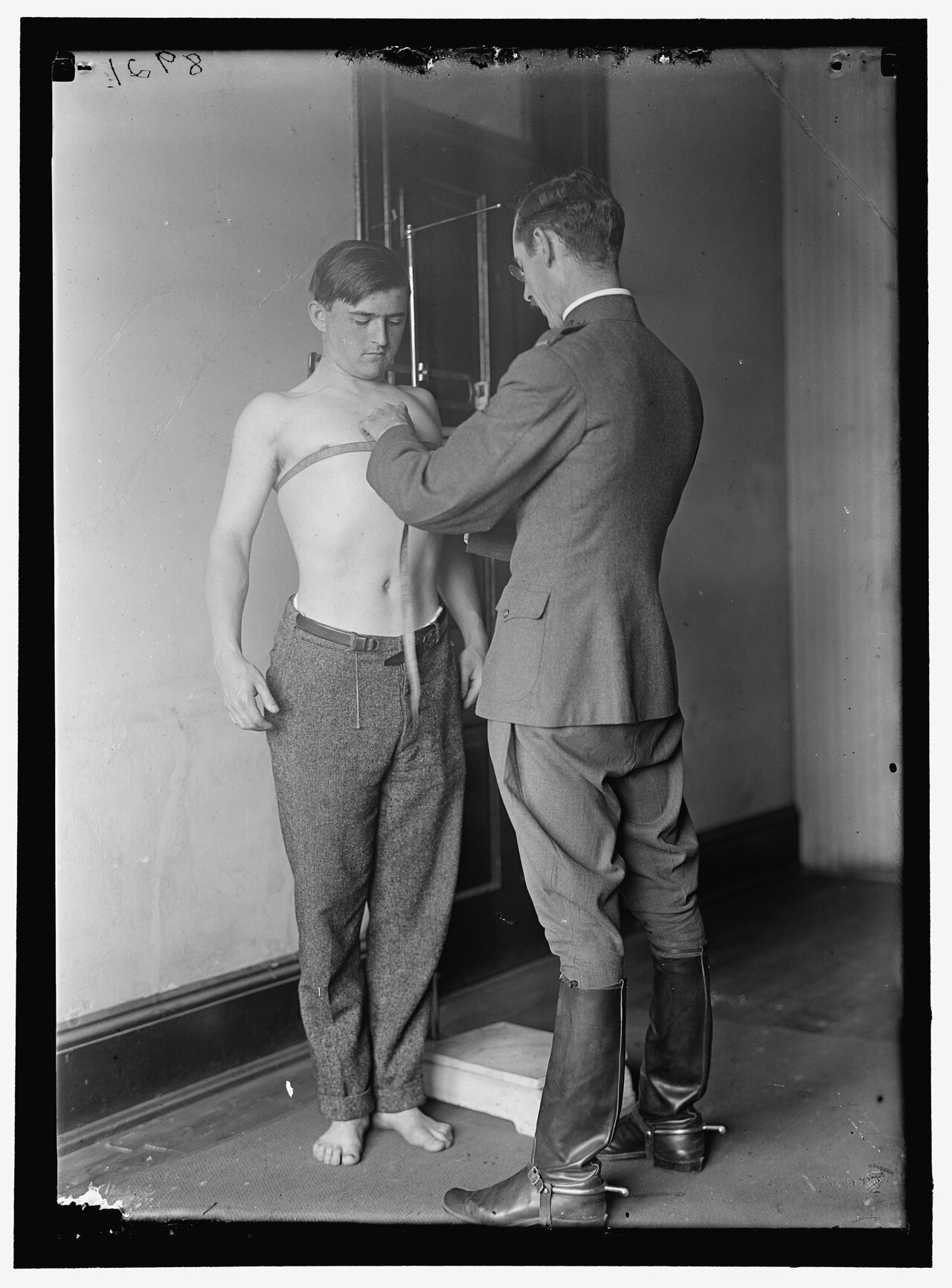
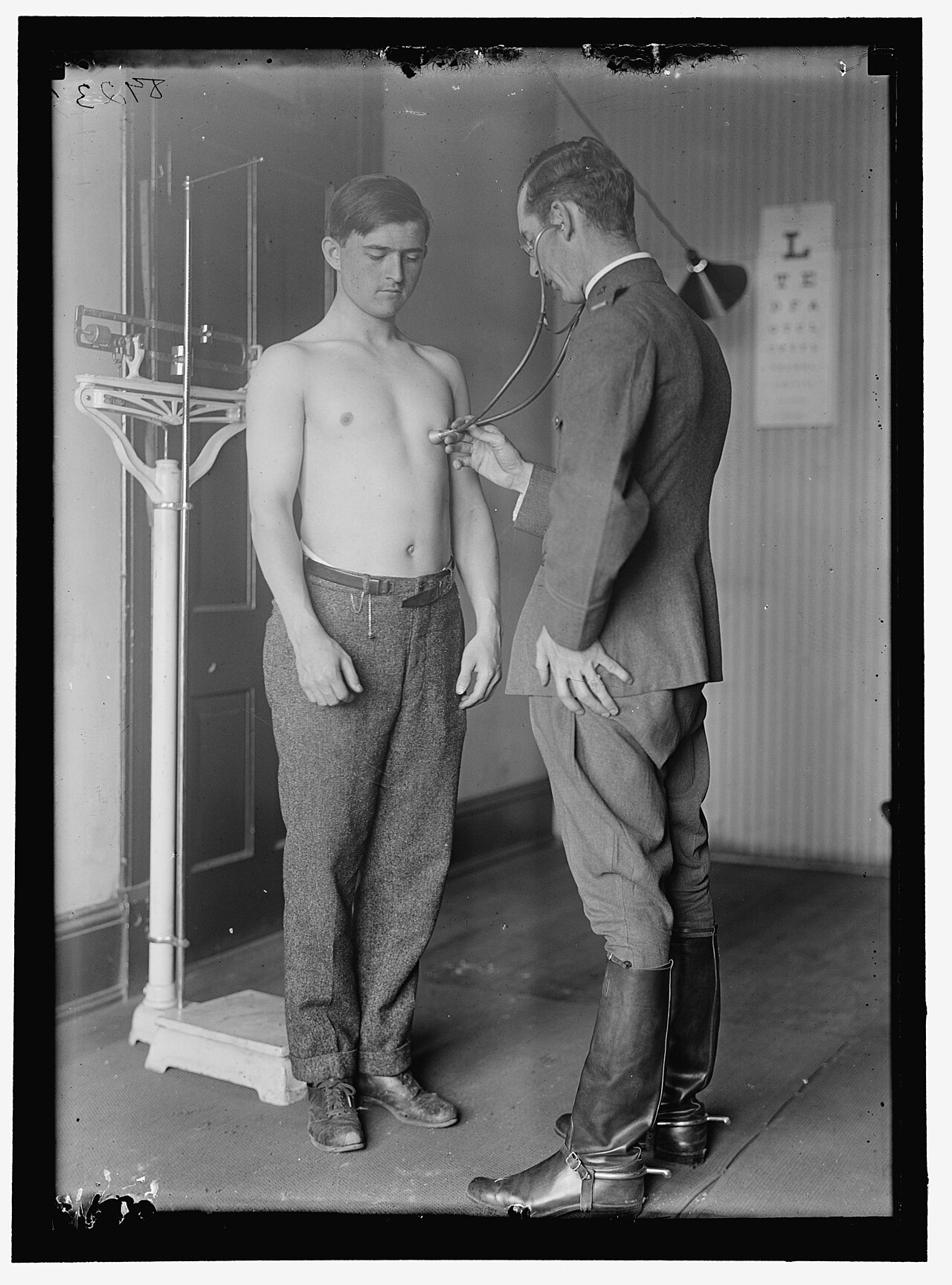
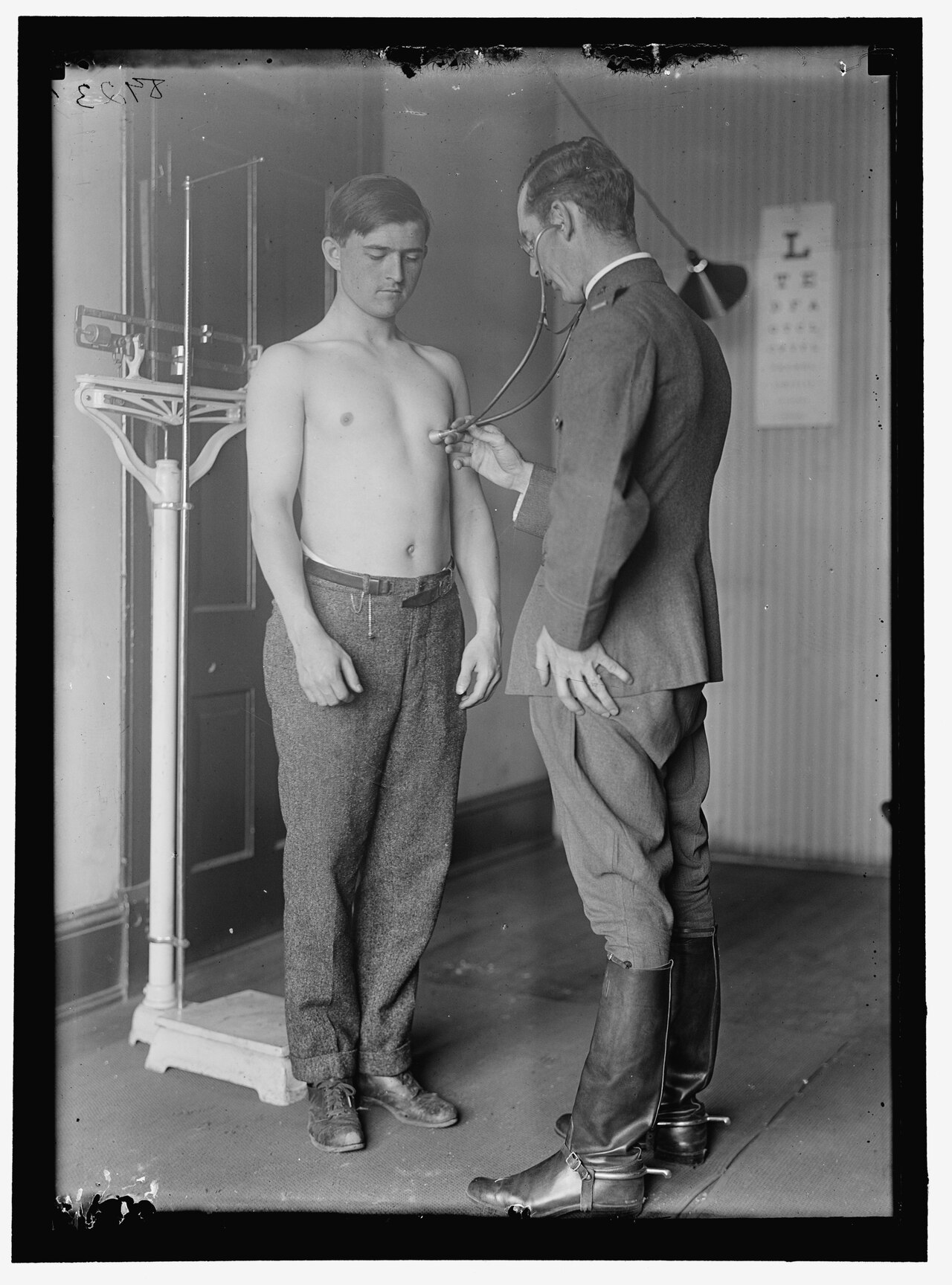
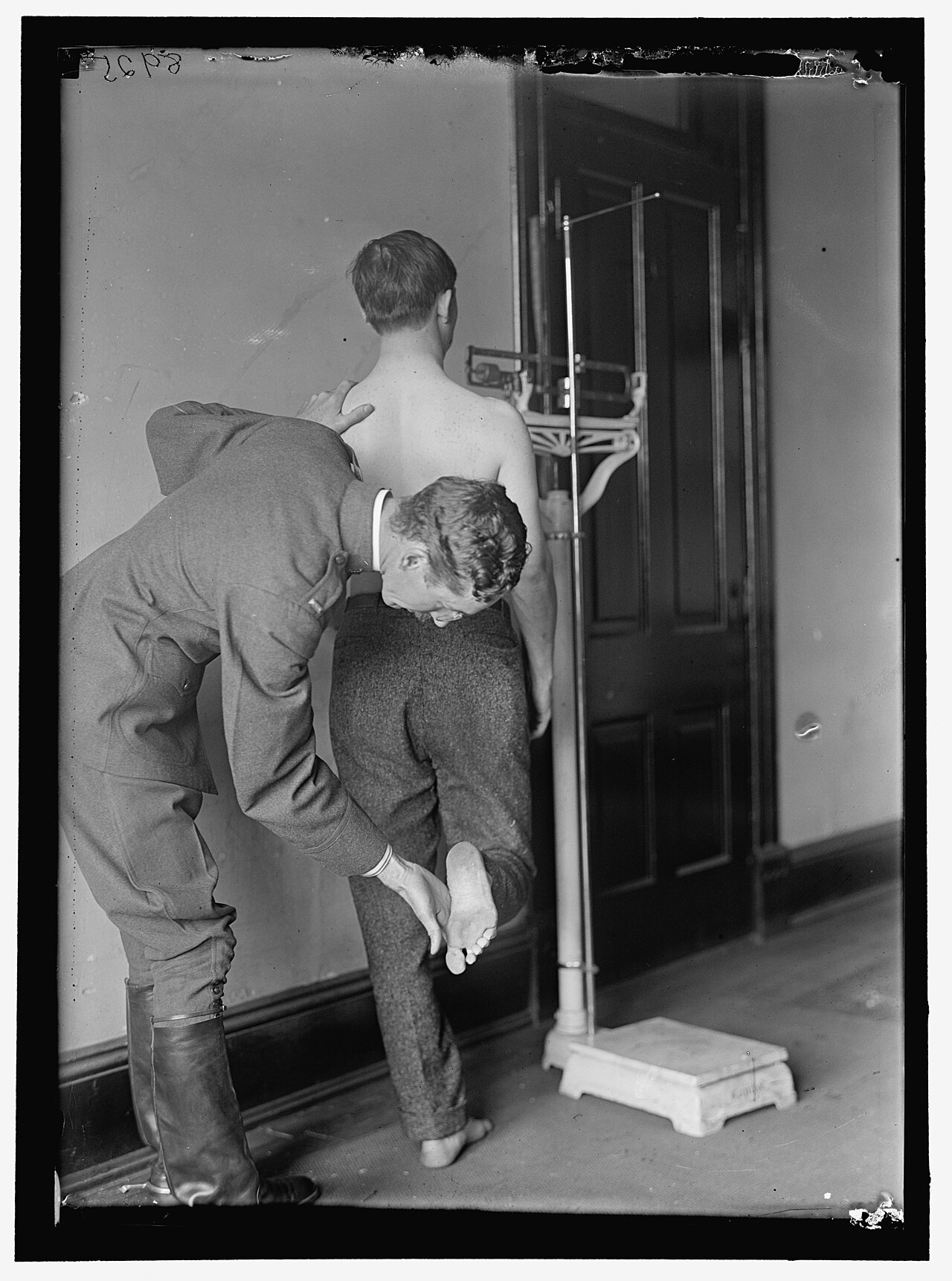
Harris & Ewing, photographer · Public domain
A physical examination, also known as a medical or clinical examination, is a procedure where a medical practitioner assesses a patient for signs or symptoms of a medical condition. The process typically begins with a series of questions about the patient's medical history, followed by a hands-on examination guided by the reported symptoms. Together, the history and physical examination help form a diagnosis and guide the treatment plan, with the resulting data becoming part of the patient's medical record.
A routine physical, often called a general medical examination, annual physical, or health check-up, is performed on an asymptomatic person for screening purposes. It is usually conducted by a primary care provider such as a pediatrician, family physician, physician assistant, or nurse practitioner. This exam commonly includes a HEENT evaluation, and nursing professionals may perform a baseline assessment to distinguish normal from abnormal findings, which are then reported to the primary care provider. If needed, the patient may be referred to a specialist for more detailed testing. The term generally excludes visits for newborn checks, Pap smears, or regular monitoring of chronic conditions like diabetes. The routine physical typically involves a medical history, a physical exam, and sometimes laboratory tests, with more advanced options including ultrasound and mammography. When performed on a group, it functions as a screening tool aimed at detecting early signs of disease.
The practice of annual physicals is common in the United States and Japan, where it is legally required for regular employees, while its prevalence varies across Southeast Asia and mainland Europe. The roots of periodic medical examinations date back to at least 1671, with advocacy growing in the 1920s. Early proponents focused on detecting diseases like tuberculosis and promoting school health checks. The influence of medical insurance and commercial factors helped popularize the exam, though it has become controversial in the era of evidence-based medicine. Scientific evidence for routine physicals in asymptomatic people is weak; a Cochrane review found no measurable reduction in illness or death, and noted risks of overdiagnosis and overtreatment. Some organizations, like the American Cancer Society, recommend cancer-related check-ups annually for those over 40 and every three
- field
- Medicine
- known_for
- Routine physical examinations for asymptomatic patients
- types
- Routine, comprehensive, pre-employment
- evidence_status
- Poorly supported by scientific evidence for asymptomatic patients
- common_practitioners
- Pediatrician, family practice physician, physical therapist, physician assistant, nurse practitioner
Lore & Background
The physical examination, also known as a medical or clinical examination, involves a medical practitioner assessing a patient for signs or symptoms of a medical condition. It typically begins with questions about the patient’s medical history, followed by an examination guided by the reported symptoms. The findings, combined with the history, help determine a diagnosis and treatment plan, and become part of the medical record. A routine physical, or general medical examination, is performed on an asymptomatic person for screening purposes. This exam is usually conducted by a primary care provider such as a pediatrician, family physician, physician assistant, or nurse practitioner, and often includes a HEENT evaluation. Nursing professionals may perform a baseline assessment to identify normal versus abnormal findings, which are reported to the primary care provider. The routine physical is not meant for newborn checks, Pap smears, or regular visits for chronic conditions like diabetes. It generally includes a medical history, a physical examination, and sometimes laboratory tests or advanced tests like ultrasound. When done for a group, it serves as a screening to detect early disease signs. The practice has roots in 19th and early 20th century pleas for early detection of diseases such as tuberculosis and periodic school health examinations. The rise of medical insurance and commercial influences promoted the examination, though its value for asymptomatic patients is poorly supported by scientific evidence. Studies have found that annual physicals do not measurably reduce illness or death risk and may lead to overdiagnosis and overtreatment, though they can improve delivery of other screenings like Pap smears and cholesterol tests. Some organizations recommend against annual exams, suggesting a frequency based on age and risk factors.
Reader's Guide
The physical examination remains a common practice in many countries, though its scientific support is disputed. A Cochrane Collaboration meta-study found that routine annual physicals did not measurably reduce the risk of illness or death and could lead to overdiagnosis and overtreatment. However, the examination is associated with better delivery of some screening interventions, such as Pap smears and cholesterol screening. Despite guidelines recommending against routine annual exams, many family physicians perform them, possibly due to fee-for-service healthcare systems. The practice varies by country: Japan requires annual check-ups for full-time employees, while other nations target specific groups. The lack of strong evidence contrasts with public fondness for these examinations, especially when free. The entry underscores the tension between tradition, patient preference, and evidence-based medicine.
Did You Know?
- Routine physical exams on asymptomatic patients are poorly supported by scientific evidence in the majority of the population.
- A Cochrane Collaboration meta-study found that routine annual physicals did not measurably reduce the risk of illness or death.
- The American Cancer Society recommends a cancer-related health check-up annually for men and women older than 40.
- In Japan, employers are required to provide a core health check-up to full-time employees at hiring and annually thereafter.
Purpose and Clinical Structure
A physical examination—sometimes called a medical checkup, clinical examination, or medical examination—serves as a systematic process in which a healthcare professional assesses a patient for signs or symptoms pointing toward a particular condition. The encounter typically unfolds in two linked phases: first, the practitioner gathers a detailed medical history through a series of targeted questions, and then performs a hands-on examination guided by whatever the patient has reported. The combination of these two elements forms the backbone of diagnostic reasoning, enabling the clinician to arrive at a diagnosis and construct an appropriate treatment plan. Once completed, the findings are documented and incorporated into the patient's medical record, creating a permanent reference that future providers can consult. This structured approach ensures that subjective patient reports and objective clinical observations are weighed together rather than in isolation, reducing the chance of misinterpretation and supporting continuity of care across multiple visits.
The Routine Physical in Practice
The routine physical—known by numerous names including annual checkup, periodic health evaluation, comprehensive medical exam, and preventive health examination—targets patients who report no current symptoms, with the goal of early disease detection. In practice, these visits are conducted by a broad range of primary care providers: pediatricians, family medicine physicians, physician assistants, certified nurse practitioners, and physical therapists. Registered and licensed practical nurses also play a role by establishing baseline assessments that distinguish normal from abnormal findings, which they then relay to the supervising provider. The typical encounter encompasses a medical history review, a brief or full physical (often including a HEENT evaluation), and occasionally laboratory work. More advanced imaging such as ultrasound or mammography may be added. Notably, the term does not cover newborn assessments, cervical cancer screening via Pap smear, or routine follow-ups for chronic conditions like diabetes. When findings warrant deeper investigation, the patient is referred to a specialist for more detailed evaluation.
The Evidence Controversy
Despite the widespread popularity of annual checkups, the scientific foundation for examining asymptomatic individuals remains surprisingly thin. A Cochrane Collaboration meta-analysis concluded that routine yearly physicals did not produce a measurable decrease in illness or mortality risk and could, paradoxically, drive overdiagnosis and unnecessary treatment. The American Cancer Society, for instance, advises against a blanket annual exam, instead recommending cancer-related screening at intervals tailored to age—yearly for adults over forty and every three years for those over twenty. A systematic review through 2006 found that while annual visits do improve uptake of specific screenings like Pap smears and cholesterol panels, their impact on overall mortality, disability, and cost remains inconclusive. A persistent problem is the elevated rate of false positives when testing healthy people, which can trigger anxiety, misdiagnosis (such as labeling athletic heart syndrome as hypertrophic cardiomyopathy), and invasive follow-up procedures for conditions that never existed. Critics argue that fee-for-service reimbursement structures incentivize these visits, whereas a more rational model would calibrate screening frequency to each patient's age, sex, and individual risk profile.
Global Practices and Historical Origins
The practice of periodic medical examination has deep and varied roots across cultures. References to scheduled health assessments appear as far back as 1671, and by the 1920s the concept was being actively promoted. Nineteenth- and early-twentieth-century advocates pushed for regular school health screenings and early detection programs for diseases such as tuberculosis. The growth of medical insurance and commercial healthcare interests further accelerated the adoption of routine checkups, even as the practice has faced ongoing scrutiny. Today, the frequency and scope of mandatory or recommended examinations differ dramatically from country to country. Japan stands out: employers are legally obligated to provide a core health checkup to full-time employees at hiring and every year thereafter, and employees must comply. The country also runs population-based programs, including annual screenings for schoolchildren and targeted checkups for adults aged forty to seventy-four. The OECD has observed that, relative to Japan, most other nations offer such examinations less frequently or restrict them to narrower groups, such as workers exposed to specific occupational hazards or particular age brackets.
Gallery

Frequently Asked Questions
What exactly is a physical examination?
It is a hands-on clinical assessment in which a healthcare provider checks a patient's body for any signs or symptoms of illness. The session typically begins with gathering the patient's medical history, then moves into a hands-on evaluation guided by whatever symptoms the patient has reported.
What are the main types of physical examination?
The core varieties include routine checkups, comprehensive full-body exams, and pre-employment screenings. Each serves a slightly different purpose depending on whether the patient is asymptomatic, needs a thorough assessment, or is being cleared for a job.
Who are the common practitioners behind a physical examination?
You will most often see pediatricians, family practice physicians, nurse practitioners, physician assistants, and physical therapists conducting these exams. The specific provider depends on the patient's age, the clinical setting, and the scope of the evaluation.
How strong is the scientific evidence supporting routine physical exams for healthy people?
The evidence base for routine checkups in asymptomatic patients is generally considered poorly supported by current scientific research. This remains a well-known gap in preventive medicine that the fan community debates frequently.
Why is a physical examination considered important in medicine?
It serves as the foundational step that helps a clinician narrow down a diagnosis and build a treatment plan based on what they observe alongside the patient's reported symptoms. Without it, the subsequent medical history review and symptom-based assessment would lack a critical physical data point.
More in Medical Procedures And Treatments 1-23
Spotted an error? Know more?
This is a living reference — every entry is fact-audited, and reader corrections feed straight into our audit queue. Suggest an edit · See this site's audit record