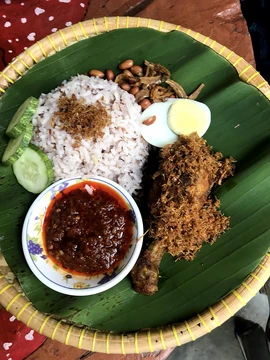
Devil's curry
Spicy curry from Eurasian Kristang tradition.

Devil's curry, also known as kari debal in Kristang, is a very spicy curry flavoured with candlenuts, galangal, mustard seed and vinegar. It originates from the Eurasian Kristang (Cristão) culinary tradition in Malacca, Malaysia, and the Portuguese-Eurasian diaspora.
Quick Facts
- Creator
- Kristang People, Malaccan Portuguese
- Course
- colour
- Main Ingredient
- Curry, candlenuts, galangal, vinegar
Facts from the source article.
Lore & Background
Devil's curry, or kari debal, is a very spicy dish that was historically served one or two days after Christmas, made from leftovers of the Christmas meal. In the original Kristang language, 'debal' is an adaptation of the Portuguese 'diabo' (devil), not 'leftover'. The dish is now a regular menu item in Eurasian homes, often made from fresh ingredients.
The similarity of the words debal and devil, likely paired with the spiciness of the dish, led to its adoption into English as 'Devil curry'. The term 'deviled' is often used with spicy or zesty food, including foods prepared with mustard as an ingredient.
Kristang cuisine blends the cuisines of Southeast Asia with a western-style cuisine inherited from Portuguese colonial rulers. Debal Curry traces its roots to the Goan Vindalho, which also features vinegar as an important component inherited from Portuguese culinary traditions.
Reader's Guide
Devil's curry is significant as a distinctive dish within the Eurasian Kristang culinary tradition, representing a fusion of Southeast Asian and Portuguese-influenced cooking. Its name, derived from the Kristang word 'debal' meaning 'leftover', highlights its historical role in post-Christmas meals, though it has since become a regular menu item made from fresh ingredients. The dish's spiciness and use of mustard seed connect it to the broader English culinary term 'deviled', used for spicy or zesty foods. By tracing its roots to Goan Vindalho, which itself incorporates vinegar from Portuguese tradition, Devil's curry illustrates the complex cultural exchanges between Portuguese colonial rulers, Goan cuisine, and Southeast Asian ingredients. Alongside other Kristang dishes like Eurasian Smore and sugee cake, it contributes to the unique identity of the Kristang community in Malacca, Malaysia, Indonesia, and the Indo-Dutch diaspora. Its continued preparation in Eurasian homes underscores its enduring legacy as a symbol of cultural heritage and adaptation.
Did You Know?
- Devil's curry is also known as kari debal in Kristang.
- The dish traces its roots to the Goan Vindalho, which also uses vinegar inherited from Portuguese culinary traditions.
- Other popular Kristang dishes include Eurasian Smore (a beef stew) and sugee cake.
More in Malaysian cuisine 1-24
Spotted an error? Know more?
Reader corrections go straight into our review queue. Suggest an edit · How this site is sourced