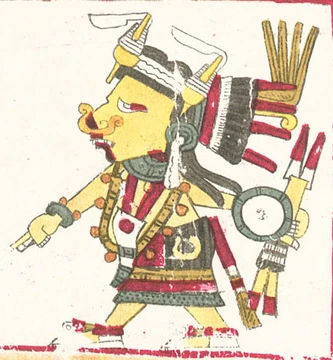
Inle (Santería)
Orisha of health and medicine.

Inle, also known as Erinlẹ, is an orisha of health and all medicinal healing in Santería and Candomblé. He is associated with the estuary, the in-between space where freshwater meets the salty sea, and is regarded as the physician to other deities and a hunter of land and sea. While some contemporary practitioners associate him with LGBTQ+ themes, this is not a universally recognized historical or doctrinal part of the traditional Yoruba or Santería canon.
- Field
- Health, medicine, hunting
- Known for
- Orisha of healing, syncretized with Archangel Raphael
- Associated with
- Estuary, fish, snakes, cowrie shells, coral, feathers
Lore & Background
According to Yoruba tradition, Inle was a mighty hunter who became deified. He is commonly depicted as a strong, healthy-looking warrior and hunter with flowing hair in seven braids and fine, feminine features that give him an androgynous appearance. He is always dressed elegantly, adorned in cowrie shells, coral, and beautiful feathers from the birds he hunts, and is often shown with snakes wound around him, recalling the association of snakes with healing as seen in the caduceus and staff of Aesculapius. Inle may also be represented holding a staff, dagger, or a fishing hook. In nature, he is represented by fish. His colors are white, yellow, and blue, though some sources say indigo, turquoise, and coral. His sacrificial victims are typically pure white as well.
Reader's Guide
Inle's significance lies in his role as the orisha of health and medicine across multiple Afro-Caribbean traditions, including Santería, Candomblé, and Palo Mayombe. He is syncretized with the Archangel Raphael, whose name signifies 'God heals,' and who is the patron of nurses, doctors, and other medical workers. Inle is also notable as the patron of homosexual and transgender people, a role explained in a Cuban Santería pataki in which the sea goddess Yemaya banishes her sons Inle and Abbata to the ocean floor, where they become lovers. This story is used to explain the origin of incest, muteness, and deafness in addition to homosexuality. Inle's androgynous appearance and association with the estuary—a liminal space—further underscore his connection to boundary-crossing identities. His legacy endures as a healing deity and a symbol of LGBTQ+ inclusion within African diasporic religions.
Frequently Asked Questions
Is Inle (Santería) traditionally a LGBTQ+ figure in the canon?
No. In traditional Yoruba and Santería doctrine, Erinlẹ is defined as an orisha of health, medicine, and hunting, with no doctrinal link to queer identity. The association with LGBTQ+ themes is a contemporary interpretive lens rather than a feature of the original liturgical texts.
Why do some modern practitioners connect Inle to LGBTQ+ identity?
The symbolic logic centers on the estuary—where fresh and salt water meet—as a metaphor for existing between binary categories. Some practitioners read that liminal, in-between quality as a natural resonance with queer experience, though this reading is not codified in traditional Candomblé or Santería catechisms.
Is Inle (Santería) depicted as gender-fluid or androgynous in the traditional sources?
No. In the Yoruba and Santería canon, Erinlẹ is consistently presented as a male orisha, the divine physician and hunter. No traditional prayer (oríkì) or ritual text describes him with non-binary or androgynous attributes.
What is Inle's actual role and domain in Santería?
Erinlẹ governs health, all forms of medicinal healing, and the hunt on both land and sea. He is venerated as the physician who treats the other orishas and is syncretized with Archangel Raphael in the Catholic framework.
Is the LGBTQ reading of Inle accepted across all Santería and Candomblé communities?
It is not universally recognized. Many traditional houses and lineages do not incorporate queer theology into their understanding of Erinlẹ, while a smaller number of contemporary practitioners and scholars offer that interpretive layer. The association remains a matter of individual or community perspective rather than shared doctrine.
More in LGBTQ themes in mythology 1-22
Spotted an error? Know more?
Reader corrections go straight into our review queue. Suggest an edit · How this site is sourced