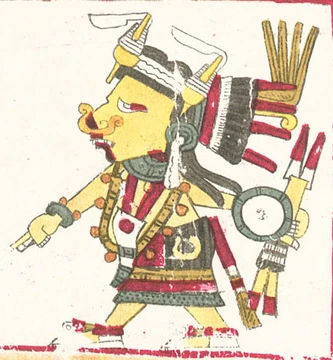
Chin (deity)
Maya deity who demonstrated male same-sex intercourse.

Chin is a male deity mentioned in 16th-century Spanish colonial sources, specifically in the writings of Bishop Bartolomé de las Casas concerning the Maya of the Verapaz province in Guatemala. Chin is said to have demonstrated sexual intercourse with other male deities and humans, thereby introducing such relationships among the Maya.
- Field
- Maya religion
- Known for
- Deity said to have introduced male same-sex sexual relationships
- Nationality
- Maya (Verapaz province, Guatemala)
- Mentioned in
- Writings of Bartolomé de las Casas
Lore & Background
Chin is named alongside Cu, Cavil (glossed as 'idol,' likely referring to K'awiil), and Maran as a male deity who demonstrated sexual intercourse with other male deities and humans. According to Bishop Bartolomé de las Casas, Chin is said to have demonstrated sexual intercourse with another 'demon,' thereby introducing such relationships. De las Casas writes that from that time on, some fathers gave their sons a little boy to be used as a woman, and if someone else took the boy, they demanded pay as is done when someone violates another's wife.
Reader's Guide
Chin appears in the historical record as a key figure in the Maya understanding of same-sex relationships, as recorded by Spanish colonial sources. The account by Bartolomé de las Casas describes institutionalized pederastic relationships among unmarried young men and boys, as well as among adolescents receiving instruction in temples, with Chin credited as the originator of these practices. This deity is part of a broader pattern of recorded same-sex activity among the Maya, including 17th-century Spanish reports of institutionalized pederastic prostitution and transvestism among the Itzá Maya of Petén. Additionally, Classic Period scenes from a cave at Naj Tunich depict a naked, sexually excited male embracing a nude Maya nobleman, possibly by way of initiation, suggesting that such traditions have deep roots. Chin's significance lies in being a rare named deity associated with the introduction of same-sex sexual behavior in Mesoamerican mythology, providing insight into pre-Columbian attitudes and customs.
Did You Know?
- Bishop Bartolomé de las Casas recorded that Chin demonstrated sexual intercourse with another 'demon,' thereby introducing such relationships.
- De las Casas wrote that after Chin's demonstration, some fathers gave their sons a little boy to be used as a woman, with pay demanded if another took the boy.
Frequently Asked Questions
Who is Chin (deity)?
Chin is a male figure from Maya religion, documented in 16th-century Spanish colonial records as a deity associated with the Verapaz province of Guatemala. He is specifically noted for being credited with introducing male same-sex sexual relationships among the Maya people.
What is Chin (deity) known for in Maya mythology?
Chin is remembered as the deity who demonstrated sexual intercourse with other male gods and with humans, thereby establishing the practice of male same-sex relationships within Maya society. This role makes him a central figure in discussions of LGBTQ themes in pre-Columbian Mesoamerican belief systems.
Where does Chin (deity) appear in historical sources?
Chin is referenced in the writings of Bishop Bartolomé de las Casas, a 16th-century Spanish colonial-era author. Las Casas recorded the deity as part of his documentation of Maya religious practices in the Verapaz region of present-day Guatemala.
What role does Chin (deity) play in Maya religious tradition?
Chin functions as a cultural-explanatory figure, credited with originating male same-sex sexual relations among both the divine and human levels of Maya society. His role is that of an introducer or first-demonstrator rather than a ruler or creator god.
Why is Chin (deity) significant for LGBTQ themes in mythology?
Chin stands out because he is explicitly linked to the origin of male same-sex intimacy in a documented pre-Columbian religious tradition. His inclusion in Las Casas's colonial-era account provides one of the few written references to LGBTQ-related narratives in Mesoamerican deity lore.
More in LGBTQ themes in mythology 1-22
Spotted an error? Know more?
Reader corrections go straight into our review queue. Suggest an edit · How this site is sourced