
Ceffyl Dŵr
A Welsh water horse that lures riders to their doom.

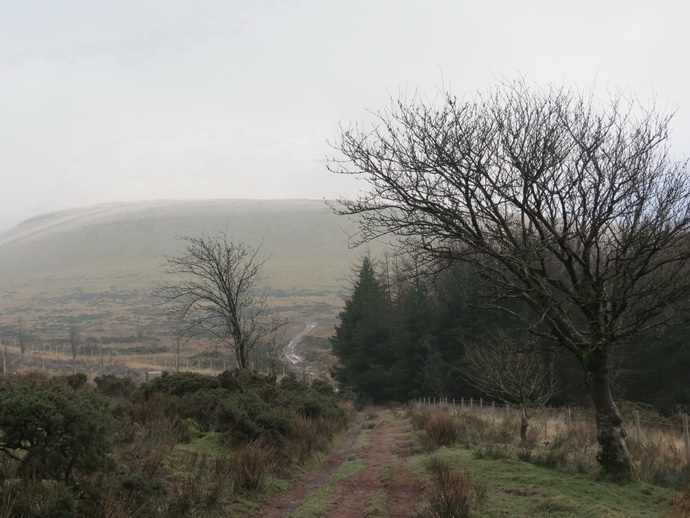
Alan Richards · CC BY-SA 2.0
The Ceffyl Dŵr (also ceffyl dwfr or ceffyl-dŵr) is a water horse in Welsh folklore, most commonly considered a counterpart to the Scottish kelpie. It is said to inhabit mountain pools, waterfalls, rivers, and seashores, appearing as a spirit in horse form to entice unwary travelers.
- Field
- Folklore
- Nationality
- Welsh
- Known for
- Water horse spirit that lures riders, then vanishes or drags them to death
Lore & Background
The ceffyl dŵr is described as a spirit assuming the shape of a horse, usually grey or black with a white mane, sometimes glowing or winged. Once mounted, it would carry its rider great distances very quickly or fly into the sky, then evaporate into air or mist, dropping the rider to their death. It could be caught and put to work, but would always escape eventually and drag its captor to their death.
Its temperament varied by region: in North Wales it was often malevolent with fiery eyes, while in South Wales it was more positively seen as a pest or aid. In some regions it could shapeshift into other animals, such as a goat that charged people or a frog that choked them. On seashores it was dapple-grey or sand-like, with hooves turned the wrong way, and was seen when thunderstorms were brewing.
Reader's Guide
The ceffyl dŵr holds significance in Welsh folklore as a cautionary figure embodying the dangers of natural waters. Its dual nature—sometimes malevolent, sometimes helpful—reflects regional variations in how communities interpreted the unpredictable forces of rivers, waterfalls, and seashores. The creature's ability to shapeshift into other animals, such as goats or frogs, further emphasizes its role as a trickster spirit. Stories of clergymen riding the ceffyl dŵr without harm suggest a belief that spiritual authority could neutralize its threat. The ceffyl dŵr's legacy endures as a symbol of the wild and untamed aspects of the Welsh landscape, warning against complacency near water while also offering a glimpse into the rich tapestry of Celtic mythological creatures.
Did You Know?
- The ceffyl dŵr is considered a counterpart to the Scottish kelpie and has been compared to the Irish púca and each uisge.
- In the Vale of Clwyd, a ceffyl dŵr often transformed into a frog that hopped on people's backs and choked them.
- Clergymen and ministers of all denominations could ride a ceffyl dŵr without danger until the desired destination was reached.
- On seashores, the ceffyl dŵr could be recognized by its hooves being turned the wrong way.
Nature and Appearance
The ceffyl dŵr is a spectral equine figure rooted in Welsh oral tradition, most frequently drawn as a counterpart to Scotland's kelpie, though storytellers and folklorists have also linked it to Ireland's púca and each uisge as well as the Manx glaistyn. Its preferred haunts are mountain pools and cascading waterfalls, though it is no stranger to rivers or the shoreline. In its most common guise it presents as a grey or black horse with a striking white mane, occasionally described as glowing or even winged. Along the coast, witnesses reported a dapple-grey or sand-coloured animal whose hooves were turned the wrong way, and it tended to appear when thunderheads were gathering; in particularly stormy seasons its coat shifted to white or dark silver. In certain inland communities the creature was instead imagined as a huge, clumsy chestnut or piebald beast. Whatever its regional colouring, the underlying identity remained constant: a water spirit wearing the skin of a horse.
The Lure and the Fatal Ride
The ceffyl dŵr's primary mode of interaction with humans is seduction through the promise of a ride. A weary traveller, drawn to the horse's beautiful appearance, mounts it without suspicion. What follows is the creature's signature cruelty: it either gallops at a terrifying speed across vast distances or soars skyward, then dissolves into mist or thin air, leaving the rider to plummet to their death. The danger is not limited to casual riders. In several accounts the water horse was captured, harnessed, and put to ordinary labour, yet it invariably broke free after a period of service and dragged its captor to a fatal end, often hauling them into the sea. The folklore thus presents a creature that is simultaneously alluring and inescapably lethal, one whose beauty is the very mechanism of its trap. No amount of human control could tame it; the bond between rider and horse, or master and beast, was always temporary, and the reckoning always fatal.
Regional Character and Shapeshifting
Welsh communities did not agree on the ceffyl dŵr's disposition. In North Wales the creature carried a deeply malevolent reputation, often depicted with burning eyes and an oppressive, shadowy bearing that made mere proximity feel threatening. South Wales, by contrast, tended to view it as a minor nuisance at worst and a generous helper of exhausted travellers at best, frequently described as luminescent. The water horse of the River Honddu earned a specifically tormenting name: one tale recounts it ferrying a tired man from an ancient Roman camp near Brecon to the banks of the Towy close to Carmarthen, then returning him three days later in a state of near-unrecognisable disrepair after hauling him through mud, streams, thorn thickets, and brambles. Beyond its equine form, the creature was credited with shapeshifting into other animals. In some areas it became a goat that charged people with enough force to cause serious injury, while in the Vale of Clwyd it reportedly turned into a frog that hopped onto passersby's backs and choked them.
Folktales and Encounters
The richest vein of ceffyl dŵr lore lies in the specific encounters recorded across centuries. One man, exhausted by a long journey, accepted a ride from a white-maned horse emerging from a waterfall; the speed was so extraordinary that he covered the stretch from Glyn-Neath to Llanddewi Brefi in roughly an hour before being thrown. In the Arawn narrative, a miniature black-coated horse with a white mane carried the hero through the air across an immense span before vanishing. A winter-night tale from the early 1800s tells of an old man who could not overtake a small glowing horse with a long-legged rider; the pair vanished near the Old Mill just as the valley flooded by midnight, and the man credited his escape to the creature urging him on. Clergy enjoyed a special exemption: an 18th-century parson and his clerk rode a supposed stray horse from Cardiff, and the moment the clerk praised its speed, the horse bucked him off while carrying the parson safely home. A parallel story from Lydmoor saw a deacon thrown into bushes after complaining the horse was getting lazy, leaving the minister to ride on alone.
Gallery
Frequently Asked Questions
Who is Ceffyl Dŵr?
Ceffyl Dŵr is a supernatural water horse from Welsh folklore, essentially the Welsh counterpart to the Scottish kelpie. It manifests as a horse-shaped spirit that haunts bodies of water and preys on unsuspecting travelers.
Where does Ceffyl Dŵr inhabit?
This water horse is said to dwell in mountain pools, waterfalls, rivers, and along seashores throughout Wales. It takes on a convincing horse form near these water sources to attract passing travelers.
What happens if you ride Ceffyl Dŵr?
Once a rider mounts the creature, it either vanishes into the water or drags the person down to drown. The horse is a deadly lure, and no one who falls for its trick survives the encounter.
How is Ceffyl Dŵr related to the kelpie?
The Ceffyl Dŵr is most commonly understood as the Welsh parallel to the Scottish kelpie, sharing the same core concept of a water-dwelling horse spirit that kills by luring riders. The two traditions are closely aligned in their mechanics and the fatal outcome they describe.
What is Ceffyl Dŵr's role in Welsh folklore?
It serves as a cautionary figure warning travelers to be wary of unfamiliar horses near water. The creature embodies the hidden danger of Wales's rivers, pools, and coastlines, turning natural beauty into a lethal trap.
More in Legendary shapeshifters 1-24
Spotted an error? Know more?
Reader corrections go straight into our review queue. Suggest an edit · How this site is sourced