
Bake-danuki
Supernatural tanuki known for shapeshifting and trickery in Japanese folklore.

Koikawa Harumachi · Public domain
Bake-danuki (化け狸) are a kind of yōkai (supernatural beings) found in Japanese classics, folklore, and legends, commonly associated with the Japanese raccoon dog or tanuki. Although the tanuki is a real, extant animal, the bake-danuki has always been depicted as a strange, even supernatural creature, with abilities similar to those attributed to kitsune (foxes), such as shapeshifting and possessing humans.
- Field
- Japanese folklore and mythology
- Nationality
- Japan
- Known for
- Shapeshifting, trickery, comical monster image, and association with tanuki (Japanese raccoon dog)
Lore & Background
The earliest appearance of the tanuki turning into a human is recorded in the Nihon Shoki, written during the Nara period, where it is noted that in the country of Mutsu, tanuki turned into humans and sang songs. However, the term 'bake-danuki' as a distinct yōkai category does not appear there. Bake-danuki subsequently appear in classics such as the Nihon Ryōiki and the Uji Shūi Monogatari. In folktales like 'Kachi-kachi Yama' and 'Bunbuku Chagama', they often played the part of foolish animals. Compared with kitsune (fox), one saying is 'the fox has seven disguises, the tanuki has eight,' suggesting the tanuki is superior in disguises, but unlike the fox, which tempts people, tanuki fool people to make them seem stupid, or simply because they like to change their form.
Reader's Guide
Bake-danuki hold a significant place in Japanese folklore, appearing in literature from the Nara period onward and in legends across many regions, especially Shikoku and the Sado Islands. They are often given names when possessing special abilities, such as Danzaburou-danuki, Kinchō-tanuki, Rokuemon-tanuki, and Yashima no Hage-tanuki, and become subjects of rituals. Their image evolved from a fearsome supernatural being to a more comical monster, particularly in the Edo Period, when the tanuki with a large scrotum became popular in Kanazawa, associated with goldsmiths using tanuki pelts. The bake-danuki also inspired the popular Shigaraki ware statues seen across Japan, which were developed by potter Tetsuzo Fujiwara in 1936. The modern figurine, invented in 1952 by a Buddhist monk, is associated with eight special traits that bring good fortune, including a hat for protection and big eyes to perceive.
Did You Know?
- The earliest literary mention of a tanuki turning into a human is in the Nihon Shoki, but the term 'bake-danuki' as a distinct yōkai category does not appear there.
- In some regions, bake-danuki are reputed to have abilities similar to kitsune, including shapeshifting and possessing humans.
- The comical image of the tanuki with a large scrotum likely developed in Kanazawa during the Edo Period, linked to goldsmiths using tanuki pelts.
Literary Origins & the Cross-Cultural Kanji
The bake-danuki's literary footprint stretches back to the Nara period, when the Nihon Shoki recorded a passage connected to Empress Suiko's reign noting that in the second month of spring, tanuki in the land of Mutsu would transform into human forms and sing. This early mention established the raccoon dog as a supernatural figure in Japanese written tradition, and the creature subsequently appeared in other classical works such as the Nihon Ryōiki and the Uji Shūi Monogatari. The very kanji used to write the word carries its own cross-cultural history. In China, the character originally denoted a group of medium-sized cat-like mammals centered on the leopard cat, creatures that carried a fearsome reputation. When Japanese scholars adopted the character, they had no exact equivalent animal to attach it to, so they applied it loosely to tanuki, stray cats, wild boars, badgers, weasels, and giant flying squirrels. Because the Japanese raccoon dog lacks the predatory menace of the Chinese leopard cat, the bake-danuki evolved into a far more comical and less terrifying supernatural figure than its continental counterpart.
Shapeshifting, Mischief & the Comical Image
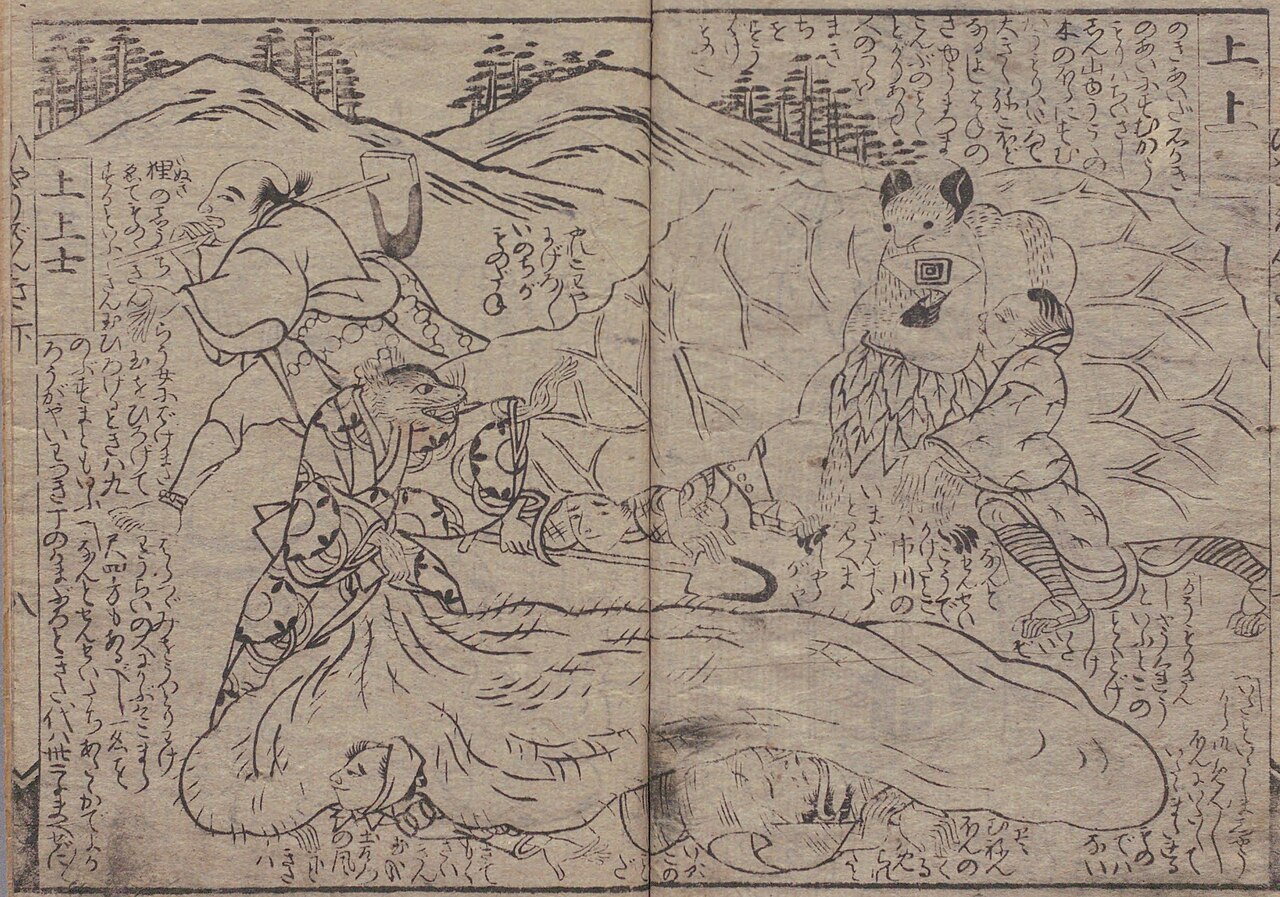
In Japanese folklore, the tanuki's shapeshifting abilities are considered to rival or even surpass those of the kitsune. A well-known saying holds that the fox has seven disguises while the tanuki has eight, placing the raccoon dog one step above the fox in its capacity for transformation. Yet the motivation differs sharply: while a fox shifts form to seduce or tempt, the tanuki transforms primarily to trick people into looking foolish, or perhaps simply because it enjoys the act of changing. This playful, mischievous character is reinforced by the creature's iconic physical traits in popular imagery. The comical depiction of a tanuki with an exaggeratedly large scrotum is believed to have originated in Kanazawa during the Edo Period, where goldsmiths used tanuki pelts as work surfaces for hammering gold into leaf. In illustrations, the animal is often shown slinging its testicles over its back like a traveler's pack or beating them like drums. Equally famous is the image of the tanuki drumming on its own large belly, producing rhythmic pom-poko or ponpon sounds.
Named Spirits & Regional Legends
Across Japan, particularly in Shikoku and the Sado Islands of Niigata Prefecture, specific tanuki were given proper names and even became the subjects of local rituals. The Danzaburou-danuki of Sado, the Kinchō-tanuki and Rokuemon-tanuki of Awa Province in Tokushima, and the Yashima no Hage-tanuki of Kagawa all exemplify this tradition of individualized supernatural raccoon dogs. Other well-known figures include Bunbuku Chagama, a tanuki that disguised itself as a monk's teapot in Tatebayashi, Gunma, producing endless tea; and Sōko-tanuki, a creature at Gugyō-ji temple in Ibaraki that served as a monk before being discovered in its true form and subsequently granted a page's rank. Regional tales multiply further: in Osaka's Minamikawachi District, a voice on a hillside lured travelers into carrying what turned out to be a massive pine log, after which an old tanuki apologized; in Kumamoto and Miyazaki, an old tanuki disguised as a woman with a jūbako box deceived passersby with a rock masquerading as a treat.
Folk Mysteries & Cultural Resonance
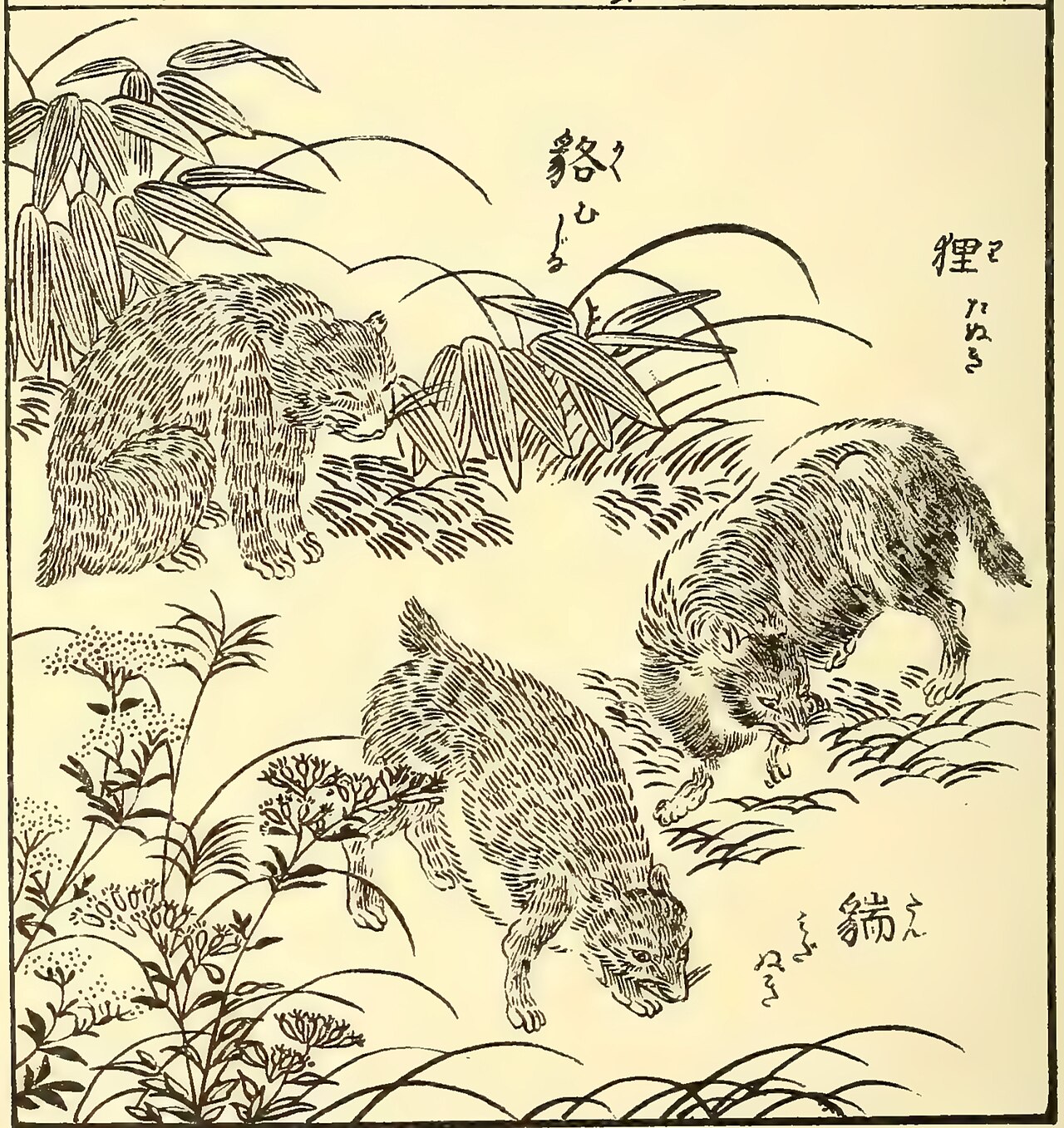
Beyond individual named spirits, the tanuki permeated Japanese folk culture as an explanation for unexplained phenomena. In Edo, mysterious drumming sounds heard in the dead of night were attributed to tanuki-bayashi, a rhythmic noise with no visible source. This mystery became so embedded in local identity that it inspired the nursery rhyme Shōjō-ji no Tanuki-bayashi, passed down at Shōjō-ji temple. In Ōmachi, Nagano, a tanuki would climb a tall tree and dangle white bags to attract the attention of travelers below. In Naruto, Tokushima, a creature called Akadenchū would appear at midnight as a child in a red sleeveless hanten, insistently begging to be carried on one's back. The fūri, documented in illustrated compendia such as the Gazu Hyakki Yagyō and Wakan Sansai Zue, was described as a wind-swift beast that climbed trees with the speed of flying birds and could use a particular grass as bait to lure birds. These diverse regional attributions show how the tanuki served as a flexible, all-purpose supernatural agent in the Japanese folk imagination.
Gallery
Frequently Asked Questions
Who is Bake-danuki?
Bake-danuki are yōkai spirits from Japanese folklore, essentially the supernatural counterpart of the tanuki (Japanese raccoon dog). They appear throughout classical Japanese literature and folk legend as mischievous, often comical trickster figures.
What powers does Bake-danuki have?
Bake-danuki can shapeshift into various forms and are also capable of possessing humans, abilities that closely mirror those of kitsune. Their trickery and shape-shifting are their defining supernatural traits in the stories they appear in.
How is Bake-danuki different from kitsune?
Both can shapeshift and possess people, but bake-danuki are specifically tied to the tanuki animal and carry a more comedic, lighthearted reputation in Japanese tales. Kitsune tend to be portrayed as more dangerous or alluring, whereas bake-danuki lean toward playful mischief.
Where does Bake-danuki appear in Japanese culture?
Bake-danuki show up across Japanese classical literature, folk tales, and broader mythology as a recurring yōkai figure. They sit alongside foxes, tengu, and other supernatural creatures as a staple of the Japanese yōkai tradition.
Is the tanuki a real animal?
Yes, the tanuki (Japanese raccoon dog) is a real, extant species native to Japan, but the bake-danuki is its entirely supernatural counterpart. The living animal has long been linked in folk imagination to a strange, otherworldly creature capable of impossible feats.
More in Legendary shapeshifters 1-24
Spotted an error? Know more?
Reader corrections go straight into our review queue. Suggest an edit · How this site is sourced