Court of equity
Last updated
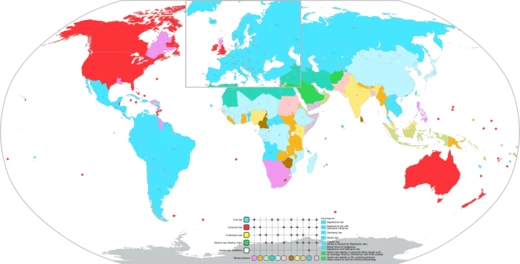
A court of equity, also called a chancery court, applies principles of fairness rather than strict legal rules to cases.[1] The Lord Chancellor of England received petitions that led to the creation of these courts, which offered remedies like specific performance rather than monetary damages.[1] Legislation granting combined authority to administer both common law and equity systems caused most equity courts to eventually consolidate with law courts.[1]
Quick Facts
- Field
- Equity jurisdiction
Facts from the source article.
Key facts and history
The systematization of equity is often credited to Lord Eldon and the introduction of the Judicature Acts in 1873.[2] The framers of the U.S. Constitution granted federal courts jurisdiction over both common-law actions and suits in equity.[3] Three distinct phases mark equity's historical development: the medieval period covering the 13th through 15th centuries, the formative period spanning the 16th and 17th centuries, and the systematization period from the 17th to the 19th centuries.[4] The Chancery Division originated in the 13th century, established by the monarch following the Supreme Court of Judicature's separation.[5]
By the 14th and 15th centuries, the Chancery had become a self-contained administrative body that produced writs for matters involving inheritance or property transfers.[6] The Court of Chancery started to produce decrees without relying on the King's Council, and Chancellors gained legal expertise.[7] The English Judicature Act passed in 1873 created the new High Court of Justice and Court of Appeal, which took over from the former Chancery, Common Pleas, Queen's Bench and Exchequer Courts.[8] Before the Judicature Acts were enacted, equity courts held a separate jurisdiction that was distinct from common law.[9]
What the cited sources add
The Federal Judicial Center notes that equity was a centuries-old English system where judges based decisions on fairness when rigid common-law rules caused injustice.[3] Article III, section 2, clause 1 of the U.S. Constitution extended federal judicial power to "all Cases, in Law and Equity"[3] A traditional limit on equity, incorporated into U.S. law, provided that federal courts had equity jurisdiction only when no sufficient legal remedy existed.[3] The Process Act of 1792 directed that equity cases proceed "according to the principles, rules and usages which belong to courts of equity" to keep the two types of actions distinct.[3]
Law and equity remained separate forms of action in federal courts until the 1938 Federal Rules of Civil Procedure combined them into a single "civil action".[3]
References
- Wikipedia, "Court of equity" (CC BY-SA 4.0), which cites: Hill, "The people's law dictionary : taking the mystery out of legal language", MJF Books, 2002 (we also read that source) en.wikipedia.org
- Wikipedia, "Court of equity" (CC BY-SA 4.0), which cites: Burns, "The Court of Chancery in the 19th century: a paradox of decline and expansion", The University of Queensland Law Journal, 2001, p. 202 (original not read by us) en.wikipedia.org
- "History of the Federal Judiciary – Equity Jurisdiction in the Federal Courts", Federal Judicial Center. fjc.gov
- Wikipedia, "Court of equity" (CC BY-SA 4.0), which cites: Hepburn, "Principles of equity and trusts", The Federation Press, 2016, p. 21–27; Brien, "Equity and trusts guidebook", Oxford University Press, 2016, p. 4; Hepburn, "Principles of equity and trusts", The Federation Press, 2016, p. 21 (original not read by us) en.wikipedia.org
- Wikipedia, "Court of equity" (CC BY-SA 4.0), which cites: Hepburn, "Principles of equity and trusts", The Federation Press, 2016, p. 21; Bathurst, "The history of equity from ancient Rome to the Judicature Acts", Australian Bar Review, 2016, p. 205; Baldwin, "The King's Council and the Chancery, I", The American Historical Review, 1910, p. 497; Haskett, "The Medieval English Court of Chancery", Law and History Review, 1996, p. 248; Baldwin, "The King's Council and the Chancery, I", The American Historical Review, 1910, p. 497; Hepburn, "Principles of equity and trusts", The Federation Press, 2 en.wikipedia.org
- Wikipedia, "Court of equity" (CC BY-SA 4.0), which cites: Fisher, "Chancery and the Emergence of Standard Written English in the Fifteenth Century", Speculum, 1977, p. 875; Fisher, "Chancery and the Emergence of Standard Written English in the Fifteenth Century", Speculum, 1977, p. 875 (original not read by us) en.wikipedia.org
- Wikipedia, "Court of equity" (CC BY-SA 4.0), which cites: Bathurst, "The history of equity from ancient Rome to the Judicature Acts", Australian Bar Review, 2016, p. 207; Hepburn, "Principles of equity and trusts", The Federation Press, 2016, p. 26 (original not read by us) en.wikipedia.org
- Wikipedia, "Court of equity" (CC BY-SA 4.0), which cites: Hepburn, "Principles of equity and trusts", The Federation Press, 2016, p. 34 (original not read by us) en.wikipedia.org
- Wikipedia, "Court of equity" (CC BY-SA 4.0), which cites: Brien, "Equity and trusts guidebook", Oxford University Press, 2016, p. 5; Hepburn, "Principles of equity and trusts", The Federation Press, 2016, p. 28 (original not read by us) en.wikipedia.org
Each numbered sentence above was checked against the source it cites before publication. Sentences citing Wikipedia adapt text from the English Wikipedia article Court of equity (contributors), used under CC BY-SA 4.0; this entry is available under the same licence. Other sources were used for facts only.
More in Legal Systems & Courts
Sources
Compiled from Wikipedia and the sources listed below. Text from Wikipedia is available under CC BY-SA 4.0; this entry is adapted from it.
- Wikipedia: Court of equity (CC BY-SA 4.0).
Spotted an error? Know more?
Reader corrections go straight into our review queue. Suggest an edit · How this site is sourced