Courts of England and Wales
Civil and criminal courts for England and Wales.
Last updated
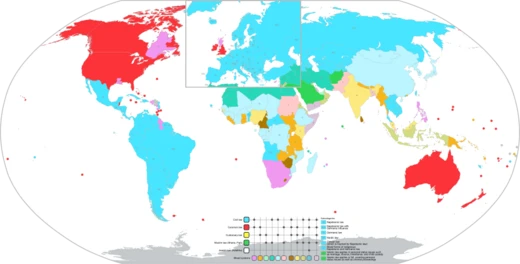
The Courts of England and Wales form a distinct legal system within the United Kingdom, separate from the systems of Scotland and Northern Ireland. While the Supreme Court of the United Kingdom serves as the highest appeal court for almost all cases in England and Wales, including devolution matters, the United Kingdom does not possess a single unified legal system. Exceptions to this separation exist in specific areas: the Asylum and Immigration Tribunal has jurisdiction across the whole United Kingdom, and a single system of employment tribunals covers England, Wales, and Scotland, though not Northern Ireland.
The Military Court Service also has jurisdiction over all UK armed forces members for offences against military law. The senior appellate and trial courts—the Court of Appeal, the High Court of Justice, and the Crown Court—are collectively known as the Senior Courts of England and Wales. Originally created by the Judicature Acts as the "Supreme Court of Judicature," they were renamed the "Supreme Court of England and Wales" in 1981, and then to their current name by the Constitutional Reform Act 2005 to distinguish them from the new Supreme Court of the United Kingdom.
Quick Facts
- Jurisdiction
- England and Wales
- Highest appeal court
- Supreme Court of the United Kingdom
- Senior courts
- Court of Appeal
- High Court
- Crown Court
- Subordinate courts
- County Court
- Family Court
- Magistrates' courts
- Youth courts
- Administrative body
- His Majesty's Courts and Tribunals Service
Facts from the source article.
Lore & Background
The Courts of England and Wales are administered by His Majesty's Courts and Tribunals Service, an executive agency of the Ministry of Justice. The Senior Courts consist of the Court of Appeal, the High Court of Justice, and the Crown Court. The Court of Appeal deals only with appeals and has two divisions: Civil and Criminal.
The High Court functions as both a civil court of first instance and an appellate court, with three divisions: King's Bench, Chancery, and Family. The Crown Court is a criminal court of original and appellate jurisdiction, the only court that can try cases on indictment. Subordinate courts include the County Court (purely civil), the Family Court (all family cases), and magistrates' courts (local criminal courts where all criminal proceedings start).
Reader's Guide
The Courts of England and Wales are significant as the primary judicial institutions for the most populous part of the United Kingdom, handling the vast majority of civil and criminal cases. Their structure reflects a historical evolution from local assizes and quarter sessions to a unified system, with the Senior Courts central to appellate and high-level original jurisdiction. The existence of calls for a separate Wales criminal justice system indicates ongoing debates about regional autonomy within the legal framework. The courts' administration by HM Courts and Tribunals Service ensures centralized support, though the Supreme Court maintains its own separate administration.
Did You Know?
- The Supreme Court of the United Kingdom is the highest appeal court in almost all cases in England and Wales, a role previously held by the Appellate Committee of the House of Lords.
- The County Court was unified into a single national court for England and Wales on 22 April 2014.
More in Legal Systems & Courts
Sources
Compiled from Wikipedia and the sources listed below. Text from Wikipedia is available under CC BY-SA 4.0; this entry is adapted from it.
- Wikipedia: Courts of England and Wales (CC BY-SA 4.0).
Spotted an error? Know more?
Reader corrections go straight into our review queue. Suggest an edit · How this site is sourced