Deposition (law)
Last updated
In suits in equity in English courts around the mid-15th century, a deposition was a closed proceeding where a master or commissioner read written interrogatories to a witness, summarized the witness's oral answers into a third-person narrative, and filed the resulting document under seal until shortly before trial.[1] Rule 30 of the Federal Rules of Civil Procedure governs depositions in almost all cases pending in United States federal courts.[2]
Quick Facts
- Field
- Law
- First appearance
- Mid-15th century
- Key innovator
- Chancellor James Kent
- Current use
- United States and Canada
Facts from the source article.
Key facts and history
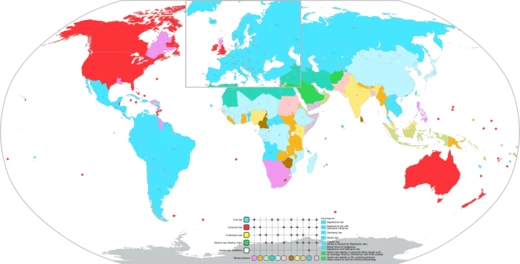
The modern oral deposition began developing in early 19th century New York when Chancellor James Kent allowed masters to examine witnesses in real time.[3] The merger of common law and equity procedure reduced the deposition to its modern role as a discovery and evidence preservation device.[4] In Canada, the process is called an examination for discovery and is nearly identical to the U.S. procedure.[5] Under FRCP Rule 30, depositions are limited to ten per side and each deponent to one day of no more than seven hours.[2]
What the cited sources add
Under Rule 30, a person may instruct a deponent not to answer only to preserve a privilege, enforce a court limitation, or present a motion under Rule 30(d)(3).[6] The deponent must be allowed 30 days after notification to review the transcript and sign a statement listing any changes in form or substance with reasons.[6] Audet's practice guide notes that requesting review is an "absolute prerequisite" to deposition corrections.[7] Impeaching a witness with deposition testimony is more effective when the witness admits reviewing the transcript and finding it correct.[7]
The deponent has 30 days to review the transcript after the court reporter notifies him that it is available.[7] Under Rule 30 of the Federal Rules of Civil Procedure, a deposition notice must specify the time and place of the deposition, and also the deponent's name and address if those are known.[6]
References
- Wikipedia, "Deposition (law)" (CC BY-SA 4.0), which cites: Goldstein, "A Short History of Discovery", Anglo-American Law Review, 1981, p. 257–270; Kessler, "Our Inquisitorial Tradition: Equity Procedure, Due Process, and the Search for an Alternative to the Adversarial", Cornell Law Review, July 2005, p. 1181–1276; Goldstein, "A Short History of Discovery", Anglo-American Law Review, 1981, p. 257–270; Kessler, "Our Inquisitorial Tradition: Equity Procedure, Due Process, and the Search for an Alternative to the Adversarial", Cornell Law Review, July 2005, p. 1181–1276; Falvey, "Remembering Prot en.wikipedia.org
- Wikipedia, "Deposition (law)" (CC BY-SA 4.0), which cites: "Federal Rules of Civil Procedure, Rule 30. Depositions by Oral Examination", Legal Information Institute (we also read that source) en.wikipedia.org
- Wikipedia, "Deposition (law)" (CC BY-SA 4.0), which cites: Kessler, "Our Inquisitorial Tradition: Equity Procedure, Due Process, and the Search for an Alternative to the Adversarial", Cornell Law Review, July 2005, p. 1181–1276; Goldstein, "A Short History of Discovery", Anglo-American Law Review, 1981, p. 257–270 (original not read by us) en.wikipedia.org
- Wikipedia, "Deposition (law)" (CC BY-SA 4.0), which cites: Kessler, "Our Inquisitorial Tradition: Equity Procedure, Due Process, and the Search for an Alternative to the Adversarial", Cornell Law Review, July 2005, p. 1181–1276 (original not read by us) en.wikipedia.org
- Wikipedia, "Deposition (law)" (CC BY-SA 4.0), which cites: Morissette, "Examination for Discovery"; "Rules of Civil Procedure, R.R.O. 1990, Reg. 194", CanLII; Robinson, ""Taking questions under advisement must stop"", Law Times News, 21 August 2017 (original not read by us) en.wikipedia.org
- "Federal Rules of Civil Procedure, Rule 30. Depositions by Oral Examination", Legal Information Institute. law.cornell.edu
- Audet, "Why, When & How to Correct a Deposition Transcript Under the Federal Rules", James Publishing, 8 September 2014. jamespublishing.com
Each numbered sentence above was checked against the source it cites before publication. Sentences citing Wikipedia adapt text from the English Wikipedia article Deposition (law) (contributors), used under CC BY-SA 4.0; this entry is available under the same licence. Other sources were used for facts only.
More in Legal Systems & Courts
Sources
Compiled from Wikipedia and the sources listed below. Text from Wikipedia is available under CC BY-SA 4.0; this entry is adapted from it.
- Wikipedia: Deposition (law) (CC BY-SA 4.0).
Spotted an error? Know more?
Reader corrections go straight into our review queue. Suggest an edit · How this site is sourced