Judge
Public official who presides over court proceedings and issues rulings.
Last updated
A judge is a public official who oversees court proceedings, either on their own or as part of a panel. Their main job is to settle legal disputes in a final, lawful, and public way, and they are expected to stay impartial during trials, which are typically open to the public. The powers, duties, appointment methods, training, and disciplinary rules for judges differ a lot from one legal system to another.
Judges hold significant government authority. Depending on their position and where they work, they can order police, military, or court staff to carry out searches, arrests, imprisonments, executions, garnishments, detentions, seizures, deportations, and similar actions.
At the same time, judges oversee trial procedures to keep things consistent and fair, reducing the chance of arbitrary decisions. Their power is checked by higher courts, like appeals courts and supreme courts. In a criminal court, three main legally trained officials usually work together: the judge, the prosecutor, and the defense attorney.
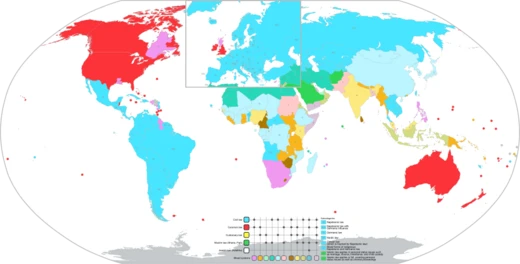
How a judge acts depends on the legal system. In an adversarial system (common law, used in the U.S. and England), the judge acts as a neutral referee, mainly making sure the procedure is correct, while the prosecution and defense present their case to a jury of ordinary citizens. The jury decides the facts, and then the judge handles sentencing. For smaller cases, judges can issue summary judgments without a jury.
In an inquisitorial system (civil law, used in continental Europe), there is no jury—the judge is the main factfinder, handling presiding, judging, and sentencing alone. Here, the judge is expected to apply the law directly, as the French saying goes: Le juge est la bouche de la loi (“The judge is the mouth of the law”). In some systems, judges even conduct investigations, acting as examining magistrates.
Judges may work alone on minor cases, but in criminal, family, and other significant matters, they work in panels. In some civil law systems, these panels include lay judges—volunteers without legal training who may be politically appointed, unlike jurors. Professional judges are often helped by law clerks, referendaries, and notaries, while bailiffs or similar staff handle security.
Requirements and appointment
There are both volunteer and professional judges. Volunteer judges, like English magistrates, don’t need legal training and aren’t paid. Professional judges must be legally educated; in the U.S., that usually means a Juris Doctor degree.
Significant professional experience is also common—for instance, U.S. judges are often chosen from experienced attorneys. Judges are frequently appointed through indirect elections, though obstruction during the nomination process can create partisan imbalances. In some places, judges are elected directly by the public.
Accountability
Judicial independence is often paired with measures to prevent activism or sentencing disparities. Judges can vary in leniency, and the Harvard Law Review notes that judicial immunity, combined with weak oversight, can fail to deter misconduct.
Retention elections can improve accountability. Impartiality is seen as key to the rule of law, though one study found that in pivotal cases, judges’ personal political ideology influences their decisions. On political questions, judges can avoid bias by deciding along the preferences of the median citizen.
Judge as an occupation
As an occupation, judges must research and process large amounts of documents, witness statements, and case materials. They need a thorough understanding of law and procedure, plus strong skills in logical reasoning, analysis, and decision-making. Excellent writing skills are essential because their written rulings are final and authoritative.
Since judges work with people constantly, good dispute resolution and interpersonal skills are necessary. They must also have good moral character, meaning no criminal record. Professional judges often earn high salaries; in the U.S., the median is $101,690 per year, while federal judges earn between $208,000 and $267,000 annually.
Gender identity
Women are overrepresented among first-instance judges in France, Greece, Hungary, Latvia, Luxembourg, Serbia, and Slovenia, partly because women make up most law graduates. In contrast, men are overrepresented among first-instance judges in the UK, Ireland, and the United States.
On supreme courts in the U.S. and many EU member states, women are underrepresented, except in France (which reached gender parity in 2018) and Romania (where men are underrepresented). The term of office for judges varies. In the U.S., federal judges are appointed “for good behavior,” which effectively means life tenure unless they voluntarily step down.
Lore & Background
Judges may work alone in smaller cases, but in criminal, family, and other significant cases they work in a panel. In adversarial systems (common law), the judge functions as an impartial referee ensuring correct procedure, while the jury is the main factfinder. In inquisitorial systems (civil law), the judge is the main factfinder and applies the law directly, as in the French expression 'Le juge est la bouche de la loi.' Some judges also serve as examining magistrates in inquisitorial systems. Judges are often appointed through indirect election, though some jurisdictions use direct election.
Professional judges are required to be legally educated; volunteer judges, such as English magistrates, are not required to have legal training and are unpaid. In the U.S., federal judges are appointed 'for good behavior,' effectively life tenure, while many states have mandatory retirement ages ranging from 70 to 90. Women are overrepresented among first instance judges in several European countries, while men are overrepresented in the UK, Ireland, and the United States. In supreme courts, women are underrepresented in the U.S.
Reader's Guide
Judges are central to the rule of law, ensuring that legal disputes are settled impartially and in accordance with legal procedures. Their role varies significantly between adversarial and inquisitorial systems, affecting how trials are conducted and who determines facts. The method of appointing judges—whether by election, appointment, or merit—shapes judicial independence and accountability. Debates persist over judicial immunity, partisan imbalance in appointments, and the influence of personal ideology on decisions.
Mandatory retirement ages for judges remain a topic of discussion, particularly in the U.S. federal system, where life tenure is the norm. The diversity of judicial demographics across countries reflects broader societal patterns in legal education and professional opportunity. Overall, judges balance the exercise of substantial governmental power with the duty to reduce arbitrariness and maintain impartiality.
More in Legal Systems & Courts
Sources
Compiled from Wikipedia and the sources listed below. Text from Wikipedia is available under CC BY-SA 4.0; this entry is adapted from it.
- Wikipedia: Judge (CC BY-SA 4.0).
Spotted an error? Know more?
Reader corrections go straight into our review queue. Suggest an edit · How this site is sourced