Batik
Wax-resist dyeing technique with ancient roots and global influence.

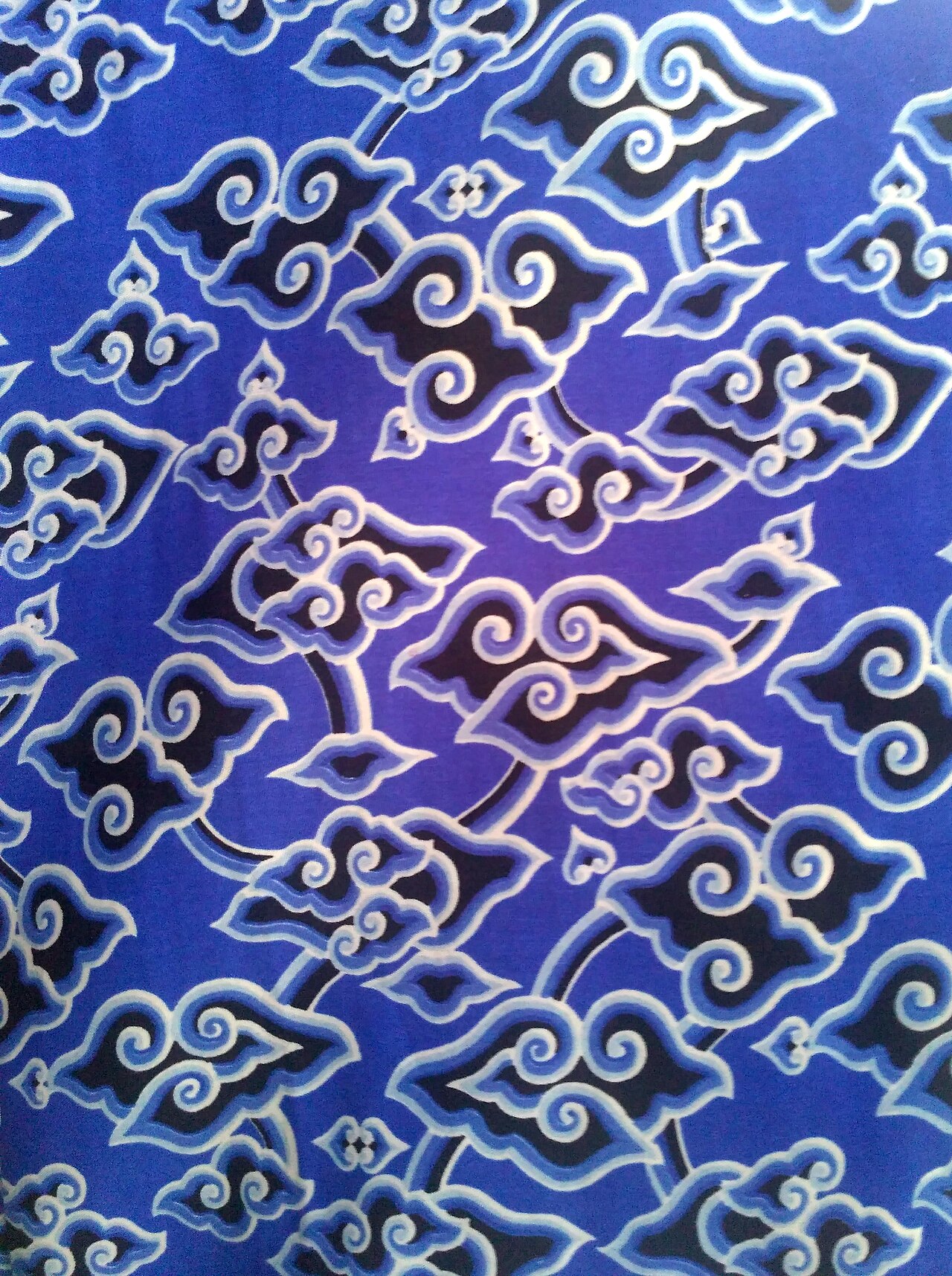
Fpangestuphotographer · CC BY-SA 4.0
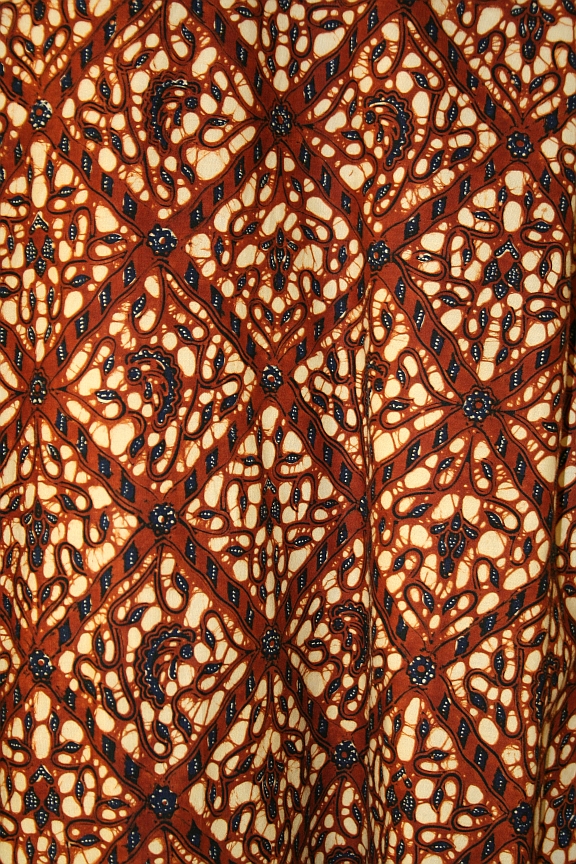
Batik is a dyeing technique using wax resist, also used to describe patterned textiles created with that technique. It is made by drawing or stamping wax on cloth to prevent colour absorption during dyeing, creating a patterned negative when the wax is removed. The technique has been practised since ancient times in several world cultures, including Egypt, China, India, Indonesia, Malaysia, Nigeria, and Sri Lanka. The version developed in Indonesia, especially on the island of Java, is among the most sophisticated, and it first became widely known outside Southeast Asia through the 1817 book *The History of Java*.
Quick Facts
- Material
- Cambrics · silk · cotton
Facts from the source article.
Lore & Background
Batik-like resist dyeing existed in Egypt in the 4th century BC, used to wrap mummies, and continued into the medieval Byzantine era. In Asia, the technique is attested in India, Tang dynasty China, and the Nara Period in Japan. In Africa, it was practiced by the Yoruba of Nigeria and the Soninke and Wolof of Senegal. The art is highly developed on Java, though its antiquity is difficult to determine due to the tropical climate. The oldest surviving physical Javanese batik piece, a blue-white valance, was carbon-dated to the 13th or 14th century, corresponding to the early Majapahit period, suggesting sophisticated techniques already existed then.
Reader's Guide
Batik's significance lies in its long history across multiple cultures and its role as a major textile tradition, particularly in Java. The technique became widely known outside Southeast Asia after Thomas Stamford Raffles described it in his 1817 book *The History of Java*, sparking collecting and scholarly interest. In the 19th to early 20th century, innovations such as copper block stamps (cap) and synthetic dyes increased productivity and expanded colour possibilities. Javanese batik production spread overseas, influencing African wax prints and being adopted by Aboriginal artists in Australia in the 1970s. Many workshops and artisans remain active today, creating a wide range of products and continuing to influence other textile traditions and artists. The word 'batik' itself, borrowed from Javanese, is now used in English as a general term for similar wax-resist dyeing techniques, even those culturally unrelated to Javanese batik.
Did You Know?
- The English word 'batik' is borrowed from Javanese 'bathik'.
- The oldest surviving Javanese batik piece is a blue-white valance carbon-dated to the 13th or 14th century.
- Javanese batik was introduced to Subsaharan Africa in the 19th century by Dutch and English merchants.
- In the 1920s, Javanese batik makers migrating to the eastern coast of Malay Peninsula introduced batik production using stamp blocks.
The Art of Wax Resist
The core technique involves applying wax to cloth to block dye absorption, then removing it to reveal a patterned negative. Artisans draw or stamp the wax onto the fabric, submerge it in dye, and repeat the cycle multiple times to build up intricate multi-coloured designs. The resulting motifs span a wide spectrum: some carry deep symbolic weight and are reserved for particular ceremonial occasions, while others were devised simply to satisfy market demand and shifting fashion trends. The method is by no means confined to a single culture or region. It appears across Egypt, southern China (especially among hilltribe groups such as the Miao, Bouyei, and Gejia), India, Indonesia, Malaysia, Nigeria, and Sri Lanka. Although the English word batik is borrowed from the Javanese bathik, most English dictionaries treat it as a generic descriptor for any wax-resist textile, so culturally unrelated cloths produced with similar methods can share the label. Linguist Robert Blust traces the Javanese term back to Proto-Austronesian roots whose doublet meanings encompass decorations and patterns in a broad sense.
Ancient Echoes Across Continents
Wax-resist dyeing ranks among humanity's oldest textile arts. In fourth-century BC Egypt, linen was soaked in wax and scratched with a stylus to wrap mummies, a practice that lingered into the medieval Byzantine era even though very few pieces survive. Across Asia the technique is attested in India, in Tang-dynasty China, and during Japan's Nara Period. In West Africa, the Yoruba of Nigeria alongside the Soninke and Wolof of Senegal all practiced wax-resist cloth making. In Java the art reached extraordinary refinement, yet tropical humidity makes physical evidence scarce. Dutch historians Rouffaer and Juynboll proposed the technique arrived from India or Sri Lanka in the sixth or seventh century. Some scholars point to pattern resemblances in Hindu-Buddhist statuary, while others caution that visual similarity does not prove wax-resist production. The word batik itself does not appear in any pre-Islamic Javanese source, leading some researchers to date its formal development to the sixteenth century, after the Majapahit kingdom's decline.
Java's Refined Tradition and a 2022 Discovery
Java's batik tradition stands among the world's most sophisticated, yet pinning down its exact antiquity has proven stubbornly difficult. The oldest surviving physical Javanese batik piece was only identified in 2022: a blue-and-white valance carbon-dated to the thirteenth or fourteenth century, corresponding to the early Majapahit period. Its quality suggests advanced techniques were already in use, though it competed with the more established ikat textile tradition. The craft flourished further in Java's Islamic courts, partly driven by the desire to replicate prestigious foreign textiles such as Indian patola brought through Indian Ocean maritime trade. When the Dutch East India Company imposed monopolistic trade practices in seventeenth-century Indonesia, locally produced batik proved so robust and high-quality that it stifled Dutch textile sales. Their imports of chintz from the Coromandel coast simply could not compete with the craftsmanship emerging from Javanese workshops.
Global Recognition and Modern Innovation
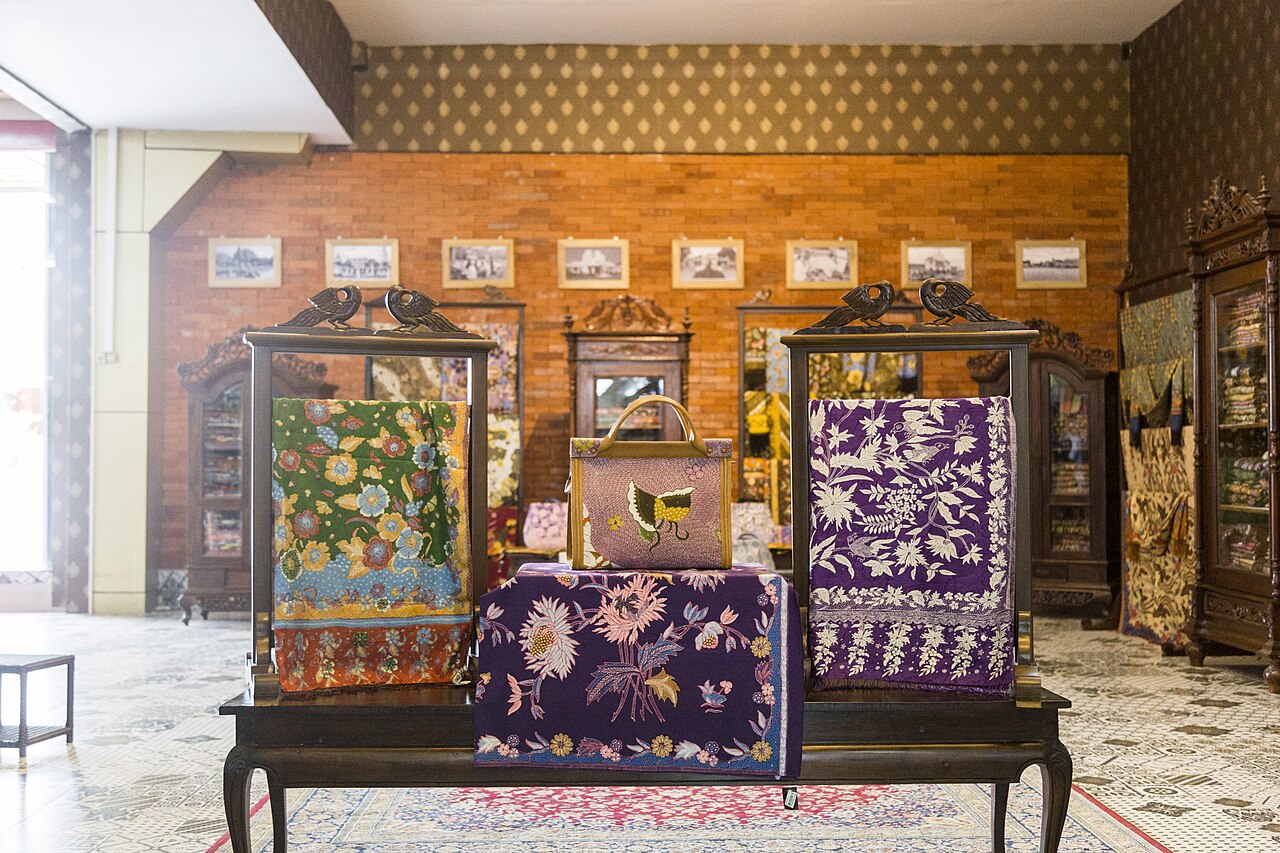
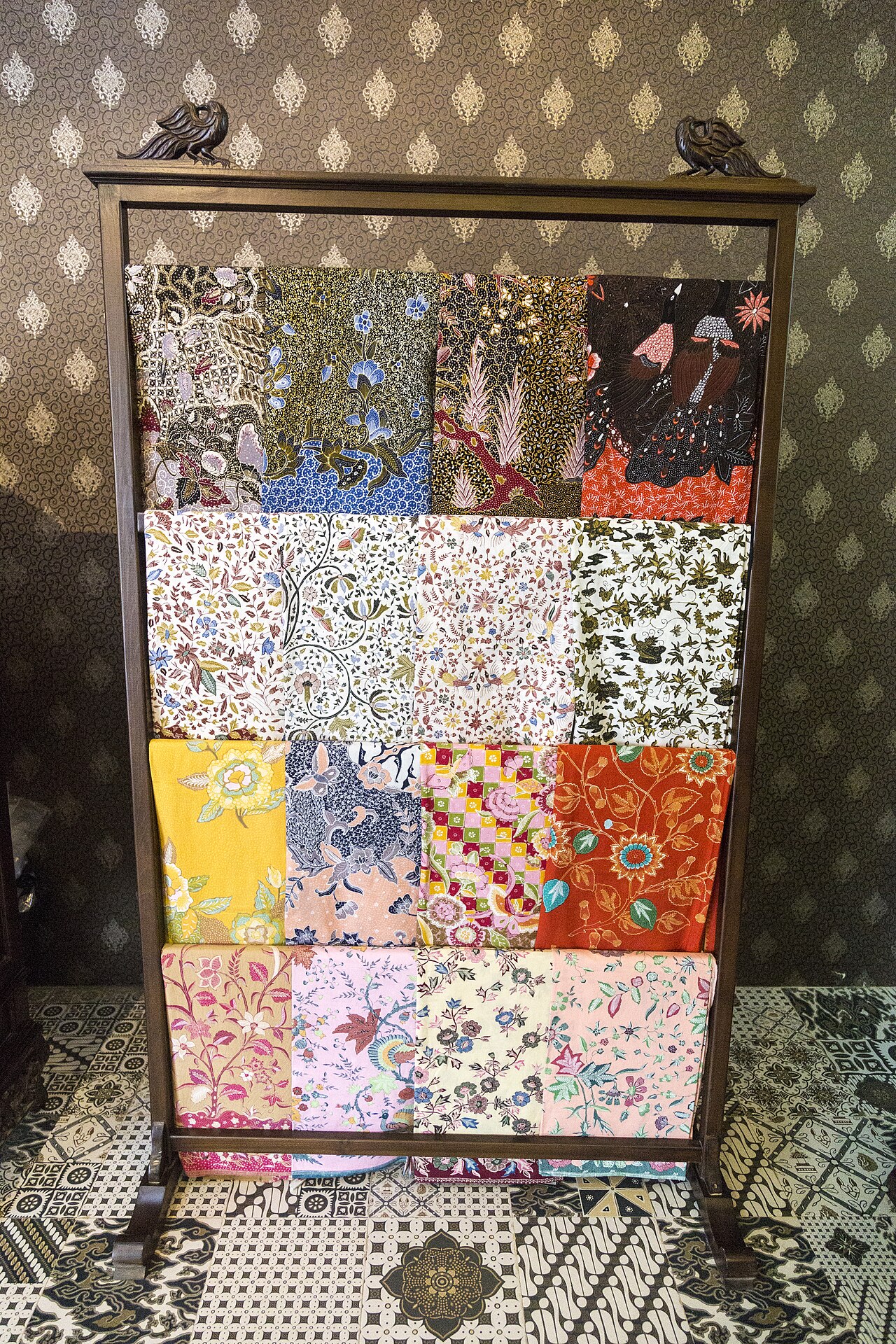
Batik leapt onto the world stage in 1817 when Thomas Stamford Raffles described the Javanese process in his History of Java, sparking collecting efforts and scholarly study. In 1873, Dutch merchant Elie Van Rijckevorsel donated his Indonesian collection to Rotterdam's ethnographic museum, and examples were later displayed at the 1900 Paris Exposition Universelle. The Tropenmuseum now houses the largest collection of Indonesian batik in the Netherlands. The nineteenth and early twentieth centuries brought transformative innovation: Dutch Indo-European and Chinese settlers, particularly in Java's northern coastal regions, introduced copper block stamps for mass production and synthetic dyes that yielded brighter palettes. Scholars such as J.E. Jasper and Mas Pirngadi published extensive pattern documentation, which artisans then used to blend cultural influences into new designs. Prominent ateliers like those of Eliza van Zuylen and Oey Soe Tjoen catered to audiences across the Malay archipelago. Today, workshops and artisans remain active, creating a wide range of products and influencing other textile traditions and artists worldwide.
Gallery
Frequently Asked Questions
What exactly is Batik?
Batik is a wax-resist dyeing method in which hot wax is applied to cloth to shield certain areas from dye, and the pattern emerges once the wax is washed off. The term also refers to the finished patterned textile itself.
How old is the Batik technique?
Wax-resist dyeing traces back to at least the 4th century BC in Egypt, making it one of the oldest known textile processes. In Java, the earliest surviving batik fragment has been carbon-dated to the 13th or 14th century.
How is Batik actually made?
The artisan draws or stamps molten wax onto the fabric in the intended design, then immerses the cloth in dye so only the unwaxed threads absorb colour. When the wax is removed, the reserved sections contrast against the dyed ground to form the final motif.
Why is the Javanese version considered the most sophisticated?
Although wax-resist techniques appear in Egypt, China, India, Malaysia, Nigeria, and Sri Lanka, the tradition developed on Java is widely regarded as the most elaborate and refined. Its layered colour work and intricate motif vocabulary distinguish it from other regional practices.
When did Batik first become known outside Southeast Asia?
The craft gained broad international recognition after an 1817 book introduced it to readers beyond the region. Prior to that publication, most audiences outside Southeast Asia had little awareness of the technique.
More in Indonesian inventions 1-24
Spotted an error? Know more?
Reader corrections go straight into our review queue. Suggest an edit · How this site is sourced