
Baju Lamina
A mail and plate armor from the Nusantara archipelago.

Gerald Brousseau Gardner · CC BY-SA 4.0
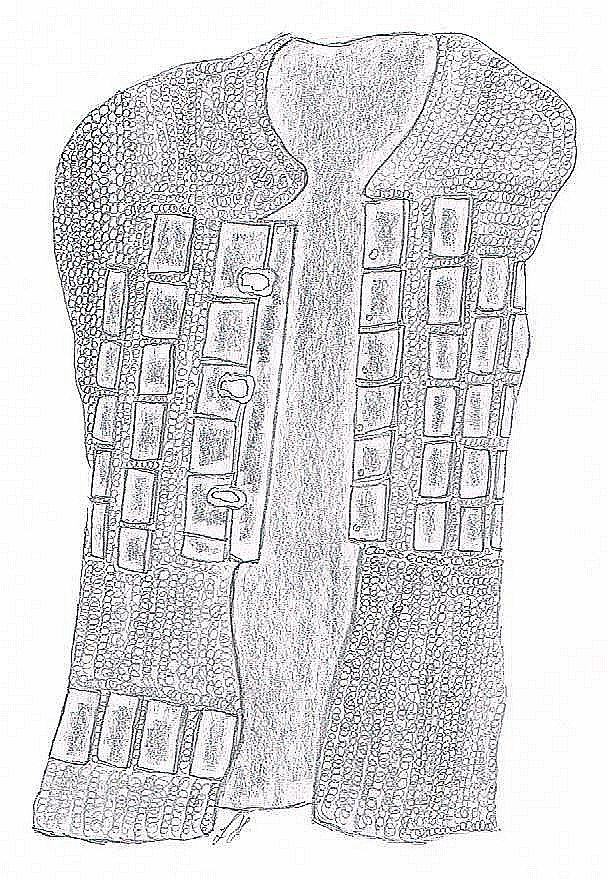
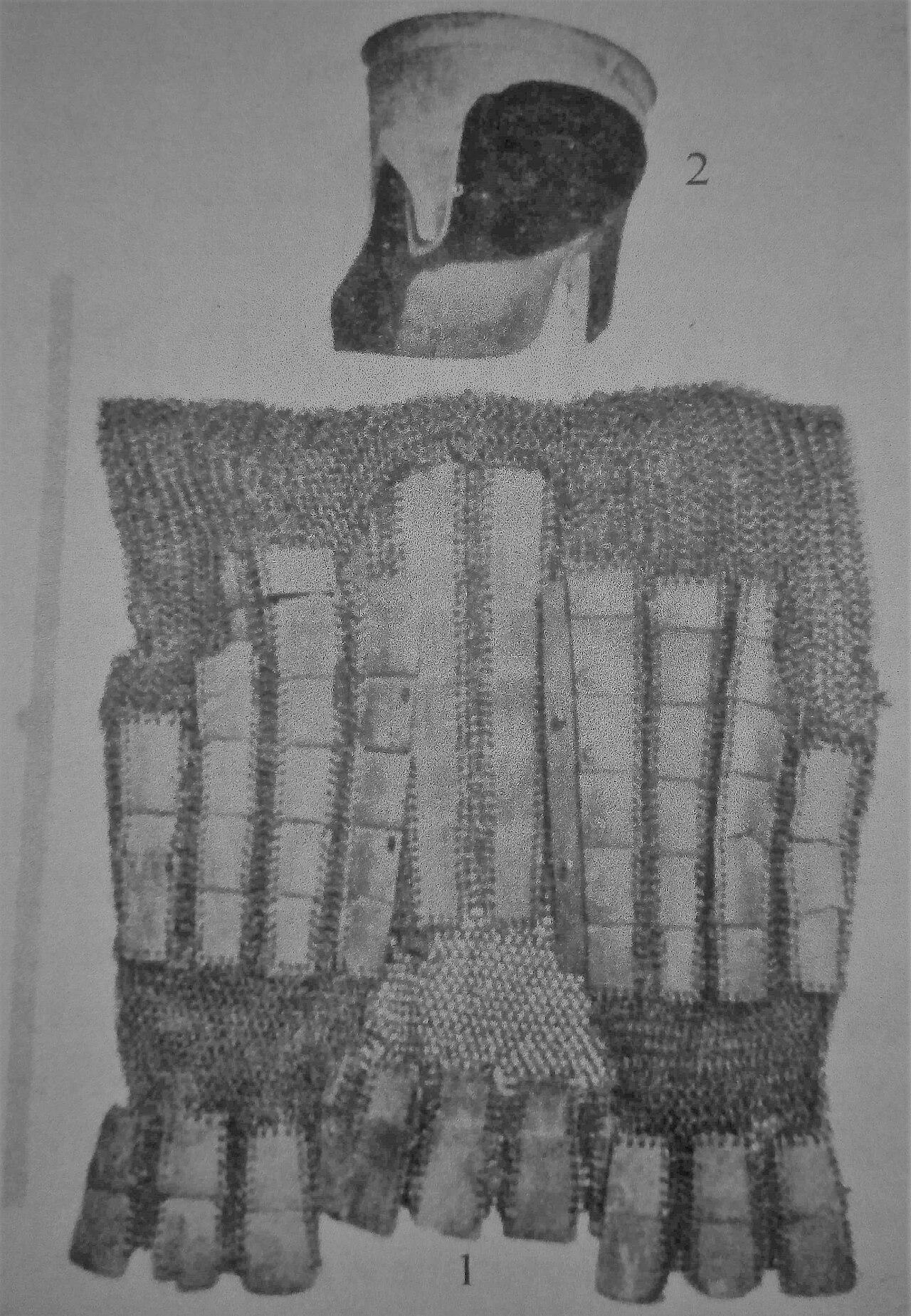
The baju lamina (also known as lamena by Bugis, sa'dan by Toraja, lamina or laminah by Malays) is a mail and plate armor from the Nusantara archipelago, encompassing Indonesia, Malaysia, Brunei, and the Philippines. It is a chain armor worked in the form of a vest, with the front portion consisting of small rectangular brass plates and the back portion consisting of brass rings. Several rectangular brass plates are attached to the brass rings, extending from about the collarbone to the waist or hip area, reinforcing the chest and abdomen.
- Type
- Mail and plate armor
- Region
- Nusantara archipelago (Indonesia, Malaysia, Brunei, Philippines)
- Materials
- Brass rings and rectangular brass plates
- Earliest reference
- After the conquest of Malacca by the Portuguese (1511)
- Period of use by bugis
- 17th century until the 19th century
Lore & Background
The baju lamina is a chain armor constructed as a vest, with the front made of small rectangular brass plates and the back of brass rings. Rectangular brass plates are attached to the rings, covering the chest and abdomen for reinforcement. It has neither sleeves nor a collar. One possible early reference to this type of armor appears after the Portuguese conquest of Malacca in 1511, when the son of Afonso de Albuquerque mentioned 'armor-plated dresses (laudeis de laminas)' among Malaccan armaments, though the term may refer to other lamellar or plate armors.
Reader's Guide
The baju lamina represents a distinctive form of armor from the Nusantara archipelago, combining mail and plate elements. Its earliest known mention comes from the aftermath of the 1511 Portuguese conquest of Malacca, though it is uncertain whether such armor was used in battle, only by elites, or purely ceremonially. Rui de Araújo reported that very few Malaccan soldiers wore armor. By the 17th century, the Bugis people adopted mail and plate armor, continuing its use into the 19th century. The armor's construction—brass rings and plates—reflects regional metalworking traditions. Its legacy is preserved in museum collections such as the Pitt Rivers Museum, and it is referenced alongside other regional armors like baju rantai and baju empurau.
Did You Know?
- The baju lamina is also known as lamena by Bugis, sa'dan by Toraja, and lamina or laminah by Malays.
- A possible early reference to this armor is after the conquest of Malacca by the Portuguese in 1511, though the term 'laudeis de laminas' may refer to other lamellar or plate armors.
- The Bugis people started using mail and plate armor around the 17th century and continued until the 19th century.
Construction and Design
The baju lamina is built as a vest-shaped piece of chain armor, featuring neither sleeves nor a collar. Its construction is divided into two distinct zones. The back portion consists of small rectangular brass plates, while the front section is formed from brass rings. Across the front, several additional rectangular brass plates are fastened to the ringwork, spanning from roughly the height of the collarbone down to the lower edge of the last rib cage. These plates serve to reinforce the chain armor specifically at the chest and pelvis, areas considered more vulnerable in a confrontation. The overall result is a hybrid protective garment that merges the flexibility of interlinked rings with the solidity of flat plate, concentrating rigid reinforcement where the body is most exposed. The open, sleeveless silhouette keeps the piece relatively unencumbered, allowing freedom of movement while still delivering targeted protection to the torso's most critical areas.
Cultural Reach and Regional Naming
The baju lamina is not confined to a single ethnic group or modern nation. It belongs to the broader Nusantara archipelago, encompassing the territories of present-day Indonesia, Malaysia, Brunei, and the Philippines. Within this wide cultural sphere, the armor carries different names depending on the local tradition. The Bugis people refer to it as lamena, while the Toraja call it sa'dan. Among Malay-speaking communities, it is known as lamina or laminah. These varied appellations reflect the deep integration of mail-and-plate armor into multiple distinct cultures across the archipelago. The fact that a single type of protective garment could be adopted, named, and maintained by so many different groups speaks to the shared martial traditions and trade networks that connected the islands. The baju lamina thus stands as a testament to a common defensive technology that transcended individual ethnic boundaries while still bearing the linguistic fingerprints of each culture that embraced it.
Earliest Historical Mentions
The earliest known reference to the baju lamina dates to the aftermath of the Portuguese conquest of Malacca in 1511. The son of Afonso de Albuquerque, the Portuguese commander who led the campaign, recorded a description of Malaccan armament. Among the weapons and gear he listed were large matchlocks identified as Javanese arquebuses, poisoned blowing tubes, bows and arrows, Javanese lances, and what he termed "laudeis de laminas"—armor-plated dresses. This phrase is widely regarded as one of the first written mentions of the mail-and-plate vest later catalogued as baju lamina. However, the record does not clarify the armor's actual role. It remains uncertain whether these plated garments were deployed in active battle, reserved exclusively for the elite and nobility, or worn purely as ceremonial regalia. The ambiguity in the source leaves a gap in our understanding of how the armor functioned in Malaccan society at the turn of the sixteenth century.
Practical Use and Historical Context
While the earliest textual evidence points to Malacca in the early sixteenth century, the sustained military use of the baju lamina is better documented among the Bugis people. Beginning around the seventeenth century, the Bugis incorporated mail and plate armor into their armed forces, and they continued to employ it well into the nineteenth century—a span of more than two hundred years of active use. This long period of adoption suggests the armor remained practical and relevant across multiple generations of warfare. In contrast, the situation in Malacca appears more limited. Rui de Araújo, a contemporary Portuguese observer, noted that very few soldiers in the Malaccan army actually wore armor. This observation, combined with the uncertainty surrounding the "laudeis de laminas" mentioned by Albuquerque's son, raises the possibility that in some contexts the baju lamina served more as a symbol of status or ceremonial display than as standard-issue battlefield equipment. The contrast between Bugis military practice and the more ambiguous Malaccan record highlights the varied ways different societies integrated this armor into their martial lives.
Gallery
Frequently Asked Questions
What is Baju Lamina?
Baju Lamina is a traditional torso-defense garment that blends flexible chainmail with solid metal plating, originating from the Indonesian and wider Southeast Asian archipelago. It is essentially a combat vest designed to protect the wearer's chest and abdomen.
How is Baju Lamina constructed?
The front panel is built from small rectangular brass plates, while the back is formed by interlinked brass rings. Extra plates are laced onto the ringwork, spanning roughly from the collarbone down to the hip, giving the vest a layered mail-and-plate structure.
What other names is Baju Lamina known by across different cultures?
The Bugis call it lamena, the Toraja refer to it as sa'dan, and Malay speakers use lamina or laminah. Despite the different local names, all of these terms describe the same brass mail-and-plate vest.
When and where was Baju Lamina historically in use?
The earliest surviving reference to this armor dates to the period after the Portuguese captured Malacca in 1511, indicating it was already established by then. The Bugis are specifically documented as wearing it from the 17th century through the 19th century.
Why is Baju Lamina significant in the history of archipelago armor?
It showcases a locally developed fusion of two distinct protective techniques—flexible ring mail and rigid plate—tailored to the tropical fighting context of the region. Its presence across present-day Indonesia, Malaysia, Brunei, and the Philippines underscores a shared martial heritage spanning the Nusantara.
More in Indonesian inventions 1-24
Spotted an error? Know more?
Reader corrections go straight into our review queue. Suggest an edit · How this site is sourced