Batik kawung
An ancient Indonesian batik motif symbolizing purity and self-control.

Alteaven · CC BY-SA 3.0
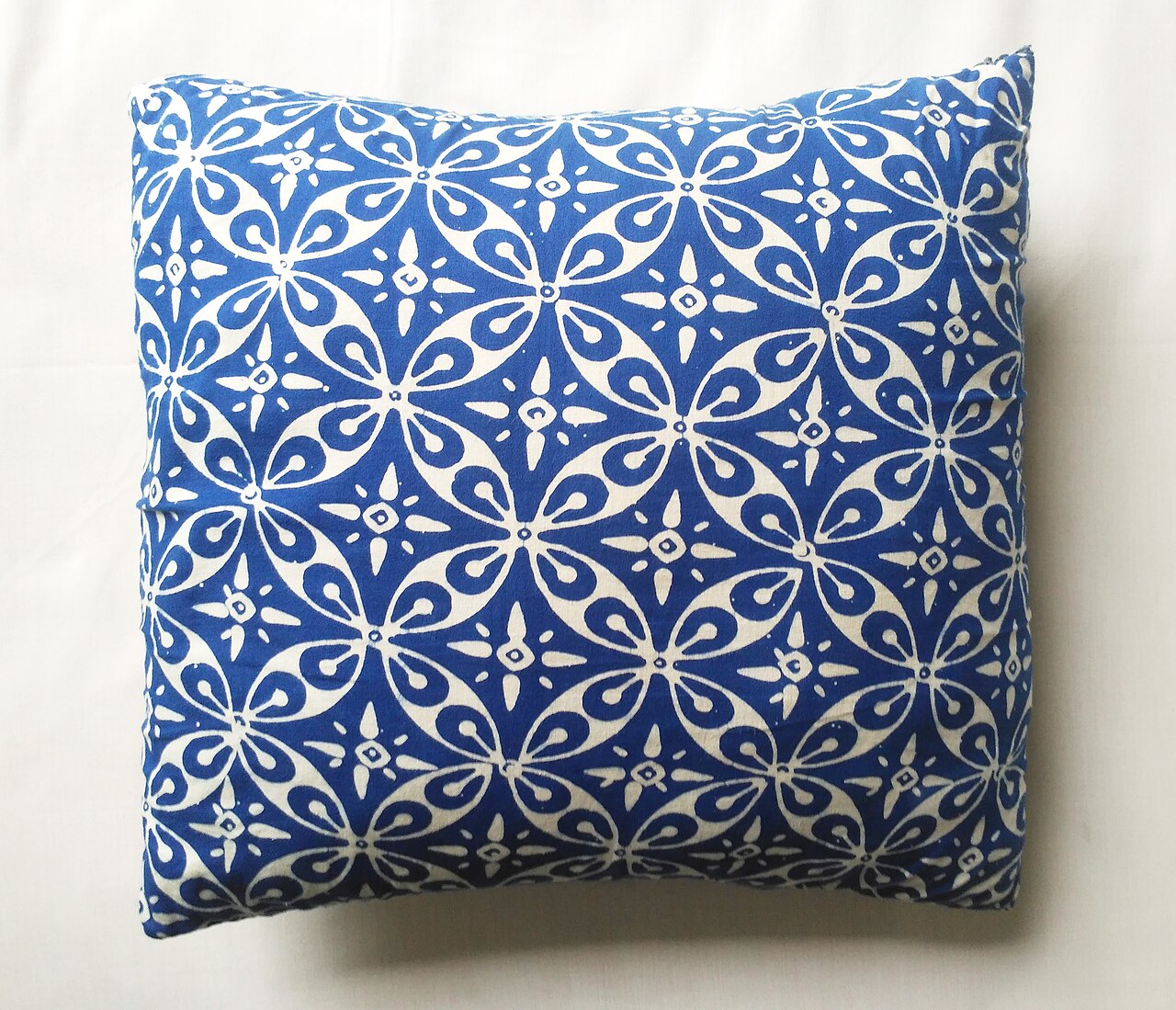
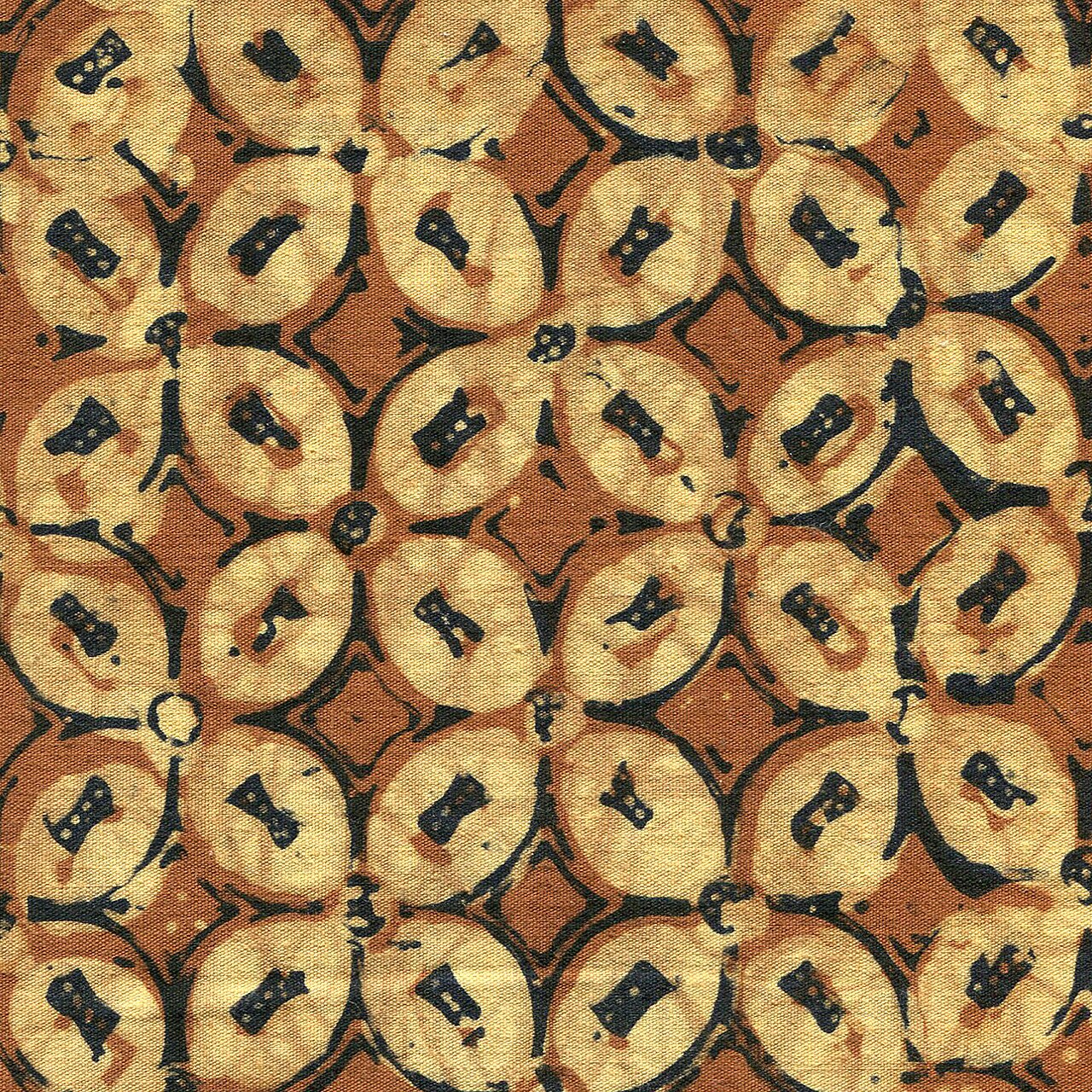
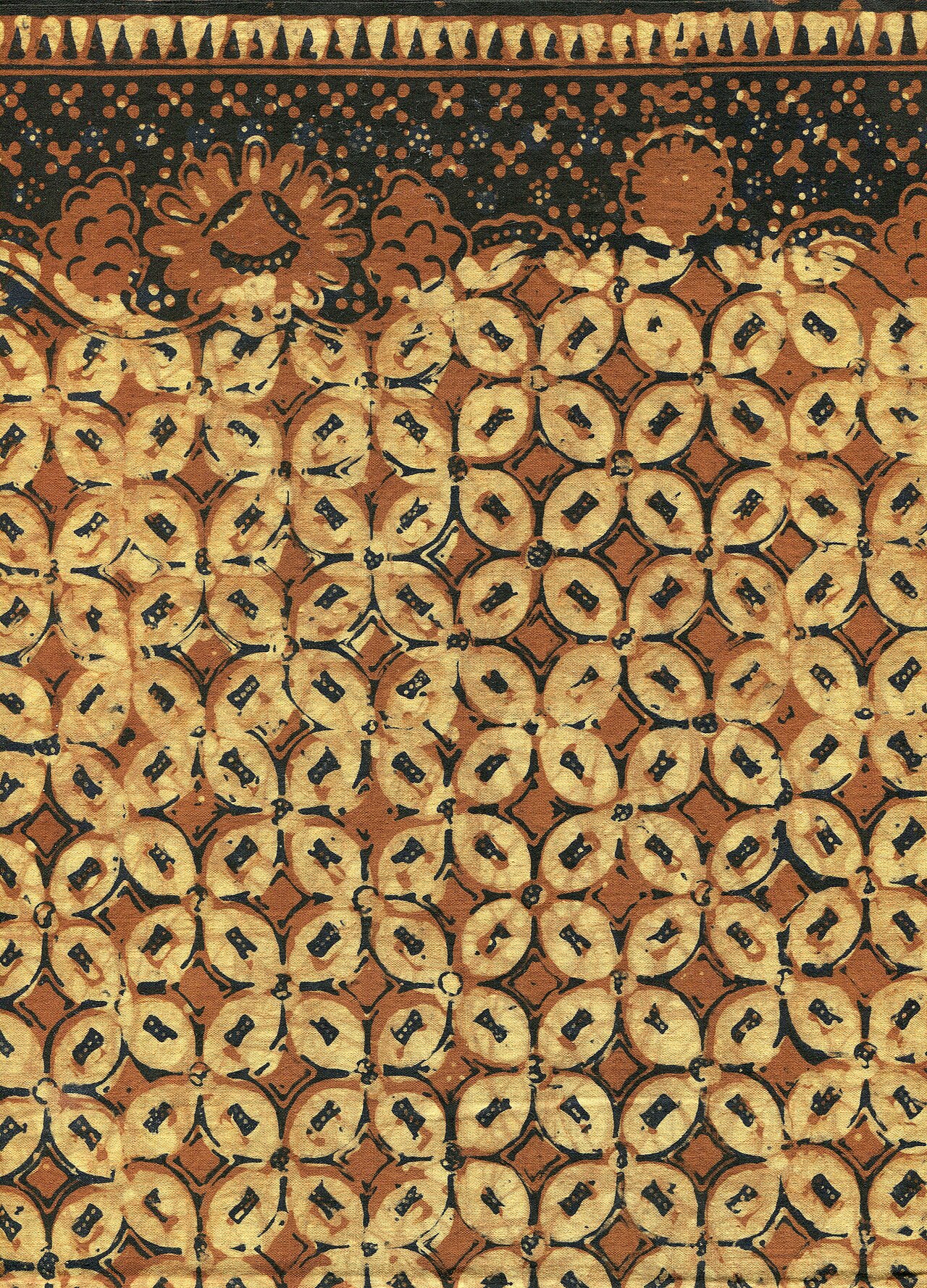
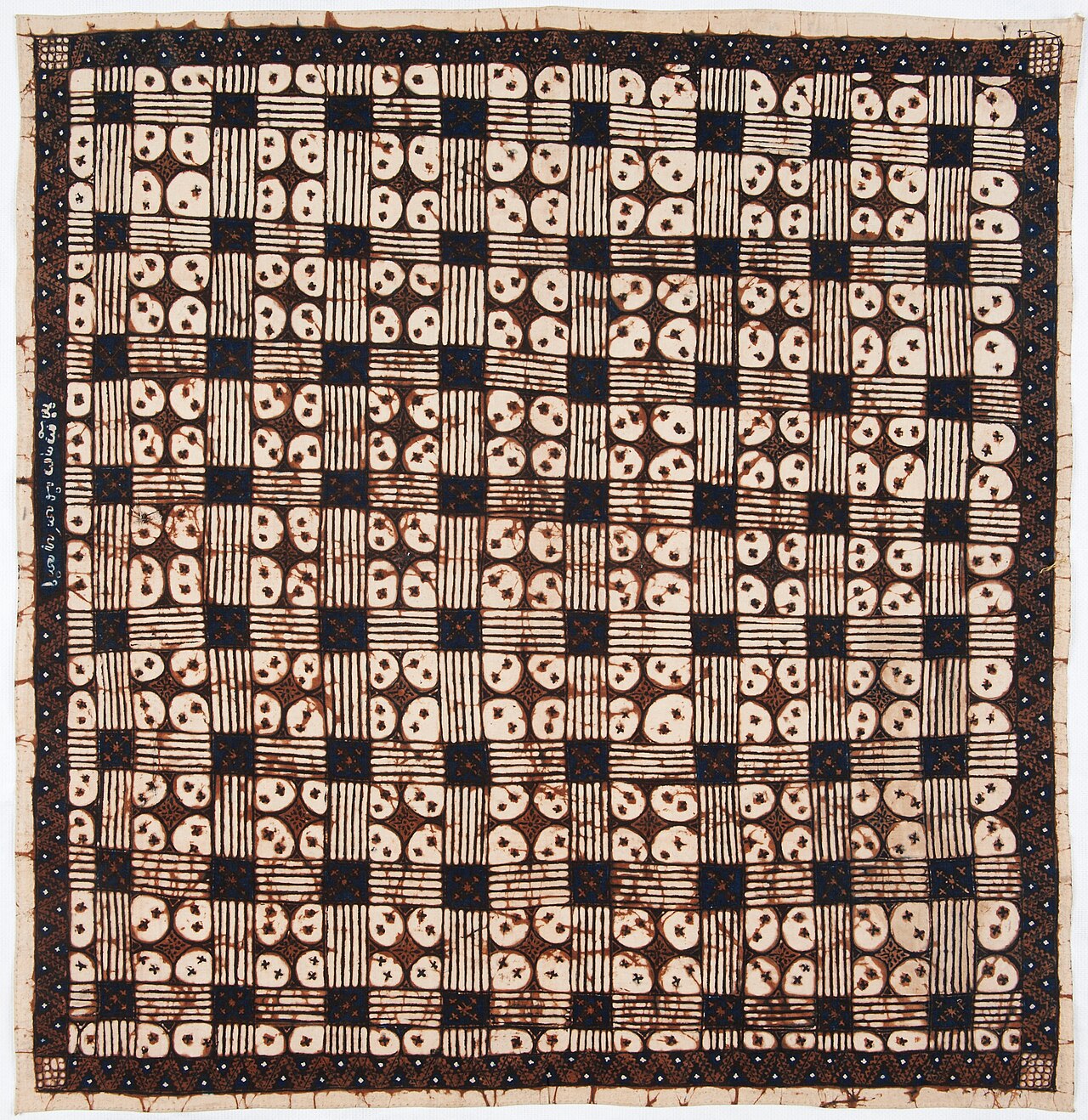
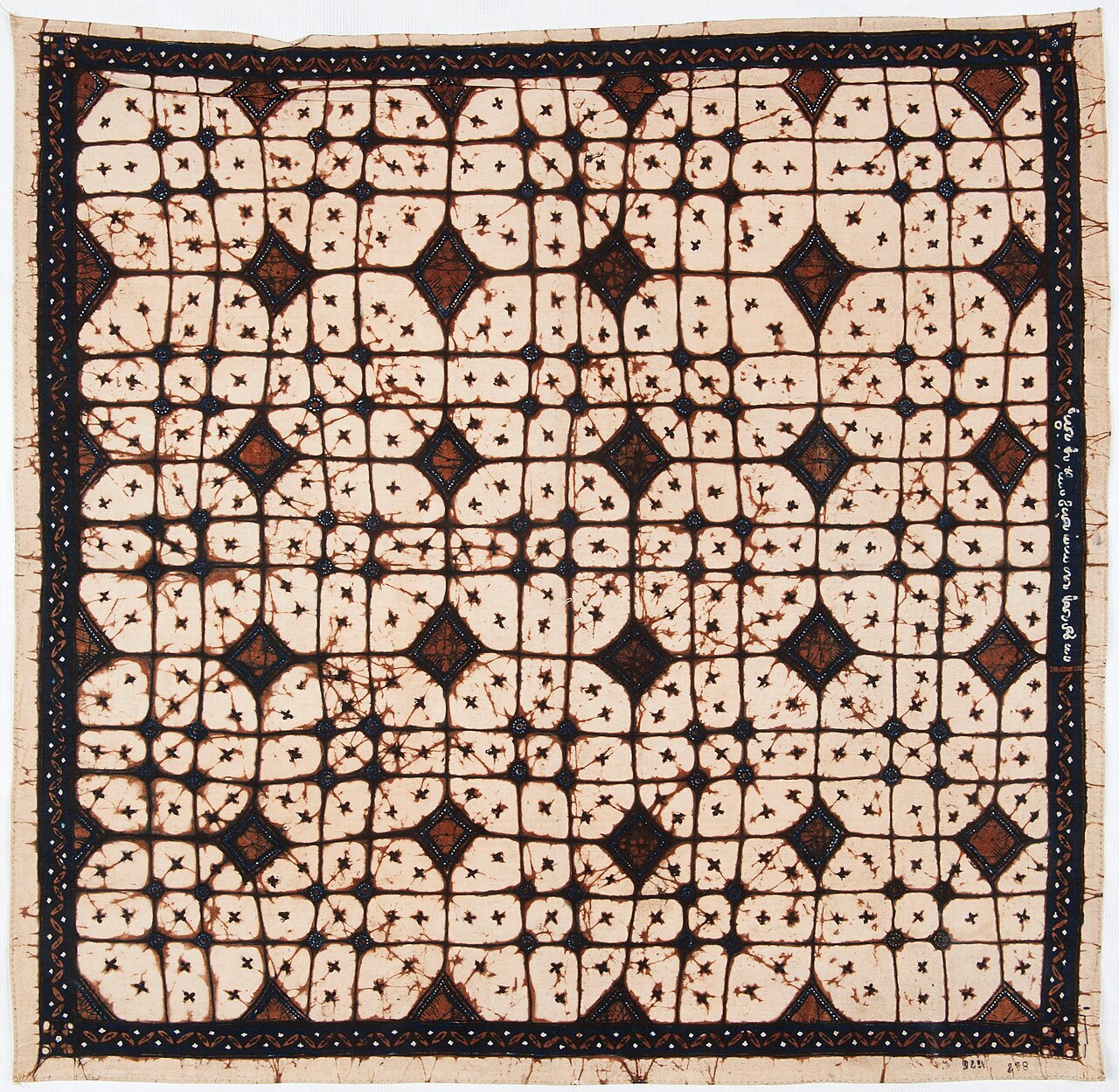
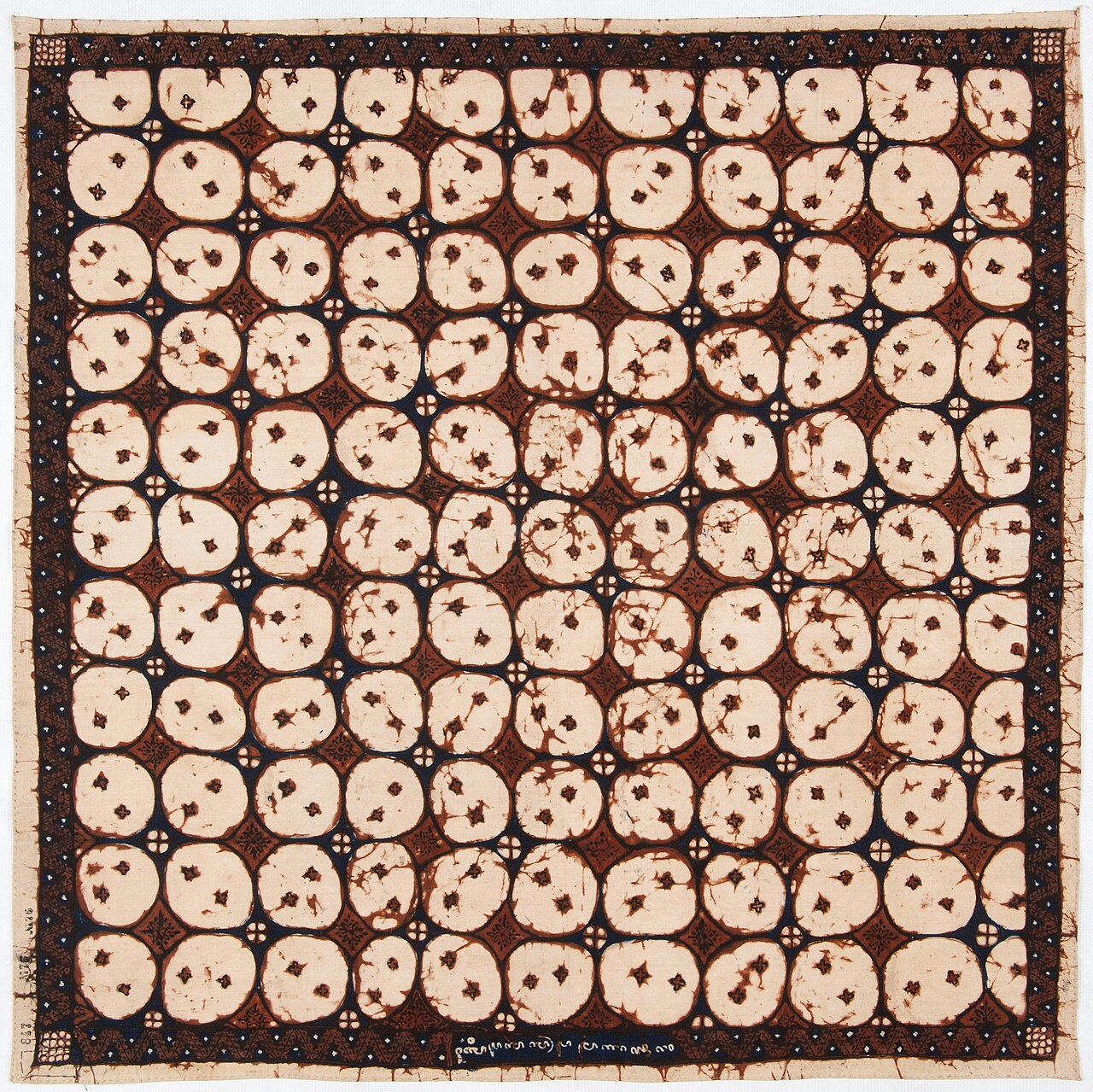
The *kawung* batik motif features circles arranged in a neat geometric pattern. These circles resemble the fruit of the *kawung*—a type of coconut, sugar palm, or palm fruit. Some interpret the design as a four-petaled lotus flower, which symbolizes longevity and purity. This motif is among the oldest in Indonesian batik, with references in both written records and oral tradition dating back to the 16th-century Mataram Sultanate.
The word *kawung* has several possible origins. In Javanese, it can mean the fruit of the palm tree, or the palm leaves used for rolling cigarettes. Another theory traces it to *kwangwung*, the Javanese term for the horn beetle.
Two main theories explain the motif’s origin. One credits Sultan Agung of Mataram (r. 1613–1645), who said he was inspired by the palm tree. The other appears in folklore: a wise, polite young man caught the attention of the royal court. After a spy observed him, the king summoned him. His mother, hoping he would become a useful person, dressed him in his best clothes, which bore the *kawung* pattern.
Types of *kawung* are usually named by the size of the oval shapes or by combinations with other motifs.
- **Kawung Picis** uses small circles. *Picis* refers to a small 10-cent coin, though some say the word simply means “something small.” - **Kawung Bribil/Gidril** has larger ovals than Picis. *Bribil* means half a penny in Javanese; other sources say it was a nickel coin worth five cents, or 25 cents. - **Kawung Sen** features ovals larger than Bribil, matching the size of a colonial-era one-penny coin. However, some sources treat Kawung Sen, Bribil, and Gidril as the same motif, inspired by the *sen* coin, while Picis is distinct. - **Kawung Klempong** is the largest type. - **Kawung Beton** has four circles with two rectangular points, separated by a cross line. *Beton* comes from the Javanese word for jackfruit seed, symbolizing good deeds not shown outwardly. - **Kawung Cacah Gori** uses chopped *gori* filler patterns. - **Kawung Geger** is a large *kawung* filled with smaller *kawung* inside. This sacred motif was reserved for kings and close family, linked to the 1813 Ponorogo agreement that split the sultanate into the Ngayogyakarto Hadiningrat Sultanate and the Pakualaman Duchy. - **Kawung Kopi/Sari** has oval ornaments with a line dividing each into two parts, resembling a broken coffee fruit.
Quick Facts
- Material
- Cambrics, silk, cotton
- Location
- Indonesia
Facts from the source article.
Lore & Background
There are two theories regarding the origin of batik kawung. The first theory states that the motif was created by the fourth Sultan of Mataram, Sultan Agung, who ruled from 1613 to 1645, and was inspired by the palm tree. The second theory appears in folklore, telling of an authoritative, polite, and wise young man whose reputation reached the royal court. A spy was sent to observe him, and he was eventually summoned before the king. His mother prepared for him the best clothes, a kawung motif garment, hoping he would become a useful person for the community.
Reader's Guide
Batik kawung is one of the oldest batik motifs in Indonesia, with its existence recorded since the 16th-century Mataram Sultanate. The motif's meaning is tied to perfection, purity, and holiness. In relation to the word suwung, meaning empty, the kawung motif symbolizes the emptiness of worldly passions and desires, resulting in perfect self-control. This emptiness makes a person neutral, impartial, and following the flow of life. The figure Semar, an incarnation of a god with good and wise character, is said to always wear this motif. The kawung motif has many named variations, such as Kawung Picis, Kawung Bribil, Kawung Sen, Kawung Klempong, Kawung Beton, Kawung Geger, and others, often distinguished by the size of the oval shapes or combinations with other motifs. Kawung Geger, for example, is considered sacred and could only be worn by kings and their close families, linked to the Ponorogo agreement of 1813 that split the sultanate.
Did You Know?
- The word kawung in Javanese can mean the fruit of the palm tree, palm tree leaves used for rolling cigarettes, or come from the Javanese word kwangwung meaning horn beetle.
- Kawung Picis is named after a small 10-cent coin, while Kawung Bribil is named after a half-penny coin.
- The kawung motif is sometimes interpreted as an image of a lotus flower with four open flower crowns, symbolizing longevity and purity.
Origins & Historical Roots
Batik kawung stands as one of the most ancient decorative patterns in Indonesian textile tradition, with references stretching back to the 16th-century Mataram Sultanate era. Two competing narratives explain its creation. The first attributes the design to Sultan Agung, the fourth ruler of Mataram who reigned between 1613 and 1645, who reportedly drew inspiration from the palm tree. The second, rooted in oral folklore, tells of a young man of remarkable courtesy and wisdom whose reputation reached the royal court. When the king summoned him, his mother prepared his finest garment in the kawung pattern, hoping the design would ensure he became a beneficial figure for the community. The pattern's presence in both written historical records and oral traditions underscores its deep cultural embedding. The very name kawung carries multiple etymological roots in Javanese—referring to palm fruit, palm leaves used for rolling cigarettes, or even the horn beetle known as kwangwung—reflecting the layered cultural associations woven into this single motif.
Symbolism & Visual Interpretation
The kawung motif presents a fascinating duality in interpretation. Visually, it consists of circular or oval shapes arranged in a precise geometric pattern, resembling the fruit of the palm tree or, in some traditions, the fruit of the sugar palm. Yet an equally valid reading sees the same arrangement as a lotus flower with four open petals. This lotus interpretation carries profound symbolic weight, as the flower represents both longevity and purity in Indonesian cultural thought. The geometric regularity of the pattern—circles nested within circles, arranged with mathematical precision—gives the design a sense of order and completeness that resonates with these aspirational qualities. Whether read as fruit or flower, the motif conveys themes of natural abundance, spiritual cleanliness, and enduring life. The color palettes used across variations, ranging from white and yellowish-white for the main elements to red soga for contours and black for backgrounds, further reinforce the contrast between purity and depth that defines the kawung aesthetic.
Classification by Scale & Form
The kawung family encompasses a remarkable range of variations, primarily distinguished by the size of the oval elements and their combination with supplementary patterns. At the smallest scale sits Kawung Picis, named after a tiny ten-cent coin, where the circles are correspondingly minute. Moving upward, Kawung Bribil or Gidril features larger ovals, its name tied to a mid-value currency variously described as half a penny, five cents, or twenty-five cents depending on the source. Kawung Sen extends the scale further, referencing the one-penny coin of the colonial period, while Kawung Klempong represents the largest standard form. Beyond size-based naming, other variations introduce distinct visual elements: Kawung Beton incorporates four circles with two rectangular points bounded by a cross line, drawing its name from the Javanese word for jackfruit seed and its symbolism of hidden good deeds. Kawung Geger fills a large kawung with smaller ones inside, while Kawung Buntal blends the picis form with kenikir floral motifs, creating a hybrid composition unique within the family.
Royal Exclusivity & Sacred Status
Not all kawung variations carry equal cultural weight. Kawung Geger, in which a large kawung motif is filled with smaller kawung motifs within, holds a distinctly sacred status reserved exclusively for kings and their immediate families. This restriction is tied to a specific historical event: the Ponorogo agreement of 1813, which divided the sultanate into the Ngayogyakarto Hadiningrat Sultanate and the Pakualaman Duchy. The motif's association with this political partition elevated it beyond mere decoration into the realm of royal authority and legitimacy. Similarly, the folklore narrative of the mother preparing kawung-patterned clothing for her son before his royal summons imbues the design with connotations of virtue, service, and noble purpose. The pattern thus functions not only as aesthetic expression but as a marker of social hierarchy, spiritual aspiration, and political identity—layers of meaning that have accumulated over centuries of Javanese court culture.
Gallery
Frequently Asked Questions
What is Batik kawung?
Batik kawung is one of the oldest and most recognizable patterns in Indonesian batik, defined by a tight grid of evenly spaced circles. It first appears in written records and oral traditions from the 16th-century Mataram Sultanate.
What does the kawung pattern look like?
The design is a repeating geometric lattice of small circles that tile the entire fabric. Those circles are said to echo the round seed of the kawung palm fruit, or alternatively to resemble a four-petaled lotus bloom.
What does Batik kawung symbolize?
The motif is traditionally tied to ideas of purity, holiness, and self-mastery, representing an ideal of inner perfection. Some Javanese readings also connect it to longevity and spiritual cleanliness.
How old is the kawung motif?
Both textual sources and oral tradition place its earliest references in the 16th-century Mataram Sultanate, making it among the oldest documented batik designs in Indonesia. Its continuous use across roughly five centuries underscores its deep cultural roots.
How does kawung relate to other classic batik motifs?
Kawung is frequently composed alongside patterns such as Parang, Megamendung, and Tujuh rupa in ceremonial and royal batik pieces. Together these motifs form the core visual vocabulary of Javanese spiritual and courtly batik.
More in Indonesian inventions 1-24
Spotted an error? Know more?
Reader corrections go straight into our review queue. Suggest an edit · How this site is sourced