Angklung
A bamboo instrument from Indonesia played in coordinated ensembles.

Kamillo · CC BY-SA 3.0
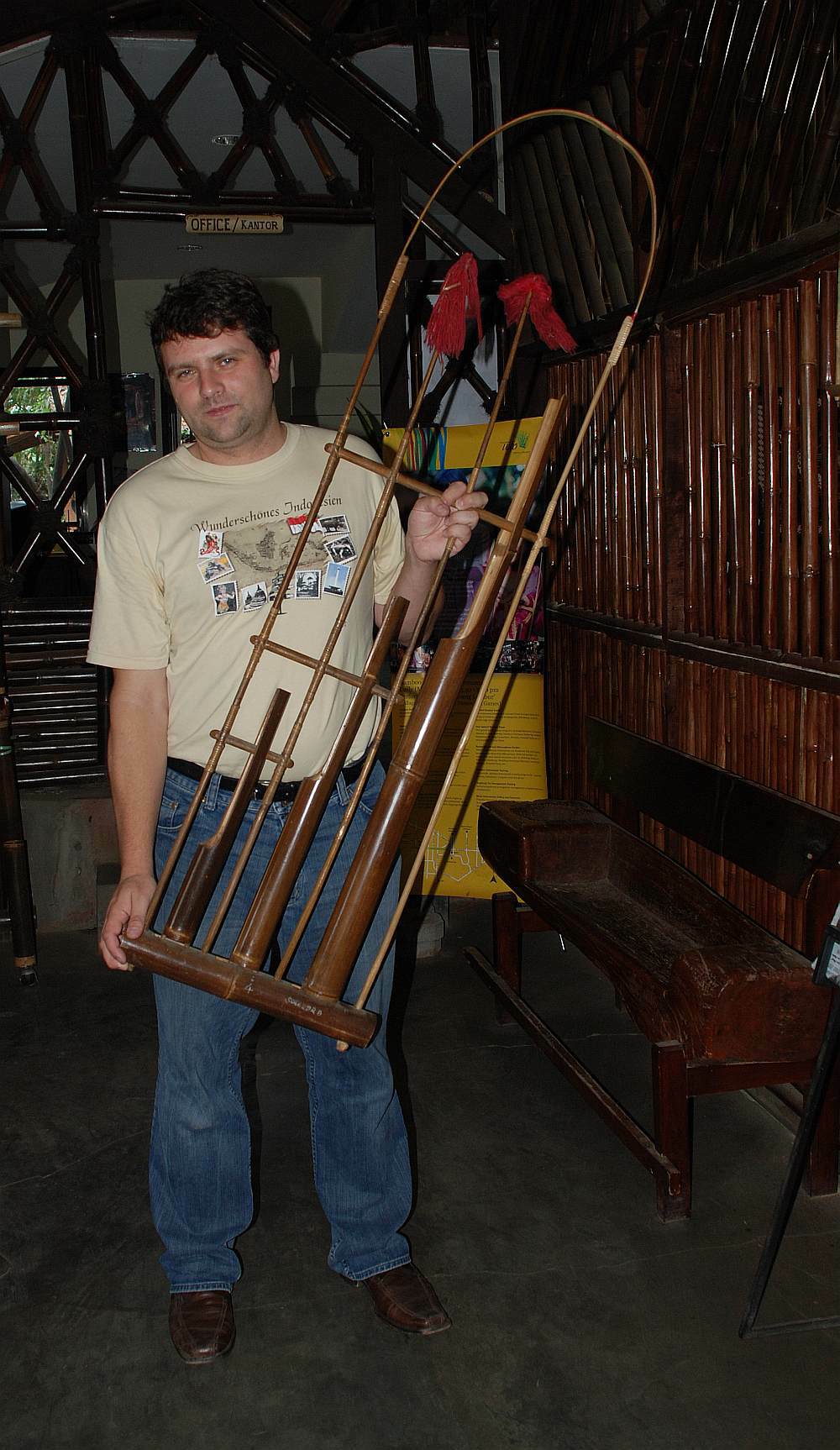
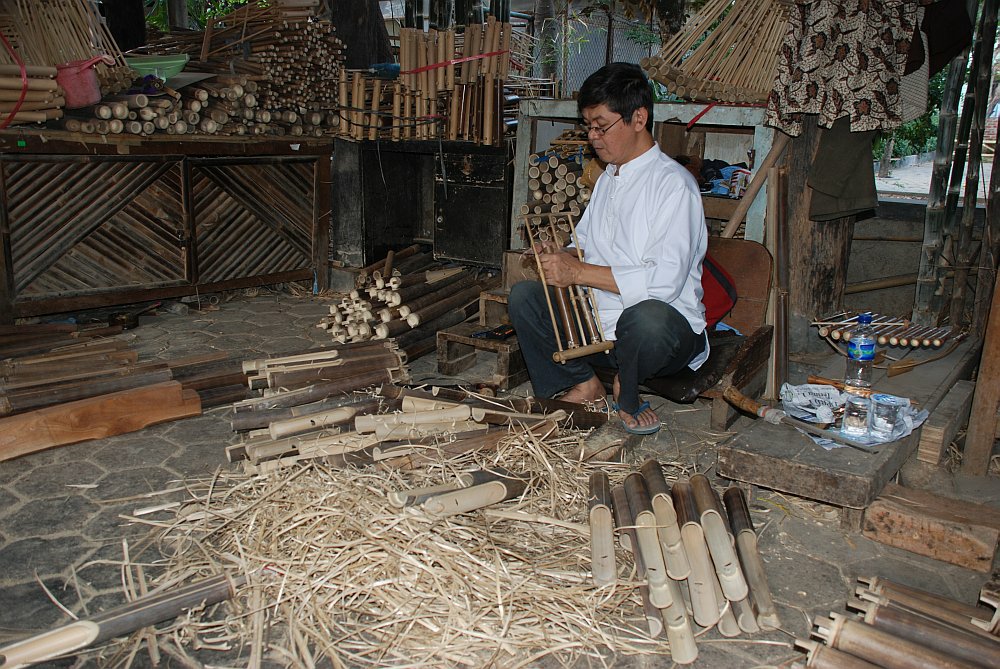
The angklung is a musical instrument from the Sundanese people of Indonesia, made of bamboo tubes attached to a bamboo frame. It is played by shaking the instrument to produce a resonant pitch, with each performer typically responsible for one note in an ensemble. The angklung has been played for many centuries in what is now West Java and Banten, and is an important part of Sundanese cultural identity. On 18 November 2010, UNESCO included the Indonesian angklung in the Representative List of the Intangible Cultural Heritage of Humanity.
Quick Facts
- Background
- percussion
- Classification
- Idiophone
- Hornbostel Sachs
- 111.232
- Hornbostel Sachs Desc
- Sets of percussion tubes
- Developed
- Indonesia
- Range
- G2 - C6
- Pitch
- medium
Facts from the source article.
Lore & Background
The word angklung may have originated from Sundanese 'angkleung-angkleungan', suggesting the movement of the player and the onomatopoeic 'klung' sound. According to Dr. Groneman, the angklung was a favorite instrument across the archipelago even before the Hindu era. In the Hindu period and the time of the Kingdom of Sunda, it was played to honor Dewi Sri, the goddess of Rice, and signaled time for prayers. It was also used for martial music during the Battle of Bubat, as told in the Kidung Sunda.
The oldest surviving angklung is the Angklung Gubrag, made in the 17th century in Jasinga, Bogor. The oldest tradition is angklung buhun from Lebak Regency, Banten, played by the Baduy people during the seren taun harvest ceremony. In 1938, Daeng Soetigna created a diatonic-scale angklung, leading to its use in education and entertainment. In 1966, Udjo Ngalagena opened Saung Angklung as a centre for preservation and development.
Reader's Guide
The angklung is significant as a traditional Sundanese instrument that embodies cooperation and cultural identity. Its ensemble playing requires each performer to sound a single pitch, promoting teamwork, mutual respect, and social harmony. The instrument's history spans centuries, with roles in Hindu-era ceremonies honoring Dewi Sri, prayer signals, and martial music. UNESCO's 2010 recognition encouraged safeguarding, transmission, and promotion of performances and craftsmanship. The angklung's adaptation to the diatonic scale by Daeng Soetigna in 1938 revived its popularity, allowing it to accompany Western instruments and be used in education. The legacy includes preservation efforts like Saung Angklung and continued use in rituals and entertainment. Various regional types—such as angklung kanekes, dogdog lojor, gabrag, badeng, bungko, badud, buncis, and calung—reflect diverse functions, from rice-planting rituals to circumcision ceremonies and parades. The angklung remains a living tradition, linking past and present Sundanese culture.
Did You Know?
- The angklung is made of bamboo tubes attached to a bamboo frame, tuned to octaves like Western handbells.
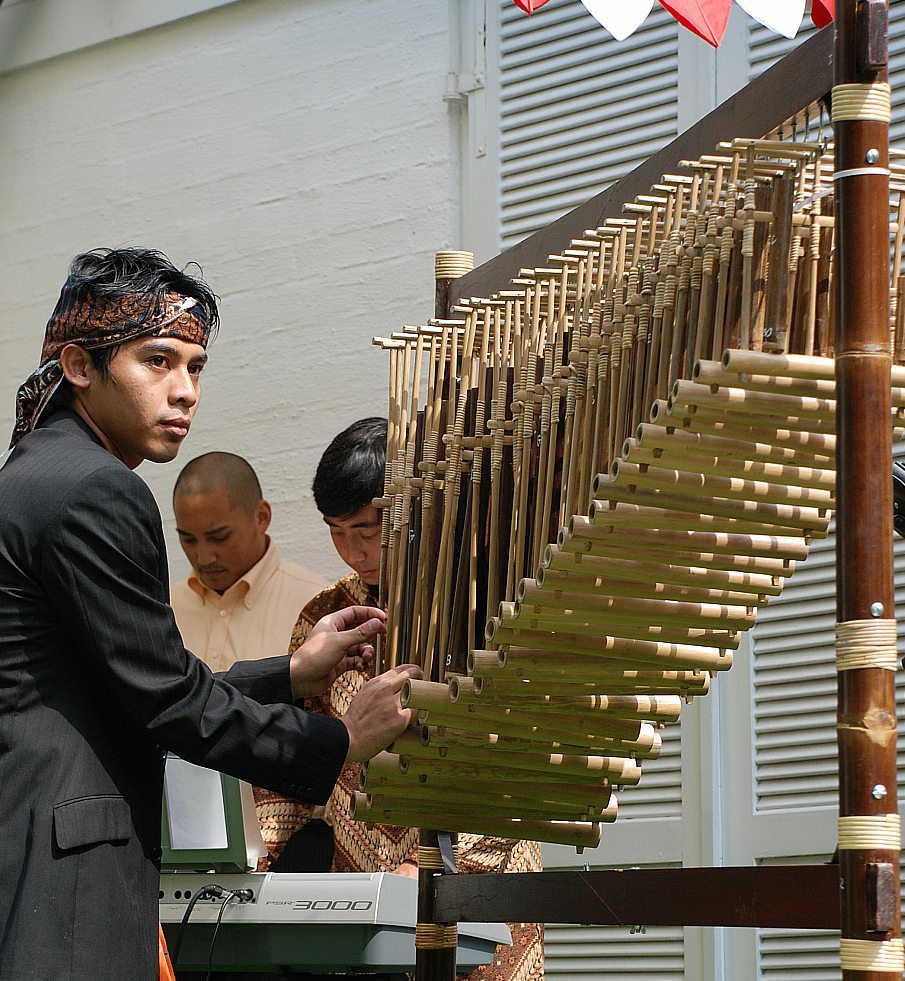
- Each performer in an angklung ensemble typically plays only one pitch, sounding their instrument at appropriate times.
Ancient Roots & Ceremonial Significance
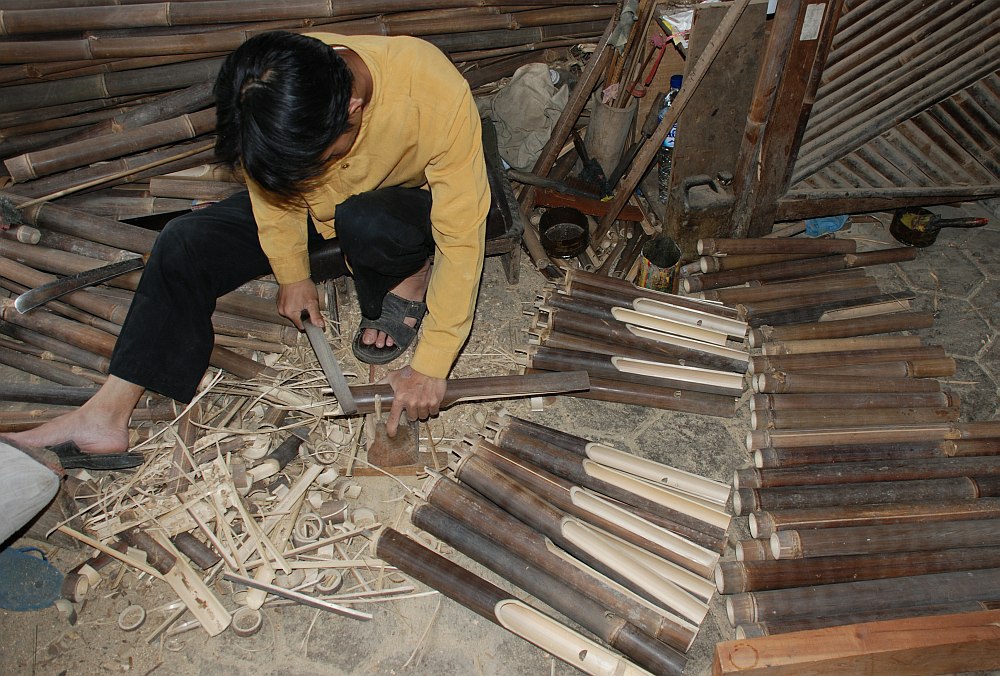
The angklung's story stretches back centuries into the spiritual life of the Sundanese people. During the Hindu period and the era of the Kingdom of Sunda, this bamboo instrument served as a sacred voice in ritual life. It was played to honor Dewi Sri, the rice goddess, in hopes she would bless the land and sustain the community. The instrument also marked the moments for prayer, and historical accounts suggest it had been sounding in the Kingdom of Sunda since at least the seventh century. Even in martial contexts the angklung found its place; the Kidung Sunda, an ancient Sundanese narrative, describes it providing battle music during the famous Battle of Bubat. The oldest physical example still in existence, the Angklung Gubrag, was crafted in the seventeenth century in Jasinga, Bogor, while additional antique specimens are preserved in the Sri Baduga Museum in Bandung. The most ancient living tradition is the angklung buhun, played by the Baduy people of inland Banten during their seren taun harvest ceremony, a practice maintained with unbroken continuity across generations.
The Diatonic Revolution & Modern Revival
For centuries the angklung followed the traditional pélog and sléndro tuning systems, but a single innovation in 1938 transformed its trajectory. Daeng Soetigna, a musician from Bandung, reimagined the instrument by retuning it to the Western diatonic scale. This seemingly modest change unlocked an entirely new world of possibility: the angklung could now blend with Western orchestral instruments and enter educational settings across Indonesia. The instrument's renaissance was publicly celebrated in 1955 when it was featured in an orchestra during the landmark Bandung Conference, one of the earliest such performances on record. A decade later, in 1966, Udjo Ngalagena—a direct student of Soetigna—established his Saung Angklung, a dedicated house for the preservation, teaching, and development of the instrument. Through these efforts, the angklung moved from a regional ceremonial object to a living educational tool and a flexible ensemble voice capable of sitting alongside violins and brass in a full orchestra.
A Mosaic of Regional Traditions
Far from being a single uniform instrument, the angklung exists as a rich family of regional variants, each woven into the specific rituals of its community. In the isolated Baduy territory of Lebak, Banten, the angklung kanekes accompanies the ancient rice-planting rite and is crafted exclusively by the Baduy Dalam, the innermost tribe that guards the purest ancestral customs. Its eight named parts range from the large indung down to the small roel. In the Kasepuhan Pancer Pangawinan communities around Mount Halimun, the angklung dogdog lojor is played by six musicians during farming, circumcision, and wedding ceremonies. In Cipinang village, Bogor, the angklung gabrag honors Dewi Sri through the full rice cycle from planting to barn storage. In Garut, the angklung badeng has evolved from a rice ritual to accompany Islamic preaching, requiring nine instruments in a specific configuration. In Cirebon, the angklung bungko—believed to be six hundred years old and linked to a fifteenth-century naval commander—was once played to heal sick children and to accompany inter-village conflicts. Each variant carries its own mythology, player count, and ceremonial purpose.
Collective Philosophy & World Recognition
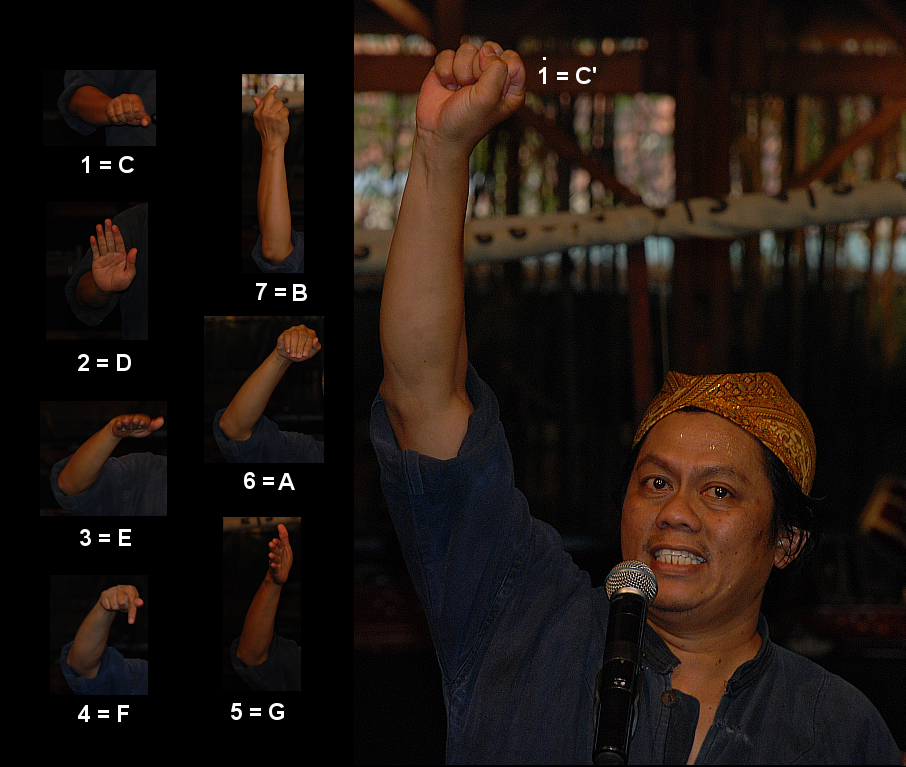
The angklung is as much a social philosophy as a musical instrument. In an ensemble, each performer is assigned a single pitch and sounds their instrument only at the precise moment the melody demands, a collaborative technique known as Kotekan. No single player can produce a complete tune alone; the music emerges entirely from the group's coordination, timing, and mutual listening. This structure is widely understood in Sundanese culture as a living lesson in teamwork, mutual respect, and social harmony—values the instrument is believed to instill in its players. The collective nature of the angklung also made it a natural symbol of unity on the world stage. On November 18, 2010, UNESCO inscribed the Indonesian angklung on its Representative List of the Intangible Cultural Heritage of Humanity. The designation was not merely honorary; UNESCO explicitly urged the Indonesian government and its citizens to safeguard the tradition, ensure its transmission to new generations, promote public performances, and support the artisans who craft each bamboo tube. The recognition affirmed that the angklung's value lies not only in its sound but in the cooperative human relationships it demands and celebrates.
Gallery

Frequently Asked Questions
What is an angklung?
The angklung is a traditional Indonesian musical instrument built from tuned bamboo tubes mounted on a bamboo frame. It produces a single resonant pitch when the player shakes the frame, making it a percussion-like instrument rooted in Sundanese tradition.
How is an angklung played in a group?
Each performer holds one angklung responsible for a single note and shakes it in time with the others. The ensemble works by mutual listening and coordination, so the combined pitches weave into a shared melody.
Where does the angklung come from?
The angklung has been played for centuries across the Sundanese heartlands of West Java and Banten in Indonesia. It remains a core element of Sundanese musical identity in those regions to this day.
Why is the angklung considered culturally important?
Beyond its sound, the angklung is prized because playing it demands teamwork, mutual respect, and social harmony among all participants. It functions as a living symbol of Sundanese community values passed down through generations.
Has the angklung received any international recognition?
Yes. On 18 November 2010, UNESCO inscribed the Indonesian angklung on its Representative List of the Intangible Cultural Heritage of Humanity, acknowledging its centuries-old tradition and its role in preserving Sundanese cultural identity.
More in Indonesian inventions 1-24
Spotted an error? Know more?
Reader corrections go straight into our review queue. Suggest an edit · How this site is sourced