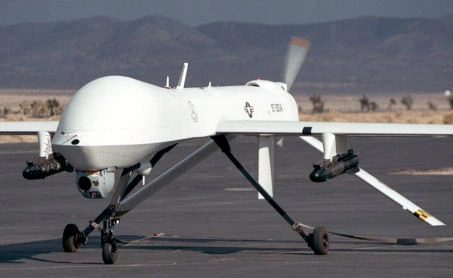
Unmanned ground vehicle
Unmanned ground vehicles operate without onboard humans in hazardous roles.

An unmanned ground vehicle (UGV), sometimes called an armored robot (ARB), is a vehicle that moves across the ground without a human inside. These machines are used in situations where having a person on board is risky, costly, impractical, or simply not possible. They typically carry sensors to observe their surroundings and either operate autonomously or are controlled remotely by a human operator. UGVs are the land-based equivalent of drones in the air, underwater, or on the water’s surface.
The first known UGV appeared in 1904, when Spanish engineer Leonardo Torres Quevedo tested a radio-controlled tricycle he called the Telekino, which worked at a range of 20 to 30 meters. In 1915, France produced early explosive robotic drones known as Aubriot-Gabet “land torpedoes” and the Crocodile Schneider-Creusot; twenty were used by the 2nd French Army that July. A working radio-controlled car was described in an October 1921 issue of World Wide Wireless magazine, and it was thought the technology could be adapted for tanks. During the 1930s, the USSR developed the Teletank, a small, remotely controlled tank armed with a machine gun, which saw action in the Winter War against Finland and at the start of the German-Soviet War in 1941. In World War II, the British planned a radio-controlled version of the Matilda II tank called the “Black Prince” for drawing enemy fire or demolition, but an order for 60 was canceled due to the cost of converting the transmission. From 1942, Germany used the Goliath tracked mine, a cable-controlled vehicle carrying 60 kg of explosives, modeled after a French vehicle captured in 1940; it was not considered a success due to cost, low speed, cable reliance, and poor protection.
Lore & Background
The history of unmanned ground vehicles begins in 1904, when Spanish engineer Leonardo Torres Quevedo developed a radio-based control system called Telekino, tested on a three-wheeled land vehicle with a range of 20 to 30 meters. The first prototypes of explosive robotic drones appeared in France in 1915 as Aubriot-Gabet 'land torpedoes' and the Crocodile Schneider-Creusot; twenty were put into service with the 2nd French Army in July 1915. A working remote-controlled car was reported in October 1921 by RCA, and in the 1930s the USSR developed the Teletank, a small remotely controlled tank armed with a machine gun, which operated in the Winter War and at the start of the German-Soviet War. During World War II, the British developed a radio-controlled Matilda II tank called 'Black Prince,' and Germany used the Goliath tracked mine, a cable-controlled vehicle carrying 60 kg of explosive charge, though it was not considered a success.
In the 1960s, DARPA funded the first major mobile robot development effort, Shakey, a wheeled platform with a TV camera, sensors, and a computer. DARPA subsequently developed the Autonomous Land Vehicle (ALV), the first UGV that could navigate completely autonomously on and off roads at useful speeds, as part of the Strategic Computing Initiative of 1983–1993. UGVs rose in significance after the full-scale Russian invasion of Ukraine. On March 29, 2024, a platoon of Russian UGVs equipped with AGS-17 automatic grenade launchers was deployed for an assault near Berdychi in Ukraine, marking the first use of UGVs for direct frontline assaults. During an undated operation, the 3rd Assault Brigade claimed the world's first surrender of enemy soldiers to unmanned drones in Kharkiv Oblast, using FPV and ground drones. On December 22, 2025, the 3rd Assault Brigade reported that a Ukrainian UGV, a Droid TW 12.7 armed with a .50-caliber machine gun, held off Russian attacks for 45 days while operated remotely or using AI, the first time a position was held solely by a UGV without direct human support.
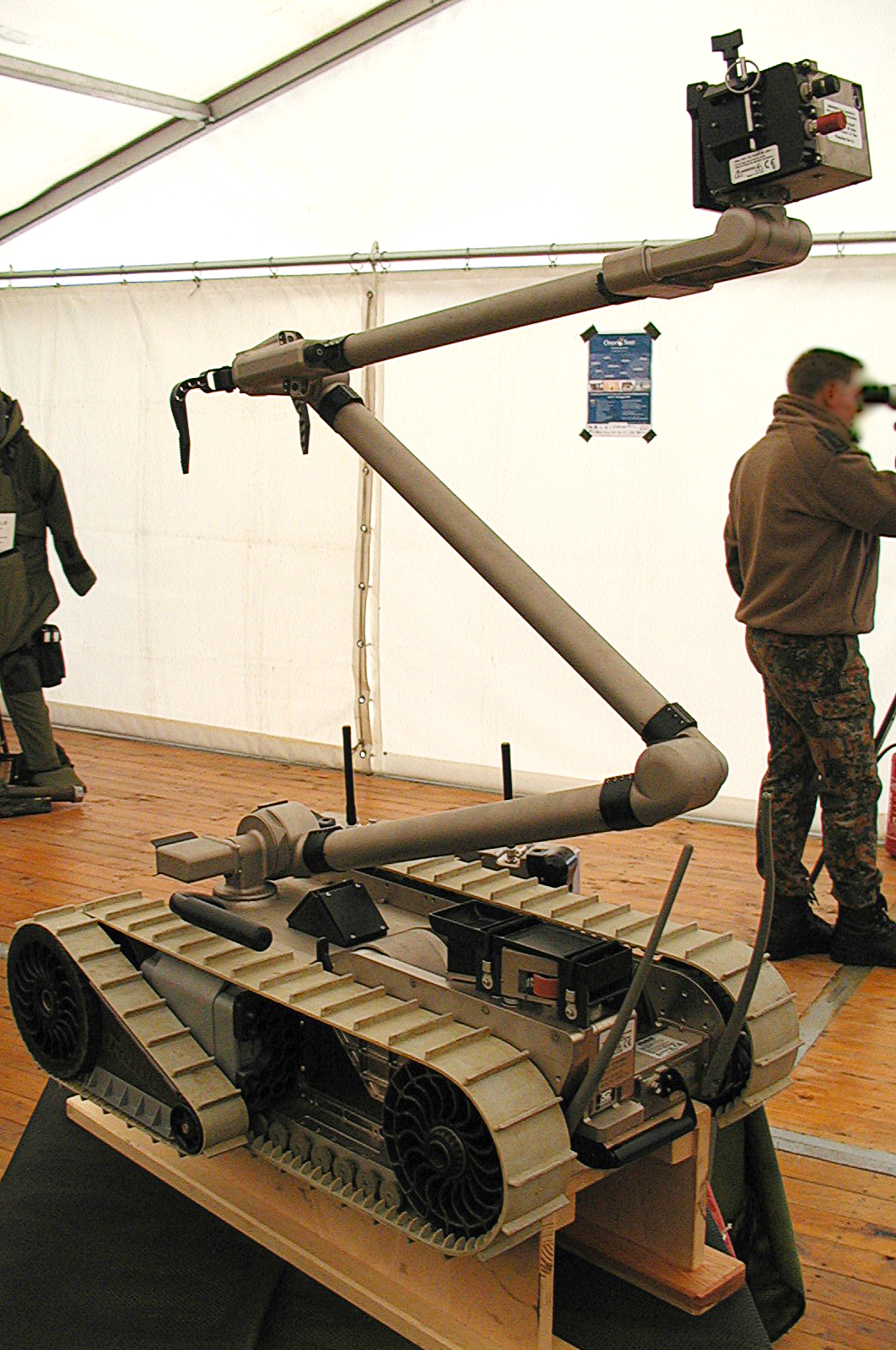
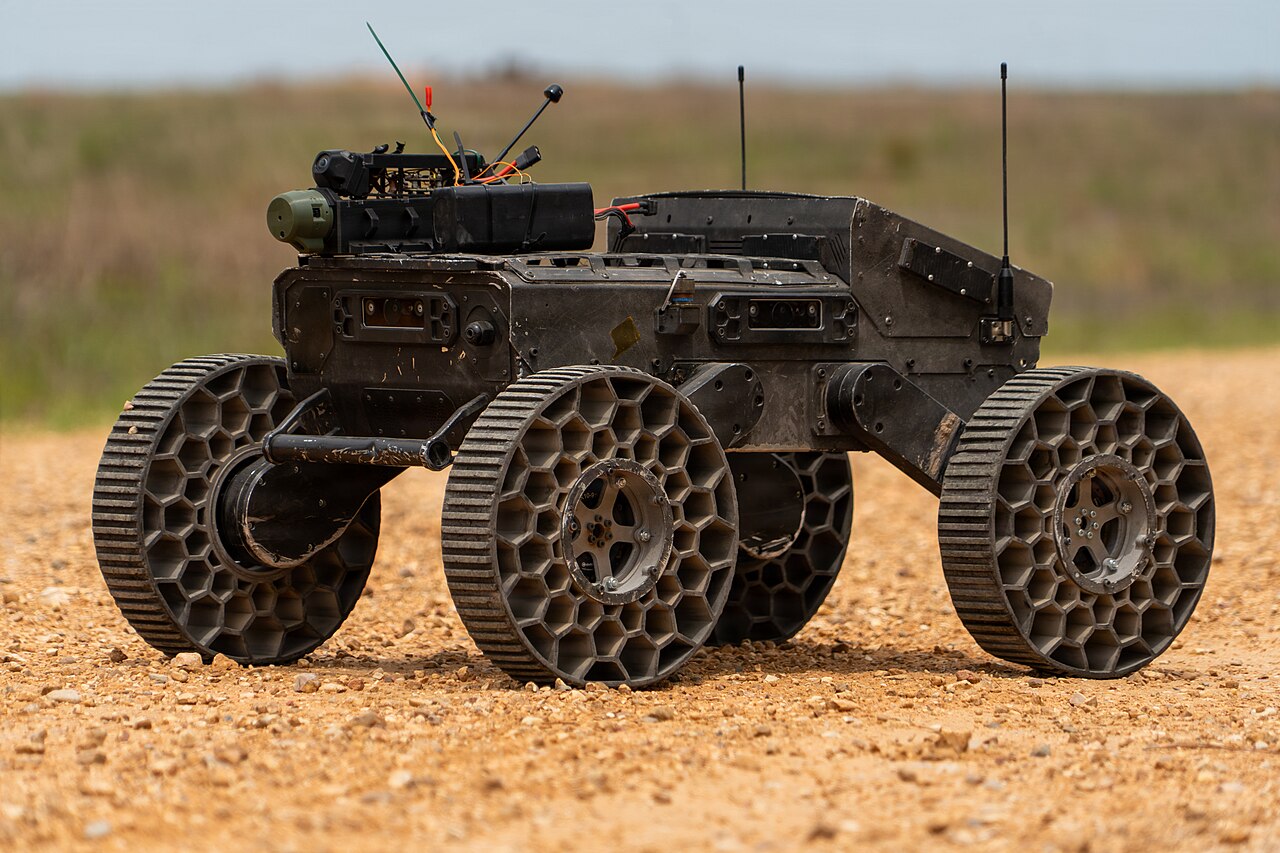
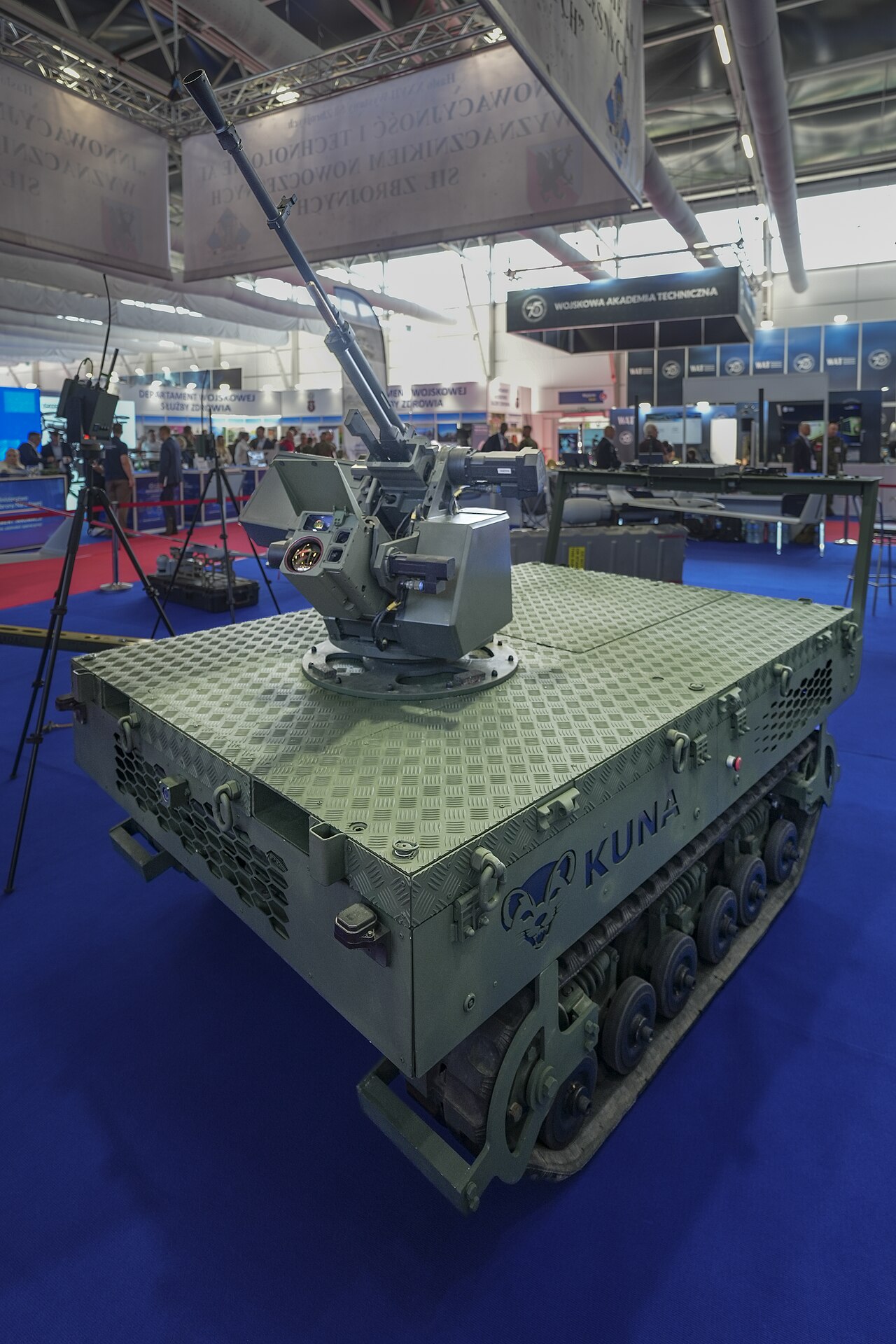
UGVs generally include a vehicle platform, sensors, control systems, guidance interface, communication links, and systems integration features. The platform can be a car, truck, or all-terrain vehicle, with tracks, wheels, or legs for locomotion, and power from internal combustion engines, batteries, or hydrogen. Sensors include compasses, odometers, inclinometers, gyroscopes, cameras, laser and ultrasound rangefinders, GPS radios, and infrared technology. Control systems are generally considered remote-operated or autonomous, with supervisory control as a combination. Remote-operated UGVs are controlled by a human operator via direct visual observation or sensors; autonomous UGVs replace the human controller with artificial intelligence, using sensors to model the environment and determine actions. Communication can be via radio or fiber optics.
Reader's Guide
Unmanned ground vehicles have become significant as replacements for humans in hazardous situations, such as handling explosives, bomb disposal, and military operations where additional strength or smaller size is needed, or where humans cannot safely go. Their military applications include surveillance, reconnaissance, and target acquisition. The use of UGVs in direct frontline assaults, first recorded in March 2024 near Berdychi, Ukraine, marked a shift in ground warfare, demonstrating that unmanned systems could be used for offensive operations. The first surrender of enemy soldiers to ground drones, claimed by the 3rd Assault Brigade in Kharkiv Oblast, illustrated a new dynamic in combat where unmanned vehicles could compel enemy forces to capitulate. The December 2025 report of a Ukrainian UGV holding a position for 45 days without direct human support showed that UGVs could sustain defensive operations independently, potentially reducing risk to human soldiers. These developments, alongside the dramatic rise in use of unmanned aerial vehicles, have elevated the role of UGVs in modern conflict. The legacy of UGVs includes their evolution from early radio-controlled experiments and World War II demolition vehicles to sophisticated platforms capable of autonomous navigation and combat roles. Their design continues to integrate advanced sensors, control systems, and communication links, enabling them to operate in environments that are inconvenient, dangerous, expensive, or impossible for humans. As of 2025, a wide variety of UGVs are in use across military and civilian sectors, including agriculture, mining, and construction, where they replace humans in hazardous or repetitive tasks.
Pioneers of the Driverless Ground
The concept of a ground vehicle operating without a human aboard stretches back further than most people realize. In 1904, Spanish engineer Leonardo Torres Quevedo built a three-wheeled tricycle controlled by radio over a range of twenty to thirty meters, a system he called Telekino—widely regarded as the first known UGV. The idea resurfaced in wartime: France fielded twenty Aubriot-Gabet land torpedoes with its 2nd Army in July 1915, and in 1921 RCA's World Wide Wireless magazine described a working radio-controlled car, with observers speculating the tech could be adapted to tanks. The 1930s saw the Soviet Union develop the Teletank, a small machine-gun-armed tank steered by radio from a parent vehicle; it saw action in the Winter War of 1939–1940 and at the opening of the German-Soviet War in 1941. Britain's 1941 Black Prince radio-controlled Matilda II was intended to bait anti-tank guns or perform demolition, but prohibitive conversion costs led to the cancellation of an order for sixty units. Germany's Goliath tracked mine, used from 1942, carried sixty kilograms of explosive on a control cable but suffered from low speed, poor protection, and cable dependency, earning a mixed reputation.
From Shakey to Fully Autonomous Navigation
The leap from radio-controlled prototypes to genuinely self-driving ground robots came through sustained research investment. In the 1960s, DARPA funded the development of Shakey, a wheeled platform equipped with a TV camera, environmental sensors, and an onboard computer. Its tasks were modest—picking up wooden blocks and placing them in designated spots on command—yet it represented the first major mobile-robot research program in the world. Building on that foundation, DARPA and the U.S. Army pursued a series of autonomous and semi-autonomous ground robots throughout the following decades. The crowning achievement of that effort arrived around 1985, when the Autonomous Land Vehicle (ALV) was demonstrated under the Strategic Computing Initiative of 1983–1993. The ALV was the first UGV capable of navigating both on-road and off-road terrain completely autonomously at speeds useful in operational settings, marking a decisive break from the cable- and radio-dependent machines of the earlier twentieth century.
UGVs Go to War: The Ukraine Turning Points
The full-scale Russian invasion of Ukraine transformed UGVs from niche research platforms into frontline combat assets. On March 29, 2024, during the Eastern Ukraine Campaign, a platoon of Russian UGVs fitted with AGS-17 automatic grenade launchers launched a direct assault near the town of Berdychi—the first recorded use of ground robots in a frontline offensive. The conflict also produced a historic first on the Ukrainian side: the 3rd Assault Brigade reported that Russian soldiers in the Kharkiv Oblast surrendered to a swarm of FPV and ground drones, with the unmanned vehicles then guiding the captives to a Ukrainian position. Perhaps most striking was a claim made on December 22, 2025, when the same brigade announced that a Droid TW 12.7, armed with a .50-caliber machine gun, had held a position against repeated Russian attacks for forty-five days, operated either remotely or by AI. It was the first time a defensive position was maintained solely by a UGV without any supporting infantry.
Anatomy of a UGV: Platform, Senses, and Control
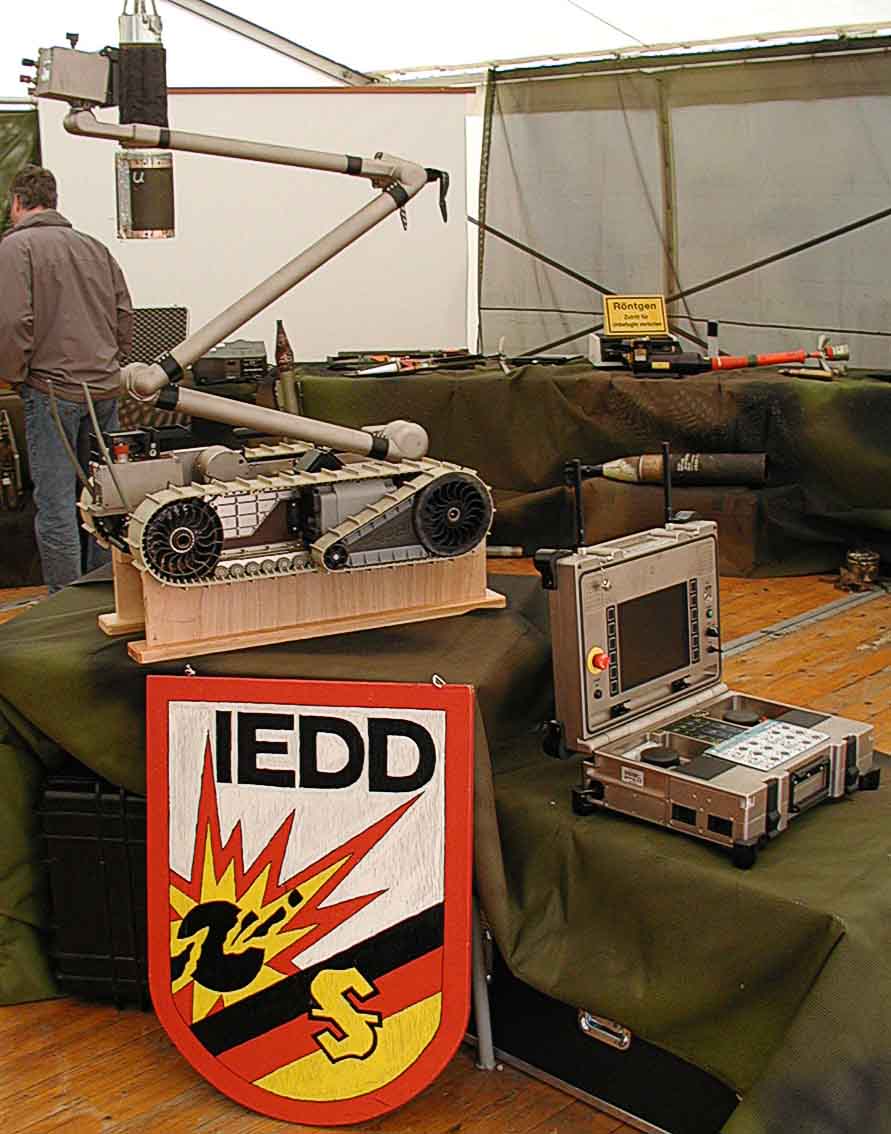
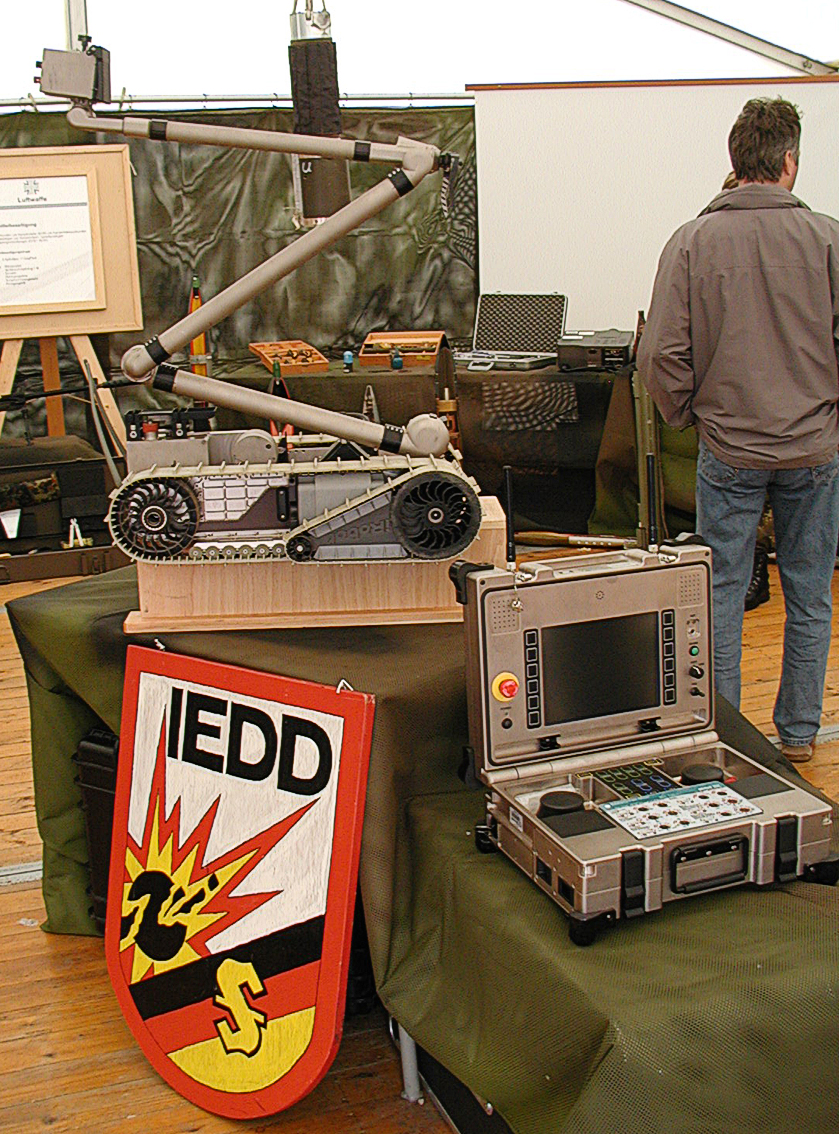
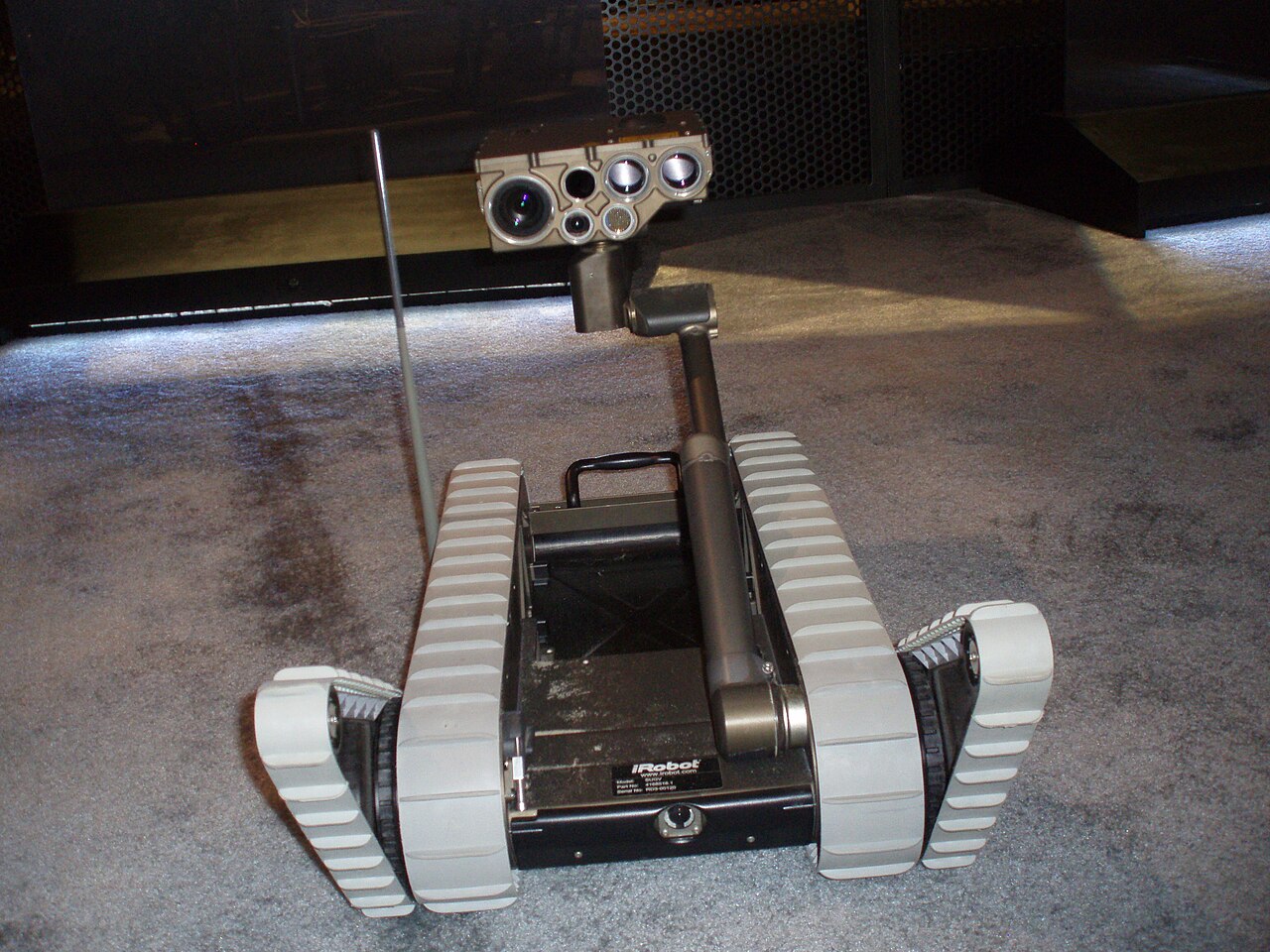
A functional UGV is an integration of several interdependent subsystems. The platform—whether a car, truck, all-terrain vehicle, or articulated multi-unit assembly—houses the locomotive mechanism (tracks, wheels, or legs), the power source (internal combustion engine, battery, or hydrogen fuel cell), and the mounting points for sensors and computing hardware. The sensor suite builds a real-time model of the surroundings, detecting other vehicles, pedestrians, and obstacles while simultaneously fixing the vehicle's position along its navigation path; typical instruments include compasses, odometers, inclinometers, gyroscopes, cameras, laser and ultrasound rangefinders, GPS receivers, and infrared detectors. Control architecture falls into three broad categories: remote operation, where a human pilot makes decisions from visual or sensor feeds; full autonomy, where onboard software handles all decisions; and supervisory control, a hybrid blending both. Communication links and systems-integration features tie everything together. The field spans a wide roster of platforms, from iRobot's PackBot and MacroUSA's Armadillo V2 and Scorpion to Israel Aerospace Industries' G-NIUS Guardium, the U.S. Marine Corps' Gladiator, and Russia's Uran-9 and Nerekhta.
Gallery
Frequently Asked Questions
What is an Unmanned Ground Vehicle (UGV)?
A UGV is a ground-based machine that travels across terrain without carrying a human occupant. It can either navigate on its own or be steered by a remote operator, and it typically carries sensors to perceive its surroundings. These robots serve as the terrestrial counterpart to aerial, underwater, and surface drones.
What is Shakey and why does it matter in UGV history?
Shakey, developed during the 1960s, is widely regarded as the first major milestone in mobile robot research. It was a wheeled platform equipped with a television camera, various sensors, and communication capabilities, laying groundwork for autonomous ground navigation.
Why are UGVs deployed instead of manned vehicles?
Operators choose UGVs when sending a person into the area would be too dangerous, too expensive, logistically impractical, or physically impossible. By removing the human from the vehicle, these machines can operate in environments where crewed platforms would face unacceptable risk.
More in Ground Robots and Military Robots
Spotted an error? Know more?
Reader corrections go straight into our review queue. Suggest an edit · How this site is sourced