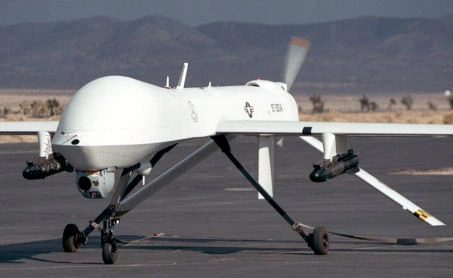
Driverless tractor
An autonomous farm vehicle operating without a human driver.

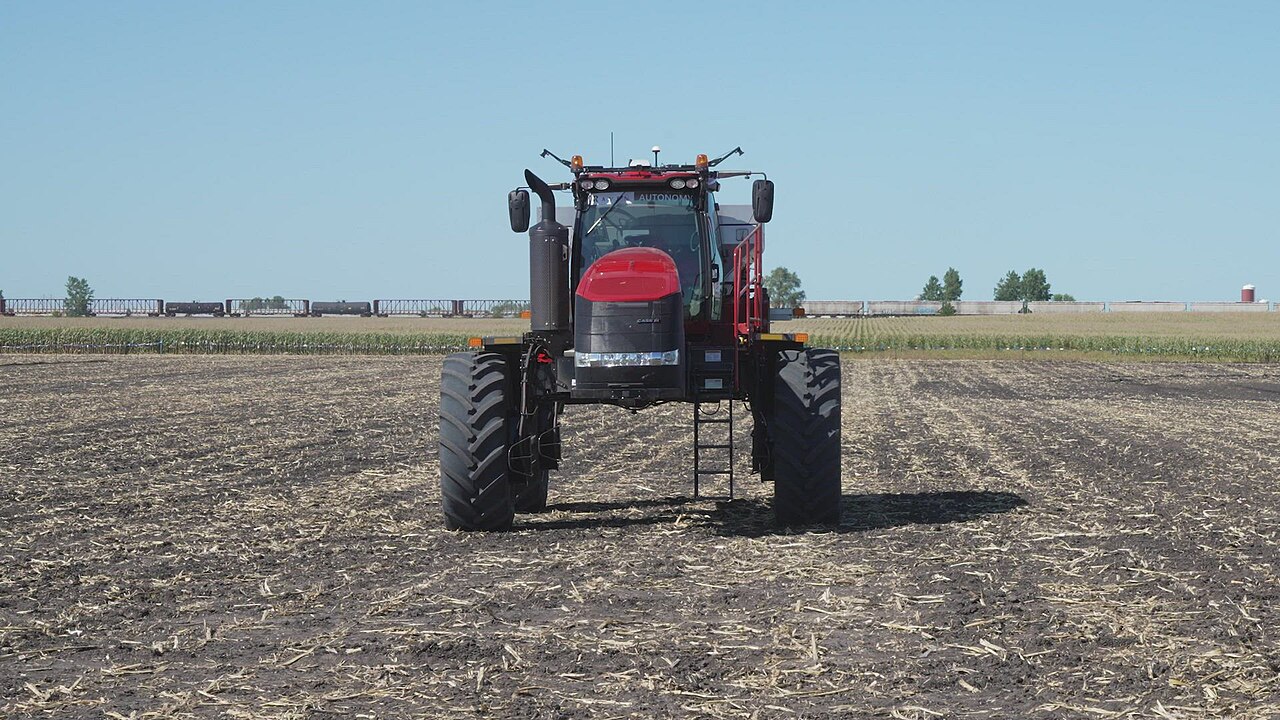
A driverless tractor is an autonomous farm vehicle that delivers a high tractive effort at slow speeds for tillage and other agricultural tasks. It operates without a human inside the tractor itself, using GPS and wireless technologies to independently observe its position, decide speed, and avoid obstacles such as people, animals, or objects in the field. The concept dates back to 1940, but recent advances in unmanned vehicles and agricultural technology have driven its evolution into both fully autonomous and supervised autonomy systems.
Quick Facts
- Earliest concept
- 1940
- Early inventor
- Frank W. Andrew
- Early guidance method
- cable wound around a barrel or fixed wheel
- Major manufacturers
- John Deere
- Autonomous Tractor Corporation
- Fendt
- Case IH
Facts from the source article.
Lore & Background
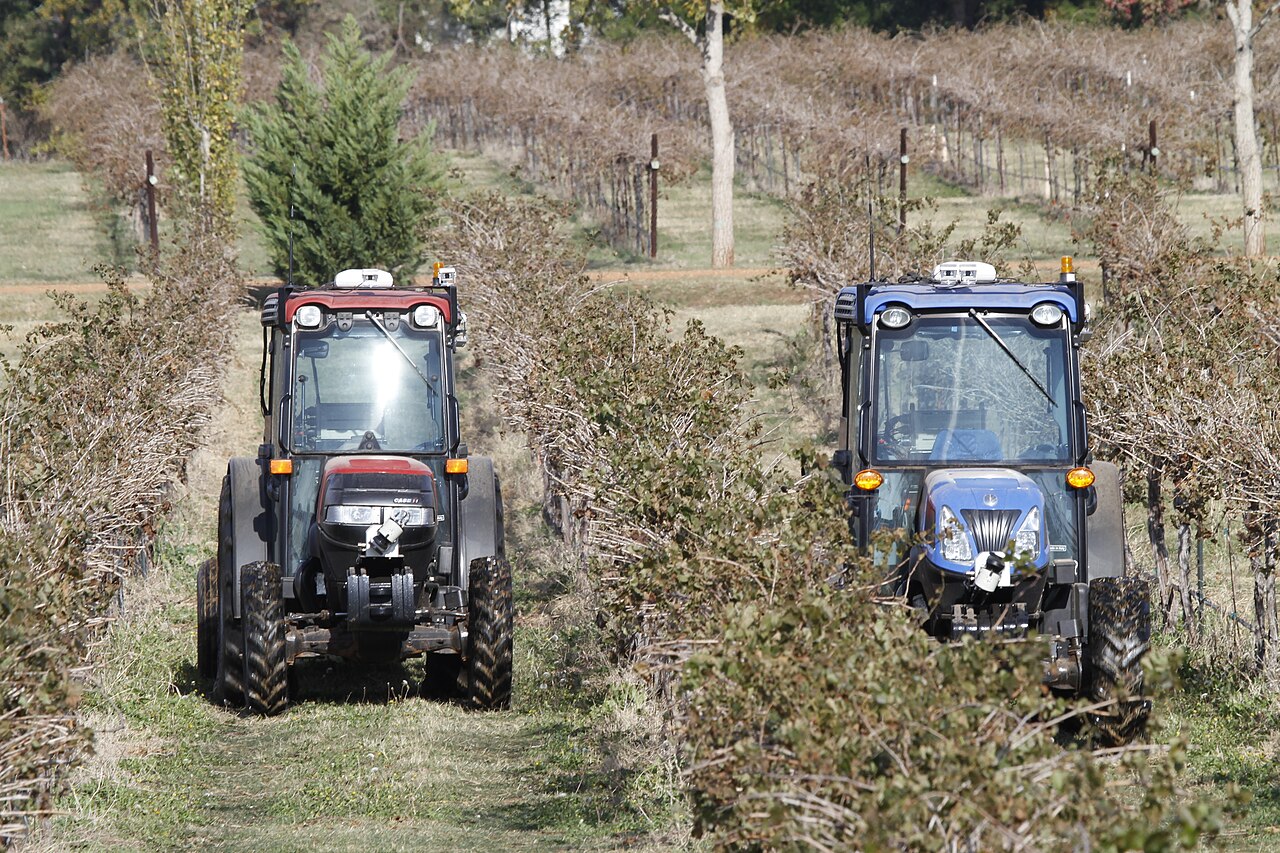
The idea of a driverless tractor has existed since 1940, when Frank W. Andrew invented one guided by a cable wound around a fixed wheel in the field. In the 1950s, Ford developed 'The Sniffer' but never produced it due to the need for underground wires. No major advances occurred until 1994, when engineers at the Silsoe Research Institute created a picture analysis system for a small driverless tractor designed for vegetable and root crops, which could also handle slight headland turns. As of 2008, however, driverless tractor technologies have moved toward autonomy, or independent functioning. Subsequently, the idea of a driverless tractor emerged in 2011 and 2012. Current driverless tractors are split into full autonomy and supervised autonomy. Fully autonomous tractors often navigate using lasers and mobile transponders, or use GPS and radio feedback with automation software. Supervised autonomy uses vehicle-to-vehicle communication, where a lead tractor determines speed and direction transmitted to the driverless unit. Safety sensors stop the tractor if objects such as people or animals are detected.
Reader's Guide
The driverless tractor represents a significant shift in agricultural automation, building on precision agriculture developments from the 1980s. It is part of a broader move toward automation in farming, alongside technologies like automatic milking and automatic strawberry pickers. The technology requires the tractor to follow deterministic tasks, exhibit reactive behavior to unknown situations, and have reflexive responses—ultimately imitating a human's ability to observe spatial position and make speed decisions. Manufacturers such as John Deere, Autonomous Tractor Corporation, Fendt, and Case IH have actively pursued marketable prototypes. John Deere's ITEC Pro guidance product launched in early 2008, and in 2022 the company announced an autonomous tractor controlled from a smartphone. Autonomous Tractor Corporation's SPIRIT driverless tractor was initially designed to follow a manned tractor but moved toward independent functioning. Fendt's GuideConnect model mirrors the movements of a lead tractor. The driverless tractor remains controversial regarding safety and public acceptance, as operating without a driver makes some people nervous. Creating safe technology in all failure scenarios requires extensive programming and time.
Gallery
Frequently Asked Questions
Who first conceived the Driverless tractor and when?
The idea traces back to 1940, when Frank W. Andrew built an early version guided by a cable looped around a barrel or fixed wheel. That rudimentary setup laid the groundwork for the GPS-driven autonomous systems seen in modern farming.
How does a Driverless tractor avoid obstacles and stay on course?
It continuously reads its own position via GPS and wireless signals, then adjusts speed and heading without human input. Built-in perception systems let it detect and route around people, animals, or unexpected objects in the field.
What were some landmark prototypes in Driverless tractor history?
Ford's 'The Sniffer' in the 1950s was one of the first recognizable autonomous farm vehicles, and the Silsoe Research Institute followed with a picture-analysis navigation system in 1994. These milestones bridged the gap between Andrew's cable-guided experiment and today's fully self-driving tractors.
Which companies build Driverless tractors today?
Major players include John Deere, Autonomous Tractor Corporation, Fendt, and Case IH, all offering either fully autonomous or supervised-autonomy models for commercial agriculture. These systems can run completely hands-off or with a remote operator monitoring from outside the vehicle.
More in Ground Robots and Military Robots
Spotted an error? Know more?
Reader corrections go straight into our review queue. Suggest an edit · How this site is sourced