Foster-Miller TALON
Remotely operated tracked robot for reconnaissance, EOD, and combat.
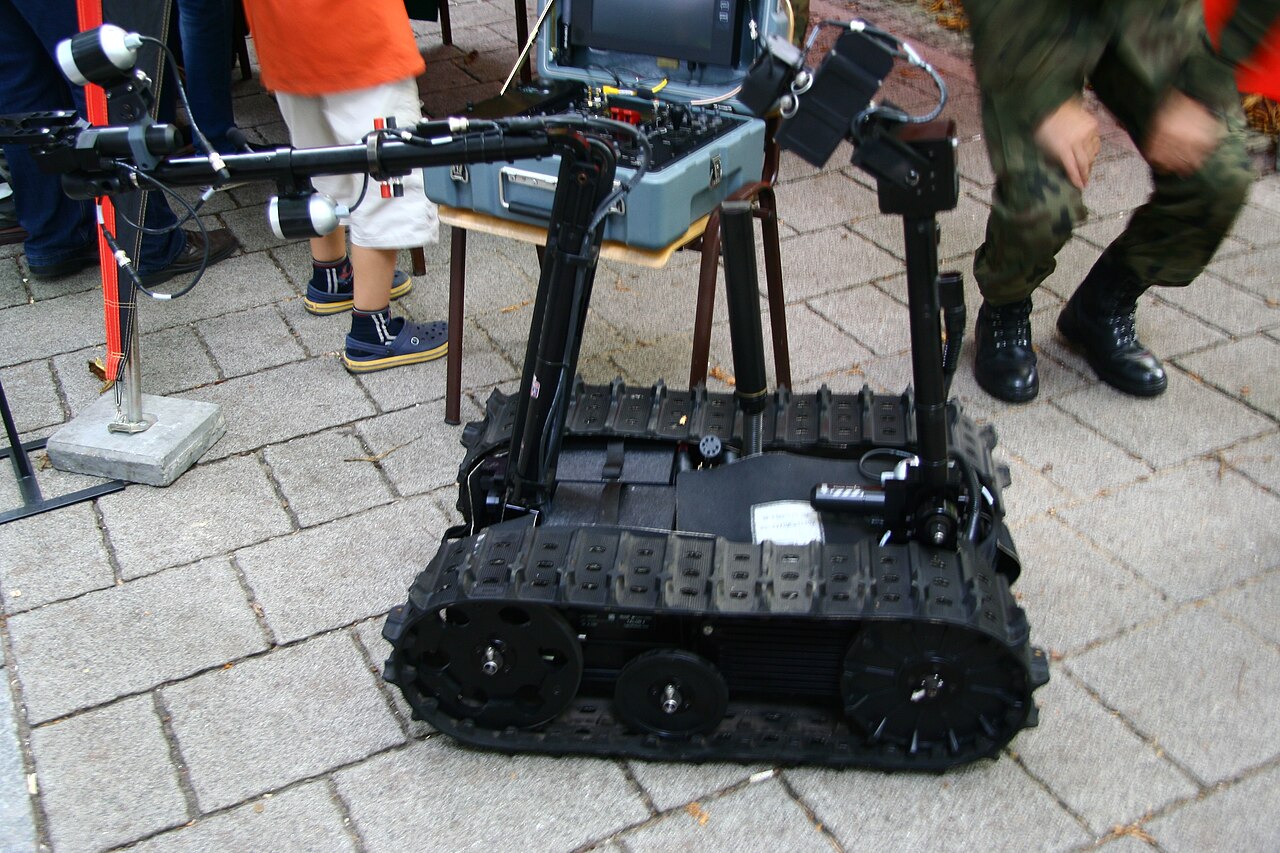
The Foster-Miller TALON is a remotely operated, tracked military robot designed for missions ranging from reconnaissance to combat. It is made by the American robotics company QinetiQ-NA, a subsidiary of QinetiQ. The TALON is notable for being one of the fastest robots in production, capable of traveling through sand, water, and snow, as well as climbing stairs, and for its use in explosive ordnance disposal and armed combat roles.
Quick Facts
- Weight
- Less than 100 lb (60 lb for reconnaissance version)
- Maximum range from operator
- About 3,937 ft / 1.2 km
- Standby duration
- Up to seven days on lithium-ion batteries
- Cost (standard form)
- Approximately $6,000,000
- Deployment start
- 2000
Facts from the source article.
Lore & Background
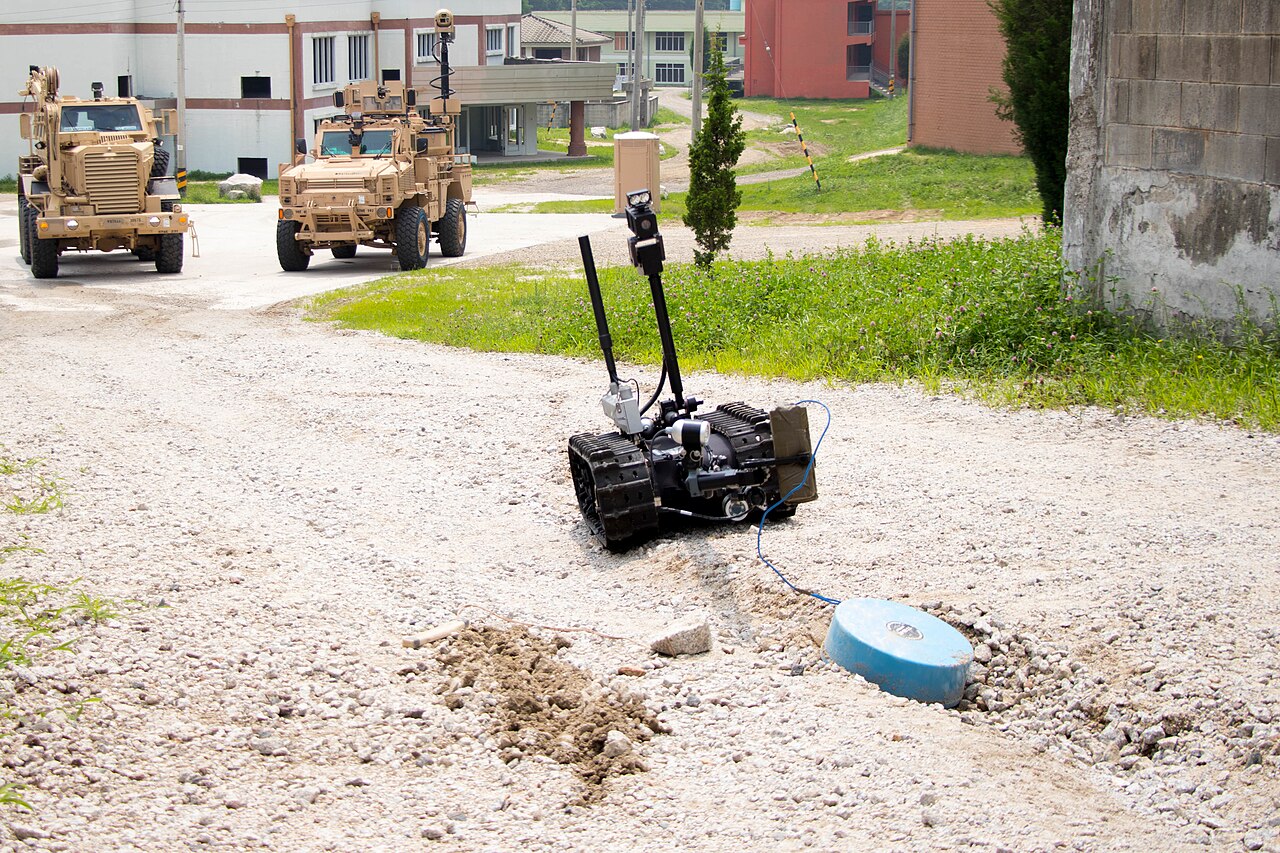
The TALON was deployed in military service starting in 2000, including in Bosnia for movement of munitions and explosive ordnance disposal. It was used at Ground Zero after the September 11 attacks in search and recovery, working for 45 days under contaminated conditions without electronic failure, and was the only robot used in that effort that did not require any major repair. This led to the further development of the HAZMAT TALON. Foster-Miller claims the TALON was used for a classified mission by US Special Forces in the war against the Taliban in Afghanistan, as well as in an EOD role. In Iraq, its standard role has been performing EOD and IED destruction missions, and its combat SWORDS version has been used as a guard protecting front line buildings from attack. According to Foster-Miller, the robot has performed around 20,000 EOD missions in the conflicts in Iraq and Afghanistan.
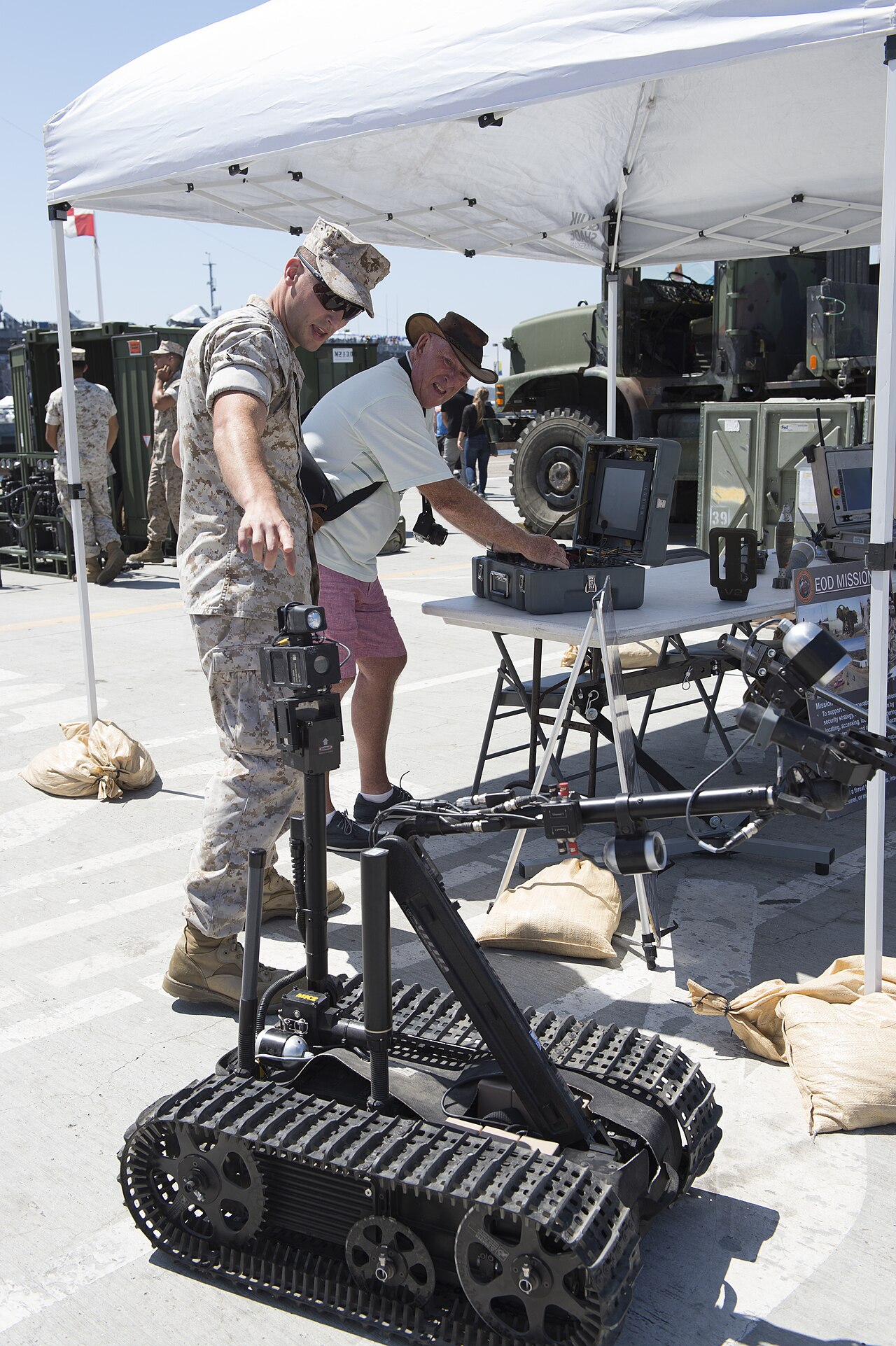
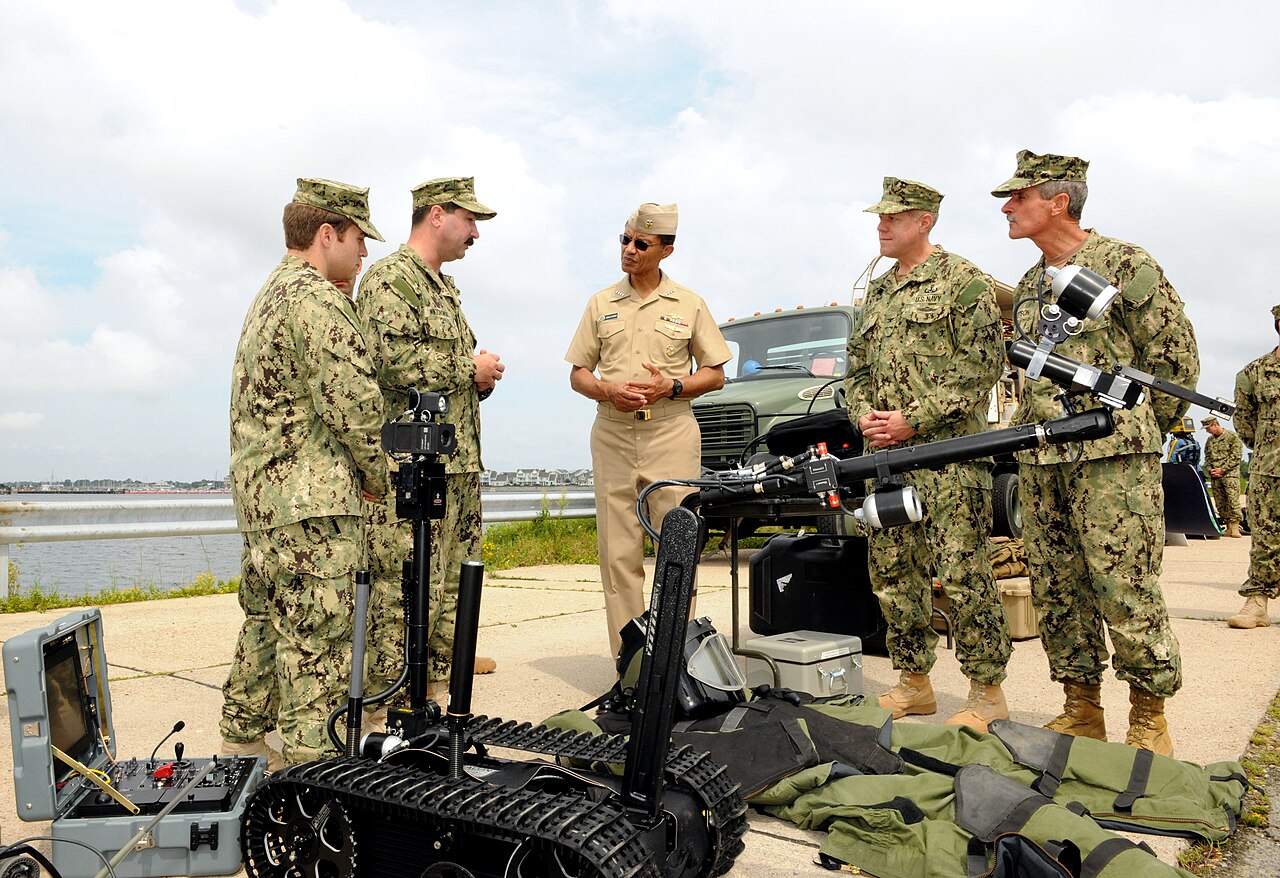
The TALON transmits in color, black and white, infrared, and/or night vision to its operator. It can run off lithium-ion batteries for a maximum of seven days on standby. It has an 8.5-hour battery life at normal operating speeds, two standard lead batteries providing two hours each, and one optional lithium ion providing an additional 4.57 hours. It can withstand repeated decontamination, allowing it to work for extended periods in contaminated areas. The robot is controlled through a two-way radio or fiber-optic link from a portable or wearable Operator Control Unit (OCU) that provides continuous data and video feedback for precise vehicle positioning.
Variants include the Regular (IED/EOD) TALON, which carries sensors and a robotic manipulator; the Special Operations TALON (SOTALON), which lacks the arm but carries day/night color cameras and listening devices; the SWORDS TALON for small arms combat and guard roles; the HAZMAT TALON with chemical, gas, temperature, and radiation sensors; and the C-TALON, designed for land and water environments with high-resolution imaging sonar. As of late 2014, the US Army was refurbishing 353 Talon IV robots, with 296 going to Army engineers and 57 to the Army National Guard.
Reader's Guide
The Foster-Miller TALON represents a significant step in the integration of unmanned ground vehicles into military operations, particularly in hazardous environments. Its use at Ground Zero after the September 11 attacks demonstrated its durability and reliability in contaminated conditions, leading to specialized variants like the HAZMAT TALON. The robot's deployment in Bosnia, Afghanistan, and Iraq for explosive ordnance disposal and IED destruction missions—numbering around 20,000 missions according to Foster-Miller—underscores its role in reducing risk to personnel. The SWORDS variant marked the first instance of robots carrying guns into battle, though the US Army never authorized their use in combat. The TALON's adaptability across reconnaissance, EOD, combat, and HAZMAT roles, along with its ability to operate in diverse terrains and conditions, has made it a foundational platform for subsequent systems like the Modular Advanced Armed Robotic System (MAARS). Its acquisition by the Smithsonian Institution and display at the National Infantry Museum reflect its historical significance in military robotics.
Engineering for the Harsh Front
The Foster-Miller TALON is a tracked, remotely piloted ground vehicle built by QinetiQ-NA, the North American arm of the British defense firm QinetiQ. Foster-Miller has long marketed it as one of the quickest operational robots in service, capable of crossing sand, wading through water, plowing over snow, and even climbing staircases—terrain that stumps many wheeled platforms. Its sensor suite transmits color, black-and-white, infrared, and night-vision imagery back to an operator stationed up to roughly 1,200 meters away, communicating over a two-way radio or fiber-optic link through a portable or wearable control unit. Power comes from a combination of two standard lead-acid batteries delivering about two hours each and an optional lithium-ion pack adding nearly four and a half hours, yielding roughly 8.5 hours of active operation or up to seven days on standby. The chassis weighs under 45 kilograms in its standard configuration, dropping to 27 kilograms for the lighter reconnaissance build, and houses a cargo bay that accepts a range of sensor payloads. The standard unit carries a price tag near six million dollars.
A Family of Specialized Platforms
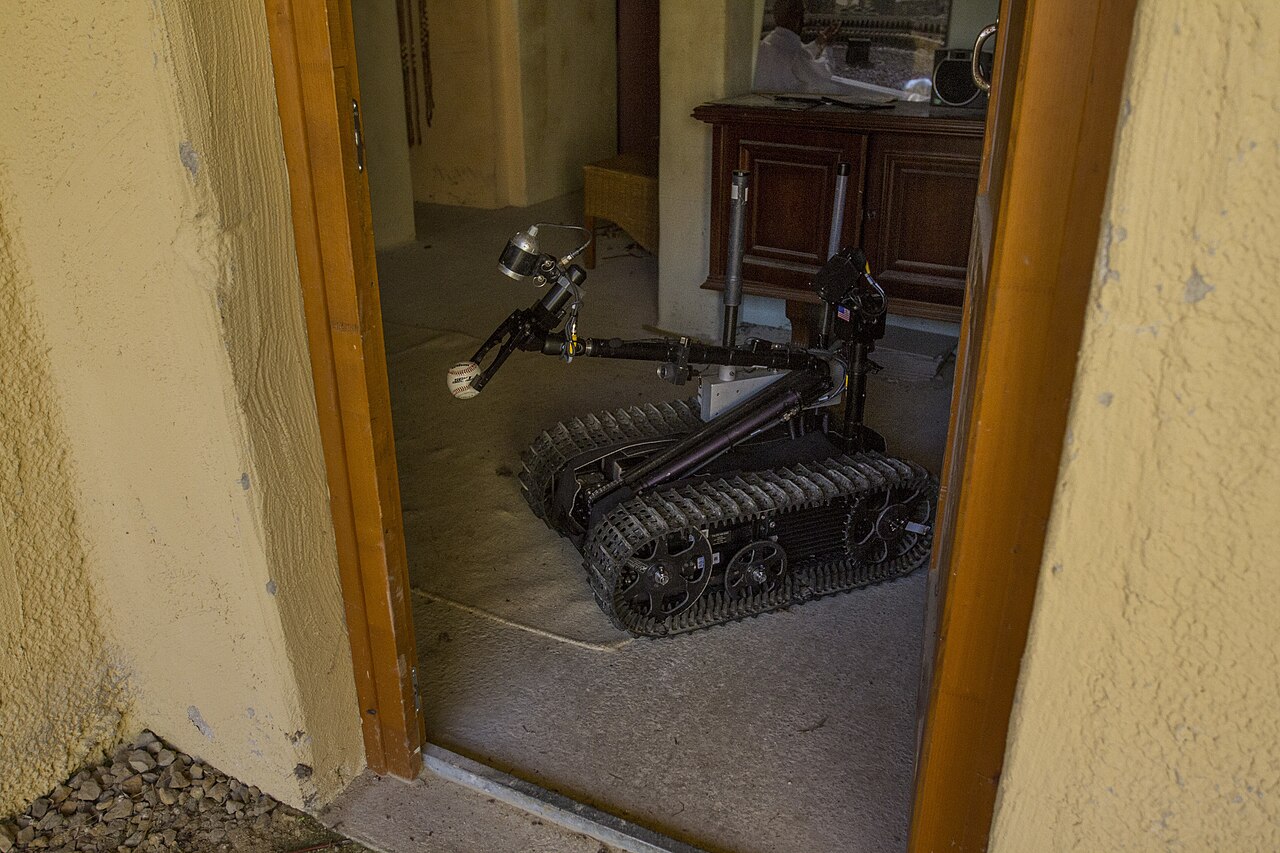
Rather than a single-purpose machine, the TALON exists as a family of variants tailored to distinct tactical needs. The standard IED/EOD model pairs its sensor array with a robotic manipulator arm, letting soldiers approach and neutralize improvised explosive devices without putting a body in harm's way. The Special Operations TALON, or SOTALON, strips out that arm to save weight, replacing it with day-and-night color cameras and listening microphones for stealthy reconnaissance. The HAZMAT variant mounts chemical, gas, temperature, and radiation detectors whose readings stream in real time to a hand-held display, and it has been evaluated by the U.S. Army's Armament Research, Development and Engineering Center. The C-TALON extends the platform into amphibious territory, engineered for turbulent coastal waters, limited-access harbors, and open water, and it carries a high-resolution imaging sonar. Finally, the SWORDS configuration bolts a weapons system onto the same tracked chassis, a topic that generated considerable controversy when the first armed units reached Iraq.
The SWORDS Experiment and the Question of Lethal Autonomy
The Special Weapons Observation Reconnaissance Detection System, known as SWORDS, represented Foster-Miller's boldest step: mounting a full weapons package on the TALON chassis. The armory options ranged from an M16 rifle and a 5.56 mm M249 SAW to a 7.62 mm M240, a .50-caliber M82 Barrett, a six-barreled 40 mm grenade launcher, and a quad 66 mm M202A1 FLASH incendiary. At roughly $230,000 per unit, with mass-production estimates between $150,000 and $180,000, the system was still soldier-operated rather than autonomous, piloted from a small console. Foster-Miller was even prototyping a "Game Boy"-style controller paired with virtual-reality headsets for future operators. On August 2, 2007, three SWORDS units armed with M249 machine guns were sent to Iraq, marking the first time robots carrying firearms entered a combat theater. Yet the U.S. Army never issued authorization to fire, so the weapons remained unused. Funding was cut after those initial three deployments, and Foster-Miller pivoted toward a successor called the Modular Advanced Armed Robotic System, or MAARS.
Provenance, Service Record, and Institutional Recognition
The TALON has been in continuous military service since 2000. Its earliest recorded operations came in Bosnia, where it moved munitions and handled grenade disposal. After the September 11 attacks, it was among the robots sent into the rubble at Ground Zero for search and recovery; it worked for 45 days under contaminated conditions without a single electronic failure, making it the only robot in that effort to avoid major repairs. That field performance directly inspired the HAZMAT variant. Foster-Miller also claims the robot supported a classified U.S. Special Forces mission against the Taliban in Afghanistan, and in Iraq its standard role centered on EOD and IED destruction. Across the two conflicts, the TALON family is credited with roughly 20,000 EOD missions. By late 2014, the Army was refurbishing 353 Talon IV units—296 destined for Army engineers and 57 for the National Guard. The platform's historical significance is now recognized in museums: the Smithsonian Institution acquired a SWORDS robot by August 2013, and another sits on display at the National Infantry Museum in Fort Benning, Georgia.
Gallery
More in Ground Robots and Military Robots
Spotted an error? Know more?
Reader corrections go straight into our review queue. Suggest an edit · How this site is sourced