Legged Squad Support System
Quadruped robot designed to carry squad equipment autonomously.

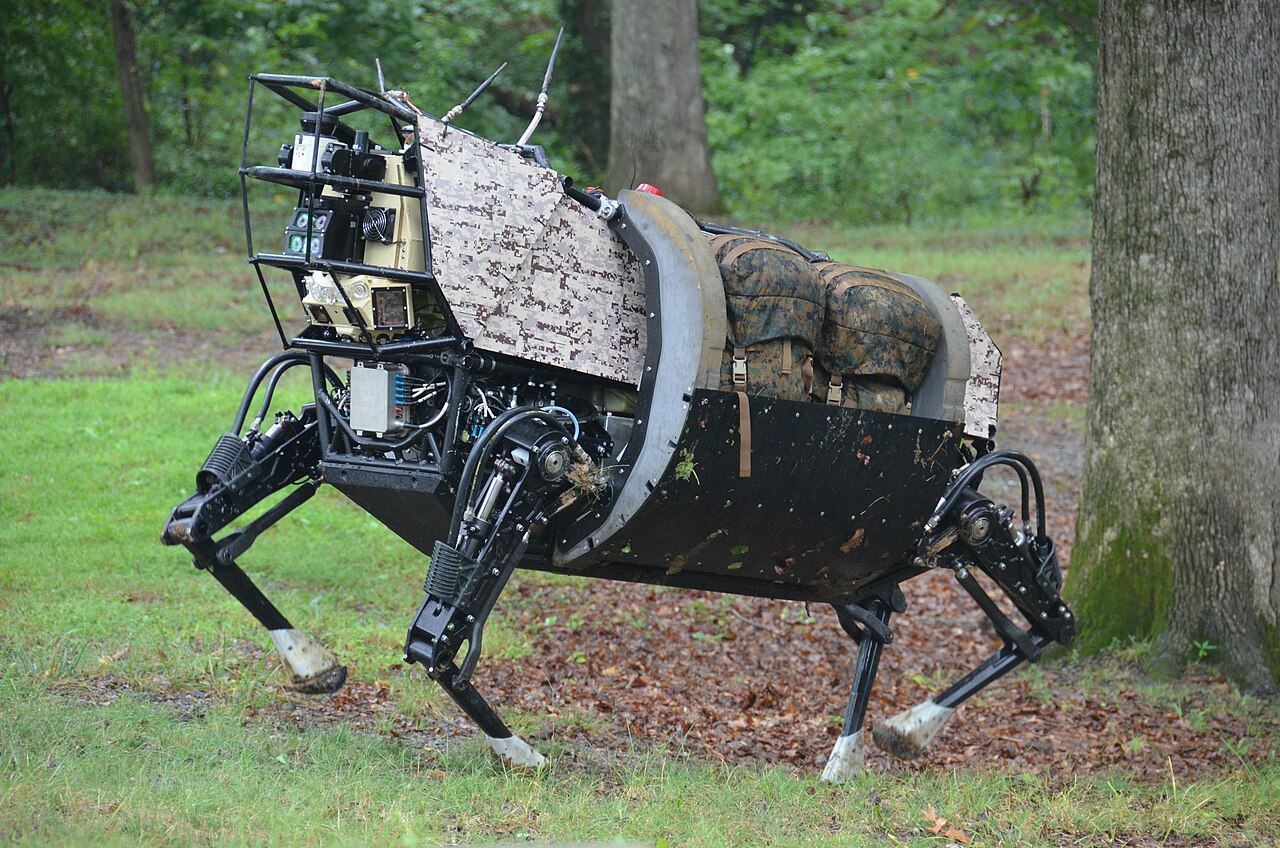
The Legged Squad Support System (LS3) was a DARPA project to create a four-legged robot that could autonomously carry gear for a squad of soldiers or marines. Toughened for military use like its predecessor BigDog, it was built to handle hot, cold, wet, and dirty conditions. The LS3 was placed into storage at the end of 2015.
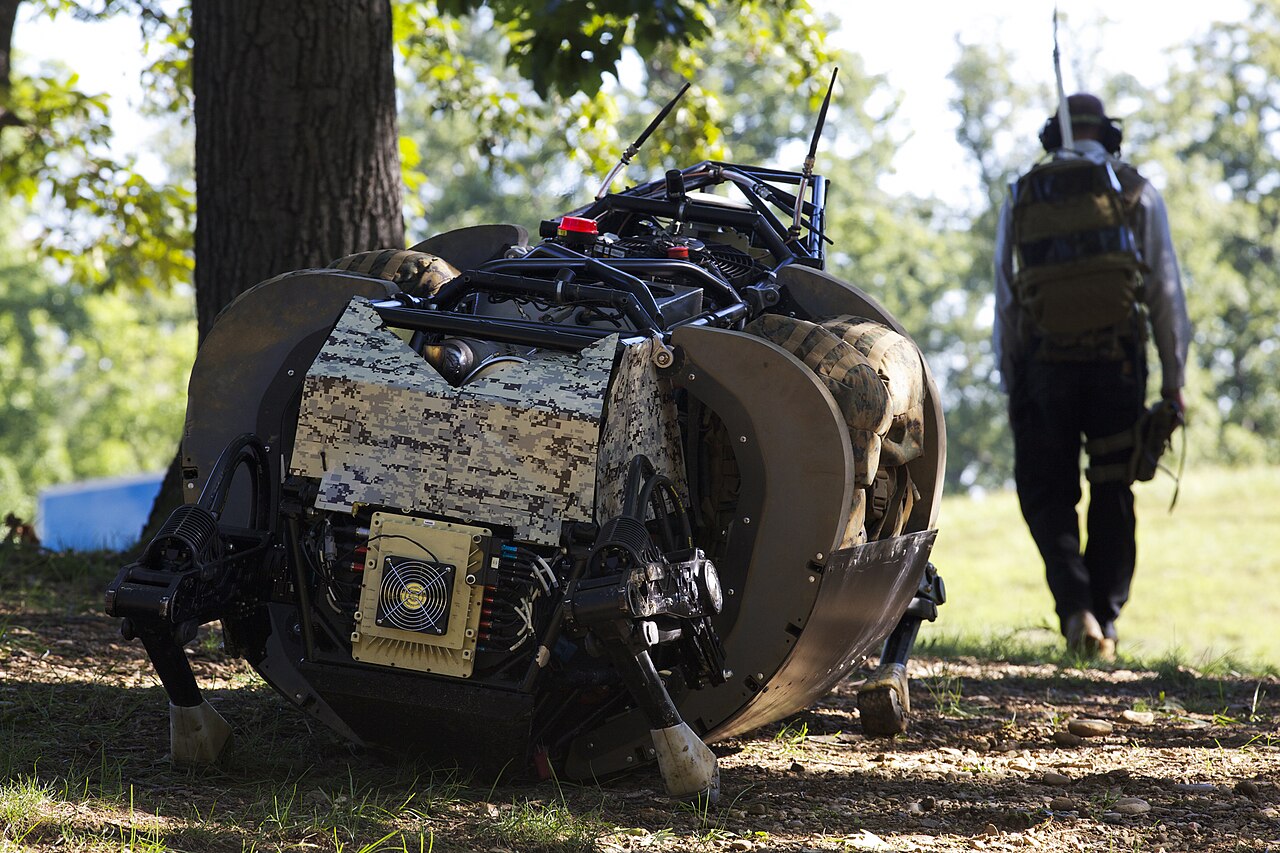
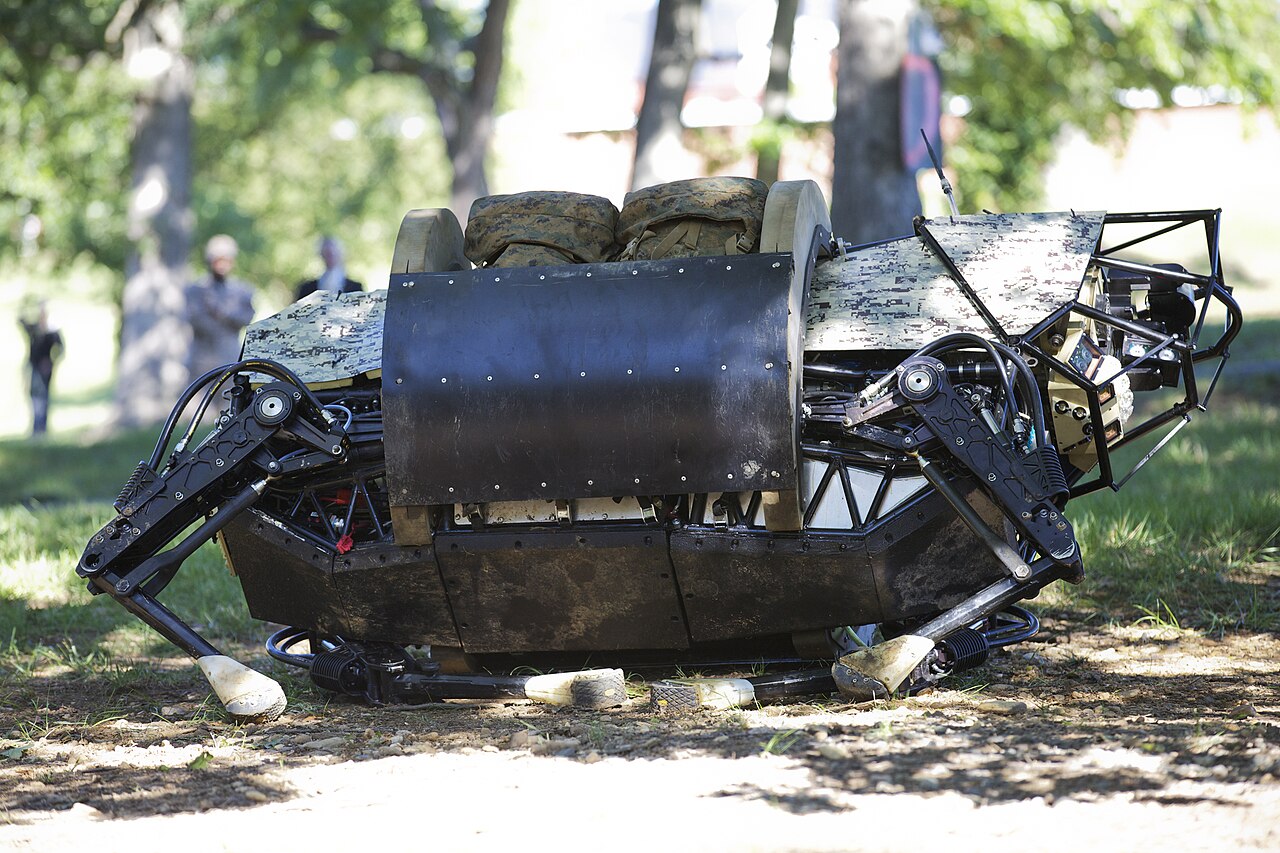
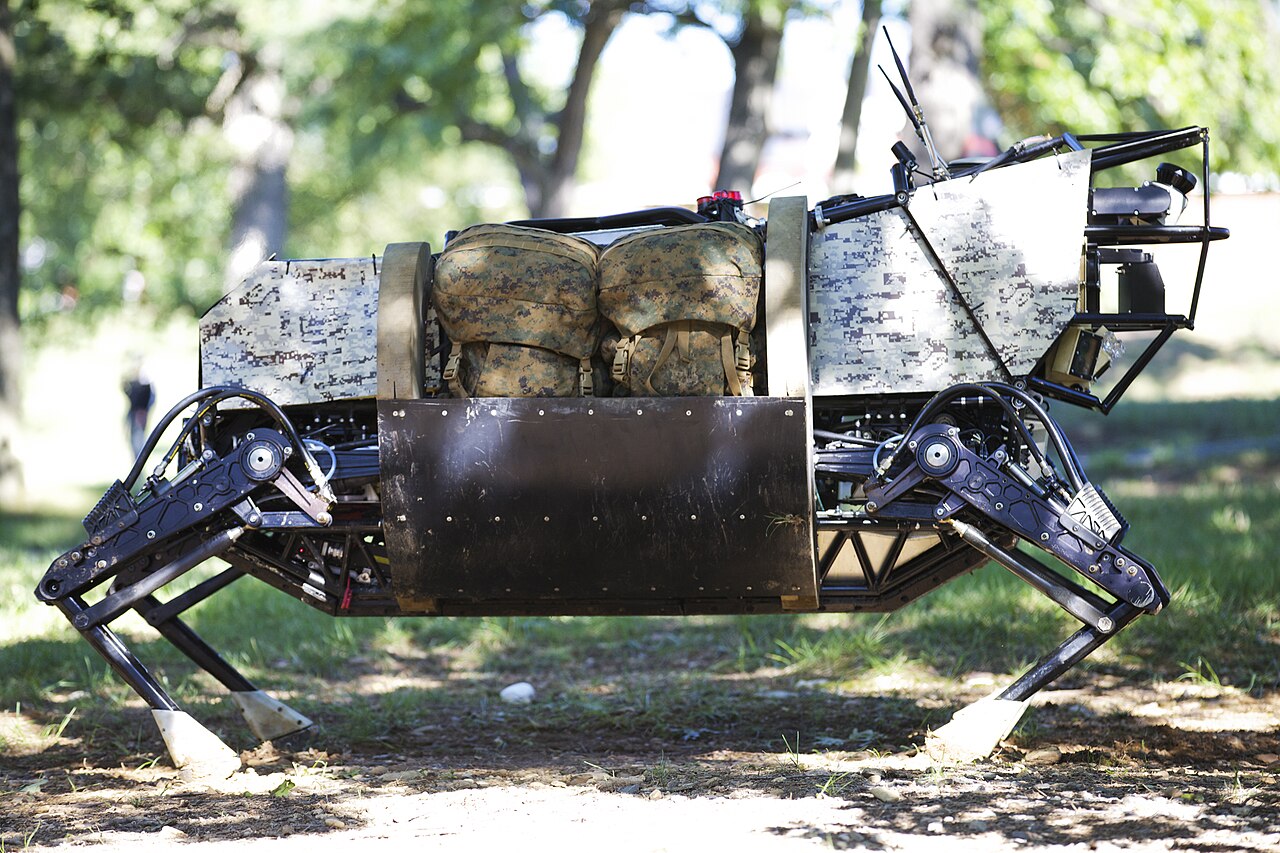
The goal was for the LS3 to go wherever dismounted troops went, do what they did, and work alongside them. It was designed to carry 400 pounds of squad equipment, sense and navigate terrain, move nimbly, and operate quietly when needed. Roughly the shape and size of a horse, it used a stereo vision system with two cameras mounted in its "head" and a LIDAR component to follow a human leader and record camera intelligence. The military variant measured 2.5 feet wide, 7.5 feet long, 5 feet tall, and weighed 800 pounds—more than twice as big and three times heavier than BigDog.
Boston Dynamics received the initial contract on December 3, 2009. The LS3, also called AlphaDog, evolved from BigDog. The contract called for an operational demonstration of two units with troops in 2012. DARPA conducted the first outdoor exercise on the latest version in February 2012, where it successfully demonstrated full capabilities during a hike over tough terrain. After that, an 18-month plan to complete development and refine key capabilities began in summer 2012.
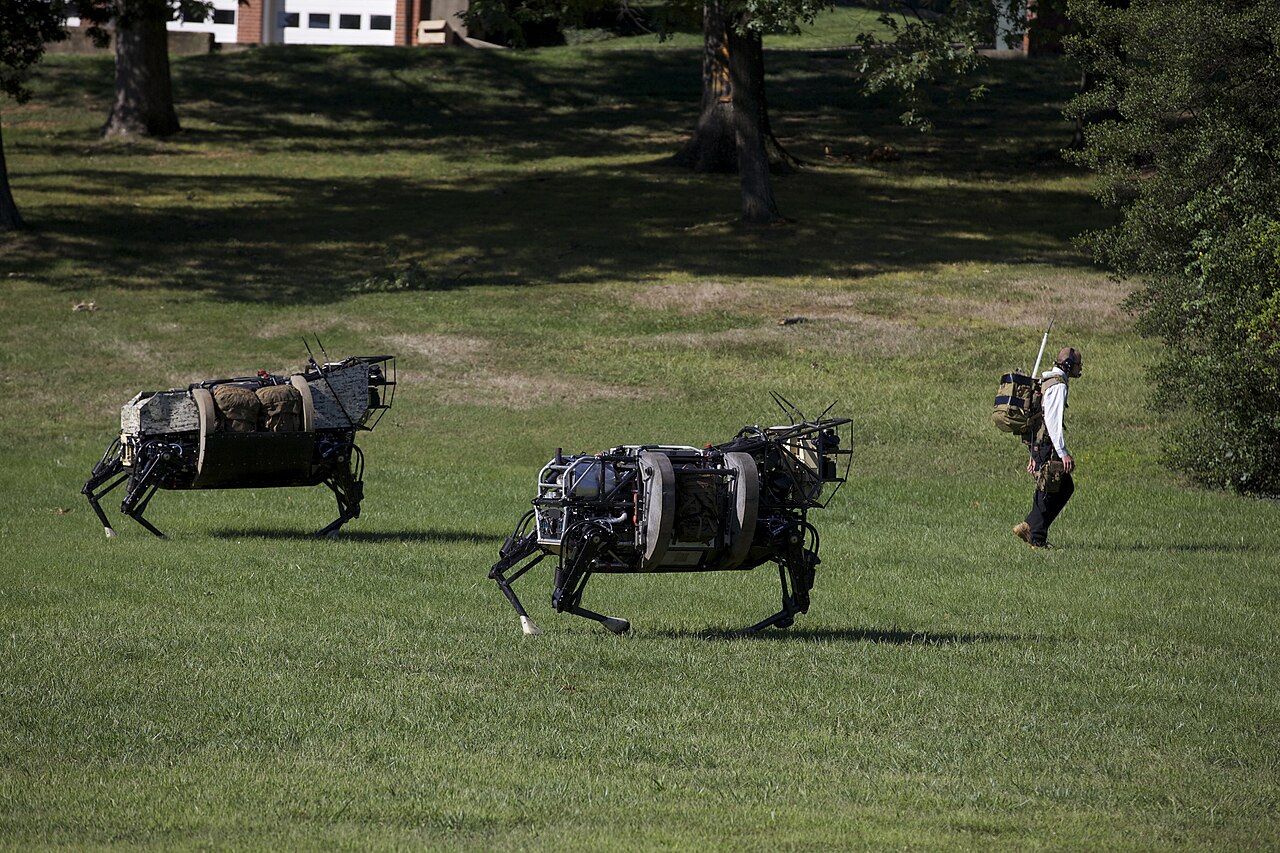
On September 9, 2012, two LS3 prototypes were tested outdoors. They completed trotting and jogging mobility runs, perception visualization demonstrations, and soldier-bounded autonomy demonstrations. They were about ten times quieter than the original platform thanks to an exhaust silencer. Improvements included a 1 to 3 mph walk and trot over rough, rocky terrain, an easy transition to a 5 mph jog, and a 7 mph run on flat surfaces.
In early December 2012, the LS3 walked through woods at Fort Pickett, Virginia, controlled by voice commands. Ten commands were understood: "engine on" activated it, "follow tight" made it walk the same path as the controller, "follow corridor" made it generate its own efficient path, and there were basic orders like "stop" and "engine off." Further work aimed to improve mobility, such as traversing deep snow-covered hills and avoiding gunfire and bombs. DARPA intended to supply a Marine company with an LS3 by 2014.
Quick Facts
- Contract awarded
- December 3, 2009
- Contractor
- Boston Dynamics
- Weight
- 800 lb (362 kg)
- Payload capacity
- 400 lb / 181 kg
- Speed range
- 1–3 mph (1.61–4.83 km/h) walk/trot, 5 mph (8.05 km/h) jog, 7 mph (11.3 km/h) run
Facts from the source article.
Lore & Background
The initial contract for the Legged Squad Support System was awarded to Boston Dynamics on December 3, 2009. The constant evolution of the BigDog led to the development of the LS3, also known as AlphaDog. The contract schedule called for an operational demonstration of two units with troops in 2012. DARPA carried out the first outdoor exercise on the latest variation of the LS3 in February 2012, with it successfully demonstrating its full capabilities during a planned hike encompassing tough terrain. Following its initial success, an 18-month plan was unveiled to complete overall development and refine key capabilities, due to start in summer 2012.
On September 9, 2012, two LS3 prototypes were demonstrated in an outdoor test. They completed trotting and jogging mobility runs, perception visualization demonstrations, and soldier-bounded autonomy demonstrations. They were roughly 10 times quieter than the original platform, using an exhaust silencer. In early December 2012, the LS3 performed walks through woods in Fort Pickett, Virginia, with a human controller giving voice commands. There were ten commands the system could understand, including 'engine on,' 'follow tight,' 'follow corridor,' 'stop,' and 'engine off.' Continued work aimed to improve mobility over deep snow-covered hills and to avoid gunfire and bombs on the battlefield.
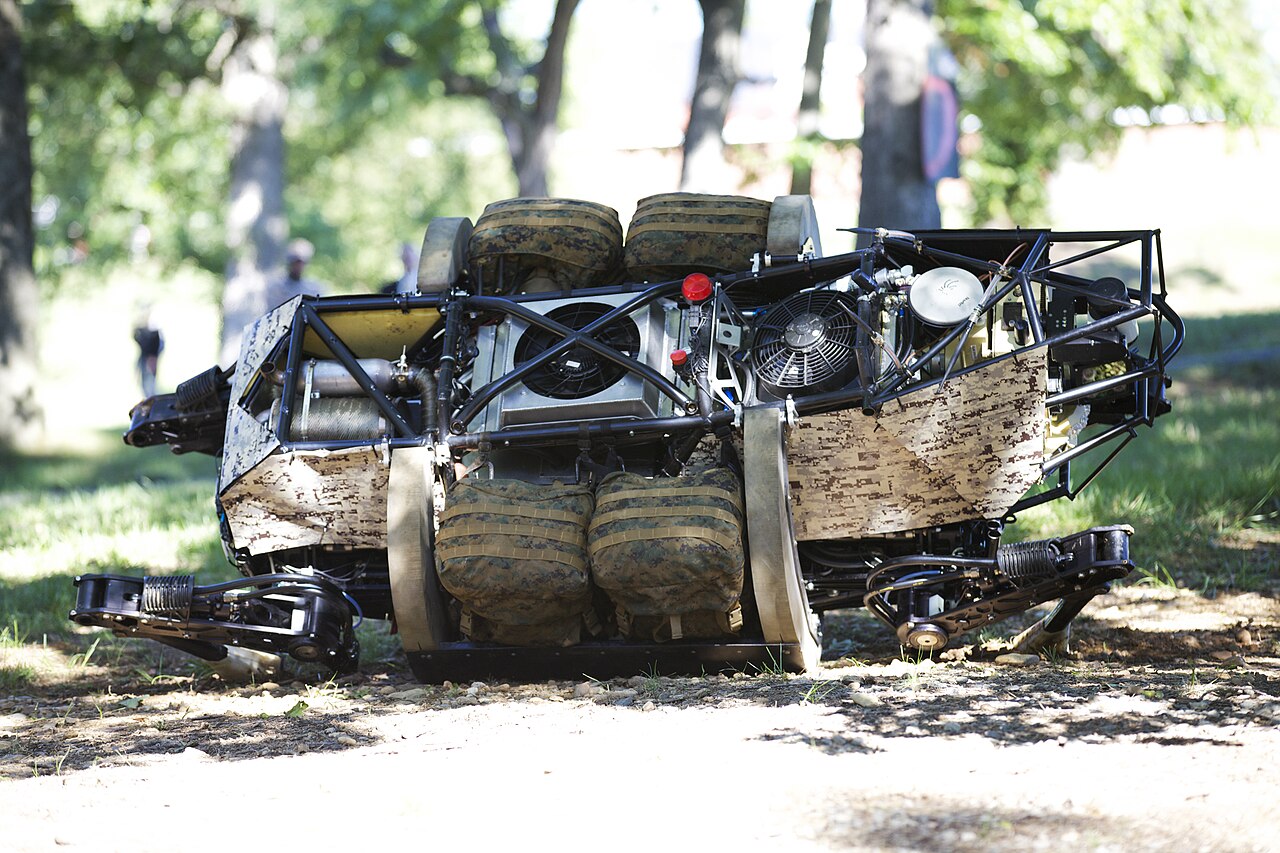
The LS3 was used by Marines in July 2014 during Exercise RIMPAC 2014. One company nicknamed the machine 'Cujo' and used it to resupply platoons in places difficult to reach by all-terrain vehicles. Operators noted it could traverse 70–80 percent of terrain but had problems negotiating obliques and contours of hills. When it fell over, the system could right itself most of the time; when it needed assistance, it required only one person because it was designed to be easily rolled upright. Due to loud noise during movement and difficulty traversing certain terrains, the LS3 was used as a logistical tool rather than a tactical one.
Reader's Guide
The Legged Squad Support System represented a significant step in autonomous ground robotics for military logistics, but it did not enter service. By late 2015, the Marines had put the LS3 into storage because of limitations including loud noise, challenges in repairing it if it breaks, and how to integrate it into a traditional Marine patrol. Since 2010, development had cost $42 million total. No future experiments or upgrades are planned, and it would take a new contract and interest from Marine Corps top brass to resurrect the program. Although creation of the LS3 did not result in accepting it into service, it did provide important insights about autonomous technology. The system demonstrated the feasibility of a legged robot carrying heavy loads over rough terrain while following a human lead, and its voice command interface pointed toward more intuitive soldier-robot interaction. Its participation in the U.S. Army's Squad Multipurpose Equipment Transport (S-MET) program in October 2013 showed the military's ongoing interest in robotic load carriers, even as the LS3 itself was ultimately shelved.
Gallery
Frequently Asked Questions
What is the Legged Squad Support System (LS3)?
The LS3 is a four-legged military robot developed under a DARPA initiative to act as an autonomous pack mule for infantry squads. It was engineered to follow dismounted troops across varied terrain and haul their shared gear without human intervention.
How big is the LS3 and how much can it carry?
The robot measures roughly 5 feet tall, 7.5 feet long, and 2.5 feet wide, with a body mass of about 800 pounds. Despite its own weight, it was built to haul up to 400 pounds of squad equipment.
How fast can the LS3 move and can it operate quietly?
The robot could walk or trot at 1–3 mph, jog at 5 mph, and sprint at up to 7 mph. It was also designed to move quietly when stealth was required by the squad it supported.
What happened to the LS3 after development?
The program was wound down and the LS3 was placed into storage at the end of 2015. It never entered active military service alongside a squad unit.
More in Ground Robots and Military Robots
Spotted an error? Know more?
Reader corrections go straight into our review queue. Suggest an edit · How this site is sourced