Automated guided vehicle
A portable robot that follows infrastructure-based paths for material transport.

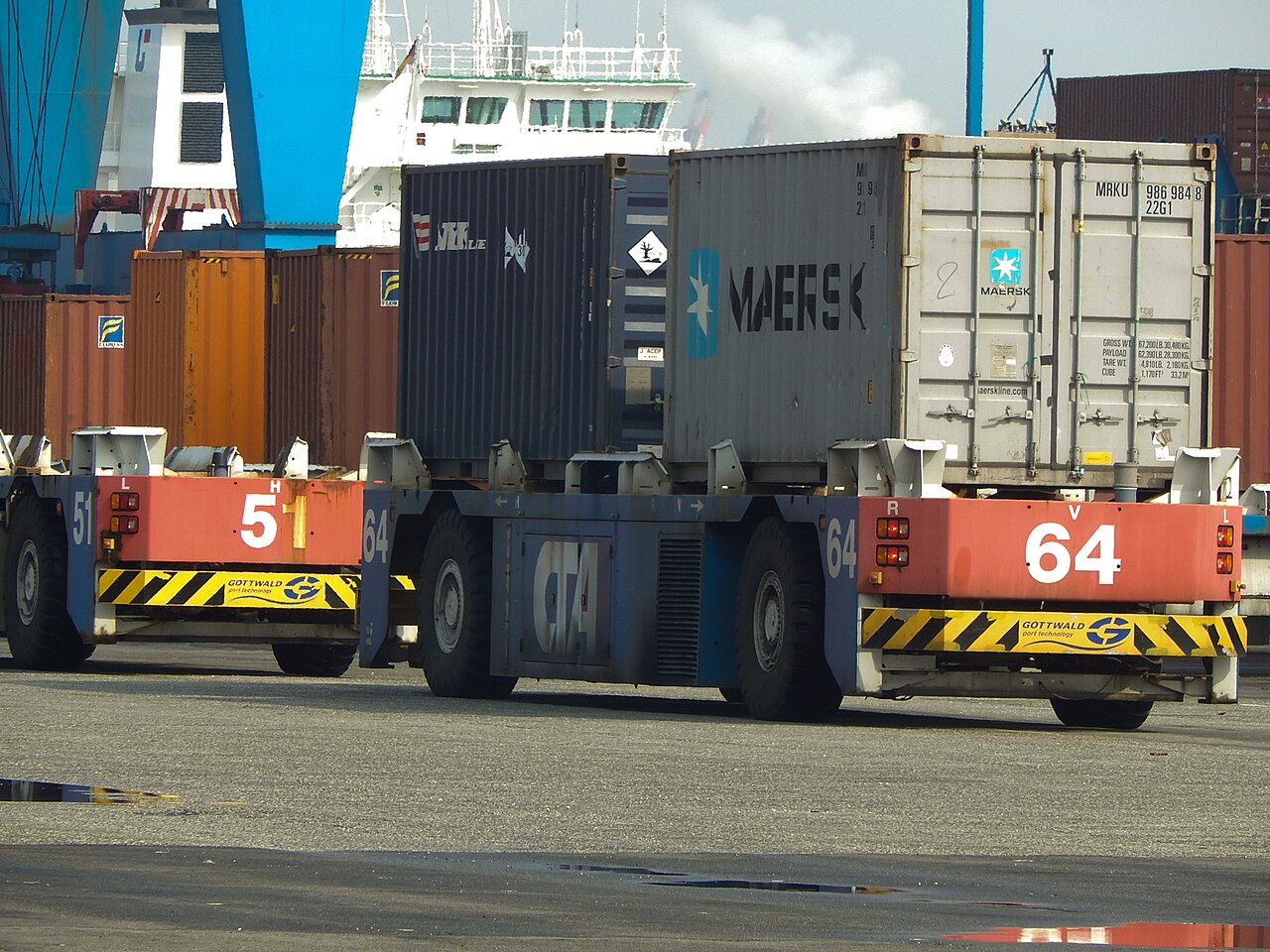
An automated guided vehicle (AGV) is a portable robot that follows marked lines, wires, radio waves, vision cameras, magnets, or lasers for navigation. Unlike an autonomous mobile robot (AMR), an AGV relies on extra infrastructure in its environment. AGVs are most often used in industrial applications to transport heavy materials around large buildings such as factories or warehouses, and their application broadened during the late 20th century.
Quick Facts
- First market introduction
- 1950s
- First developer
- Barrett Electronics of Northbrook, Illinois
- First type
- tow truck following a wire in the floor
- Alternative names
- laser guided vehicle (LGV)
- Fahrerloses Transportsystem (FTS)
- förarlösa truckar
- automated guided cart (AGC)
- Navigation methods
- wired
- optical guidepath
- laser target
- inertial (gyroscopic)
- natural feature
- vision guidance
- geoguidance
- Steering control types
- differential speed control, steered wheel control
Facts from the source article.
Lore & Background
The first AGV was brought to market in the 1950s by Barrett Electronics of Northbrook, Illinois, and was simply a tow truck that followed a wire in the floor instead of a rail. Out of this technology came a new type of AGV that follows invisible UV markers on the floor instead of being towed by a chain. The first such system was deployed at the Willis Tower (formerly Sears Tower) in Chicago, Illinois to deliver mail throughout its offices. Over the years the technology has become more sophisticated, and today automated vehicles are mainly laser navigated, e.g., LGV (Laser Guided Vehicle).
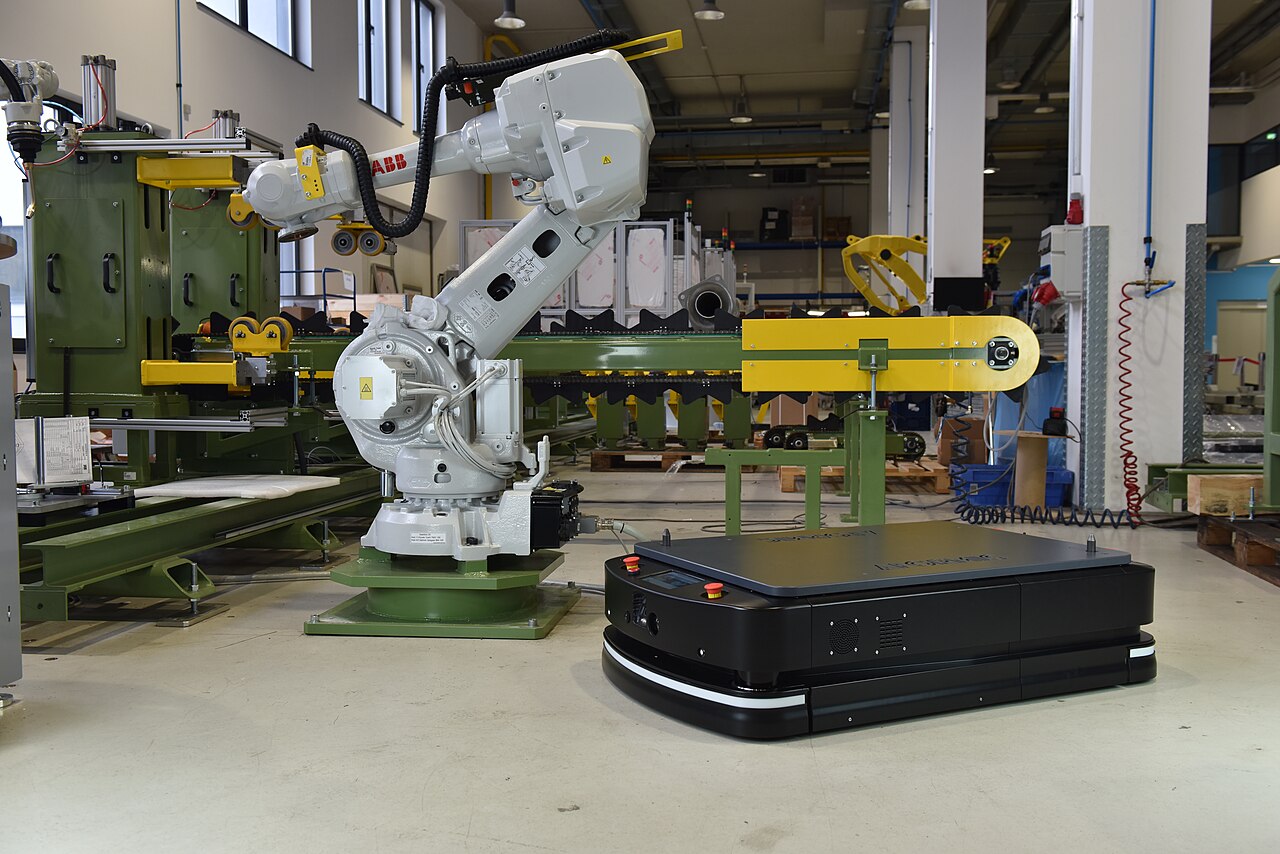
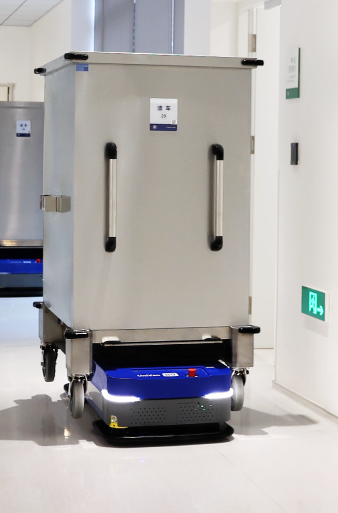
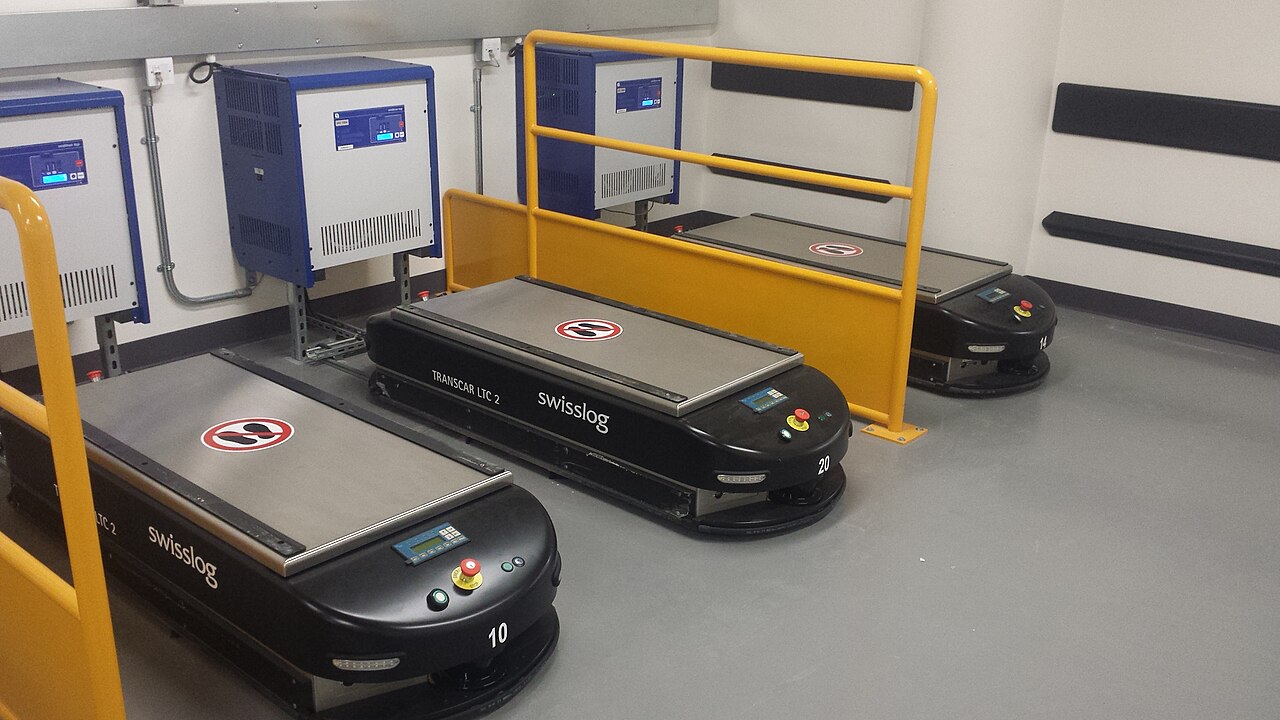
AGVs can tow objects behind them in trailers to which they can autonomously attach, and the trailers can be used to move raw materials or finished products. The AGV can also store objects on a bed, with objects placed on a set of motorized rollers (conveyor) and then pushed off by reversing them. AGVs are employed in nearly every industry, including pulp, paper, metals, newspaper, and general manufacturing, as well as transporting materials such as food, linen or medicine in hospitals. Lower cost versions are often called Automated Guided Carts (AGCs) and are usually guided by magnetic tape.
Navigation methods include wired guidance (a wire below the floor generating a magnetic field), optical guidepath (UV-reactive tape or paint), laser target navigation (using retro-reflective markers and laser scanners), inertial (gyroscopic) navigation with floor transponders, natural feature navigation using range-finding sensors and probabilistic techniques, vision guidance using stereo cameras and Evidence Grid technology, and geoguidance which recognizes columns, racks and walls without infrastructure. Steering control can be differential speed control (two independent drive wheels) or steered wheel control (similar to a car or three-wheeled forklift).
Reader's Guide
The automated guided vehicle has become a foundational technology in modern industrial logistics, playing an important role in the design of new factories and warehouses. Its significance lies in its ability to safely move goods to their rightful destination without requiring a human driver, operating in environments ranging from tight aisles to extreme temperatures. The evolution from simple wire-following tow trucks to laser-navigated systems that communicate with other robots demonstrates a steady increase in capability and flexibility. In an automated process, LGVs are programmed to communicate with other robots to ensure product is moved smoothly through the warehouse, whether being stored for future use or sent directly to shipping areas. The development of natural feature and vision guidance systems has reduced the need for environmental modifications, allowing quicker installation and less downtime. The technology's legacy includes its widespread adoption across industries such as pulp, paper, metals, newspaper, general manufacturing, and healthcare, where it transports food, linen, or medicine. The AGV's ability to handle failure without bringing down the entire manufacturing operation, by planning paths around failed devices, has made it a resilient component of automated production systems.
Did You Know?
- An AGV can also be called a laser guided vehicle (LGV), and in Germany it is known as Fahrerloses Transportsystem (FTS).
- Vision-guided AGVs use Evidence Grid technology, invented by Dr. Hans Moravec at Carnegie Mellon University.
- Inertial navigation for AGVs can operate in nearly any environment including tight aisles or extreme temperatures, with a margin of error of ±1 inch.
Gallery


Frequently Asked Questions
What is an Automated Guided Vehicle (AGV)?
An AGV is a mobile robot built to haul heavy loads through indoor spaces like warehouses and factories. It moves by detecting external cues—such as floor markings, embedded wires, or laser targets—rather than planning its own route.
What's the difference between an AGV and an Autonomous Mobile Robot (AMR)?
The key distinction is that an AGV depends on pre-installed environmental infrastructure to follow its path, while an AMR can plan and adjust its own route without those external guides. This makes AGVs well-suited to fixed layouts but less flexible when the environment changes.
Who developed the first AGV and when?
Barrett Electronics, based in Northbrook, Illinois, is credited with creating the first AGV in the 1950s. That original machine was essentially a tow truck that tracked a wire laid in the floor.
More in Ground Robots and Military Robots
Spotted an error? Know more?
Reader corrections go straight into our review queue. Suggest an edit · How this site is sourced