Maria Tănase
Romanian singer and actress, national diva and cultural icon.

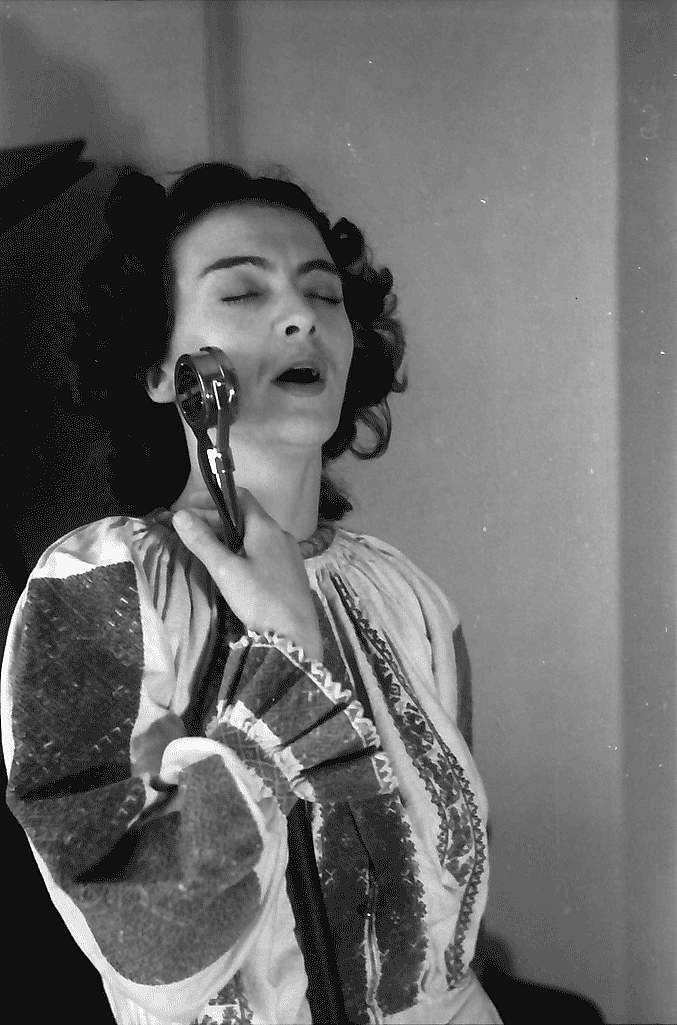
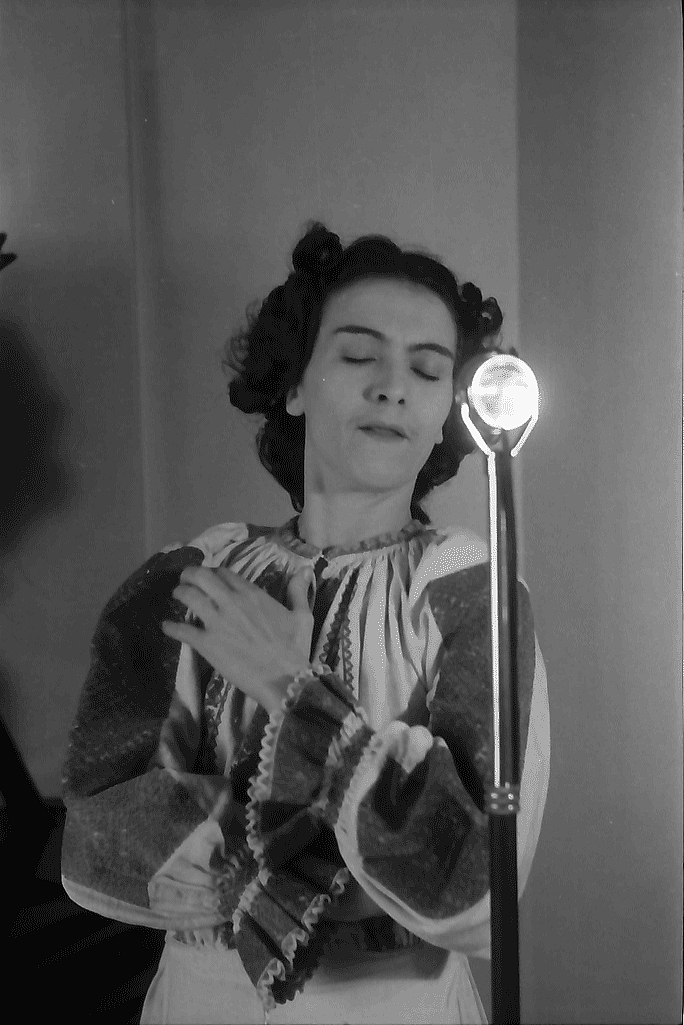
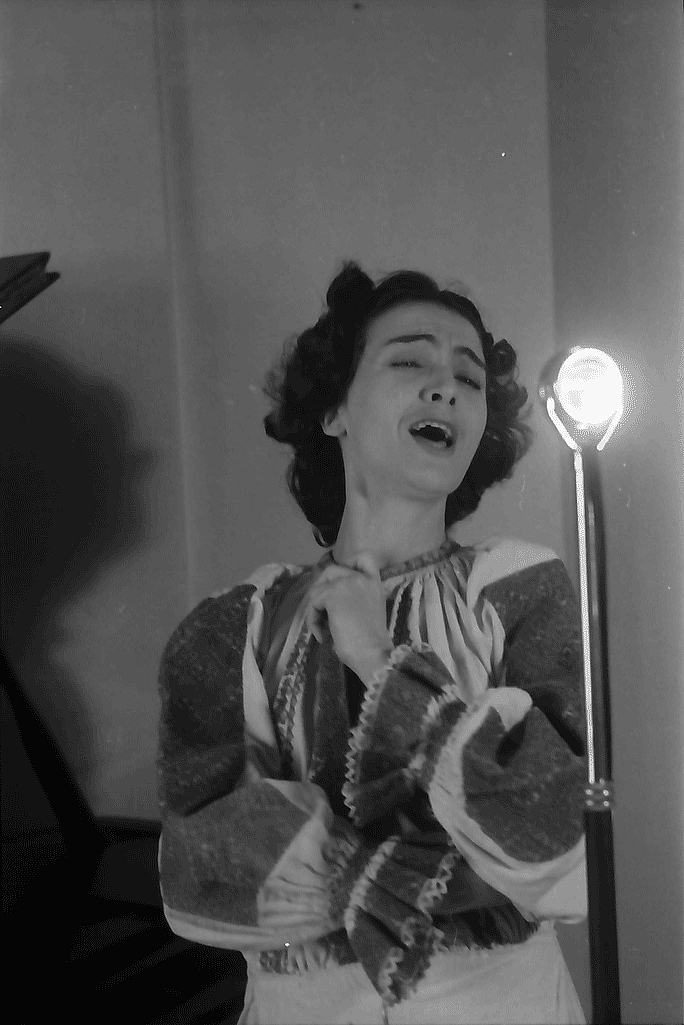
Willy Pragher · CC BY 4.0
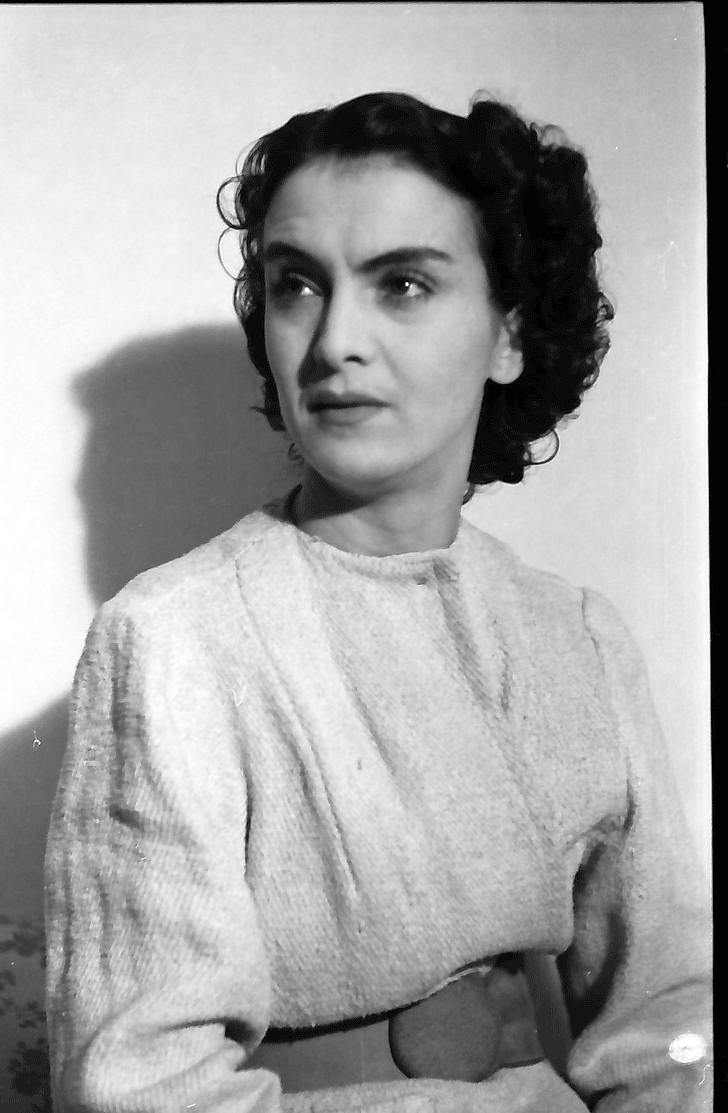
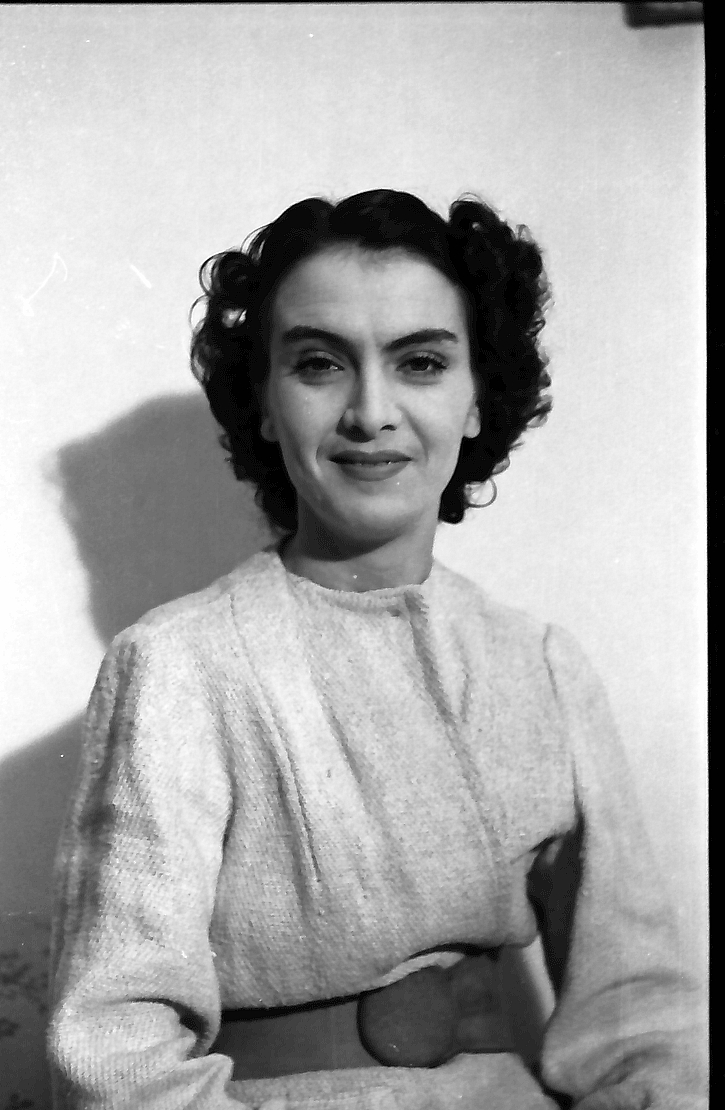
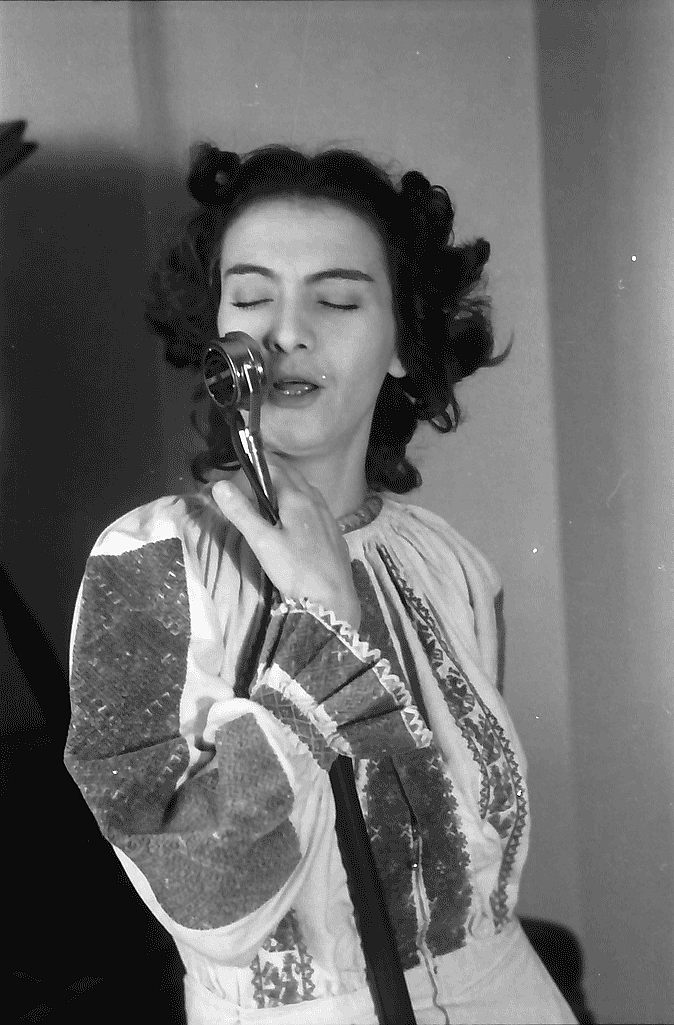
Maria Tănase (25 September 1913 – 22 June 1963) was a Romanian singer and actress whose music ranged from traditional Romanian music to romance, tango, chanson, and operetta. She is widely regarded as Romania's national diva and a major cultural icon of the 20th century, with a significance in Romania comparable to that of Édith Piaf in France or Amália Rodrigues in Portugal.
- born
- 25 September 1913
- died
- 22 June 1963
- field
- Singer, actress
- nationality
- Romanian
- known_for
- Romania's national diva; popularizer of traditional Romanian music
Quick Facts
- Birth Date
- 25 September 1913
- Birth Place
- Bucharest, Kingdom of Romania
- Death Date
- 22 June 1963 (aged 49)
- Death Place
- Bucharest, Romanian People's Republic
- Resting Place
- Bellu Cemetery, Bucharest
- Occupation
- Singer, actress
- Years Active
- 1934–1963
- Spouse
- Clery Sachelarie (m. 1950)
Facts from the source article.
Lore & Background
Born in the Bucharest suburb of Cărămidarii de Jos, Maria Tănase attended Primary School number 11 from Tăbăcari. Her father, Ion Coanda Tănase, was a master gardener and florist whose nursery employed women from various regions of Romania; they shared traditional folk songs and tales that deeply influenced her. She made her stage debut in Cărămidarii de Jos at the 'Ion Heliade Rădulescu' High School, and in 1934 joined the 'Cărăbuș' Theatre of Constantin Tănase with the help of newspaper writer Sandu Eliad. Her real debut took place on 2 June 1934 under the stage name Mary Atanasiu. In the fall of 1937 she recorded her first folk songs at the Columbia studio in Bucharest, and her voice was first heard on the radio on 20 February 1938. She represented Romania at the 1939 New York World's Fair. During the first months of the National Legionary State, she was banned from performing and her recordings were destroyed. During World War II, she sang for injured soldiers alongside George Enescu, George Vraca, and Constantin Tănase. In December 1943, she sang at the Royal Cavalry Regiment's Christmas festivities in the presence of King Michael I, Ion Antonescu, and others. After the war, she performed in various theatres and took parts in plays and films, including 'Ciulinii Bărăganului' (1958). She also toured extensively, making over forty trips to New York City. In 1952 she was offered a position at the Music School No. 1 in Bucharest, and in 1962 she guided 'Taraful Gorjului' in Târgu Jiu. On 1 May 1963, after a concert in Hunedoara, she canceled her tour due to sickness, and died of cancer on 22 June 1963. She was buried at Bellu Cemetery in Bucharest.
Reader's Guide
Maria Tănase's significance lies in her role as a national diva who popularized Romanian folk music and became a cultural icon. Her nearly three-decade career earned her admiration for her originality, voice, physical beauty, and charisma. In 2006 she was included in the list of the 100 Greatest Romanians of all time by a nationwide poll. Her legacy is reflected in the tributes of notable figures: Constantin Brâncuși called her a 'symbol of all Romanians'; Nicolae Iorga named her 'Pasărea măiastră' ('The Majestic Bird'); and Mihail Sadoveanu considered her 'the first authentic rhapsodist' of the Romanians. Nobel laureate Herta Müller credited Tănase with making her feel what folklore meant. British musician Nigel Kennedy and the Balanescu Quartet have released albums honoring her. In 2013, Google Romania celebrated her 100th birthday with a doodle. Her songs include 'Cine iubește și lasă' (1937), 'Leliță cârciumăreasă' (1939), 'Bun îi vinul ghiurghiuliu' (1938), 'Doina din Maramureș' (1956), 'Ciuleandra' (1956), 'Lume, lume' (1966), and 'Până când nu te iubeam'. She received the State Prize in 1955 and was honored with the medals 'Ordinul Muncii', 'Premiul de Stat', and the title 'Artistă Emerită'.
Did You Know?
- Maria Tănase made her stage debut under the name Mary Atanasiu on 2 June 1934.
- During the National Legionary State, she was banned from performing and her recordings were destroyed.
- She represented Romania at the 1939 New York World's Fair.
- In 2006 she was included in the list of the 100 Greatest Romanians of all time by a nationwide poll.
The Historical Landscape of Women in Music
Women have long occupied a wide spectrum of roles within the musical arts—serving as vocalists, lyricists, composers, instrumental performers, teachers, and figures working behind the scenes. Across the centuries, their contributions have shaped entire movements, genres, and aesthetic trends. And yet, for much of that history, significant portions of the musical world remained either formally closed to women or socially discouraged for them to enter. A broader recognition of this imbalance gained momentum perhaps as early as the 1960s, and since then, institutional and cultural barriers have been slowly dismantling. A distinct strand known as women's music—work created by women and often directed toward a female audience—has explored political and social questions, feeding back into wider currents of creativity, activism, and cultural life. The erasure of women's contributions is visible even in standard reference works: the Concise Oxford History of Music, for instance, lists Clara Schumann as one of the very few female composers it acknowledges, underscoring how thin the documented record has been.
Medieval and Renaissance Trailblazers
In the Medieval period, most art music served liturgical or religious purposes, and the views of religious leaders about women's roles meant very few women composed in that sphere. One remarkable exception was Hildegard von Bingen (1098–1179), a German Benedictine abbess who was simultaneously a composer, writer, and philosopher. Her Ordo Virtutum stands as an early example of both liturgical drama and the morality-play form. Seventy-seven of her sequences, each paired with original poetic text, have survived—among the largest repertoires of any medieval composer. Her liturgical songs, collected in the Symphonia armoniae celestium revelationum, span antiphons, hymns, sequences, and responsories, all set to her own texts, with monophonic melodies that stretched the boundaries of traditional Gregorian chant. The Renaissance produced two especially notable Italian women. Maddalena Casulana (1544–1590), a composer, lutenist, and singer, published Il primo libro di madrigali in Venice—the first printed musical work by a woman in Western history. In its dedication she challenged the assumption that intellectual and artistic gifts belonged exclusively to men; contemporaries like Philippe de Monte held her in high regard. Caterina Assandra (1590–1618), a Benedictine nun and organist, composed motets and organ pieces; her motet O Salutaris Hostia was among the earliest to feature the violone.
Baroque-Era Defiance
The Baroque era saw several women who defied the conventions of their time. Francesca Caccini (1587–1641), an Italian composer, singer, lutenist, poet, and music teacher, delivered a performance at the 1600 wedding of Henry IV of France and Maria de Medici that earned her the king's praise as "the best singer ever heard in France." Back in Italy, she served the Medici court in multiple capacities—teacher, chamber singer, rehearsal coach, and composer of both chamber and stage music. Barbara Strozzi (1619–1677), another Italian, was a Baroque composer and singer renowned for both her poetic skill and her compositional output. She was described as the most prolific composer of printed secular vocal music in mid-century Venice, a distinction that applied regardless of gender. Across the Channel, Élisabeth Jacquet de La Guerre (1665–1729) emerged from a French family of musicians and master instrument-makers. A child prodigy, she performed on the harpsichord before King Louis XIV and went on to serve as a musician in the Royal Court. She taught, composed across a wide variety of musical forms, and gave concerts at home and throughout Paris. Her accomplishments were formally recognized by Titon du Tillet, who included her in Parnasse francois, a biographical collection honoring the era's poets and musicians.
Classical-Era Expansion and Institutional Recognition
The Classical Era brought a broader range of women into musical life across multiple countries. In Italy, Maria Teresa Agnesi (1720–1795) composed opera seria and chamber music while also performing as a harpsichordist and singer; her career was made possible by the patronage of Habsburg Empress Maria Theresa of Vienna, and her portrait still hangs in the La Scala opera house. In Prussia, Princess Anna Amalia (1723–1787) learned harpsichord, flute, and violin from a young age and became abbess of Quedlinburg in 1755. She is known for smaller chamber works—trios, marches, cantatas, songs, and fugues—and served as a curator who preserved over six hundred volumes of scores by Bach, Handel, Telemann, Graun, and C. P. E. Bach. In Sweden, Elisabeth Olin (1740–1828) became the prima donna of Swedish opera for a decade, performing in regular public concerts at Stockholm's Riddarhuset. In 1773 she became the first woman granted the title Hovsångare (court singer), and in 1782 she was inducted as the first woman member of the Royal Swedish Academy of Music. Others of the era, including Henriette Adélaïde Villard de Beaumesnil in France and Harriet Abrams and Jane Mary Guest in England, contributed as instrumentalists and singers.
Gallery
Frequently Asked Questions
Who is Maria Tănase?
She was a Romanian singer and actress born on 25 September 1913 who became the country's most celebrated vocal performer of the 20th century. Fans and scholars commonly refer to her as Romania's national diva.
What kinds of music did Maria Tănase perform?
Her repertoire covered traditional Romanian folk songs, romance, tango, chanson, and operetta. She was particularly celebrated for weaving traditional Romanian melodies into a broad, mainstream stage and recording career.
Why is Maria Tănase considered so important in Romanian culture?
She is regarded as a defining cultural icon of 20th-century Romania, with a level of national significance often likened to Édith Piaf in France or Amália Rodrigues in Portugal. Her voice and artistry shaped how Romanians understood and cherished their own musical heritage.
When did Maria Tănase live?
She was born on 25 September 1913 and died on 22 June 1963. Although her career was cut short by her relatively young death, it left a lasting imprint on Romanian popular music.
What role did Maria Tănase play in preserving Romanian folk music?
She brought traditional Romanian songs to wide urban audiences through her concerts and recordings, making folk melodies accessible to listeners who might never have encountered them otherwise. This work cemented her legacy as a guardian of Romania's musical identity.
More in Global Pop & Folk Legends 1-24
Spotted an error? Know more?
This is a living reference — every entry is fact-audited, and reader corrections feed straight into our audit queue. Suggest an edit · See this site's audit record