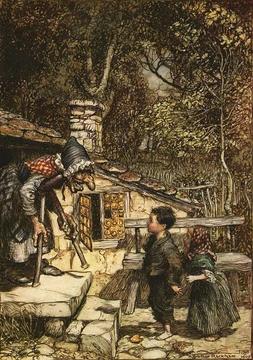
Leslie Cheung
Hong Kong singer-actor who shaped Cantopop and cinema.

Lajmmoore · CC BY-SA 4.0
Leslie Cheung Kwok-wing was born Cheung Fat-chung on 12 September 1956 in Kowloon, British Hong Kong, and died on 1 April 2003. He worked as a singer-songwriter and actor, becoming a major cultural figure across the Chinese-speaking world. People knew him for his polished charm, bold film roles, and a daring, androgynous style on stage. Over 26 years, he put out more than 40 albums and appeared in 56 movies.
Cheung grew up in a middle-class Hakka family, the youngest of ten children. His father, Cheung Wut-hoi, made suits for Western celebrities like Alfred Hitchcock, Marlon Brando, and Cary Grant, but Cheung had no interest in tailoring. He described his childhood as unhappy, feeling distant from his father and siblings and often witnessing fights at home. He said he felt depressed sometimes and craved affection from parents who were mostly absent. His father’s abusive treatment of his mother shaped his views on marriage, and things got worse when his father married another woman. Raised mainly by his grandmother, he was very close to her. He summed up his upbringing as a "silent resentment" with "nothing worth remembering," except for his grandmother’s death when he was in primary school—the one thing he said he did recall from childhood.
He attended Rosaryhill School in Hong Kong, where he did poorly except in English, then at age 12 went to Eccles Hall School Quidenham, a boys’ boarding school in England. There, he got into Western films and music, studying the soundtrack of *Romeo and Juliet*. He remembered "racial problems" but made friends. On weekends, he worked as a bartender and sang occasionally at a relative’s restaurant in Southend-on-Sea. He chose the name Leslie after seeing *Gone with the Wind*, inspired by actor Leslie Howard, because he liked that it could be either a man’s or woman’s name. He studied textile management at the University of Leeds for a year, then returned to Hong Kong in 1976 after his father had a stroke that left him partially paralyzed. His father wanted all the children home, so Cheung quit school and sold Levi’s jeans to get by. He later said, "I had no plans. There I was, feeling like I was hanging in the middle of nowhere."
Back in Hong Kong, he went to high school again as a mature student and formed a band, singing lead. In May 1977, the band members each entered RTV’s Asian Singing Contest. Only Cheung made it
- born
- 12 September 1956, Kowloon, British Hong Kong
- died
- 1 April 2003, Hong Kong
- field
- Singer-songwriter, actor
- nationality
- Hong Kong
- known_for
- Cantopop pioneer, pan-Asian film fame, androgynous stage presence
Quick Facts
- Native Name Lang
- zh-Hant-HK
- Birth Name
- Cheung Fat-chung
- Birth Date
- df=yes · 1956 · 9 · 12
- Birth Place
- Kowloon, British Hong Kong
- Death Date
- df=yes · 2003 · 4 · 1 · 1956 · 9 · 12
- Death Place
- Central, Hong Kong
- Resting Place
- Po Fook Hill, Sha Tin, New Territories
- Resting Place Coordinates
- <!-- LAT · LONG · type:landmark · display=inline
- Death Cause
- Suicide -->
- Citizenship
- Canada · Hong Kong · British
- Education
- University of Leeds
- Occupation
- Singer · songwriter · actor
Facts from the source article.
Lore & Background
Cheung was born in Kowloon, British Hong Kong, the youngest of 10 children in a middle-class Hakka family. His father was a well-known tailor whose clients included Alfred Hitchcock, Marlon Brando, and Cary Grant. Cheung described an unhappy childhood, feeling estranged from his father and siblings, and was raised by his grandmother. He studied in England from age 12, attending Eccles Hall School Quidenham, and later the University of Leeds for textile management, but returned to Hong Kong in 1976 after his father suffered a stroke.
Cheung entered RTV's Asian Singing Contest in 1977, finishing as first runner-up in the Hong Kong division. His early music albums failed commercially, and his first public performance was booed. He achieved mass stardom in 1984 with the hit single 'Monica,' which introduced his signature dance-pop style. He announced a retirement from music in 1989 and emigrated to Canada in 1990, but returned to Hong Kong in 1995.
Reader's Guide
Leslie Cheung is regarded as one of the founding fathers of Cantopop, defining the genre in the 1980s. His studio albums 'Summer Romance' (1987) and 'Most Beloved' (1995) each sold over 300,000 copies in Hong Kong, ranking among the territory's best-selling albums. His film work earned him selection as one of the Top 100 Foreign Actors of the 20th Century by Kinema Junpo, and in 2010 CNN named him one of the 25 Greatest Asian Actors of All Time. Cheung's androgynous stage presence and flamboyant screen characters challenged gender norms and left a lasting impact on Sinophone popular culture. His death in 2003 marked the end of a 26-year career that spanned over 40 albums and 56 films, cementing his status as a cultural icon.
Did You Know?
- Cheung chose his English name 'Leslie' inspired by actor Leslie Howard from the film 'Gone with the Wind,' finding the name unisex.
- His first film role was in a softcore porn production, 'Erotic Dream of the Red Chamber' (1978), which featured his bare buttocks.
- Cheung's 1984 hit 'Monica' was a cover of a Japanese single by Kōji Kikkawa.
- He was the youngest of 10 children in a middle-class Hakka family.
The Cantopop Tradition
Leslie Cheung made his name within the broader C-pop family, a genre that stretches across mainland China, Hong Kong, Macau, and Taiwan, and extends into Singapore and Malaysia where Chinese languages are spoken. His work sits squarely in the Cantopop branch, one of three principal subgenres alongside Mandopop and Hokkien pop. The roots of this tradition trace back to Shanghai in the 1920s, where composer Li Jinhui and his daughter Li Minghui recorded what is widely considered the first Chinese pop song, "Drizzle," blending jazz instrumentation with pentatonic folk melodies. When the Shanghai recording industry relocated to Hong Kong after 1949, it eventually gave rise to the Cantopop scene of the 1970s, the very soil from which Cheung's career grew. The term shidaiqu, meaning "music of the era," had long described popular singing in Chinese dialects, and Cheung inherited that lineage of vernacular expression.
A Genre in Motion
C-pop functions as an umbrella covering pop, R&B, ballads, rock, hip hop, and ambient music across the Greater China region. Within that vast canopy, Cheung's Hong Kong-based career belonged to Cantopop, which in the new millennium has been steadily closing the gap with Mandopop, its Mandarin-speaking counterpart. Hokkien pop, once heavily shaped by Japanese enka traditions, has been re-integrating into the wider C-pop conversation and drifting toward Mandopop in its development. Chinese rock, meanwhile, broke away as a distinct force in the early 1990s. The genre's boundaries have always been loose; what unites these strands is the use of Chinese languages and the shared cultural geography of the region. For an artist like Cheung, working in Cantopop meant operating in a space where dialect, local identity, and cross-border influence constantly negotiated with one another, and where the lines between subgenres were never as rigid as taxonomy might suggest.
Music and Politics
The political landscape of Chinese popular music has always cast a long shadow over artists. In the early years of the People's Republic, the CCP branded the genre "Yellow Music," a term linking it to pornography, and popular music became a vehicle for Maoist ideology and Cultural Revolution messaging. The Kuomintang, after relocating to Taiwan, suppressed native Hokkien dialect from the 1950s through the late 1980s, pushing Mandopop into dominance there. In mainland China, officially sanctioned music schools taught popular music through lyrics echoing state-approved patriotic verses and traditional cultural values, with the government using traditional culture to reinforce its own legitimacy. After the Cultural Revolution's decade-plus of isolation, Deng's opening-up policies and China's entry into the World Trade Organization brought globalized cultural exchange, particularly with the United States. For a C-pop artist like Cheung, this meant performing in a region where music had been both a tool of state control and a space of personal expression, navigating a landscape where political currents never fully receded from the stage.
The Ecosystem of C-pop
The commercial infrastructure surrounding C-pop has evolved dramatically across the decades. In the 1920s, privately run radio stations in major cities broadcast popular music, and jazz influences from American musicians like Buck Clayton filtered into nightclub and dancehall culture. After the war, the industry became regionally branded and marketed. In the digital age, EolAsia.com launched in 2000 as the first online C-pop music portal in Hong Kong, surviving the dot-com bubble and offering legal downloads backed by EMI, Warner Music, and Sony BMG by 2005. In 2008, Norman Cheung acquired EMI Music Asia's remaining stake for an estimated HK$100 million after EMI withdrew from China. Piracy remained a persistent challenge; Baidu.com faced lawsuits from industry groups for unauthorized music distribution, while Google eventually entered with free listening and genuine copies. For a C-pop figure like Cheung, these shifts in how music was produced, distributed, and consumed shaped the very ecosystem in which his art reached audiences.
Gallery


Frequently Asked Questions
Who is Leslie Cheung?
Leslie Cheung Kwok-wing, born Cheung Fat-chung in Kowloon in 1956, was a Hong Kong singer-songwriter and actor who rose to become a defining cultural figure across the Chinese-speaking world. He is widely credited as a pioneer of Cantopop and a pan-Asian cinematic star.
What made Leslie Cheung stand out in music and film?
He was recognized for his polished charm, bold and unconventional film roles, and a daring, androgynous stage presence that challenged norms in both Cantopop and Hong Kong cinema. That combination of performance style and visual daring set him apart from his peers.
How much did Leslie Cheung release over his career?
Across a 26-year career he put out more than 40 albums and appeared in 56 films. That sheer volume of work spanning two major industries made him a defining voice of his era.
What was Leslie Cheung's family background?
He was the youngest of ten children in a middle-class Hakka family in Kowloon. His father, Cheung Wut-hoi, was a tailor who crafted suits for Hollywood names such as Alfred Hitchcock, Marlon Brando, and Cary Grant.
When and where did Leslie Cheung pass away?
He died on 1 April 2003 in Hong Kong at the age of 46. His passing marked the end of a career that had profoundly shaped popular music and film across Asia.
More in Global Pop & Folk Legends 1-24
Spotted an error? Know more?
This is a living reference — every entry is fact-audited, and reader corrections feed straight into our audit queue. Suggest an edit · See this site's audit record